<?xml version="1.0" encoding="utf-8" ?>
<rdf:RDF xmlns:rdf="http://www.w3.org/1999/02/22-rdf-syntax-ns#" xmlns:dc="http://purl.org/dc/elements/1.1/" xmlns:syn="http://purl.org/rss/1.0/modules/syndication/" xmlns="http://purl.org/rss/1.0/">


<channel rdf:about="https://old.sveb.unife.it/it/ricerca-1/laboratori/biologia-molecolare-emostasi/search_rss">
  <title>Biologia Molecolare dell'Emostasi</title>
  <link>https://old.sveb.unife.it</link>

  <description>
    
            These are the search results for the query, showing results 1 to 15.
        
  </description>


  <image rdf:resource="https://old.sveb.unife.it/logo.png"/>

  <items>
    <rdf:Seq>
      
        <rdf:li rdf:resource="https://old.sveb.unife.it/it/ricerca-1/laboratori/biologia-molecolare-emostasi/temi-di-ricerca/componenti-dell2019emostasi-nella-sclerosi-multipla"/>
      
      
        <rdf:li rdf:resource="https://old.sveb.unife.it/it/ricerca-1/laboratori/biologia-molecolare-emostasi/temi-di-ricerca/polimorfismi-genici-funzionali-e-farmacocinetica"/>
      
      
        <rdf:li rdf:resource="https://old.sveb.unife.it/it/ricerca-1/laboratori/biologia-molecolare-emostasi/temi-di-ricerca/approcci-terapeutici-rna-based-1"/>
      
      
        <rdf:li rdf:resource="https://old.sveb.unife.it/it/ricerca-1/laboratori/biologia-molecolare-emostasi/temi-di-ricerca"/>
      
      
        <rdf:li rdf:resource="https://old.sveb.unife.it/it/ricerca-1/laboratori/biologia-molecolare-emostasi/la-ricerca/pubblicazioni-scientifiche-2/fattore-x"/>
      
      
        <rdf:li rdf:resource="https://old.sveb.unife.it/it/ricerca-1/laboratori/biologia-molecolare-emostasi/la-ricerca/pubblicazioni-scientifiche-2/proteina-s"/>
      
      
        <rdf:li rdf:resource="https://old.sveb.unife.it/it/ricerca-1/laboratori/biologia-molecolare-emostasi/la-ricerca/pubblicazioni-scientifiche-2/fattore-viii-ed-emofilia-a"/>
      
      
        <rdf:li rdf:resource="https://old.sveb.unife.it/it/ricerca-1/laboratori/biologia-molecolare-emostasi/la-ricerca/pubblicazioni-scientifiche-2/fattore-di-von-willebrand"/>
      
      
        <rdf:li rdf:resource="https://old.sveb.unife.it/it/ricerca-1/laboratori/biologia-molecolare-emostasi/la-ricerca/pubblicazioni-scientifiche-2/fattore-ii"/>
      
      
        <rdf:li rdf:resource="https://old.sveb.unife.it/it/ricerca-1/laboratori/biologia-molecolare-emostasi/la-ricerca/pubblicazioni-scientifiche-2/studi-multifattoriali"/>
      
      
        <rdf:li rdf:resource="https://old.sveb.unife.it/it/ricerca-1/laboratori/biologia-molecolare-emostasi/la-ricerca/pubblicazioni-scientifiche-2/proteina-c"/>
      
      
        <rdf:li rdf:resource="https://old.sveb.unife.it/it/ricerca-1/laboratori/biologia-molecolare-emostasi/la-ricerca/pubblicazioni-scientifiche-2/coagulazione-e-ritmi-circadiani"/>
      
      
        <rdf:li rdf:resource="https://old.sveb.unife.it/it/ricerca-1/laboratori/biologia-molecolare-emostasi/la-ricerca/pubblicazioni-scientifiche-2/resistenza-alla-proteina-c-attivata"/>
      
      
        <rdf:li rdf:resource="https://old.sveb.unife.it/it/ricerca-1/laboratori/biologia-molecolare-emostasi/la-ricerca/pubblicazioni-scientifiche-2/fattore-v"/>
      
      
        <rdf:li rdf:resource="https://old.sveb.unife.it/it/ricerca-1/laboratori/biologia-molecolare-emostasi/la-ricerca/pubblicazioni-scientifiche-2/fattore-vii"/>
      
    </rdf:Seq>
  </items>

</channel>


  <item rdf:about="https://old.sveb.unife.it/it/ricerca-1/laboratori/biologia-molecolare-emostasi/temi-di-ricerca/componenti-dell2019emostasi-nella-sclerosi-multipla">
    <title>Componenti dell’Emostasi nella Sclerosi Multipla </title>
    <link>https://old.sveb.unife.it/it/ricerca-1/laboratori/biologia-molecolare-emostasi/temi-di-ricerca/componenti-dell2019emostasi-nella-sclerosi-multipla</link>
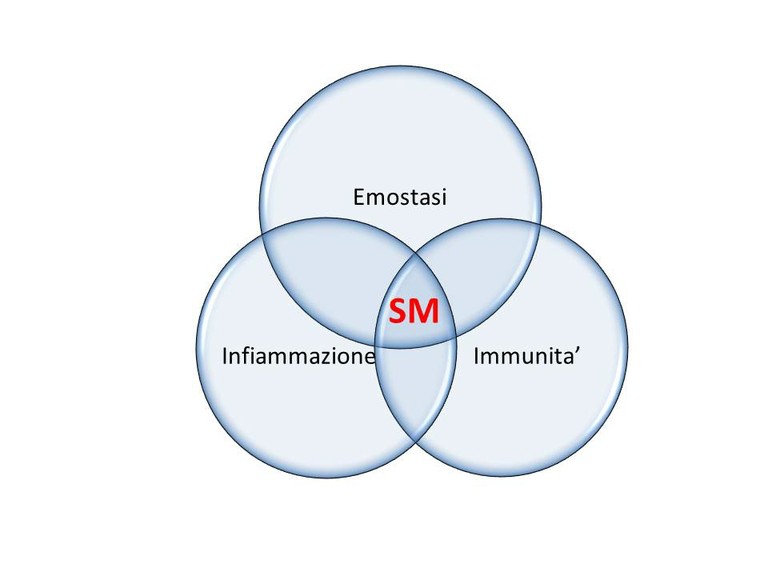
    <description>Numerose  proteine dell’Emostasi sono coinvolte anche in altri processi: risposta infiammatoria, apoptosi, integrita’della barriera emato-encefalica e autoimmunita’. Queste proprieta’ forniscono il supporto razionale al loro studio nell’ambito della Sclerosi Multipla, patologia infiammatoria, autoimmune e degenerativa del sistema nervoso centrale.
</description>
    <content:encoded xmlns:content="http://purl.org/rss/1.0/modules/content/"><![CDATA[<p style="text-align: center; "> </p>
<p style="text-align: center; "> </p>
<p><img src="https://old.sveb.unife.it/it/ricerca-1/laboratori/biologia-molecolare-emostasi/temi-di-ricerca/InterconnessioniEmostasi.jpg/image_large" alt="" class="image-inline" title="" /></p>
<p> </p>
<p><img src="https://old.sveb.unife.it/it/ricerca-1/laboratori/biologia-molecolare-emostasi/temi-di-ricerca/Figure1.tif/image_large" alt="" class="image-inline" title="" /></p>
<p> </p>
<h3><strong>Pubblicazioni:</strong></h3>
<p> </p>
<p style="text-align:justify; "><a href="https://pubmed.ncbi.nlm.nih.gov/35008743/"><b><span>Combination of Genomic and Transcriptomic Approaches Highlights Vascular and Circadian Clock Components in Multiple Sclerosis.</span></b></a><span> </span><span>Scapoli C, </span><a href="https://www.ncbi.nlm.nih.gov/pubmed/?term=Ziliotto%20N%5BAuthor%5D&amp;cauthor=true&amp;cauthor_uid=31068896"><span class="highlight"><span>Ziliotto N</span></span></a><span>, </span><a href="https://www.ncbi.nlm.nih.gov/pubmed/?term=Lunghi%20B%5BAuthor%5D&amp;cauthor=true&amp;cauthor_uid=31055871"><span>Lunghi B</span></a><span>, Menegatti E, Salvi F, Zamboni P, </span><a href="https://www.ncbi.nlm.nih.gov/pubmed/?term=Baroni%20M%5BAuthor%5D&amp;cauthor=true&amp;cauthor_uid=31467667"><span>Baroni M</span></a><span>, Mascoli F, </span><a href="https://www.ncbi.nlm.nih.gov/pubmed/?term=Bernardi%20F%5BAuthor%5D&amp;cauthor=true&amp;cauthor_uid=31613176"><span>Bernardi F</span></a><span>, </span><a href="https://www.ncbi.nlm.nih.gov/pubmed/?term=Marchetti%20G%5BAuthor%5D&amp;cauthor=true&amp;cauthor_uid=31055871"><span>Marchetti G</span></a><span>.</span></p>
<p style="text-align:justify; "><a href="https://pubmed.ncbi.nlm.nih.gov/35008743/"><span>Int J Mol Sci</span></a><span>. 2021 Dec 28;23(1):310.</span></p>
<p style="text-align:justify; "><span>doi: 10.3390/ijms23010310.</span></p>
<p style="text-align:justify; "><span><br /></span></p>
<p style="text-align:justify; "><span> </span></p>
<p style="text-align:justify; "><a href="file:///C:/Users/Paolo/Desktop/Ziliotto%20N,%20Zivadinov%20R,%20Jakimovski%20D,%20Baroni%20M,%20Bergsland%20N,%20Ramasamy%20DP,%20Weinstock-Guttman%20B,%20Ramanathan%20M,%20Marchetti%20G,%20Bernardi%20F.%20Relationships%20Among%20Circulating%20Levels%20of%20Hemostasis%20Inhibitors,%20Chemokines,%20Adhesion%20Molecules,%20and%20MRI%20Characteristics%20in%20Multiple%20Sclerosis.%20Front%20Neurol.%202020%20Oct%2015;11:553616.%20doi:%2010.3389/fneur.2020.553616.%20PMID:%2033178104;%20PMCID:%20PMC7593335."><b><span>Relationships Among Circulating Levels of Hemostasis Inhibitors, Chemokines, Adhesion Molecules, and MRI Characteristics in Multiple Sclerosis.</span></b></a><span> </span><a href="https://www.ncbi.nlm.nih.gov/pubmed/?term=Ziliotto%20N%5BAuthor%5D&amp;cauthor=true&amp;cauthor_uid=31068896"><span class="highlight"><span>Ziliotto N</span></span></a><span>, Zivadinov R, Jakimovski D, </span><a href="https://www.ncbi.nlm.nih.gov/pubmed/?term=Baroni%20M%5BAuthor%5D&amp;cauthor=true&amp;cauthor_uid=31467667"><span>Baroni M</span></a><span>, Bergsland N, Ramasamy DP, Weinstock-Guttman B, Ramanathan M, </span><a href="https://www.ncbi.nlm.nih.gov/pubmed/?term=Marchetti%20G%5BAuthor%5D&amp;cauthor=true&amp;cauthor_uid=31055871"><span>Marchetti G</span></a><span>, </span><a href="https://www.ncbi.nlm.nih.gov/pubmed/?term=Bernardi%20F%5BAuthor%5D&amp;cauthor=true&amp;cauthor_uid=31613176"><span>Bernardi F</span></a><span>.</span></p>
<p style="text-align:justify; "><a href="file:///C:/Users/Paolo/Desktop/Ziliotto%20N,%20Zivadinov%20R,%20Jakimovski%20D,%20Baroni%20M,%20Bergsland%20N,%20Ramasamy%20DP,%20Weinstock-Guttman%20B,%20Ramanathan%20M,%20Marchetti%20G,%20Bernardi%20F.%20Relationships%20Among%20Circulating%20Levels%20of%20Hemostasis%20Inhibitors,%20Chemokines,%20Adhesion%20Molecules,%20and%20MRI%20Characteristics%20in%20Multiple%20Sclerosis.%20Front%20Neurol.%202020%20Oct%2015;11:553616.%20doi:%2010.3389/fneur.2020.553616.%20PMID:%2033178104;%20PMCID:%20PMC7593335."><span>Front Neurol</span></a><span>. 2020 Oct 15;11:553616.</span></p>
<p style="text-align:justify; "><span>doi: 10.3389/fneur.2020.553616.</span></p>
<p style="text-align:justify; "><span><br /></span></p>
<p style="text-align:justify; "><span> </span></p>
<p style="text-align:justify; "><a href="https://pubmed.ncbi.nlm.nih.gov/32438216/"><b><span>Expression profiles of the internal jugular and saphenous veins: Focus on hemostasis genes.</span></b></a><span> </span><a href="https://www.ncbi.nlm.nih.gov/pubmed/?term=Ziliotto%20N%5BAuthor%5D&amp;cauthor=true&amp;cauthor_uid=31068896"><span class="highlight"><span>Ziliotto N</span></span></a><span>, Meneghetti S, Menegatti E, </span><a href="https://www.ncbi.nlm.nih.gov/pubmed/?term=Baroni%20M%5BAuthor%5D&amp;cauthor=true&amp;cauthor_uid=31467667"><span>Baroni M</span></a><span>, </span><a href="https://www.ncbi.nlm.nih.gov/pubmed/?term=Lunghi%20B%5BAuthor%5D&amp;cauthor=true&amp;cauthor_uid=31055871"><span>Lunghi B</span></a><span>, Salvi F, Ferracin M, </span><a href="https://www.ncbi.nlm.nih.gov/pubmed/?term=Branchini%20A%5BAuthor%5D&amp;cauthor=true&amp;cauthor_uid=31613176"><span>Branchini A</span></a><span>, Gemmati D, Mascoli F, Zamboni P, </span><a href="https://www.ncbi.nlm.nih.gov/pubmed/?term=Bernardi%20F%5BAuthor%5D&amp;cauthor=true&amp;cauthor_uid=31613176"><span>Bernardi F</span></a><span>, </span><a href="https://www.ncbi.nlm.nih.gov/pubmed/?term=Marchetti%20G%5BAuthor%5D&amp;cauthor=true&amp;cauthor_uid=31055871"><span>Marchetti G</span></a><span>.</span></p>
<p style="text-align:justify; "><a href="https://pubmed.ncbi.nlm.nih.gov/32438216/"><span>Thromb Res</span></a><span>. 2020 Jul;191:113-124.</span></p>
<p style="text-align:justify; "><span>doi: 10.1016/j.thromres.2020.04.039.</span></p>
<p style="text-align:justify; "><span><br /></span></p>
<p style="text-align:justify; "><span> </span></p>
<p style="text-align:justify; "><a href="https://pubmed.ncbi.nlm.nih.gov/31408242/"><b><span>Plasma levels of protein C pathway proteins and brain magnetic resonance imaging volumes in multiple sclerosis.</span></b></a><span> </span><a href="https://www.ncbi.nlm.nih.gov/pubmed/?term=Ziliotto%20N%5BAuthor%5D&amp;cauthor=true&amp;cauthor_uid=31068896"><span class="highlight"><span>Ziliotto N</span></span></a><span>, Zivadinov R, </span><a href="https://www.ncbi.nlm.nih.gov/pubmed/?term=Baroni%20M%5BAuthor%5D&amp;cauthor=true&amp;cauthor_uid=31467667"><span>Baroni M</span></a><span>, </span><a href="https://www.ncbi.nlm.nih.gov/pubmed/?term=Marchetti%20G%5BAuthor%5D&amp;cauthor=true&amp;cauthor_uid=31055871"><span>Marchetti G</span></a><span>, Jakimovski D, Bergsland N, Ramasamy DP, Weinstock-Guttman B, Straudi S, Manfredini F, Ramanathan M, </span><a href="https://www.ncbi.nlm.nih.gov/pubmed/?term=Bernardi%20F%5BAuthor%5D&amp;cauthor=true&amp;cauthor_uid=31613176"><span>Bernardi F</span></a><span>.</span></p>
<p style="text-align:justify; "><a href="https://pubmed.ncbi.nlm.nih.gov/31408242/"><span>Eur J Neurol</span></a><span>. 2020 Feb;27(2):235-243.</span></p>
<p><span>doi: 10.1111/ene.14058.</span></p>
<p> </p>
<p><strong><a class="external-link" href="https://www.ncbi.nlm.nih.gov/pubmed/31408242">Plasma levels of protein C pathway proteins and brain magnetic resonance imaging volumes in multiple sclerosis</a>.</strong> <a href="https://www.ncbi.nlm.nih.gov/pubmed/?term=Ziliotto%20N%5BAuthor%5D&amp;cauthor=true&amp;cauthor_uid=31408242"><span class="highlight">Ziliotto N</span></a><span>, </span><a href="https://www.ncbi.nlm.nih.gov/pubmed/?term=Zivadinov%20R%5BAuthor%5D&amp;cauthor=true&amp;cauthor_uid=31408242">Zivadinov R</a><span>, </span><a href="https://www.ncbi.nlm.nih.gov/pubmed/?term=Baroni%20M%5BAuthor%5D&amp;cauthor=true&amp;cauthor_uid=31408242">Baroni M</a><span>, </span><a href="https://www.ncbi.nlm.nih.gov/pubmed/?term=Marchetti%20G%5BAuthor%5D&amp;cauthor=true&amp;cauthor_uid=31408242">Marchetti G</a><span>, </span><a href="https://www.ncbi.nlm.nih.gov/pubmed/?term=Jakimovski%20D%5BAuthor%5D&amp;cauthor=true&amp;cauthor_uid=31408242">Jakimovski D</a><span>, </span><a href="https://www.ncbi.nlm.nih.gov/pubmed/?term=Bergsland%20N%5BAuthor%5D&amp;cauthor=true&amp;cauthor_uid=31408242">Bergsland N</a><span>, </span><a href="https://www.ncbi.nlm.nih.gov/pubmed/?term=Ramasamy%20DP%5BAuthor%5D&amp;cauthor=true&amp;cauthor_uid=31408242">Ramasamy DP</a><span>, </span><a href="https://www.ncbi.nlm.nih.gov/pubmed/?term=Weinstock-Guttman%20B%5BAuthor%5D&amp;cauthor=true&amp;cauthor_uid=31408242">Weinstock-Guttman B</a><span>, </span><a href="https://www.ncbi.nlm.nih.gov/pubmed/?term=Straudi%20S%5BAuthor%5D&amp;cauthor=true&amp;cauthor_uid=31408242">Straudi S</a><span>, </span><a href="https://www.ncbi.nlm.nih.gov/pubmed/?term=Manfredini%20F%5BAuthor%5D&amp;cauthor=true&amp;cauthor_uid=31408242">Manfredini F</a><span>, </span><a href="https://www.ncbi.nlm.nih.gov/pubmed/?term=Ramanathan%20M%5BAuthor%5D&amp;cauthor=true&amp;cauthor_uid=31408242">Ramanathan M</a><span>, </span><a href="https://www.ncbi.nlm.nih.gov/pubmed/?term=Bernardi%20F%5BAuthor%5D&amp;cauthor=true&amp;cauthor_uid=31408242">Bernardi F</a><span>.</span></p>
<p><span> </span><span><a href="https://www.ncbi.nlm.nih.gov/pubmed/31408242#" title="European journal of neurology.">Eur J Neurol.</a></span><span> 2020 Feb;27(2):235-243.</span></p>
<p><span> </span><span>doi: 10.1111/ene.14058</span></p>
<p> </p>
<p><strong><a class="external-link" href="https://www.ncbi.nlm.nih.gov/pubmed/31068896">Coagulation Pathways in Neurological Diseases: Multiple Sclerosis</a>.</strong> <a href="https://www.ncbi.nlm.nih.gov/pubmed/?term=Ziliotto%20N%5BAuthor%5D&amp;cauthor=true&amp;cauthor_uid=31068896"><span class="highlight">Ziliotto N</span></a><span>, </span><a href="https://www.ncbi.nlm.nih.gov/pubmed/?term=Bernardi%20F%5BAuthor%5D&amp;cauthor=true&amp;cauthor_uid=31068896">Bernardi F</a><span>, </span><a href="https://www.ncbi.nlm.nih.gov/pubmed/?term=Jakimovski%20D%5BAuthor%5D&amp;cauthor=true&amp;cauthor_uid=31068896">Jakimovski D</a><span>, </span><a href="https://www.ncbi.nlm.nih.gov/pubmed/?term=Zivadinov%20R%5BAuthor%5D&amp;cauthor=true&amp;cauthor_uid=31068896">Zivadinov R</a><span>.<br /></span><span><a href="https://www.ncbi.nlm.nih.gov/pubmed/31068896#" title="Frontiers in neurology.">Front Neurol.</a></span><span> 2019 Apr 24;10:409.</span></p>
<p><span>doi: 10.3389/fneur.2019.00409</span></p>
<p> </p>
<p><a class="external-link" href="https://www.ncbi.nlm.nih.gov/pubmed/30597511"><strong>Are Plasma Levels of Vascular Adhesion Protein-1 Associated Both with Cerebral Microbleeds in Multiple Sclerosis and Intracerebral Haemorrhages in Stroke?</strong></a> <a href="https://www.ncbi.nlm.nih.gov/pubmed/?term=Ziliotto%20N%5BAuthor%5D&amp;cauthor=true&amp;cauthor_uid=30597511"><span class="highlight">Ziliotto N</span></a><span>, </span><a href="https://www.ncbi.nlm.nih.gov/pubmed/?term=Zivadinov%20R%5BAuthor%5D&amp;cauthor=true&amp;cauthor_uid=30597511">Zivadinov R</a><span>, </span><a href="https://www.ncbi.nlm.nih.gov/pubmed/?term=Jakimovski%20D%5BAuthor%5D&amp;cauthor=true&amp;cauthor_uid=30597511">Jakimovski D</a><span>, </span><a href="https://www.ncbi.nlm.nih.gov/pubmed/?term=Bergsland%20N%5BAuthor%5D&amp;cauthor=true&amp;cauthor_uid=30597511">Bergsland N</a><span>, </span><a href="https://www.ncbi.nlm.nih.gov/pubmed/?term=Ramasamy%20DP%5BAuthor%5D&amp;cauthor=true&amp;cauthor_uid=30597511">Ramasamy DP</a><span>, </span><a href="https://www.ncbi.nlm.nih.gov/pubmed/?term=Weinstock-Guttman%20B%5BAuthor%5D&amp;cauthor=true&amp;cauthor_uid=30597511">Weinstock-Guttman B</a><span>, </span><a href="https://www.ncbi.nlm.nih.gov/pubmed/?term=Ramanathan%20M%5BAuthor%5D&amp;cauthor=true&amp;cauthor_uid=30597511">Ramanathan M</a><span>, </span><a href="https://www.ncbi.nlm.nih.gov/pubmed/?term=Marchetti%20G%5BAuthor%5D&amp;cauthor=true&amp;cauthor_uid=30597511">Marchetti G</a><span>, </span><a href="https://www.ncbi.nlm.nih.gov/pubmed/?term=Bernardi%20F%5BAuthor%5D&amp;cauthor=true&amp;cauthor_uid=30597511">Bernardi F</a><span>.</span></p>
<p><span> </span><span><a href="https://www.ncbi.nlm.nih.gov/pubmed/30597511#" title="Thrombosis and haemostasis.">Thromb Haemost.</a></span><span> 2019 Jan;119(1):175-178</span></p>
<p><span>doi: 10.1055/s-0038-1676346</span></p>
<p> </p>
<p><strong><a class="external-link" href="https://www.ncbi.nlm.nih.gov/pubmed/30412901">Plasma levels of soluble NCAM in multiple sclerosis</a>.</strong> <a href="https://www.ncbi.nlm.nih.gov/pubmed/?term=Ziliotto%20N%5BAuthor%5D&amp;cauthor=true&amp;cauthor_uid=30412901"><span class="highlight">Ziliotto N</span></a><span>, </span><a href="https://www.ncbi.nlm.nih.gov/pubmed/?term=Zivadinov%20R%5BAuthor%5D&amp;cauthor=true&amp;cauthor_uid=30412901">Zivadinov R</a><span>, </span><a href="https://www.ncbi.nlm.nih.gov/pubmed/?term=Jakimovski%20D%5BAuthor%5D&amp;cauthor=true&amp;cauthor_uid=30412901">Jakimovski D</a><span>, </span><a href="https://www.ncbi.nlm.nih.gov/pubmed/?term=Baroni%20M%5BAuthor%5D&amp;cauthor=true&amp;cauthor_uid=30412901">Baroni M</a><span>, </span><a href="https://www.ncbi.nlm.nih.gov/pubmed/?term=Tisato%20V%5BAuthor%5D&amp;cauthor=true&amp;cauthor_uid=30412901">Tisato V</a><span>, </span><a href="https://www.ncbi.nlm.nih.gov/pubmed/?term=Secchiero%20P%5BAuthor%5D&amp;cauthor=true&amp;cauthor_uid=30412901">Secchiero P</a><span>, </span><a href="https://www.ncbi.nlm.nih.gov/pubmed/?term=Bergsland%20N%5BAuthor%5D&amp;cauthor=true&amp;cauthor_uid=30412901">Bergsland N</a><span>, </span><a href="https://www.ncbi.nlm.nih.gov/pubmed/?term=Ramasamy%20DP%5BAuthor%5D&amp;cauthor=true&amp;cauthor_uid=30412901">Ramasamy DP</a><span>, </span><a href="https://www.ncbi.nlm.nih.gov/pubmed/?term=Weinstock-Guttman%20B%5BAuthor%5D&amp;cauthor=true&amp;cauthor_uid=30412901">Weinstock-Guttman B</a><span>, </span><a href="https://www.ncbi.nlm.nih.gov/pubmed/?term=Bernardi%20F%5BAuthor%5D&amp;cauthor=true&amp;cauthor_uid=30412901">Bernardi F</a><span>, </span><a href="https://www.ncbi.nlm.nih.gov/pubmed/?term=Ramanathan%20M%5BAuthor%5D&amp;cauthor=true&amp;cauthor_uid=30412901">Ramanathan M</a><span>, </span><a href="https://www.ncbi.nlm.nih.gov/pubmed/?term=Marchetti%20G%5BAuthor%5D&amp;cauthor=true&amp;cauthor_uid=30412901">Marchetti G</a></p>
<p><a href="https://www.ncbi.nlm.nih.gov/pubmed/?term=Marchetti%20G%5BAuthor%5D&amp;cauthor=true&amp;cauthor_uid=30412901"></a><span><a href="https://www.ncbi.nlm.nih.gov/pubmed/30412901#" title="Journal of the neurological sciences.">J Neurol Sci.</a></span><span> 2019 Jan 15;396:36-41</span></p>
<p><span>doi: 10.1016/j.jns.2018.10.023</span></p>
<p> </p>
<p><a class="external-link" href="https://www.ncbi.nlm.nih.gov/pubmed/30134823"><strong>Changes in expression profiles of internal jugular vein wall and plasma protein levels in multiple sclerosis</strong></a><strong>.</strong> <a href="https://www.ncbi.nlm.nih.gov/pubmed/?term=Marchetti%20G%5BAuthor%5D&amp;cauthor=true&amp;cauthor_uid=30134823">Marchetti G</a>, <a href="https://www.ncbi.nlm.nih.gov/pubmed/?term=Ziliotto%20N%5BAuthor%5D&amp;cauthor=true&amp;cauthor_uid=30134823"><span class="highlight">Ziliotto N</span></a>, <a href="https://www.ncbi.nlm.nih.gov/pubmed/?term=Meneghetti%20S%5BAuthor%5D&amp;cauthor=true&amp;cauthor_uid=30134823">Meneghetti S</a>, <a href="https://www.ncbi.nlm.nih.gov/pubmed/?term=Baroni%20M%5BAuthor%5D&amp;cauthor=true&amp;cauthor_uid=30134823">Baroni M</a>, <a href="https://www.ncbi.nlm.nih.gov/pubmed/?term=Lunghi%20B%5BAuthor%5D&amp;cauthor=true&amp;cauthor_uid=30134823">Lunghi B</a>, <a href="https://www.ncbi.nlm.nih.gov/pubmed/?term=Menegatti%20E%5BAuthor%5D&amp;cauthor=true&amp;cauthor_uid=30134823">Menegatti E</a>, <a href="https://www.ncbi.nlm.nih.gov/pubmed/?term=Pedriali%20M%5BAuthor%5D&amp;cauthor=true&amp;cauthor_uid=30134823">Pedriali M</a>, <a href="https://www.ncbi.nlm.nih.gov/pubmed/?term=Salvi%20F%5BAuthor%5D&amp;cauthor=true&amp;cauthor_uid=30134823">Salvi F</a>, <a href="https://www.ncbi.nlm.nih.gov/pubmed/?term=Bartolomei%20I%5BAuthor%5D&amp;cauthor=true&amp;cauthor_uid=30134823">Bartolomei I</a>, <a href="https://www.ncbi.nlm.nih.gov/pubmed/?term=Straudi%20S%5BAuthor%5D&amp;cauthor=true&amp;cauthor_uid=30134823">Straudi S</a>, <a href="https://www.ncbi.nlm.nih.gov/pubmed/?term=Manfredini%20F%5BAuthor%5D&amp;cauthor=true&amp;cauthor_uid=30134823">Manfredini F</a>, <a href="https://www.ncbi.nlm.nih.gov/pubmed/?term=Voltan%20R%5BAuthor%5D&amp;cauthor=true&amp;cauthor_uid=30134823">Voltan R</a>, <a href="https://www.ncbi.nlm.nih.gov/pubmed/?term=Basaglia%20N%5BAuthor%5D&amp;cauthor=true&amp;cauthor_uid=30134823">Basaglia N</a>, <a href="https://www.ncbi.nlm.nih.gov/pubmed/?term=Mascoli%20F%5BAuthor%5D&amp;cauthor=true&amp;cauthor_uid=30134823">Mascoli F</a>, <a href="https://www.ncbi.nlm.nih.gov/pubmed/?term=Zamboni%20P%5BAuthor%5D&amp;cauthor=true&amp;cauthor_uid=30134823">Zamboni P</a>, <a href="https://www.ncbi.nlm.nih.gov/pubmed/?term=Bernardi%20F%5BAuthor%5D&amp;cauthor=true&amp;cauthor_uid=30134823">Bernardi F</a>.</p>
<p class="mceContentBody documentContent"><span><a href="https://www.ncbi.nlm.nih.gov/pubmed/30134823#" title="Molecular medicine (Cambridge, Mass.).">Mol Med.</a></span><span> 2018 Aug 9;24(1):42.</span></p>
<p class="mceContentBody documentContent"><span>doi: 10.1186/s10020-018-0043-4</span></p>
<p> </p>
<p><strong><a class="external-link" href="https://www.ncbi.nlm.nih.gov/pubmed/29758118">Hemostasis biomarkers in multiple sclerosis</a>.</strong> <a href="https://www.ncbi.nlm.nih.gov/pubmed/?term=Ziliotto%20N%5BAuthor%5D&amp;cauthor=true&amp;cauthor_uid=29758118"><span class="highlight">Ziliotto N</span></a><span>, </span><a href="https://www.ncbi.nlm.nih.gov/pubmed/?term=Bernardi%20F%5BAuthor%5D&amp;cauthor=true&amp;cauthor_uid=29758118">Bernardi F</a><span>, </span><a href="https://www.ncbi.nlm.nih.gov/pubmed/?term=Jakimovski%20D%5BAuthor%5D&amp;cauthor=true&amp;cauthor_uid=29758118">Jakimovski D</a><span>, </span><a href="https://www.ncbi.nlm.nih.gov/pubmed/?term=Baroni%20M%5BAuthor%5D&amp;cauthor=true&amp;cauthor_uid=29758118">Baroni M</a><span>, </span><a href="https://www.ncbi.nlm.nih.gov/pubmed/?term=Marchetti%20G%5BAuthor%5D&amp;cauthor=true&amp;cauthor_uid=29758118">Marchetti G</a><span>, </span><a href="https://www.ncbi.nlm.nih.gov/pubmed/?term=Bergsland%20N%5BAuthor%5D&amp;cauthor=true&amp;cauthor_uid=29758118">Bergsland N</a><span>, </span><a href="https://www.ncbi.nlm.nih.gov/pubmed/?term=Ramasamy%20DP%5BAuthor%5D&amp;cauthor=true&amp;cauthor_uid=29758118">Ramasamy DP</a><span>, </span><a href="https://www.ncbi.nlm.nih.gov/pubmed/?term=Weinstock-Guttman%20B%5BAuthor%5D&amp;cauthor=true&amp;cauthor_uid=29758118">Weinstock-Guttman B</a><span>, </span><a href="https://www.ncbi.nlm.nih.gov/pubmed/?term=Schweser%20F%5BAuthor%5D&amp;cauthor=true&amp;cauthor_uid=29758118">Schweser F</a><span>, </span><a href="https://www.ncbi.nlm.nih.gov/pubmed/?term=Zamboni%20P%5BAuthor%5D&amp;cauthor=true&amp;cauthor_uid=29758118">Zamboni P</a><span>, </span><a href="https://www.ncbi.nlm.nih.gov/pubmed/?term=Ramanathan%20M%5BAuthor%5D&amp;cauthor=true&amp;cauthor_uid=29758118">Ramanathan M</a><span>, </span><a href="https://www.ncbi.nlm.nih.gov/pubmed/?term=Zivadinov%20R%5BAuthor%5D&amp;cauthor=true&amp;cauthor_uid=29758118">Zivadinov R</a><span>.</span></p>
<p><span> </span><span><a href="https://www.ncbi.nlm.nih.gov/pubmed/29758118#" title="European journal of neurology.">Eur J Neurol.</a></span><span> 2018 Sep;25(9):1169-1176.</span></p>
<p><span>doi: 10.1111/ene.13681.</span></p>
<p> </p>
<p><strong><a class="external-link" href="https://www.ncbi.nlm.nih.gov/pubmed/29731736">Coagulation Factor XII Levels and Intrinsic Thrombin Generation in Multiple Sclerosis</a>.</strong> <a href="https://www.ncbi.nlm.nih.gov/pubmed/?term=Ziliotto%20N%5BAuthor%5D&amp;cauthor=true&amp;cauthor_uid=29731736"><span class="highlight">Ziliotto N</span></a><span>, </span><a href="https://www.ncbi.nlm.nih.gov/pubmed/?term=Baroni%20M%5BAuthor%5D&amp;cauthor=true&amp;cauthor_uid=29731736">Baroni M</a><span>, </span><a href="https://www.ncbi.nlm.nih.gov/pubmed/?term=Straudi%20S%5BAuthor%5D&amp;cauthor=true&amp;cauthor_uid=29731736">Straudi S</a><span>, </span><a href="https://www.ncbi.nlm.nih.gov/pubmed/?term=Manfredini%20F%5BAuthor%5D&amp;cauthor=true&amp;cauthor_uid=29731736">Manfredini F</a><span>, </span><a href="https://www.ncbi.nlm.nih.gov/pubmed/?term=Mari%20R%5BAuthor%5D&amp;cauthor=true&amp;cauthor_uid=29731736">Mari R</a><span>, </span><a href="https://www.ncbi.nlm.nih.gov/pubmed/?term=Menegatti%20E%5BAuthor%5D&amp;cauthor=true&amp;cauthor_uid=29731736">Menegatti E</a><span>, </span><a href="https://www.ncbi.nlm.nih.gov/pubmed/?term=Voltan%20R%5BAuthor%5D&amp;cauthor=true&amp;cauthor_uid=29731736">Voltan R</a><span>, </span><a href="https://www.ncbi.nlm.nih.gov/pubmed/?term=Secchiero%20P%5BAuthor%5D&amp;cauthor=true&amp;cauthor_uid=29731736">Secchiero P</a><span>, </span><a href="https://www.ncbi.nlm.nih.gov/pubmed/?term=Zamboni%20P%5BAuthor%5D&amp;cauthor=true&amp;cauthor_uid=29731736">Zamboni P</a><span>, </span><a href="https://www.ncbi.nlm.nih.gov/pubmed/?term=Basaglia%20N%5BAuthor%5D&amp;cauthor=true&amp;cauthor_uid=29731736">Basaglia N</a><span>, </span><a href="https://www.ncbi.nlm.nih.gov/pubmed/?term=Marchetti%20G%5BAuthor%5D&amp;cauthor=true&amp;cauthor_uid=29731736">Marchetti G</a><span>, </span><a href="https://www.ncbi.nlm.nih.gov/pubmed/?term=Bernardi%20F%5BAuthor%5D&amp;cauthor=true&amp;cauthor_uid=29731736">Bernardi F</a><span>.</span></p>
<p><span> </span><span><a href="https://www.ncbi.nlm.nih.gov/pubmed/29731736#" title="Frontiers in neurology.">Front Neurol.</a></span><span> 2018 Apr 20;9:245</span></p>
<p><span> </span><span>doi: 10.3389/fneur.2018.00245</span></p>]]></content:encoded>
    <dc:publisher>No publisher</dc:publisher>
    <dc:creator>Ferraresi Paolo</dc:creator>
    <dc:rights></dc:rights>
    <dc:date>2020-04-17T09:20:00Z</dc:date>
    <dc:type>Pagina</dc:type>
  </item>


  <item rdf:about="https://old.sveb.unife.it/it/ricerca-1/laboratori/biologia-molecolare-emostasi/temi-di-ricerca/polimorfismi-genici-funzionali-e-farmacocinetica">
    <title>Polimorfismi genici funzionali e farmacocinetica</title>
    <link>https://old.sveb.unife.it/it/ricerca-1/laboratori/biologia-molecolare-emostasi/temi-di-ricerca/polimorfismi-genici-funzionali-e-farmacocinetica</link>
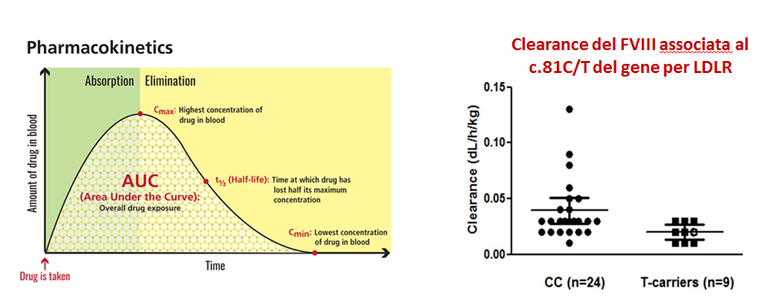
    <description>La frequente infusione di fattore VIII (FVIII, emivita di 12-14h) nei pazienti emofilici di tipo A e l’ampia variabilità delle risposte al FVIII infuso inducono a ricercare polimorfismi in geni codificanti recettori per il FVIII che, modulando la sopravvivenza in circolo del fattore, possano essere determinanti funzionali della farmacocinetica</description>
    <content:encoded xmlns:content="http://purl.org/rss/1.0/modules/content/"><![CDATA[<p> </p>
<p><img src="https://old.sveb.unife.it/it/ricerca-1/laboratori/biologia-molecolare-emostasi/temi-di-ricerca/farmacocineticaepol.PNG/image_large" alt="" class="image-inline" title="" /></p>
<p> </p>
<p> </p>
<h3><strong>Pubblicazioni:</strong></h3>
<p> </p>
<p><a href="https://pubmed.ncbi.nlm.nih.gov/34626083/"><b>F9 missense mutations impairing factor IX activation are associated with pleiotropic plasma phenotypes.</b></a> <a href="https://www.ncbi.nlm.nih.gov/pubmed/?term=Branchini%20A%5BAuthor%5D&amp;cauthor=true&amp;cauthor_uid=31613176">Branchini A</a>, Morfini M, Lunghi B, Belvini D, Radossi P, Bury L, Serino ML, Giordano P, Cultrera D, Molinari AC, Napolitano M, Bigagli E, Castaman G, <a href="https://www.ncbi.nlm.nih.gov/pubmed/?term=Pinotti%20M%5BAuthor%5D&amp;cauthor=true&amp;cauthor_uid=31613176">Pinotti M</a>, <a href="https://www.ncbi.nlm.nih.gov/pubmed/?term=Bernardi%20F%5BAuthor%5D&amp;cauthor=true&amp;cauthor_uid=31613176">Bernardi F</a>; GePKHIS Study Group of AICE.</p>
<p><a href="https://pubmed.ncbi.nlm.nih.gov/34626083/">J Thromb Haemost</a>. 2022 Jan;20(1):69-81.</p>
<p>doi: 10.1111/jth.15552.</p>
<p> </p>
<p><a href="https://pubmed.ncbi.nlm.nih.gov/34407556/"><b>The Asialoglycoprotein Receptor Minor Subunit Gene Contributes to Pharmacokinetics of Factor VIII Concentrates in Hemophilia A</b>.</a> <a href="https://www.ncbi.nlm.nih.gov/pubmed/?term=Lunghi%20B%5BAuthor%5D&amp;cauthor=true&amp;cauthor_uid=31055871">Lunghi B</a>, Morfini M, Martinelli N, <a href="https://www.ncbi.nlm.nih.gov/pubmed/?term=Balestra%20D%5BAuthor%5D&amp;cauthor=true&amp;cauthor_uid=32244944">Balestra D</a>, Linari S, Frusconi S, <a href="https://www.ncbi.nlm.nih.gov/pubmed/?term=Branchini%20A%5BAuthor%5D&amp;cauthor=true&amp;cauthor_uid=31613176">Branchini A</a>, Cervellera CF, <a href="https://www.ncbi.nlm.nih.gov/pubmed/?term=Marchetti%20G%5BAuthor%5D&amp;cauthor=true&amp;cauthor_uid=31055871">Marchetti G</a>, Castaman G, <a href="https://www.ncbi.nlm.nih.gov/pubmed/?term=Bernardi%20F%5BAuthor%5D&amp;cauthor=true&amp;cauthor_uid=31613176">Bernardi F</a>.</p>
<p><a href="https://pubmed.ncbi.nlm.nih.gov/34407556/">Thromb Haemost</a>. 2022 May;122(5):715-725.</p>
<p>doi: 10.1055/a-1591-7869.</p>
<p> </p>
<p><strong>PB156: Genetic Polymorphisms Contributing to the Pharmacokinetics of Factor VIII Concentrates.</strong> B. Lunghi, S. Frusconi, S. Linari; G, Marchetti, F. Bernardi, G. Castaman, M. Morfini. <a href="https://onlinelibrary.wiley.com/toc/24750379/2018/2/S1" target="_blank">Special Issue: Abstracts of the 64th Annual Meeting of the Scientific Standardization Committee of the International Society on Thrombosis and Haemostasis, July 18–21, 2018</a></p>
<p> </p>
<p><strong><a class="external-link" href="https://www.ncbi.nlm.nih.gov/pubmed/31055871">Functional polymorphisms in the LDLR and pharmacokinetics of Factor VIII concentrates</a>.</strong> <a href="https://www.ncbi.nlm.nih.gov/pubmed/?term=Lunghi%20B%5BAuthor%5D&amp;cauthor=true&amp;cauthor_uid=31055871"><span class="highlight">Lunghi B</span></a><span>, </span><a href="https://www.ncbi.nlm.nih.gov/pubmed/?term=Bernardi%20F%5BAuthor%5D&amp;cauthor=true&amp;cauthor_uid=31055871">Bernardi F</a><span>, </span><a href="https://www.ncbi.nlm.nih.gov/pubmed/?term=Martinelli%20N%5BAuthor%5D&amp;cauthor=true&amp;cauthor_uid=31055871">Martinelli N</a><span>, </span><a href="https://www.ncbi.nlm.nih.gov/pubmed/?term=Frusconi%20S%5BAuthor%5D&amp;cauthor=true&amp;cauthor_uid=31055871">Frusconi S</a><span>, </span><a href="https://www.ncbi.nlm.nih.gov/pubmed/?term=Branchini%20A%5BAuthor%5D&amp;cauthor=true&amp;cauthor_uid=31055871">Branchini A</a><span>, </span><a href="https://www.ncbi.nlm.nih.gov/pubmed/?term=Linari%20S%5BAuthor%5D&amp;cauthor=true&amp;cauthor_uid=31055871">Linari S</a><span>, </span><a href="https://www.ncbi.nlm.nih.gov/pubmed/?term=Marchetti%20G%5BAuthor%5D&amp;cauthor=true&amp;cauthor_uid=31055871">Marchetti G</a><span>, </span><a href="https://www.ncbi.nlm.nih.gov/pubmed/?term=Castaman%20G%5BAuthor%5D&amp;cauthor=true&amp;cauthor_uid=31055871">Castaman G</a><span>, </span><a href="https://www.ncbi.nlm.nih.gov/pubmed/?term=Morfini%20M%5BAuthor%5D&amp;cauthor=true&amp;cauthor_uid=31055871">Morfini M</a><span>.</span></p>
<p><span> </span><span><a href="https://www.ncbi.nlm.nih.gov/pubmed/31055871#" title="Journal of thrombosis and haemostasis : JTH.">J Thromb Haemost.</a></span><span> 2019 Aug;17(8):1288-1296.</span></p>
<p><span>doi: 10.1111/jth.14473</span></p>]]></content:encoded>
    <dc:publisher>No publisher</dc:publisher>
    <dc:creator>Ferraresi Paolo</dc:creator>
    <dc:rights></dc:rights>
    <dc:date>2020-04-16T11:10:00Z</dc:date>
    <dc:type>Pagina</dc:type>
  </item>


  <item rdf:about="https://old.sveb.unife.it/it/ricerca-1/laboratori/biologia-molecolare-emostasi/temi-di-ricerca/approcci-terapeutici-rna-based-1">
    <title>Approcci terapeutici RNA-based</title>
    <link>https://old.sveb.unife.it/it/ricerca-1/laboratori/biologia-molecolare-emostasi/temi-di-ricerca/approcci-terapeutici-rna-based-1</link>
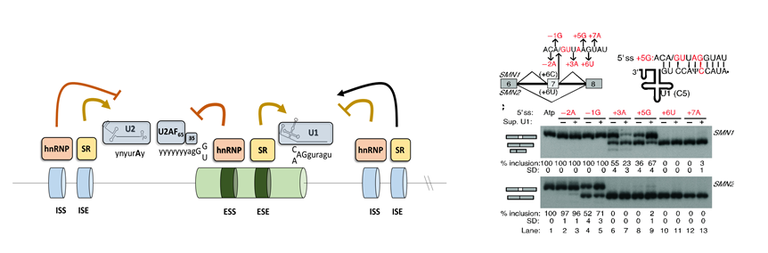
    <description>La maggior parte dei geni va incontro a splicing alternativo e molte mutazioni (&gt;30%) vanno ad alterare questo processo di maturazione dell'RNA. Attualmente sono disponibili diverse strategie in grado di modulare il processamento dell'RNA messaggero. Nel nostro laboratorio vengono esplorati questi approcci di modulazione al fine di ripristinare il corretto processamento dell'RNA per scopi terapeutici.</description>
    <content:encoded xmlns:content="http://purl.org/rss/1.0/modules/content/"><![CDATA[<p><img src="https://old.sveb.unife.it/it/ricerca-1/laboratori/biologia-molecolare-emostasi/temi-di-ricerca/RNAbased2.PNG/image_large" alt="" class="image-inline" title="" /></p>
<p> </p>
<h3><strong>Pubblicazioni:</strong></h3>
<p><strong><br /></strong></p>
<p style="text-align:justify; "><a href="https://pubmed.ncbi.nlm.nih.gov/34906067/"><strong><span>OTC intron 4 variations mediate pathogenic splicing patterns caused by the c.386G&gt;A mutation in humans and spfash mice, and govern susceptibility to RNA-based therapies.</span></strong></a><span> </span><span>Sacchetto C, Peretto L, Baralle F, Maestri I, Tassi F, </span><a href="https://www.ncbi.nlm.nih.gov/pubmed/?term=Bernardi%20F%5BAuthor%5D&amp;cauthor=true&amp;cauthor_uid=31613176"><span>Bernardi F</span></a><span>, van de Graaf SFJ, Pagani F, </span><a href="https://www.ncbi.nlm.nih.gov/pubmed/?term=Pinotti%20M%5BAuthor%5D&amp;cauthor=true&amp;cauthor_uid=31613176"><span>Pinotti M</span></a><span>, </span><a href="https://www.ncbi.nlm.nih.gov/pubmed/?term=Balestra%20D%5BAuthor%5D&amp;cauthor=true&amp;cauthor_uid=32244944"><span class="highlight"><span>Balestra D</span></span></a><span>.</span></p>
<p style="text-align:justify; "><a href="https://pubmed.ncbi.nlm.nih.gov/34906067/"><span>Mol Med</span></a><span>. 2021 Dec 14;27(1):157.</span></p>
<p style="text-align:justify; "><span>doi: 10.1186/s10020-021-00418-9.</span></p>
<p style="text-align:justify; "><span><br /></span></p>
<p style="text-align:justify; "><span> </span></p>
<p style="text-align:justify; "><a href="https://pubmed.ncbi.nlm.nih.gov/34242570/"><strong><span>Dissection of pleiotropic effects of variants in and adjacent to F8 exon 19 and rescue of mRNA splicing and protein function.</span></strong></a><span> </span><a href="https://www.ncbi.nlm.nih.gov/pubmed/?term=Lombardi%20S%5BAuthor%5D&amp;cauthor=true&amp;cauthor_uid=31613176"><span>Lombardi S</span></a><span>, Leo G, Merlin S, Follenzi A, McVey JH, Maestri I, </span><a href="https://www.ncbi.nlm.nih.gov/pubmed/?term=Bernardi%20F%5BAuthor%5D&amp;cauthor=true&amp;cauthor_uid=31613176"><span>Bernardi F</span></a><span>, </span><a href="https://www.ncbi.nlm.nih.gov/pubmed/?term=Pinotti%20M%5BAuthor%5D&amp;cauthor=true&amp;cauthor_uid=31613176"><span>Pinotti M</span></a><span>, </span><a href="https://www.ncbi.nlm.nih.gov/pubmed/?term=Balestra%20D%5BAuthor%5D&amp;cauthor=true&amp;cauthor_uid=32244944"><span class="highlight"><span>Balestra D</span></span></a><span>.</span></p>
<p style="text-align:justify; "><a href="https://pubmed.ncbi.nlm.nih.gov/34242570/"><span>Am J Hum Genet</span></a><span>. 2021 Aug 5;108(8):1512-1525.</span></p>
<p class="mceContentBody documentContent"><span style="text-align: justify; ">doi: 10.1016/j.ajhg.2021.06.012.</span></p>
<p class="mceContentBody documentContent"> </p>
<p><a href="https://pubmed.ncbi.nlm.nih.gov/33228018/"><strong>An Exon-Specific Small Nuclear U1 RNA (ExSpeU1) Improves Hepatic OTC Expression in a Splicing-Defective spf/ash Mouse Model of Ornithine Transcarbamylase Deficiency.</strong></a> <a href="https://www.ncbi.nlm.nih.gov/pubmed/?term=Balestra%20D%5BAuthor%5D&amp;cauthor=true&amp;cauthor_uid=32244944"><span class="highlight">Balestra D</span></a>, <a href="https://www.ncbi.nlm.nih.gov/pubmed/?term=Ferrarese%20M%5BAuthor%5D&amp;cauthor=true&amp;cauthor_uid=31613176">Ferrarese M</a>, <a href="https://www.ncbi.nlm.nih.gov/pubmed/?term=Lombardi%20S%5BAuthor%5D&amp;cauthor=true&amp;cauthor_uid=31613176">Lombardi S</a>, Ziliotto N, <a href="https://www.ncbi.nlm.nih.gov/pubmed/?term=Branchini%20A%5BAuthor%5D&amp;cauthor=true&amp;cauthor_uid=31613176">Branchini A</a>, Petersen N, Bosma P, <a href="https://www.ncbi.nlm.nih.gov/pubmed/?term=Pinotti%20M%5BAuthor%5D&amp;cauthor=true&amp;cauthor_uid=31613176">Pinotti M</a>, van de Graaf SFJ.</p>
<p><a href="https://pubmed.ncbi.nlm.nih.gov/33228018/">Int J Mol Sci</a>. 2020 Nov 19;21(22):8735.</p>
<p>doi: 10.3390/ijms21228735.</p>
<p> </p>
<div id="_mcePaste">
<div id="_mcePaste"></div>
</div>
<p><span><a class="external-link" href="https://www.ncbi.nlm.nih.gov/pubmed/32244944"><strong>A Compensatory U1snRNA Partially Rescues FAH Splicing and Protein Expression in a Splicing-Defective Mouse Model of Tyrosinemia Type I.</strong></a></span><span> </span><a href="https://www.ncbi.nlm.nih.gov/pubmed/?term=Balestra%20D%5BAuthor%5D&amp;cauthor=true&amp;cauthor_uid=32244944"><span class="highlight">Balestra D</span></a><span>, </span><a href="https://www.ncbi.nlm.nih.gov/pubmed/?term=Scalet%20D%5BAuthor%5D&amp;cauthor=true&amp;cauthor_uid=32244944">Scalet D</a><span>, </span><a href="https://www.ncbi.nlm.nih.gov/pubmed/?term=Ferrarese%20M%5BAuthor%5D&amp;cauthor=true&amp;cauthor_uid=32244944">Ferrarese M</a><span>, </span><a href="https://www.ncbi.nlm.nih.gov/pubmed/?term=Lombardi%20S%5BAuthor%5D&amp;cauthor=true&amp;cauthor_uid=32244944">Lombardi S</a><span>, </span><a href="https://www.ncbi.nlm.nih.gov/pubmed/?term=Ziliotto%20N%5BAuthor%5D&amp;cauthor=true&amp;cauthor_uid=32244944">Ziliotto N</a><span>, </span><a href="https://www.ncbi.nlm.nih.gov/pubmed/?term=C%20Croes%20C%5BAuthor%5D&amp;cauthor=true&amp;cauthor_uid=32244944">C Croes C</a><span>, </span><a href="https://www.ncbi.nlm.nih.gov/pubmed/?term=Petersen%20N%5BAuthor%5D&amp;cauthor=true&amp;cauthor_uid=32244944">Petersen N</a><span>, </span><a href="https://www.ncbi.nlm.nih.gov/pubmed/?term=Bosma%20P%5BAuthor%5D&amp;cauthor=true&amp;cauthor_uid=32244944">Bosma P</a><span>, </span><a href="https://www.ncbi.nlm.nih.gov/pubmed/?term=Riccardi%20F%5BAuthor%5D&amp;cauthor=true&amp;cauthor_uid=32244944">Riccardi F</a><span>, </span><a href="https://www.ncbi.nlm.nih.gov/pubmed/?term=Pagani%20F%5BAuthor%5D&amp;cauthor=true&amp;cauthor_uid=32244944">Pagani F</a><span>, </span><a href="https://www.ncbi.nlm.nih.gov/pubmed/?term=Pinotti%20M%5BAuthor%5D&amp;cauthor=true&amp;cauthor_uid=32244944">Pinotti M</a><span>, </span><a href="https://www.ncbi.nlm.nih.gov/pubmed/?term=van%20de%20Graaf%20SFJ%5BAuthor%5D&amp;cauthor=true&amp;cauthor_uid=32244944">van de Graaf SFJ</a><span>.</span></p>
<p><a href="https://www.ncbi.nlm.nih.gov/pubmed/32244944#" title="International journal of molecular sciences.">Int J Mol Sci.</a> 2020 Mar 20;21(6)</p>
<p><strong>doi: 10.3390/ijms21062136</strong></p>
<p> </p>
<p><strong><a class="external-link" href="https://www.ncbi.nlm.nih.gov/pubmed/31273093">Next-generation sequencing and recombinant expression characterized aberrant splicing mechanisms and provided correction strategies in factor VII deficiency</a>.</strong> <a href="https://www.ncbi.nlm.nih.gov/pubmed/?term=Ferraresi%20P%5BAuthor%5D&amp;cauthor=true&amp;cauthor_uid=31273093">Ferraresi P</a><span>, </span><a href="https://www.ncbi.nlm.nih.gov/pubmed/?term=Balestra%20D%5BAuthor%5D&amp;cauthor=true&amp;cauthor_uid=31273093"><span class="highlight">Balestra D</span></a><span>, </span><a href="https://www.ncbi.nlm.nih.gov/pubmed/?term=Guittard%20C%5BAuthor%5D&amp;cauthor=true&amp;cauthor_uid=31273093">Guittard C</a><span>, </span><a href="https://www.ncbi.nlm.nih.gov/pubmed/?term=Buthiau%20D%5BAuthor%5D&amp;cauthor=true&amp;cauthor_uid=31273093">Buthiau D</a><span>, </span><a href="https://www.ncbi.nlm.nih.gov/pubmed/?term=Pan-Petesh%20B%5BAuthor%5D&amp;cauthor=true&amp;cauthor_uid=31273093">Pan-Petesh B</a><span>, </span><a href="https://www.ncbi.nlm.nih.gov/pubmed/?term=Maestri%20I%5BAuthor%5D&amp;cauthor=true&amp;cauthor_uid=31273093">Maestri I</a><span>, </span><a href="https://www.ncbi.nlm.nih.gov/pubmed/?term=Farah%20R%5BAuthor%5D&amp;cauthor=true&amp;cauthor_uid=31273093">Farah R</a><span>, </span><a href="https://www.ncbi.nlm.nih.gov/pubmed/?term=Pinotti%20M%5BAuthor%5D&amp;cauthor=true&amp;cauthor_uid=31273093">Pinotti M</a><span>, </span><a href="https://www.ncbi.nlm.nih.gov/pubmed/?term=Giansily-Blaizot%20M%5BAuthor%5D&amp;cauthor=true&amp;cauthor_uid=31273093">Giansily-Blaizot M</a><span>.</span></p>
<p><span> </span><span><a href="https://www.ncbi.nlm.nih.gov/pubmed/31273093#" title="Haematologica.">Haematologica.</a></span><span> 2020 Mar;105(3):829-837</span></p>
<p class="mceContentBody documentContent"><span>doi: 10.3324/haematol.2019.217539</span></p>
<p class="mceContentBody documentContent"> </p>
<p><strong><a class="external-link" href="https://www.ncbi.nlm.nih.gov/pubmed/31649737">An Altered Splicing Registry Explains the Differential ExSpeU1-Mediated Rescue of Splicing Mutations Causing Haemophilia A</a>.</strong> <a href="https://www.ncbi.nlm.nih.gov/pubmed/?term=Balestra%20D%5BAuthor%5D&amp;cauthor=true&amp;cauthor_uid=31649737"><span class="highlight">Balestra D</span></a>1, <a href="https://www.ncbi.nlm.nih.gov/pubmed/?term=Maestri%20I%5BAuthor%5D&amp;cauthor=true&amp;cauthor_uid=31649737">Maestri I</a>, <a href="https://www.ncbi.nlm.nih.gov/pubmed/?term=Branchini%20A%5BAuthor%5D&amp;cauthor=true&amp;cauthor_uid=31649737">Branchini A</a>, <a href="https://www.ncbi.nlm.nih.gov/pubmed/?term=Ferrarese%20M%5BAuthor%5D&amp;cauthor=true&amp;cauthor_uid=31649737">Ferrarese M</a>, <a href="https://www.ncbi.nlm.nih.gov/pubmed/?term=Bernardi%20F%5BAuthor%5D&amp;cauthor=true&amp;cauthor_uid=31649737">Bernardi F</a>, <a href="https://www.ncbi.nlm.nih.gov/pubmed/?term=Pinotti%20M%5BAuthor%5D&amp;cauthor=true&amp;cauthor_uid=31649737">Pinotti M</a>.</p>
<p><a href="https://www.ncbi.nlm.nih.gov/pubmed/31649737#" title="Frontiers in genetics.">Front Genet.</a> 2019 Oct 10;10:974.</p>
<p>doi: 10.3389/fgene.2019.00974</p>
<p class="mceContentBody documentContent"> </p>
<p><strong><a class="external-link" href="https://www.ncbi.nlm.nih.gov/pubmed/31450582">Splicing Mutations Impairing CDKL5 Expression and Activity Can be Efficiently Rescued by U1snRNA-Based Therapy</a>.</strong> <a href="https://www.ncbi.nlm.nih.gov/pubmed/?term=Balestra%20D%5BAuthor%5D&amp;cauthor=true&amp;cauthor_uid=31450582"><span class="highlight">Balestra D</span></a>, <a href="https://www.ncbi.nlm.nih.gov/pubmed/?term=Giorgio%20D%5BAuthor%5D&amp;cauthor=true&amp;cauthor_uid=31450582">Giorgio D</a>, <a href="https://www.ncbi.nlm.nih.gov/pubmed/?term=Bizzotto%20M%5BAuthor%5D&amp;cauthor=true&amp;cauthor_uid=31450582">Bizzotto M</a>, <a href="https://www.ncbi.nlm.nih.gov/pubmed/?term=Fazzari%20M%5BAuthor%5D&amp;cauthor=true&amp;cauthor_uid=31450582">Fazzari M</a>, <a href="https://www.ncbi.nlm.nih.gov/pubmed/?term=Ben%20Zeev%20B%5BAuthor%5D&amp;cauthor=true&amp;cauthor_uid=31450582">Ben Zeev B</a>, <a href="https://www.ncbi.nlm.nih.gov/pubmed/?term=Pinotti%20M%5BAuthor%5D&amp;cauthor=true&amp;cauthor_uid=31450582">Pinotti M</a>, <a href="https://www.ncbi.nlm.nih.gov/pubmed/?term=Landsberger%20N%5BAuthor%5D&amp;cauthor=true&amp;cauthor_uid=31450582">Landsberger N</a>, <a href="https://www.ncbi.nlm.nih.gov/pubmed/?term=Frasca%20A%5BAuthor%5D&amp;cauthor=true&amp;cauthor_uid=31450582">Frasca A</a>.</p>
<p class="documentContent mceContentBody"><a href="https://www.ncbi.nlm.nih.gov/pubmed/31450582#" title="International journal of molecular sciences.">Int J Mol Sci.</a> 2019 Aug 24;20(17)</p>
<p>doi: 10.3390/ijms20174130</p>
<p class="mceContentBody documentContent"> </p>
<p><a class="external-link" href="https://www.ncbi.nlm.nih.gov/pubmed/31234407"><strong>Molecular Mechanisms and Determinants of Innovative Correction Approaches in Coagulation Factor Deficiencies.</strong></a><a href="https://www.ncbi.nlm.nih.gov/pubmed/?term=Balestra%20D%5BAuthor%5D&amp;cauthor=true&amp;cauthor_uid=31234407"><span class="highlight">Balestra D</span></a>, <a href="https://www.ncbi.nlm.nih.gov/pubmed/?term=Branchini%20A%5BAuthor%5D&amp;cauthor=true&amp;cauthor_uid=31234407">Branchini A</a>.</p>
<p class="mceContentBody documentContent"><a href="https://www.ncbi.nlm.nih.gov/pubmed/31234407#" title="International journal of molecular sciences.">Int J Mol Sci.</a> 2019 Jun 21;20(12).</p>
<p class="mceContentBody documentContent">doi: 10.3390/ijms20123036</p>
<p class="mceContentBody documentContent"> </p>
<p><strong><a class="external-link" href="https://www.ncbi.nlm.nih.gov/pubmed/30408273">Disease-causing variants of the conserved +2T of 5' splice sites can be rescued by engineered U1snRNAs</a>.</strong> <a href="https://www.ncbi.nlm.nih.gov/pubmed/?term=Scalet%20D%5BAuthor%5D&amp;cauthor=true&amp;cauthor_uid=30408273">Scalet D</a><span>, </span><a href="https://www.ncbi.nlm.nih.gov/pubmed/?term=Maestri%20I%5BAuthor%5D&amp;cauthor=true&amp;cauthor_uid=30408273">Maestri I</a><span>, </span><a href="https://www.ncbi.nlm.nih.gov/pubmed/?term=Branchini%20A%5BAuthor%5D&amp;cauthor=true&amp;cauthor_uid=30408273">Branchini A</a><span>, </span><a href="https://www.ncbi.nlm.nih.gov/pubmed/?term=Bernardi%20F%5BAuthor%5D&amp;cauthor=true&amp;cauthor_uid=30408273">Bernardi F</a><span>, </span><a href="https://www.ncbi.nlm.nih.gov/pubmed/?term=Pinotti%20M%5BAuthor%5D&amp;cauthor=true&amp;cauthor_uid=30408273">Pinotti M</a><span>, </span><a href="https://www.ncbi.nlm.nih.gov/pubmed/?term=Balestra%20D%5BAuthor%5D&amp;cauthor=true&amp;cauthor_uid=30408273"><span class="highlight">Balestra D</span></a><span>.</span></p>
<p><span> </span><span><a href="https://www.ncbi.nlm.nih.gov/pubmed/30408273#" title="Human mutation.">Hum Mutat.</a></span><span> 2019 Jan;40(1):48-52.</span></p>
<p><span> </span><span>doi: 10.1002/humu.23680</span></p>
<div class="cit"><span><br /></span></div>
<p><strong>The somatic FAH C.1061C&gt;A change counteracts the frequent FAH c.1062+5G&gt;A mutation and permits U1snRNA-based splicing correction.</strong> <a href="https://www.ncbi.nlm.nih.gov/pubmed/?term=Scalet%20D%5BAuthor%5D&amp;cauthor=true&amp;cauthor_uid=29497141">Scalet D</a><span>, </span><a href="https://www.ncbi.nlm.nih.gov/pubmed/?term=Sacchetto%20C%5BAuthor%5D&amp;cauthor=true&amp;cauthor_uid=29497141">Sacchetto C</a><span>, </span><a href="https://www.ncbi.nlm.nih.gov/pubmed/?term=Bernardi%20F%5BAuthor%5D&amp;cauthor=true&amp;cauthor_uid=29497141">Bernardi F</a><span>, </span><a href="https://www.ncbi.nlm.nih.gov/pubmed/?term=Pinotti%20M%5BAuthor%5D&amp;cauthor=true&amp;cauthor_uid=29497141">Pinotti M</a><span>, </span><a href="https://www.ncbi.nlm.nih.gov/pubmed/?term=van%20de%20Graaf%20SFJ%5BAuthor%5D&amp;cauthor=true&amp;cauthor_uid=29497141">van de Graaf SFJ</a><span>, </span><a href="https://www.ncbi.nlm.nih.gov/pubmed/?term=Balestra%20D%5BAuthor%5D&amp;cauthor=true&amp;cauthor_uid=29497141"><span class="highlight">Balestra D</span></a><span>.<br /></span><span><a href="https://www.ncbi.nlm.nih.gov/pubmed/29497141#" title="Journal of human genetics.">J Hum Genet.</a></span><span> 2018 May;63(5):683-686.</span></p>
<p class="mceContentBody documentContent"><span>doi: 10.1038/s10038-018-0427-x</span></p>
<p class="mceContentBody documentContent"> </p>
<p class="mceContentBody documentContent"><span><strong>Exploring Splicing-Switching Molecules For Seckel Syndrome Therapy. </strong></span><a href="https://www.ncbi.nlm.nih.gov/pubmed/?term=Scalet%20D%5BAuthor%5D&amp;cauthor=true&amp;cauthor_uid=27639833">Scalet D</a><span>, </span><a href="https://www.ncbi.nlm.nih.gov/pubmed/?term=Balestra%20D%5BAuthor%5D&amp;cauthor=true&amp;cauthor_uid=27639833"><span class="highlight">Balestra D</span></a><span>, </span><a href="https://www.ncbi.nlm.nih.gov/pubmed/?term=Rohban%20S%5BAuthor%5D&amp;cauthor=true&amp;cauthor_uid=27639833">Rohban S</a><span>, </span><a href="https://www.ncbi.nlm.nih.gov/pubmed/?term=Bovolenta%20M%5BAuthor%5D&amp;cauthor=true&amp;cauthor_uid=27639833">Bovolenta M</a><span>, </span><a href="https://www.ncbi.nlm.nih.gov/pubmed/?term=Perrone%20D%5BAuthor%5D&amp;cauthor=true&amp;cauthor_uid=27639833">Perrone D</a><span>, </span><a href="https://www.ncbi.nlm.nih.gov/pubmed/?term=Bernardi%20F%5BAuthor%5D&amp;cauthor=true&amp;cauthor_uid=27639833">Bernardi F</a><span>, </span><a href="https://www.ncbi.nlm.nih.gov/pubmed/?term=Campaner%20S%5BAuthor%5D&amp;cauthor=true&amp;cauthor_uid=27639833">Campaner S</a><span>, </span><a href="https://www.ncbi.nlm.nih.gov/pubmed/?term=Pinotti%20M%5BAuthor%5D&amp;cauthor=true&amp;cauthor_uid=27639833">Pinotti M</a><span>.</span></p>
<p class="mceContentBody documentContent"><span> </span><span><a href="https://www.ncbi.nlm.nih.gov/pubmed/27639833#" title="Biochimica et biophysica acta. Molecular basis of disease.">Biochim Biophys Acta Mol Basis Dis.</a></span><span> 2017 Jan;1863(1):15-20.</span></p>
<p class="mceContentBody documentContent"><span> doi: 10.1016/j.bbadis.2016.09.011.</span></p>
<p class="mceContentBody documentContent"> </p>
<p><strong><a class="external-link" href="https://www.ncbi.nlm.nih.gov/pubmed/27701399">An Exon-Specific U1snRNA Induces a Robust Factor IX Activity in Mice Expressing Multiple Human FIX Splicing Mutants</a>.</strong> <a href="https://www.ncbi.nlm.nih.gov/pubmed/?term=Balestra%20D%5BAuthor%5D&amp;cauthor=true&amp;cauthor_uid=27701399"><span class="highlight">Balestra D</span></a>, <a href="https://www.ncbi.nlm.nih.gov/pubmed/?term=Scalet%20D%5BAuthor%5D&amp;cauthor=true&amp;cauthor_uid=27701399">Scalet D</a>, <a href="https://www.ncbi.nlm.nih.gov/pubmed/?term=Pagani%20F%5BAuthor%5D&amp;cauthor=true&amp;cauthor_uid=27701399">Pagani F</a>, <a href="https://www.ncbi.nlm.nih.gov/pubmed/?term=Rogalska%20ME%5BAuthor%5D&amp;cauthor=true&amp;cauthor_uid=27701399">Rogalska ME</a>, <a href="https://www.ncbi.nlm.nih.gov/pubmed/?term=Mari%20R%5BAuthor%5D&amp;cauthor=true&amp;cauthor_uid=27701399">Mari R</a>, <a href="https://www.ncbi.nlm.nih.gov/pubmed/?term=Bernardi%20F%5BAuthor%5D&amp;cauthor=true&amp;cauthor_uid=27701399">Bernardi F</a>, <a href="https://www.ncbi.nlm.nih.gov/pubmed/?term=Pinotti%20M%5BAuthor%5D&amp;cauthor=true&amp;cauthor_uid=27701399">Pinotti M</a>.</p>
<p class="documentContent mceContentBody"><a href="https://www.ncbi.nlm.nih.gov/pubmed/27701399#" title="Molecular therapy. Nucleic acids.">Mol Ther Nucleic Acids.</a> 2016 Oct 4;5(10):e370.</p>
<p class="documentContent mceContentBody">doi: 10.1038/mtna.2016.77</p>
<p class="mceContentBody documentContent"> </p>
<p><strong><a class="external-link" href="https://www.ncbi.nlm.nih.gov/pubmed/27227676">Molecular Basis and Therapeutic Strategies to Rescue Factor IX Variants That Affect Splicing and Protein Function</a>.</strong> <a href="https://www.ncbi.nlm.nih.gov/pubmed/?term=Tajnik%20M%5BAuthor%5D&amp;cauthor=true&amp;cauthor_uid=27227676">Tajnik M</a><span>, </span><a href="https://www.ncbi.nlm.nih.gov/pubmed/?term=Rogalska%20ME%5BAuthor%5D&amp;cauthor=true&amp;cauthor_uid=27227676">Rogalska ME</a><span>, </span><a href="https://www.ncbi.nlm.nih.gov/pubmed/?term=Bussani%20E%5BAuthor%5D&amp;cauthor=true&amp;cauthor_uid=27227676">Bussani E</a><span>, </span><a href="https://www.ncbi.nlm.nih.gov/pubmed/?term=Barbon%20E%5BAuthor%5D&amp;cauthor=true&amp;cauthor_uid=27227676">Barbon E</a><span>, </span><a href="https://www.ncbi.nlm.nih.gov/pubmed/?term=Balestra%20D%5BAuthor%5D&amp;cauthor=true&amp;cauthor_uid=27227676"><span class="highlight">Balestra D</span></a><span>, </span><a href="https://www.ncbi.nlm.nih.gov/pubmed/?term=Pinotti%20M%5BAuthor%5D&amp;cauthor=true&amp;cauthor_uid=27227676">Pinotti M</a><span>, </span><a href="https://www.ncbi.nlm.nih.gov/pubmed/?term=Pagani%20F%5BAuthor%5D&amp;cauthor=true&amp;cauthor_uid=27227676">Pagani F</a><span>.<br /></span><span><a href="https://www.ncbi.nlm.nih.gov/pubmed/27227676#" title="PLoS genetics.">PLoS Genet.</a></span><span> 2016 May 26;12(5):e1006082.</span></p>
<p class="mceContentBody documentContent"><span>doi: 10.1371/journal.pgen.1006082</span></p>
<p class="mceContentBody documentContent"> </p>
<div class="supp">
<p><strong><a class="external-link" href="https://www.ncbi.nlm.nih.gov/pubmed/26063760">Regulation of a strong F9 cryptic 5'ss by intrinsic elements and by combination of tailored U1snRNAs with antisense oligonucleotides</a>.</strong> <a href="https://www.ncbi.nlm.nih.gov/pubmed/?term=Balestra%20D%5BAuthor%5D&amp;cauthor=true&amp;cauthor_uid=26063760"><span class="highlight">Balestra D</span></a><span>, </span><a href="https://www.ncbi.nlm.nih.gov/pubmed/?term=Barbon%20E%5BAuthor%5D&amp;cauthor=true&amp;cauthor_uid=26063760">Barbon E</a><span>, </span><a href="https://www.ncbi.nlm.nih.gov/pubmed/?term=Scalet%20D%5BAuthor%5D&amp;cauthor=true&amp;cauthor_uid=26063760">Scalet D</a><span>, </span><a href="https://www.ncbi.nlm.nih.gov/pubmed/?term=Cavallari%20N%5BAuthor%5D&amp;cauthor=true&amp;cauthor_uid=26063760">Cavallari N</a><span>, </span><a href="https://www.ncbi.nlm.nih.gov/pubmed/?term=Perrone%20D%5BAuthor%5D&amp;cauthor=true&amp;cauthor_uid=26063760">Perrone D</a><span>, </span><a href="https://www.ncbi.nlm.nih.gov/pubmed/?term=Zanibellato%20S%5BAuthor%5D&amp;cauthor=true&amp;cauthor_uid=26063760">Zanibellato S</a><span>, </span><a href="https://www.ncbi.nlm.nih.gov/pubmed/?term=Bernardi%20F%5BAuthor%5D&amp;cauthor=true&amp;cauthor_uid=26063760">Bernardi F</a><span>, </span><a href="https://www.ncbi.nlm.nih.gov/pubmed/?term=Pinotti%20M%5BAuthor%5D&amp;cauthor=true&amp;cauthor_uid=26063760">Pinotti M</a><span>.</span></p>
<p><span> </span><span><a href="https://www.ncbi.nlm.nih.gov/pubmed/26063760#" title="Human molecular genetics.">Hum Mol Genet.</a></span><span> 2015 Sep 1;24(17):4809-16</span></p>
<div class="supp"><span>doi: 10.1093/hmg/ddv205</span></div>
<div class="supp"><span><br /></span></div>
<div class="supp">
<div class="cit"></div>
<p><strong><a class="external-link" href="https://www.ncbi.nlm.nih.gov/pubmed/24738135">An engineered U1 small nuclear RNA rescues splicing defective coagulation F7 gene expression in mice</a>.</strong> <a href="https://www.ncbi.nlm.nih.gov/pubmed/?term=Balestra%20D%5BAuthor%5D&amp;cauthor=true&amp;cauthor_uid=24738135"><span class="highlight">Balestra D</span></a><span>, </span><a href="https://www.ncbi.nlm.nih.gov/pubmed/?term=Faella%20A%5BAuthor%5D&amp;cauthor=true&amp;cauthor_uid=24738135">Faella A</a><span>, </span><a href="https://www.ncbi.nlm.nih.gov/pubmed/?term=Margaritis%20P%5BAuthor%5D&amp;cauthor=true&amp;cauthor_uid=24738135">Margaritis P</a><span>, </span><a href="https://www.ncbi.nlm.nih.gov/pubmed/?term=Cavallari%20N%5BAuthor%5D&amp;cauthor=true&amp;cauthor_uid=24738135">Cavallari N</a><span>, </span><a href="https://www.ncbi.nlm.nih.gov/pubmed/?term=Pagani%20F%5BAuthor%5D&amp;cauthor=true&amp;cauthor_uid=24738135">Pagani F</a><span>, </span><a href="https://www.ncbi.nlm.nih.gov/pubmed/?term=Bernardi%20F%5BAuthor%5D&amp;cauthor=true&amp;cauthor_uid=24738135">Bernardi F</a><span>, </span><a href="https://www.ncbi.nlm.nih.gov/pubmed/?term=Arruda%20VR%5BAuthor%5D&amp;cauthor=true&amp;cauthor_uid=24738135">Arruda VR</a><span>, </span><a href="https://www.ncbi.nlm.nih.gov/pubmed/?term=Pinotti%20M%5BAuthor%5D&amp;cauthor=true&amp;cauthor_uid=24738135">Pinotti M</a><span>.</span></p>
<p><span> </span><span><a href="https://www.ncbi.nlm.nih.gov/pubmed/24738135#" title="Journal of thrombosis and haemostasis : JTH.">J Thromb Haemost.</a> </span><span>2014 Feb;12(2):177-85.</span></p>
<div class="cit"><span>doi: 10.1111/jth.12471</span></div>
<div class="cit"><span><br /></span></div>
<p><strong><a class="external-link" href="https://www.ncbi.nlm.nih.gov/pubmed/22426302">Activation of a cryptic splice site in a potentially lethal coagulation defect accounts for a functional protein variant</a>.</strong> <a href="https://www.ncbi.nlm.nih.gov/pubmed/?term=Cavallari%20N%5BAuthor%5D&amp;cauthor=true&amp;cauthor_uid=22426302">Cavallari N</a><span>, </span><a href="https://www.ncbi.nlm.nih.gov/pubmed/?term=Balestra%20D%5BAuthor%5D&amp;cauthor=true&amp;cauthor_uid=22426302"><span class="highlight">Balestra D</span></a><span>, </span><a href="https://www.ncbi.nlm.nih.gov/pubmed/?term=Branchini%20A%5BAuthor%5D&amp;cauthor=true&amp;cauthor_uid=22426302">Branchini A</a><span>, </span><a href="https://www.ncbi.nlm.nih.gov/pubmed/?term=Maestri%20I%5BAuthor%5D&amp;cauthor=true&amp;cauthor_uid=22426302">Maestri I</a><span>, </span><a href="https://www.ncbi.nlm.nih.gov/pubmed/?term=Chuamsunrit%20A%5BAuthor%5D&amp;cauthor=true&amp;cauthor_uid=22426302">Chuamsunrit A</a><span>, </span><a href="https://www.ncbi.nlm.nih.gov/pubmed/?term=Sasanakul%20W%5BAuthor%5D&amp;cauthor=true&amp;cauthor_uid=22426302">Sasanakul W</a><span>, </span><a href="https://www.ncbi.nlm.nih.gov/pubmed/?term=Mariani%20G%5BAuthor%5D&amp;cauthor=true&amp;cauthor_uid=22426302">Mariani G</a><span>, </span><a href="https://www.ncbi.nlm.nih.gov/pubmed/?term=Pagani%20F%5BAuthor%5D&amp;cauthor=true&amp;cauthor_uid=22426302">Pagani F</a><span>, </span><a href="https://www.ncbi.nlm.nih.gov/pubmed/?term=Bernardi%20F%5BAuthor%5D&amp;cauthor=true&amp;cauthor_uid=22426302">Bernardi F</a><span>, </span><a href="https://www.ncbi.nlm.nih.gov/pubmed/?term=Pinotti%20M%5BAuthor%5D&amp;cauthor=true&amp;cauthor_uid=22426302">Pinotti M</a><span>.</span></p>
<p class="supp"><span><a href="https://www.ncbi.nlm.nih.gov/pubmed/22426302#" title="Biochimica et biophysica acta.">Biochim Biophys Acta.</a></span><span> 2012 Jul;1822(7):1109-13.</span></p>
<p class="supp"><span>doi: 10.1016/j.bbadis.2012.03.001</span></p>
<p class="supp"> </p>
<p><strong><a class="external-link" href="https://www.ncbi.nlm.nih.gov/pubmed/22362925">An exon-specific U1 small nuclear RNA (snRNA) strategy to correct splicing defects</a>.</strong> <a href="https://www.ncbi.nlm.nih.gov/pubmed/?term=Fernandez%20Alanis%20E%5BAuthor%5D&amp;cauthor=true&amp;cauthor_uid=22362925">Fernandez Alanis E</a>, <a href="https://www.ncbi.nlm.nih.gov/pubmed/?term=Pinotti%20M%5BAuthor%5D&amp;cauthor=true&amp;cauthor_uid=22362925">Pinotti M</a>, <a href="https://www.ncbi.nlm.nih.gov/pubmed/?term=Dal%20Mas%20A%5BAuthor%5D&amp;cauthor=true&amp;cauthor_uid=22362925">Dal Mas A</a>, <a href="https://www.ncbi.nlm.nih.gov/pubmed/?term=Balestra%20D%5BAuthor%5D&amp;cauthor=true&amp;cauthor_uid=22362925"><span class="highlight">Balestra D</span></a>, <a href="https://www.ncbi.nlm.nih.gov/pubmed/?term=Cavallari%20N%5BAuthor%5D&amp;cauthor=true&amp;cauthor_uid=22362925">Cavallari N</a>, <a href="https://www.ncbi.nlm.nih.gov/pubmed/?term=Rogalska%20ME%5BAuthor%5D&amp;cauthor=true&amp;cauthor_uid=22362925">Rogalska ME</a>, <a href="https://www.ncbi.nlm.nih.gov/pubmed/?term=Bernardi%20F%5BAuthor%5D&amp;cauthor=true&amp;cauthor_uid=22362925">Bernardi F</a>, <a href="https://www.ncbi.nlm.nih.gov/pubmed/?term=Pagani%20F%5BAuthor%5D&amp;cauthor=true&amp;cauthor_uid=22362925">Pagani F</a>.</p>
<p class="supp"><a href="https://www.ncbi.nlm.nih.gov/pubmed/22362925#" title="Human molecular genetics.">Hum Mol Genet.</a> 2012 Jun 1;21(11):2389-98.</p>
<p class="supp">doi: 10.1093/hmg/dds045</p>
<p class="supp"> </p>
<p><strong><a class="external-link" href="https://www.ncbi.nlm.nih.gov/pubmed/19387004">Rescue of coagulation factor VII function by the U1+5A snRNA</a>.</strong> <a href="https://www.ncbi.nlm.nih.gov/pubmed/?term=Pinotti%20M%5BAuthor%5D&amp;cauthor=true&amp;cauthor_uid=19387004">Pinotti M</a><span>1</span><span>, </span><a href="https://www.ncbi.nlm.nih.gov/pubmed/?term=Balestra%20D%5BAuthor%5D&amp;cauthor=true&amp;cauthor_uid=19387004"><span class="highlight">Balestra D</span></a><span>, </span><a href="https://www.ncbi.nlm.nih.gov/pubmed/?term=Rizzotto%20L%5BAuthor%5D&amp;cauthor=true&amp;cauthor_uid=19387004">Rizzotto L</a><span>, </span><a href="https://www.ncbi.nlm.nih.gov/pubmed/?term=Maestri%20I%5BAuthor%5D&amp;cauthor=true&amp;cauthor_uid=19387004">Maestri I</a><span>, </span><a href="https://www.ncbi.nlm.nih.gov/pubmed/?term=Pagani%20F%5BAuthor%5D&amp;cauthor=true&amp;cauthor_uid=19387004">Pagani F</a><span>, </span><a href="https://www.ncbi.nlm.nih.gov/pubmed/?term=Bernardi%20F%5BAuthor%5D&amp;cauthor=true&amp;cauthor_uid=19387004">Bernardi F</a><span>.</span></p>
<p class="supp"><span><a href="https://www.ncbi.nlm.nih.gov/pubmed/19387004#" title="Blood.">Blood.</a></span><span> 2009 Jun 18;113(25):6461-4.</span></p>
<p class="supp"><span>doi: 10.1182/blood-2009-03-207613</span></p>
<p class="supp"><span><br /></span></p>
<p><strong><a class="external-link" href="https://www.ncbi.nlm.nih.gov/pubmed/18156490">U1-snRNA-mediated rescue of mRNA processing in severe factor VII deficiency</a>.</strong> <a href="https://www.ncbi.nlm.nih.gov/pubmed/?term=Pinotti%20M%5BAuthor%5D&amp;cauthor=true&amp;cauthor_uid=18156490">Pinotti M</a><span>, </span><a href="https://www.ncbi.nlm.nih.gov/pubmed/?term=Rizzotto%20L%5BAuthor%5D&amp;cauthor=true&amp;cauthor_uid=18156490">Rizzotto L</a><span>, </span><a href="https://www.ncbi.nlm.nih.gov/pubmed/?term=Balestra%20D%5BAuthor%5D&amp;cauthor=true&amp;cauthor_uid=18156490"><span class="highlight">Balestra D</span></a><span>, </span><a href="https://www.ncbi.nlm.nih.gov/pubmed/?term=Lewandowska%20MA%5BAuthor%5D&amp;cauthor=true&amp;cauthor_uid=18156490">Lewandowska MA</a><span>, </span><a href="https://www.ncbi.nlm.nih.gov/pubmed/?term=Cavallari%20N%5BAuthor%5D&amp;cauthor=true&amp;cauthor_uid=18156490">Cavallari N</a><span>, </span><a href="https://www.ncbi.nlm.nih.gov/pubmed/?term=Marchetti%20G%5BAuthor%5D&amp;cauthor=true&amp;cauthor_uid=18156490">Marchetti G</a><span>, </span><a href="https://www.ncbi.nlm.nih.gov/pubmed/?term=Bernardi%20F%5BAuthor%5D&amp;cauthor=true&amp;cauthor_uid=18156490">Bernardi F</a><span>, </span><a href="https://www.ncbi.nlm.nih.gov/pubmed/?term=Pagani%20F%5BAuthor%5D&amp;cauthor=true&amp;cauthor_uid=18156490">Pagani F</a><span>.</span></p>
<p class="supp"><span><a href="https://www.ncbi.nlm.nih.gov/pubmed/18156490#" title="Blood.">Blood.</a></span><span> 2008 Mar 1;111(5):2681-4.</span></p>
<p class="supp"><span> </span></p>
<dt><span>doi:<span> <a href="https://doi.org/10.1182/blood-2007-10-117440" target="_blank">1</a></span><a href="https://doi.org/10.1182/blood-2007-10-117440" target="_blank">0.1182/blood-2007-10-117440</a></span></dt></div>
</div>]]></content:encoded>
    <dc:publisher>No publisher</dc:publisher>
    <dc:creator>Ferraresi Paolo</dc:creator>
    <dc:rights></dc:rights>
    <dc:date>2020-04-14T10:50:00Z</dc:date>
    <dc:type>Pagina</dc:type>
  </item>


  <item rdf:about="https://old.sveb.unife.it/it/ricerca-1/laboratori/biologia-molecolare-emostasi/temi-di-ricerca">
    <title>Temi di ricerca</title>
    <link>https://old.sveb.unife.it/it/ricerca-1/laboratori/biologia-molecolare-emostasi/temi-di-ricerca</link>
    <description>Queste le principali tematiche di ricerca nel nostro laboratorio</description>
    
    <dc:publisher>No publisher</dc:publisher>
    <dc:creator>Ferraresi Paolo</dc:creator>
    <dc:rights></dc:rights>
    <dc:date>2020-04-14T08:25:00Z</dc:date>
    <dc:type>Cartella</dc:type>
  </item>


  <item rdf:about="https://old.sveb.unife.it/it/ricerca-1/laboratori/biologia-molecolare-emostasi/la-ricerca/pubblicazioni-scientifiche-2/fattore-x">
    <title>Fattore X</title>
    <link>https://old.sveb.unife.it/it/ricerca-1/laboratori/biologia-molecolare-emostasi/la-ricerca/pubblicazioni-scientifiche-2/fattore-x</link>
    <description>E' una proteina presente nel plasma ed è responsabile della conversione della Protrombina (Fattore II) in trombina, evento chiave per la successiva formazione del coagulo. Ha come come cofattore il Fattore V.</description>
    <content:encoded xmlns:content="http://purl.org/rss/1.0/modules/content/"><![CDATA[<p><span><span>
<hr />
</span></span></p>
<div>
<p class="citation"><a title="Thrombosis research.">Thromb Res.</a> 2009 Apr;123(6):914-8. Epub 2008 Dec 23.</p>
<h1>Characterization of the intracellular signalling capacity of natural FXa mutants with reduced pro-coagulant activity.</h1>
<p class="authlist"><a href="http://www.ncbi.nlm.nih.gov/pubmed?term=%22Monti%20M%22%5BAuthor%5D">Monti M</a>, <a href="http://www.ncbi.nlm.nih.gov/pubmed?term=%22Borensztajn%20KS%22%5BAuthor%5D">Borensztajn KS</a>, <a href="http://www.ncbi.nlm.nih.gov/pubmed?term=%22Pinotti%20M%22%5BAuthor%5D">Pinotti M</a>, <a href="http://www.ncbi.nlm.nih.gov/pubmed?term=%22Canella%20A%22%5BAuthor%5D">Canella A</a>, <a href="http://www.ncbi.nlm.nih.gov/pubmed?term=%22Branchini%20A%22%5BAuthor%5D">Branchini A</a>, <a href="http://www.ncbi.nlm.nih.gov/pubmed?term=%22Marchetti%20G%22%5BAuthor%5D">Marchetti G</a>, <a href="http://www.ncbi.nlm.nih.gov/pubmed?term=%22Reitsma%20PH%22%5BAuthor%5D">Reitsma PH</a>, <a href="http://www.ncbi.nlm.nih.gov/pubmed?term=%22Bernardi%20F%22%5BAuthor%5D">Bernardi F</a>, <a href="http://www.ncbi.nlm.nih.gov/pubmed?term=%22Spek%20CA%22%5BAuthor%5D">Spek CA</a>.</p>
<p class="aff">Department of Biochemistry and Molecular Biology, University of Ferrara, Italy. mntmno@unife.it</p>
<h3>Abstract</h3>
<p>INTRODUCTION: Factor X (FX) is a serine-protease playing a crucial role in the blood coagulation pathway and triggering intracellular signalling in a variety of cells via protease-activated receptors (PARs). By exploiting naturally occurring variants (V342A and G381D, catalytic domain; E19A, gamma-carboxyglutamic acid (GLA)-rich domain), we investigated the relationship between the pro-coagulant activity and the signal transduction capacity of FX.</p>
<p>MATERIALS AND METHODS: Recombinant FX (rFX) variants were expressed in Human Embryonic Kidney cells and purified by immunoaffinity chromatography. Activated rFX (rFXa) variants were characterized for pro-coagulant, amidolytic and thrombin generation activity. rFXa signalling was assessed through evaluation of extracellular signal-regulated kinase 1 and 2 (ERK1/2) phosphorylation in C2C12 myoblasts.</p>
<p>RESULTS AND CONCLUSIONS: rFX variants showed reduced (rFX-342A, 29%; rFX-19A, 12%) or not detectable (rFX-381D) amidolytic activity. Thrombin generation activity in a plasma system was also decreased either upon activation by Russell's viper venom (rFX-342A, 38%; rFX-19A, 7%; rFX-381D, not detectable) or by the extrinsic pathway (rFX-342A, 36%; rFX-19A, rFX-381D, not detectable). The rFXa-381D mutant displayed little or no enzymatic activity, and did not induce any appreciable signal transduction capacity. The rFXa-342A mutant induced a dose-dependent signalling with a 50% reduced signalling capacity. At the highest concentration (174 nM), signalling progressed with a time course similar to that of rFXa-wt. Zymogen rFX-19A showed defective and incomplete activation resulting in strongly reduced enzymatic activity and signalling. Taken together our data are consistent with a close correlation between pro-coagulant activity and intracellular signalling capacity.</p>
<p class="rprtid">PMID: 19108874 [PubMed - indexed for MEDLINE]</p>
<hr />
</div>
<div><span><a><span>Biochim Biophys Acta.</span></a></span><span> 2007 Oct;1770(10):1437-40. Epub 2007 Jul 12.</span></div>
<div><span><br /></span><strong><span>Characterization of anti-coagulant properties of prenylated coumarin ferulenol.</span></strong><span><br /><br /></span><span><a href="http://www.ncbi.nlm.nih.gov/sites/entrez?Db=pubmed&amp;Cmd=Search&amp;Term=%22Monti%20M%22%5BAuthor%5D&amp;itool=EntrezSystem2.PEntrez.Pubmed.Pubmed_ResultsPanel.Pubmed_RVAbstract"><strong>Monti M</strong></a>, <a href="http://www.ncbi.nlm.nih.gov/sites/entrez?Db=pubmed&amp;Cmd=Search&amp;Term=%22Pinotti%20M%22%5BAuthor%5D&amp;itool=EntrezSystem2.PEntrez.Pubmed.Pubmed_ResultsPanel.Pubmed_RVAbstract"><strong>Pinotti M</strong></a>, <a href="http://www.ncbi.nlm.nih.gov/sites/entrez?Db=pubmed&amp;Cmd=Search&amp;Term=%22Appendino%20G%22%5BAuthor%5D&amp;itool=EntrezSystem2.PEntrez.Pubmed.Pubmed_ResultsPanel.Pubmed_RVAbstract"><strong>Appendino G</strong></a>, <a href="http://www.ncbi.nlm.nih.gov/sites/entrez?Db=pubmed&amp;Cmd=Search&amp;Term=%22Dallocchio%20F%22%5BAuthor%5D&amp;itool=EntrezSystem2.PEntrez.Pubmed.Pubmed_ResultsPanel.Pubmed_RVAbstract"><strong>Dallocchio F</strong></a>, <a href="http://www.ncbi.nlm.nih.gov/sites/entrez?Db=pubmed&amp;Cmd=Search&amp;Term=%22Bellini%20T%22%5BAuthor%5D&amp;itool=EntrezSystem2.PEntrez.Pubmed.Pubmed_ResultsPanel.Pubmed_RVAbstract"><strong>Bellini T</strong></a>, <a href="http://www.ncbi.nlm.nih.gov/sites/entrez?Db=pubmed&amp;Cmd=Search&amp;Term=%22Antognoni%20F%22%5BAuthor%5D&amp;itool=EntrezSystem2.PEntrez.Pubmed.Pubmed_ResultsPanel.Pubmed_RVAbstract"><strong>Antognoni F</strong></a>, <a href="http://www.ncbi.nlm.nih.gov/sites/entrez?Db=pubmed&amp;Cmd=Search&amp;Term=%22Poli%20F%22%5BAuthor%5D&amp;itool=EntrezSystem2.PEntrez.Pubmed.Pubmed_ResultsPanel.Pubmed_RVAbstract"><strong>Poli F</strong></a>, <a href="http://www.ncbi.nlm.nih.gov/sites/entrez?Db=pubmed&amp;Cmd=Search&amp;Term=%22Bernardi%20F%22%5BAuthor%5D&amp;itool=EntrezSystem2.PEntrez.Pubmed.Pubmed_ResultsPanel.Pubmed_RVAbstract"><strong>Bernardi F</strong></a>.<br /><br />Dipartimento di Biochimica e Biologia Molecolare, Università di Ferrara, Italy.<br /><br /></span><span>We investigated the mechanisms underlying severe bleeding occurring upon consumption of Ferula communis. The prenylated coumarin ferulenol extracted from this plant did not directly affect blood coagulation but showed hepatocyte cytotoxicity and, at non-cytotoxic concentrations (&lt;100 nM), impaired factor X biosynthesis (40% reduction). Studies with ferulenol derivatives indicated the prenyl residue as major determinant of ferulenol activity.<br /><br /></span><span>PMID: 17693024 [PubMed - indexed for MEDLINE]</span></div>
<div>
<hr />
</div>
<div><span><a><span>Haematologica.</span></a></span><span> 2004 Apr;89(4):501-2.</span></div>
<div><span><br /></span><strong><span>Molecular characterization of factor X deficiency associated with borderline plasma factor X level.</span></strong><span><br /><br /></span><span><a href="http://www.ncbi.nlm.nih.gov/sites/entrez?Db=pubmed&amp;Cmd=Search&amp;Term=%22Pinotti%20M%22%5BAuthor%5D&amp;itool=EntrezSystem2.PEntrez.Pubmed.Pubmed_ResultsPanel.Pubmed_RVAbstract"><strong>Pinotti M</strong></a>, <a href="http://www.ncbi.nlm.nih.gov/sites/entrez?Db=pubmed&amp;Cmd=Search&amp;Term=%22Monti%20M%22%5BAuthor%5D&amp;itool=EntrezSystem2.PEntrez.Pubmed.Pubmed_ResultsPanel.Pubmed_RVAbstract"><strong>Monti M</strong></a>, <a href="http://www.ncbi.nlm.nih.gov/sites/entrez?Db=pubmed&amp;Cmd=Search&amp;Term=%22Baroni%20M%22%5BAuthor%5D&amp;itool=EntrezSystem2.PEntrez.Pubmed.Pubmed_ResultsPanel.Pubmed_RVAbstract"><strong>Baroni M</strong></a>, <a href="http://www.ncbi.nlm.nih.gov/sites/entrez?Db=pubmed&amp;Cmd=Search&amp;Term=%22Marchetti%20G%22%5BAuthor%5D&amp;itool=EntrezSystem2.PEntrez.Pubmed.Pubmed_ResultsPanel.Pubmed_RVAbstract"><strong>Marchetti G</strong></a>, <a href="http://www.ncbi.nlm.nih.gov/sites/entrez?Db=pubmed&amp;Cmd=Search&amp;Term=%22Bernardi%20F%22%5BAuthor%5D&amp;itool=EntrezSystem2.PEntrez.Pubmed.Pubmed_ResultsPanel.Pubmed_RVAbstract"><strong>Bernardi F</strong></a>.<br /><br /></span><span>Borderline plasma factor X (FX) levels might complicate the diagnosis of FX deficiency. An asymptomatic individual with 73% FX activity was identified to be heterozygous for the Val342Ala mutation. Expression studies suggested that this substitution is responsible for a CRM+ FX variant with normal activation but modestly reduced catalytic function.<br /><br /></span><span>PMID: 15075089 [PubMed - indexed for MEDLINE]</span></div>
<div>
<hr />
</div>
<div><span><a><span>Thromb Haemost.</span></a></span><span> 2003 Feb;89(2):243-8.</span></div>
<div> </div>
<div><strong><span>Impaired prothrombinase activity of factor X Gly381Asp results in severe familial CRM+ FX deficiency.</span></strong><span><br /><br /></span><span><a href="http://www.ncbi.nlm.nih.gov/sites/entrez?Db=pubmed&amp;Cmd=Search&amp;Term=%22Pinotti%20M%22%5BAuthor%5D&amp;itool=EntrezSystem2.PEntrez.Pubmed.Pubmed_ResultsPanel.Pubmed_RVAbstract"><strong>Pinotti M</strong></a>, <a href="http://www.ncbi.nlm.nih.gov/sites/entrez?Db=pubmed&amp;Cmd=Search&amp;Term=%22Camire%20RM%22%5BAuthor%5D&amp;itool=EntrezSystem2.PEntrez.Pubmed.Pubmed_ResultsPanel.Pubmed_RVAbstract"><strong>Camire RM</strong></a>, <a href="http://www.ncbi.nlm.nih.gov/sites/entrez?Db=pubmed&amp;Cmd=Search&amp;Term=%22Baroni%20M%22%5BAuthor%5D&amp;itool=EntrezSystem2.PEntrez.Pubmed.Pubmed_ResultsPanel.Pubmed_RVAbstract"><strong>Baroni M</strong></a>, <a href="http://www.ncbi.nlm.nih.gov/sites/entrez?Db=pubmed&amp;Cmd=Search&amp;Term=%22Rajab%20A%22%5BAuthor%5D&amp;itool=EntrezSystem2.PEntrez.Pubmed.Pubmed_ResultsPanel.Pubmed_RVAbstract"><strong>Rajab A</strong></a>, <a href="http://www.ncbi.nlm.nih.gov/sites/entrez?Db=pubmed&amp;Cmd=Search&amp;Term=%22Marchetti%20G%22%5BAuthor%5D&amp;itool=EntrezSystem2.PEntrez.Pubmed.Pubmed_ResultsPanel.Pubmed_RVAbstract"><strong>Marchetti G</strong></a>, <a href="http://www.ncbi.nlm.nih.gov/sites/entrez?Db=pubmed&amp;Cmd=Search&amp;Term=%22Bernardi%20F%22%5BAuthor%5D&amp;itool=EntrezSystem2.PEntrez.Pubmed.Pubmed_ResultsPanel.Pubmed_RVAbstract"><strong>Bernardi F</strong></a>.<br /><br /></span><span>Department of Biochemistry and Molecular Biology, University of Ferara, Ferrara, Italy.<br /><br />We investigated three members of a large Omani family affected by severe factor X (FX) deficiency (coagulant activity &lt;1%) and showing marked differences in the onset of severe hemorrhagic symptoms. All patients were homozygous for a novel FX mutation (Gly381Asp) in the structurally conserved region of the serine protease active site. Expression levels of recombinant 381D-FX were similar to those of wt-FX, indicating the presence of a severe CRM+ FX deficiency, a poorly investigated condition. The 381D-FX was normally activated and did not show a detectable amidolytic activity. Instead, we observed a residual activity in a prothrombin-time based assay (1%) and in prothrombinase assays both in plasma (1%) and in purified systems (3%). Comparison with FX variants characterized by reduced activation suggests that mutations affecting FX activity might result in a more pronounced impairment of coagulation and thus in severe hemorrhagic phenotype. In addition, this study indicates that the hemorrhagic heterogeneity observed in FX deficiencies is only partially explained by molecular analysis of FX gene.<br /><br /></span><span>PMID: 12574802 [PubMed - indexed for MEDLINE]</span></div>
<div>
<hr />
</div>
<div><span><a><span>Thromb Haemost.</span></a></span><span> 2002 Aug;88(2):236-41.</span></div>
<div> </div>
<div><strong><span>Reduced activation of the Gla19Ala FX variant via the extrinsic coagulation pathway results in symptomatic CRMred FX deficiency.</span></strong><span><br /><br /></span><span><a href="http://www.ncbi.nlm.nih.gov/sites/entrez?Db=pubmed&amp;Cmd=Search&amp;Term=%22Pinotti%20M%22%5BAuthor%5D&amp;itool=EntrezSystem2.PEntrez.Pubmed.Pubmed_ResultsPanel.Pubmed_RVAbstract"><strong>Pinotti M</strong></a>, <a href="http://www.ncbi.nlm.nih.gov/sites/entrez?Db=pubmed&amp;Cmd=Search&amp;Term=%22Marchetti%20G%22%5BAuthor%5D&amp;itool=EntrezSystem2.PEntrez.Pubmed.Pubmed_ResultsPanel.Pubmed_RVAbstract"><strong>Marchetti G</strong></a>, <a href="http://www.ncbi.nlm.nih.gov/sites/entrez?Db=pubmed&amp;Cmd=Search&amp;Term=%22Baroni%20M%22%5BAuthor%5D&amp;itool=EntrezSystem2.PEntrez.Pubmed.Pubmed_ResultsPanel.Pubmed_RVAbstract"><strong>Baroni M</strong></a>, <a href="http://www.ncbi.nlm.nih.gov/sites/entrez?Db=pubmed&amp;Cmd=Search&amp;Term=%22Cinotti%20F%22%5BAuthor%5D&amp;itool=EntrezSystem2.PEntrez.Pubmed.Pubmed_ResultsPanel.Pubmed_RVAbstract"><strong>Cinotti F</strong></a>, <a href="http://www.ncbi.nlm.nih.gov/sites/entrez?Db=pubmed&amp;Cmd=Search&amp;Term=%22Morfini%20M%22%5BAuthor%5D&amp;itool=EntrezSystem2.PEntrez.Pubmed.Pubmed_ResultsPanel.Pubmed_RVAbstract"><strong>Morfini M</strong></a>, <a href="http://www.ncbi.nlm.nih.gov/sites/entrez?Db=pubmed&amp;Cmd=Search&amp;Term=%22Bernardi%20F%22%5BAuthor%5D&amp;itool=EntrezSystem2.PEntrez.Pubmed.Pubmed_ResultsPanel.Pubmed_RVAbstract"><strong>Bernardi F</strong></a>.<br /><br />Dipartimento di Biochimica e Biologia Molecolare, Università di Ferrara, Ferrara, Italy.<br /><br /></span><span>We characterized a symptomatic CRMred factor X (FX) deficiency produced by the Glu19Ala mutation in the gamma-carboxyglutamic-rich domain. FX activity levels in plasma were markedly reduced in prothrombin time assays (&lt; 1-5%), whereas in activated partial thromboplastin assays (16%) and in RVV assays (17%) the reduction in activity mirrored that in antigen levels (17%). Activation of recombinant 19Ala-FX by factor IXa/factor VIIIa or RVV, and the activity in thrombin generation assays, were comparable to those of wild-type FX. Differently, complete activation of recombinant 19Ala-FX required a factor VIIa/TF concentration 30-fold higher than that of wild-type FX. The recombinant FVIIa significantly reduced PT values in 19Ala-FX reconstituted plasma, thus suggesting an alternative approach for treatment of FX deficiencies characterized by defective FX activation. The study of this FX deficiency provides an "in vivo" and "in vitro" model for the investigation of Gla domain interactions.<br /><br /></span><span>PMID: 12195695 [PubMed - indexed for MEDLINE]</span></div>
<div>
<hr />
</div>
<div><span><a><span>Br J Haematol.</span></a> 1995 Aug;90(4):910-5.</span></div>
<div><span><br /></span><strong><span>Molecular bases of CRM+ factor X deficiency: a frequent mutation (Ser334Pro) in the catalytic domain and a substitution (Glu102Lys) in the second EGF-like domain.</span></strong><span><br /><br /></span><span><a href="http://www.ncbi.nlm.nih.gov/sites/entrez?Db=pubmed&amp;Cmd=Search&amp;Term=%22Marchetti%20G%22%5BAuthor%5D&amp;itool=EntrezSystem2.PEntrez.Pubmed.Pubmed_ResultsPanel.Pubmed_RVAbstract"><strong>Marchetti G</strong></a>, <a href="http://www.ncbi.nlm.nih.gov/sites/entrez?Db=pubmed&amp;Cmd=Search&amp;Term=%22Castaman%20G%22%5BAuthor%5D&amp;itool=EntrezSystem2.PEntrez.Pubmed.Pubmed_ResultsPanel.Pubmed_RVAbstract"><strong>Castaman G</strong></a>, <a href="http://www.ncbi.nlm.nih.gov/sites/entrez?Db=pubmed&amp;Cmd=Search&amp;Term=%22Pinotti%20M%22%5BAuthor%5D&amp;itool=EntrezSystem2.PEntrez.Pubmed.Pubmed_ResultsPanel.Pubmed_RVAbstract"><strong>Pinotti M</strong></a>, <a href="http://www.ncbi.nlm.nih.gov/sites/entrez?Db=pubmed&amp;Cmd=Search&amp;Term=%22Lunghi%20B%22%5BAuthor%5D&amp;itool=EntrezSystem2.PEntrez.Pubmed.Pubmed_ResultsPanel.Pubmed_RVAbstract"><strong>Lunghi B</strong></a>, <a href="http://www.ncbi.nlm.nih.gov/sites/entrez?Db=pubmed&amp;Cmd=Search&amp;Term=%22Di%20Iasio%20MG%22%5BAuthor%5D&amp;itool=EntrezSystem2.PEntrez.Pubmed.Pubmed_ResultsPanel.Pubmed_RVAbstract"><strong>Di Iasio MG</strong></a>, <a href="http://www.ncbi.nlm.nih.gov/sites/entrez?Db=pubmed&amp;Cmd=Search&amp;Term=%22Ruggieri%20M%22%5BAuthor%5D&amp;itool=EntrezSystem2.PEntrez.Pubmed.Pubmed_ResultsPanel.Pubmed_RVAbstract"><strong>Ruggieri M</strong></a>, <a href="http://www.ncbi.nlm.nih.gov/sites/entrez?Db=pubmed&amp;Cmd=Search&amp;Term=%22Rodeghiero%20F%22%5BAuthor%5D&amp;itool=EntrezSystem2.PEntrez.Pubmed.Pubmed_ResultsPanel.Pubmed_RVAbstract"><strong>Rodeghiero F</strong></a>, <a href="http://www.ncbi.nlm.nih.gov/sites/entrez?Db=pubmed&amp;Cmd=Search&amp;Term=%22Bernardi%20F%22%5BAuthor%5D&amp;itool=EntrezSystem2.PEntrez.Pubmed.Pubmed_ResultsPanel.Pubmed_RVAbstract"><strong>Bernardi F</strong></a>.<br /><br />Centro Studi Biochimici Patologie del Genoma Umano-Dipartimento di Biochimica e Biologia Molecolare, Università di Ferrara, Italy.<br /><br /></span><span>The presence of gene lesions in coagulation factor X (FX, Stuart factor) was investigated in asymptomatic subjects with FX deficiency characterized by the presence of dysfunctional molecules in plasma, as demonstrated by the discrepancy between clotting activity and antigen level. A missense mutation (Ser334Pro) in the catalytic domain was found in three unrelated families in both the homozygous and the heterozygous conditions, and also in the compound heterozygous form with the substitution of Lys for 102 Glu. None of the mutations was detected in 40 unrelated subjects from the same geographic area. The Ser334Pro mutation affects a serine protease region characterized by extensive variation in the coagulation factors but conserved in mammalian factor X molecules. The Glu102Lys mutation affects a residue of the second EGF-like module also conserved in protein C. Both mutated residues are surface-exposed and found in protein regions suggested to be involved in macromolecular interactions which are impaired in the dysfunctional molecules.<br /><br /></span><span>PMID: 7669671 [PubMed - indexed for MEDLINE]</span></div>
<div>
<hr />
</div>
<div><span><a><span>Blood.</span></a></span><span> 1989 Jun;73(8):2123-7.</span></div>
<div><span><br /></span><strong><span>Partial gene deletion in a family with factor X deficiency.</span></strong><span><br /><br /></span><span><a href="http://www.ncbi.nlm.nih.gov/sites/entrez?Db=pubmed&amp;Cmd=Search&amp;Term=%22Bernardi%20F%22%5BAuthor%5D&amp;itool=EntrezSystem2.PEntrez.Pubmed.Pubmed_ResultsPanel.Pubmed_RVAbstract"><strong>Bernardi F</strong></a>, <a href="http://www.ncbi.nlm.nih.gov/sites/entrez?Db=pubmed&amp;Cmd=Search&amp;Term=%22Marchetti%20G%22%5BAuthor%5D&amp;itool=EntrezSystem2.PEntrez.Pubmed.Pubmed_ResultsPanel.Pubmed_RVAbstract"><strong>Marchetti G</strong></a>, <a href="http://www.ncbi.nlm.nih.gov/sites/entrez?Db=pubmed&amp;Cmd=Search&amp;Term=%22Patracchini%20P%22%5BAuthor%5D&amp;itool=EntrezSystem2.PEntrez.Pubmed.Pubmed_ResultsPanel.Pubmed_RVAbstract"><strong>Patracchini P</strong></a>, <a href="http://www.ncbi.nlm.nih.gov/sites/entrez?Db=pubmed&amp;Cmd=Search&amp;Term=%22Volinia%20S%22%5BAuthor%5D&amp;itool=EntrezSystem2.PEntrez.Pubmed.Pubmed_ResultsPanel.Pubmed_RVAbstract"><strong>Volinia S</strong></a>, <a href="http://www.ncbi.nlm.nih.gov/sites/entrez?Db=pubmed&amp;Cmd=Search&amp;Term=%22Gemmati%20D%22%5BAuthor%5D&amp;itool=EntrezSystem2.PEntrez.Pubmed.Pubmed_ResultsPanel.Pubmed_RVAbstract"><strong>Gemmati D</strong></a>, <a href="http://www.ncbi.nlm.nih.gov/sites/entrez?Db=pubmed&amp;Cmd=Search&amp;Term=%22Simioni%20P%22%5BAuthor%5D&amp;itool=EntrezSystem2.PEntrez.Pubmed.Pubmed_ResultsPanel.Pubmed_RVAbstract"><strong>Simioni P</strong></a>, <a href="http://www.ncbi.nlm.nih.gov/sites/entrez?Db=pubmed&amp;Cmd=Search&amp;Term=%22Girolami%20A%22%5BAuthor%5D&amp;itool=EntrezSystem2.PEntrez.Pubmed.Pubmed_ResultsPanel.Pubmed_RVAbstract"><strong>Girolami A</strong></a>.<br /><br />Centro Studi Biochimici Patologie del Genoma Umano, Università di Ferrara, Italy.<br /><br /></span><span>The presence of gene lesions in coagulation factor X (FX, Stuart factor) was investigated in patients with FX deficiency or an FX abnormality (FX Friuli). The proposita had a heterozygous partial deletion of the FX gene with severe deficiency of FX activity and antigen. The lesion, which was inherited from her mother, removes the 3' portion of the gene coding for the catalytic domain of the factor. In this family, two differently affected FX genes are present, leading to double heterozygosity of the proposita and thus excluding consanguinity of parents. An apparently normal gene structure was observed in the other patient with FX abnormality, suggesting the presence of a small gene lesion.<br /><br /></span><span>PMID: 2567188 [PubMed - indexed for MEDLINE]</span></div>]]></content:encoded>
    <dc:publisher>No publisher</dc:publisher>
    <dc:creator>Ferraresi Paolo</dc:creator>
    <dc:rights></dc:rights>
    <dc:date>2009-03-25T14:45:00Z</dc:date>
    <dc:type>Pagina</dc:type>
  </item>


  <item rdf:about="https://old.sveb.unife.it/it/ricerca-1/laboratori/biologia-molecolare-emostasi/la-ricerca/pubblicazioni-scientifiche-2/proteina-s">
    <title>Proteina S</title>
    <link>https://old.sveb.unife.it/it/ricerca-1/laboratori/biologia-molecolare-emostasi/la-ricerca/pubblicazioni-scientifiche-2/proteina-s</link>
    <description>E' un anticoagulante normalmente presente nel plasma che agisce da cofattore della Proteina C Attivata (APC). Ha inoltre una funzione di connessione fra la risposta infiammatoria il processo coagulativo.</description>
    <content:encoded xmlns:content="http://purl.org/rss/1.0/modules/content/"><![CDATA[<div> 
<hr />
<p class="citation"> </p>
<p class="citation"><a title="Thrombosis research.">Thromb Res.</a> 2010 Feb;125(2):e33-9. Epub 2009 Oct 29.</p>
<h1>Membrane binding and anticoagulant properties of protein S natural variants.</h1>
<p class="authlist"><a href="http://www.ncbi.nlm.nih.gov/pubmed?term=%22Baroni%20M%22%5BAuthor%5D">Baroni M</a>, <a href="http://www.ncbi.nlm.nih.gov/pubmed?term=%22Pavani%20G%22%5BAuthor%5D">Pavani G</a>, <a href="http://www.ncbi.nlm.nih.gov/pubmed?term=%22Marescotti%20D%22%5BAuthor%5D">Marescotti D</a>, <a href="http://www.ncbi.nlm.nih.gov/pubmed?term=%22Kaabache%20T%22%5BAuthor%5D">Kaabache T</a>, <a href="http://www.ncbi.nlm.nih.gov/pubmed?term=%22Borgel%20D%22%5BAuthor%5D">Borgel D</a>, <a href="http://www.ncbi.nlm.nih.gov/pubmed?term=%22Gandrille%20S%22%5BAuthor%5D">Gandrille S</a>, <a href="http://www.ncbi.nlm.nih.gov/pubmed?term=%22Marchetti%20G%22%5BAuthor%5D">Marchetti G</a>, <a href="http://www.ncbi.nlm.nih.gov/pubmed?term=%22Legnani%20C%22%5BAuthor%5D">Legnani C</a>, <a href="http://www.ncbi.nlm.nih.gov/pubmed?term=%22D'Angelo%20A%22%5BAuthor%5D">D'Angelo A</a>, <a href="http://www.ncbi.nlm.nih.gov/pubmed?term=%22Pinotti%20M%22%5BAuthor%5D">Pinotti M</a>, <a href="http://www.ncbi.nlm.nih.gov/pubmed?term=%22Bernardi%20F%22%5BAuthor%5D">Bernardi F</a>.</p>
<p class="aff">Department of Biochemistry and Molecular Biology, ICSI, University of Ferrara, Ferrara, Italy. brnmcl@unife.it</p>
<h3>Abstract</h3>
<p>INTRODUCTION: Protein S (PS) is a vitamin K-dependent plasma glycoprotein with a key role in the control of coagulation pathway on phospholipid membranes. We compared anticoagulant and membrane binding properties of PS altered by natural mutations (N217S, DelI203D204) affecting the epidermal growth factor like-domain 4 (EGF4) and causing PS deficiency.</p>
<p>MATERIALS AND METHODS: Binding of recombinant, immunopurified PS (rPS) to several conformation-specific antibodies, to C4BP and to phospholipid liposomes was investigated by ELISA. PS binding to cells was analysed by flow cytometry. PS inhibitory activities were studied in plasma and purified systems.</p>
<p>RESULTS AND CONCLUSIONS: Conformational changes produced by mutations were revealed by mapping with calcium-dependent antibodies. The immunopurified recombinant mutants (rPS) showed at 200-800 nM concentration reduced inhibition of coagulation (rPS217S, 10.2-17.3%; rPSDelI203D204, 5.8-8.9% of rPSwt) in FXa 1-stage clotting assay with APC. In thrombin generation assays the inhibition of ETP was reduced to 51.6% (rPS217S) and 24.1% (rPSDelI203D204) of rPSwt. A slightly shortened lag time (minutes) was also observed (rPS217S, 2.58; rPSDelI203D204, 2.33; rPSwt, 3.17; PS deficient plasma, 2.17). In flow cytometry analysis both mutants efficiently bound apoptotic cells in adhesion or in suspension. The affinity for phosphatidylserine-rich vesicles (apparent Kd: rPSwt 27.7+/-1.6 nM, rPS217S 146.0+/-16.1 nM and rPSDelI203D204 234.1+/-28.1 nM) was substantially increased by membrane oxidation (10.9+/-0.6, 38.2+/-3.5 and 81.4+/-6.0 nM), which resulted in a virtually normal binding capacity of mutants at physiological PS concentration. These properties help to define the molecular bases of PS deficiency, and provide further elements for PS-mediated bridging of coagulation and inflammation.</p>
<p>Copyright 2009 Elsevier Ltd. All rights reserved.</p>
<p class="rprtid">PMID: 19878975 [PubMed - indexed for MEDLINE]</p>
<hr />
  </div>
<div> </div>
<div><a>J Thromb Haemost.</a> 2006 Jan;4(1):186-91.</div>
<div><br /><strong><span>Molecular bases of type II protein S deficiency: the I203-D204 deletion in the EGF4 domain alters GLA domain function.</span></strong><br /><br /><a href="http://www.ncbi.nlm.nih.gov/sites/entrez?Db=pubmed&amp;Cmd=Search&amp;Term=%22Baroni%20M%22%5BAuthor%5D&amp;itool=EntrezSystem2.PEntrez.Pubmed.Pubmed_ResultsPanel.Pubmed_RVAbstract"><strong>Baroni M</strong></a>, <a href="http://www.ncbi.nlm.nih.gov/sites/entrez?Db=pubmed&amp;Cmd=Search&amp;Term=%22Mazzola%20G%22%5BAuthor%5D&amp;itool=EntrezSystem2.PEntrez.Pubmed.Pubmed_ResultsPanel.Pubmed_RVAbstract"><strong>Mazzola G</strong></a>, <a href="http://www.ncbi.nlm.nih.gov/sites/entrez?Db=pubmed&amp;Cmd=Search&amp;Term=%22Kaabache%20T%22%5BAuthor%5D&amp;itool=EntrezSystem2.PEntrez.Pubmed.Pubmed_ResultsPanel.Pubmed_RVAbstract"><strong>Kaabache T</strong></a>, <a href="http://www.ncbi.nlm.nih.gov/sites/entrez?Db=pubmed&amp;Cmd=Search&amp;Term=%22Borgel%20D%22%5BAuthor%5D&amp;itool=EntrezSystem2.PEntrez.Pubmed.Pubmed_ResultsPanel.Pubmed_RVAbstract"><strong>Borgel D</strong></a>, <a href="http://www.ncbi.nlm.nih.gov/sites/entrez?Db=pubmed&amp;Cmd=Search&amp;Term=%22Gandrille%20S%22%5BAuthor%5D&amp;itool=EntrezSystem2.PEntrez.Pubmed.Pubmed_ResultsPanel.Pubmed_RVAbstract"><strong>Gandrille S</strong></a>, <a href="http://www.ncbi.nlm.nih.gov/sites/entrez?Db=pubmed&amp;Cmd=Search&amp;Term=%22Vigano'%20D'Angelo%20S%22%5BAuthor%5D&amp;itool=EntrezSystem2.PEntrez.Pubmed.Pubmed_ResultsPanel.Pubmed_RVAbstract"><strong>Vigano' D'Angelo S</strong></a>, <a href="http://www.ncbi.nlm.nih.gov/sites/entrez?Db=pubmed&amp;Cmd=Search&amp;Term=%22Marchetti%20G%22%5BAuthor%5D&amp;itool=EntrezSystem2.PEntrez.Pubmed.Pubmed_ResultsPanel.Pubmed_RVAbstract"><strong>Marchetti G</strong></a>, <a href="http://www.ncbi.nlm.nih.gov/sites/entrez?Db=pubmed&amp;Cmd=Search&amp;Term=%22di%20Iasio%20MG%22%5BAuthor%5D&amp;itool=EntrezSystem2.PEntrez.Pubmed.Pubmed_ResultsPanel.Pubmed_RVAbstract"><strong>di Iasio MG</strong></a>, <a href="http://www.ncbi.nlm.nih.gov/sites/entrez?Db=pubmed&amp;Cmd=Search&amp;Term=%22Pinotti%20M%22%5BAuthor%5D&amp;itool=EntrezSystem2.PEntrez.Pubmed.Pubmed_ResultsPanel.Pubmed_RVAbstract"><strong>Pinotti M</strong></a>, <a href="http://www.ncbi.nlm.nih.gov/sites/entrez?Db=pubmed&amp;Cmd=Search&amp;Term=%22D'Angelo%20A%22%5BAuthor%5D&amp;itool=EntrezSystem2.PEntrez.Pubmed.Pubmed_ResultsPanel.Pubmed_RVAbstract"><strong>D'Angelo A</strong></a>, <a href="http://www.ncbi.nlm.nih.gov/sites/entrez?Db=pubmed&amp;Cmd=Search&amp;Term=%22Bernardi%20F%22%5BAuthor%5D&amp;itool=EntrezSystem2.PEntrez.Pubmed.Pubmed_ResultsPanel.Pubmed_RVAbstract"><strong>Bernardi F</strong></a>.<br /><br />Department of Biochemistry and Molecular Biology, ICSI, University of Ferrara, Ferrara, Italy.<br /><br />OBJECTIVE: To characterize the first type II protein S (PS) deficiency affecting the epidermal growth factor (EGF)4 domain, a calcium-binding module with a poorly defined functional role. PATIENTS: The proband suffered from recurrent deep vein thrombosis and showed reduced PS anticoagulant activity (31%), and total, free PS antigen and C4bBP levels in the normal range. RESULTS: Reverse transcription-polymerase chain reaction analysis showed the presence of the IVSg-2A/T splicing mutation that, by activating a cryptic splice site, causes the deletion of codons Ile203 and Asp204. Free PS, immunopurified from proband's plasma, showed an altered electrophoretic pattern in native condition or in the presence of Ca2+. The recombinant PS (rPS) mutant showed reduced anticoagulant (&lt;10%) and activated protein C-independent activities (24-38%) when compared with wild-type rPS (rPSwt). Binding of the rPS variant to phospholipid vesicles (Kd 235.7 +/- 30.8 nM, rPSwt; Kd 15.2 +/- 0.9 nM) as well as to Ca2+-dependent conformation-specific monoclonal antibodies for GLA domain was significantly reduced. CONCLUSIONS: These data aid in the characterization of the functional role of the EGF4 domain in the anticoagulant activities of PS and in defining the thrombophilic nature of type II PS deficiency.<br /><br />PMID: 16409468 [PubMed - indexed for MEDLINE]</div>
<div>
<hr />
</div>
<div><a>Blood.</a> 1995 Oct 1;86(7):2632-41.</div>
<div><br /><strong><span>Detection and characterization of seven novel protein S (PROS) gene lesions: evaluation of reverse transcript-polymerase chain reaction as a mutation screening strategy.</span></strong><br /><br /><a href="http://www.ncbi.nlm.nih.gov/sites/entrez?Db=pubmed&amp;Cmd=Search&amp;Term=%22Formstone%20CJ%22%5BAuthor%5D&amp;itool=EntrezSystem2.PEntrez.Pubmed.Pubmed_ResultsPanel.Pubmed_RVAbstract"><strong>Formstone CJ</strong></a>, <a href="http://www.ncbi.nlm.nih.gov/sites/entrez?Db=pubmed&amp;Cmd=Search&amp;Term=%22Wacey%20AI%22%5BAuthor%5D&amp;itool=EntrezSystem2.PEntrez.Pubmed.Pubmed_ResultsPanel.Pubmed_RVAbstract"><strong>Wacey AI</strong></a>, <a href="http://www.ncbi.nlm.nih.gov/sites/entrez?Db=pubmed&amp;Cmd=Search&amp;Term=%22Berg%20LP%22%5BAuthor%5D&amp;itool=EntrezSystem2.PEntrez.Pubmed.Pubmed_ResultsPanel.Pubmed_RVAbstract"><strong>Berg LP</strong></a>, <a href="http://www.ncbi.nlm.nih.gov/sites/entrez?Db=pubmed&amp;Cmd=Search&amp;Term=%22Rahman%20S%22%5BAuthor%5D&amp;itool=EntrezSystem2.PEntrez.Pubmed.Pubmed_ResultsPanel.Pubmed_RVAbstract"><strong>Rahman S</strong></a>, <a href="http://www.ncbi.nlm.nih.gov/sites/entrez?Db=pubmed&amp;Cmd=Search&amp;Term=%22Bevan%20D%22%5BAuthor%5D&amp;itool=EntrezSystem2.PEntrez.Pubmed.Pubmed_ResultsPanel.Pubmed_RVAbstract"><strong>Bevan D</strong></a>, <a href="http://www.ncbi.nlm.nih.gov/sites/entrez?Db=pubmed&amp;Cmd=Search&amp;Term=%22Rowley%20M%22%5BAuthor%5D&amp;itool=EntrezSystem2.PEntrez.Pubmed.Pubmed_ResultsPanel.Pubmed_RVAbstract"><strong>Rowley M</strong></a>, <a href="http://www.ncbi.nlm.nih.gov/sites/entrez?Db=pubmed&amp;Cmd=Search&amp;Term=%22Voke%20J%22%5BAuthor%5D&amp;itool=EntrezSystem2.PEntrez.Pubmed.Pubmed_ResultsPanel.Pubmed_RVAbstract"><strong>Voke J</strong></a>, <a href="http://www.ncbi.nlm.nih.gov/sites/entrez?Db=pubmed&amp;Cmd=Search&amp;Term=%22Bernardi%20F%22%5BAuthor%5D&amp;itool=EntrezSystem2.PEntrez.Pubmed.Pubmed_ResultsPanel.Pubmed_RVAbstract"><strong>Bernardi F</strong></a>, <a href="http://www.ncbi.nlm.nih.gov/sites/entrez?Db=pubmed&amp;Cmd=Search&amp;Term=%22Legnani%20C%22%5BAuthor%5D&amp;itool=EntrezSystem2.PEntrez.Pubmed.Pubmed_ResultsPanel.Pubmed_RVAbstract"><strong>Legnani C</strong></a>, <a href="http://www.ncbi.nlm.nih.gov/sites/entrez?Db=pubmed&amp;Cmd=Search&amp;Term=%22Simioni%20P%22%5BAuthor%5D&amp;itool=EntrezSystem2.PEntrez.Pubmed.Pubmed_ResultsPanel.Pubmed_RVAbstract"><strong>Simioni P</strong></a>, <a href="http://www.ncbi.nlm.nih.gov/sites/entrez?Db=pubmed&amp;Cmd=Search&amp;Term=%22Girolami%20A%22%5BAuthor%5D&amp;itool=EntrezSystem2.PEntrez.Pubmed.Pubmed_ResultsPanel.Pubmed_RVAbstract"><strong>Girolami A</strong></a>, <a href="http://www.ncbi.nlm.nih.gov/sites/entrez?Db=pubmed&amp;Cmd=Search&amp;Term=%22Tuddenham%20EG%22%5BAuthor%5D&amp;itool=EntrezSystem2.PEntrez.Pubmed.Pubmed_ResultsPanel.Pubmed_RVAbstract"><strong>Tuddenham EG</strong></a>, <a href="http://www.ncbi.nlm.nih.gov/sites/entrez?Db=pubmed&amp;Cmd=Search&amp;Term=%22Kakkar%20VV%22%5BAuthor%5D&amp;itool=EntrezSystem2.PEntrez.Pubmed.Pubmed_ResultsPanel.Pubmed_RVAbstract"><strong>Kakkar VV</strong></a>, <a href="http://www.ncbi.nlm.nih.gov/sites/entrez?Db=pubmed&amp;Cmd=Search&amp;Term=%22Cooper%20DN%22%5BAuthor%5D&amp;itool=EntrezSystem2.PEntrez.Pubmed.Pubmed_ResultsPanel.Pubmed_RVAbstract"><strong>Cooper DN</strong></a>.<br /><br />Charter Molecular Genetics Laboratory, Thrombosis Research Institute, London, UK.<br /><br />The molecular genetic analysis of protein S deficiency has been hampered by the complexity of the protein S (PROS) gene and by the existence of a homologous pseudogene. In an attempt to overcome these problems, a reverse transcript-polymerase chain reaction (RT-PCR) mutation screening procedure was developed. However, the application of this mRNA-based strategy to the detection of gene lesions causing heterozygous type I protein S deficiency appears limited owing to the high proportion of patients exhibiting absence of mRNA derived from the mutation-bearing allele ("allelic exclusion"). Nevertheless, this strategy remains extremely effective for rapid mutation detection in type II/III protein S deficiency. Using the RT-PCR technique, a G-to-A transition was detected at position +1 of the exon IV donor splice site, which was associated with type I deficiency and resulted in both exon skipping and cryptic splice site utilization. No abnormal protein S was detected in plasma from this patient. A missense mutation (Asn 217 to Ser), which may interfere with calcium binding, was also detected in exon VIII in a patient with type III protein S deficiency. A further three PROS gene lesions were detected in three patients with type I deficiency by direct sequencing of exon-containing genomic PCR fragments: a single base-pair (bp) deletion in exon XIV, a 2-bp deletion in exon VIII, and a G0to-A transition at position -1 of the exon X donor splice site all resulted in the absence of mRNA expressed from the disease allele. Thus, the RT-PCR methodology proved effective for further analysis of the resulting protein S-deficient phenotypes. A missense mutation (Met570 to Thr) in exon XIV of a further type III-deficient proband was subsequently detected in this patient's cDNA. No PROS gene abnormalities were found in the remaining four subjects, three of whom exhibited allelic exclusion. However, the father of one such patient exhibiting allelic exclusion was subsequently shown to carry a nonsense mutation (Gly448 to Term) within exon XII.<br /><br />PMID: 7545463 [PubMed - indexed for MEDLINE]</div>
<div>
<hr />
</div>
<div><a>Thromb Haemost.</a> 1995 May;73(5):746-9.</div>
<div><br /><strong><span>Protein S mRNA in patients with protein S deficiency.</span></strong><br /><br /><a href="http://www.ncbi.nlm.nih.gov/sites/entrez?Db=pubmed&amp;Cmd=Search&amp;Term=%22Sacchi%20E%22%5BAuthor%5D&amp;itool=EntrezSystem2.PEntrez.Pubmed.Pubmed_ResultsPanel.Pubmed_RVAbstract"><strong>Sacchi E</strong></a>, <a href="http://www.ncbi.nlm.nih.gov/sites/entrez?Db=pubmed&amp;Cmd=Search&amp;Term=%22Pinotti%20M%22%5BAuthor%5D&amp;itool=EntrezSystem2.PEntrez.Pubmed.Pubmed_ResultsPanel.Pubmed_RVAbstract"><strong>Pinotti M</strong></a>, <a href="http://www.ncbi.nlm.nih.gov/sites/entrez?Db=pubmed&amp;Cmd=Search&amp;Term=%22Marchetti%20G%22%5BAuthor%5D&amp;itool=EntrezSystem2.PEntrez.Pubmed.Pubmed_ResultsPanel.Pubmed_RVAbstract"><strong>Marchetti G</strong></a>, <a href="http://www.ncbi.nlm.nih.gov/sites/entrez?Db=pubmed&amp;Cmd=Search&amp;Term=%22Merati%20G%22%5BAuthor%5D&amp;itool=EntrezSystem2.PEntrez.Pubmed.Pubmed_ResultsPanel.Pubmed_RVAbstract"><strong>Merati G</strong></a>, <a href="http://www.ncbi.nlm.nih.gov/sites/entrez?Db=pubmed&amp;Cmd=Search&amp;Term=%22Tagliabue%20L%22%5BAuthor%5D&amp;itool=EntrezSystem2.PEntrez.Pubmed.Pubmed_ResultsPanel.Pubmed_RVAbstract"><strong>Tagliabue L</strong></a>, <a href="http://www.ncbi.nlm.nih.gov/sites/entrez?Db=pubmed&amp;Cmd=Search&amp;Term=%22Mannucci%20PM%22%5BAuthor%5D&amp;itool=EntrezSystem2.PEntrez.Pubmed.Pubmed_ResultsPanel.Pubmed_RVAbstract"><strong>Mannucci PM</strong></a>, <a href="http://www.ncbi.nlm.nih.gov/sites/entrez?Db=pubmed&amp;Cmd=Search&amp;Term=%22Bernardi%20F%22%5BAuthor%5D&amp;itool=EntrezSystem2.PEntrez.Pubmed.Pubmed_ResultsPanel.Pubmed_RVAbstract"><strong>Bernardi F</strong></a>.<br /><br />Angelo Bianchi Bonomi Hemophilia and Thrombosis Center, IRCCS Maggiore Hospital, Italy.<br /><br />A protein S gene polymorphism, detectable by restriction analysis (BstXI) of amplified exonic sequences (exon 15), was studied in seven Italian families with protein S deficiency. In the 17 individuals heterozygous for the polymorphism the study was extended to platelet mRNA through reverse transcription, amplification and densitometric analysis. mRNA produced by the putative defective protein S genes was absent in three families and reduced to a different extent (as expressed by altered allelic ratios) in four families. The allelic ratios helped to distinguish total protein S deficiency (type I) for free protein S deficiency (type IIa) in families with equivocal phenotypes. This study indicates that the study of platelet mRNA, in association with phenotypic analysis based upon protein S assays in plasma, helps to classify patients with protein S deficiency.<br /><br />PMID: 7482397 [PubMed - indexed for MEDLINE]</div>
<div>
<hr />
</div>
<div><a>Br J Haematol.</a> 1993 Sep;85(1):173-5.</div>
<div><br /><strong><span>Study of a protein S gene polymorphism at DNA and mRNA level in a family with symptomatic protein S deficiency.</span></strong><br /><br /><a href="http://www.ncbi.nlm.nih.gov/sites/entrez?Db=pubmed&amp;Cmd=Search&amp;Term=%22Marchetti%20G%22%5BAuthor%5D&amp;itool=EntrezSystem2.PEntrez.Pubmed.Pubmed_ResultsPanel.Pubmed_RVAbstract"><strong>Marchetti G</strong></a>, <a href="http://www.ncbi.nlm.nih.gov/sites/entrez?Db=pubmed&amp;Cmd=Search&amp;Term=%22Legnani%20C%22%5BAuthor%5D&amp;itool=EntrezSystem2.PEntrez.Pubmed.Pubmed_ResultsPanel.Pubmed_RVAbstract"><strong>Legnani C</strong></a>, <a href="http://www.ncbi.nlm.nih.gov/sites/entrez?Db=pubmed&amp;Cmd=Search&amp;Term=%22Patracchini%20P%22%5BAuthor%5D&amp;itool=EntrezSystem2.PEntrez.Pubmed.Pubmed_ResultsPanel.Pubmed_RVAbstract"><strong>Patracchini P</strong></a>, <a href="http://www.ncbi.nlm.nih.gov/sites/entrez?Db=pubmed&amp;Cmd=Search&amp;Term=%22Gemmati%20D%22%5BAuthor%5D&amp;itool=EntrezSystem2.PEntrez.Pubmed.Pubmed_ResultsPanel.Pubmed_RVAbstract"><strong>Gemmati D</strong></a>, <a href="http://www.ncbi.nlm.nih.gov/sites/entrez?Db=pubmed&amp;Cmd=Search&amp;Term=%22Ferrati%20M%22%5BAuthor%5D&amp;itool=EntrezSystem2.PEntrez.Pubmed.Pubmed_ResultsPanel.Pubmed_RVAbstract"><strong>Ferrati M</strong></a>, <a href="http://www.ncbi.nlm.nih.gov/sites/entrez?Db=pubmed&amp;Cmd=Search&amp;Term=%22Palareti%20G%22%5BAuthor%5D&amp;itool=EntrezSystem2.PEntrez.Pubmed.Pubmed_ResultsPanel.Pubmed_RVAbstract"><strong>Palareti G</strong></a>, <a href="http://www.ncbi.nlm.nih.gov/sites/entrez?Db=pubmed&amp;Cmd=Search&amp;Term=%22Coccheri%20S%22%5BAuthor%5D&amp;itool=EntrezSystem2.PEntrez.Pubmed.Pubmed_ResultsPanel.Pubmed_RVAbstract"><strong>Coccheri S</strong></a>, <a href="http://www.ncbi.nlm.nih.gov/sites/entrez?Db=pubmed&amp;Cmd=Search&amp;Term=%22Bernardi%20F%22%5BAuthor%5D&amp;itool=EntrezSystem2.PEntrez.Pubmed.Pubmed_ResultsPanel.Pubmed_RVAbstract"><strong>Bernardi F</strong></a>.<br /><br />Centro di Studi Biochimici delle Patologie del Genoma Umano, Università di Ferrara, Italy.<br /><br />A protein S gene polymorphism, detectable by restriction analysis of amplified exonic sequences, was investigated in a family with members affected by protein S deficiency, deep vein thrombosis and ictus. The clinical laboratory findings as well as RFLP analysis were consistent with the presence of a type WP III protein S deficiency clearly marked by a polymorphic allele, thus enabling us to determine the carrier status in several subjects. The RFLP analysis, extended to platelet mRNA after reverse transcription and amplification, demonstrated that the mRNA produced by the putative defective gene was present in a subject affected by thrombosis.<br /><br />PMID: 7902733 [PubMed - indexed for MEDLINE]</div>]]></content:encoded>
    <dc:publisher>No publisher</dc:publisher>
    <dc:creator>Ferraresi Paolo</dc:creator>
    <dc:rights></dc:rights>
    <dc:date>2009-03-25T14:35:00Z</dc:date>
    <dc:type>Pagina</dc:type>
  </item>


  <item rdf:about="https://old.sveb.unife.it/it/ricerca-1/laboratori/biologia-molecolare-emostasi/la-ricerca/pubblicazioni-scientifiche-2/fattore-viii-ed-emofilia-a">
    <title>Fattore VIII ed Emofilia A</title>
    <link>https://old.sveb.unife.it/it/ricerca-1/laboratori/biologia-molecolare-emostasi/la-ricerca/pubblicazioni-scientifiche-2/fattore-viii-ed-emofilia-a</link>
    <description>Il Fattore VIII è cofattore del Fattore IX per l'attivazione del Fattore X. La manifestazione della carenza di questo cofattore è l'Emofilia A che ha una incidenza di 1 su 10000 individui. Gli individui con Emofilia A sono per la quasi totalità di sesso maschile, poichè il gene del FVIII si trova sul cromosoma sessuale X in singola copia nei maschi.</description>
    <content:encoded xmlns:content="http://purl.org/rss/1.0/modules/content/"><![CDATA[<p>&nbsp;</p><div align="center"><span style="font-size: 9pt"><hr size="2" align="center" width="100%" /></span></div><div><span style="font-size: 9pt"><a>Haematologica.</a></span><span style="font-size: 9pt"> 2006 Sep;91(9):1261-3.</span></div><div><span style="font-size: 9pt"><br /></span><strong><span style="font-size: 13.5pt">Contribution of low density lipoprotein receptor-related protein genotypes to coagulation factor VIII levels in thrombotic women.</span></strong><span style="font-size: 9pt"><br /><br /></span><span style="font-size: 9pt"><a href="http://www.ncbi.nlm.nih.gov/sites/entrez?Db=pubmed&amp;Cmd=Search&amp;Term=%22Marchetti%20G%22%5BAuthor%5D&amp;itool=EntrezSystem2.PEntrez.Pubmed.Pubmed_ResultsPanel.Pubmed_RVAbstract"><strong>Marchetti G</strong></a>, <a href="http://www.ncbi.nlm.nih.gov/sites/entrez?Db=pubmed&amp;Cmd=Search&amp;Term=%22Lunghi%20B%22%5BAuthor%5D&amp;itool=EntrezSystem2.PEntrez.Pubmed.Pubmed_ResultsPanel.Pubmed_RVAbstract"><strong>Lunghi B</strong></a>, <a href="http://www.ncbi.nlm.nih.gov/sites/entrez?Db=pubmed&amp;Cmd=Search&amp;Term=%22Legnani%20C%22%5BAuthor%5D&amp;itool=EntrezSystem2.PEntrez.Pubmed.Pubmed_ResultsPanel.Pubmed_RVAbstract"><strong>Legnani C</strong></a>, <a href="http://www.ncbi.nlm.nih.gov/sites/entrez?Db=pubmed&amp;Cmd=Search&amp;Term=%22Cini%20M%22%5BAuthor%5D&amp;itool=EntrezSystem2.PEntrez.Pubmed.Pubmed_ResultsPanel.Pubmed_RVAbstract"><strong>Cini M</strong></a>, <a href="http://www.ncbi.nlm.nih.gov/sites/entrez?Db=pubmed&amp;Cmd=Search&amp;Term=%22Pinotti%20M%22%5BAuthor%5D&amp;itool=EntrezSystem2.PEntrez.Pubmed.Pubmed_ResultsPanel.Pubmed_RVAbstract"><strong>Pinotti M</strong></a>, <a href="http://www.ncbi.nlm.nih.gov/sites/entrez?Db=pubmed&amp;Cmd=Search&amp;Term=%22Mascoli%20F%22%5BAuthor%5D&amp;itool=EntrezSystem2.PEntrez.Pubmed.Pubmed_ResultsPanel.Pubmed_RVAbstract"><strong>Mascoli F</strong></a>, <a href="http://www.ncbi.nlm.nih.gov/sites/entrez?Db=pubmed&amp;Cmd=Search&amp;Term=%22Bernard%20F%22%5BAuthor%5D&amp;itool=EntrezSystem2.PEntrez.Pubmed.Pubmed_ResultsPanel.Pubmed_RVAbstract"><strong>Bernard F</strong></a>.<br /><br /></span><span style="font-size: 9pt">Department of Biochemistry and Molecular Biology, University of Ferrara, via Fossato di Mortara n 74, I-44100 Ferrara, Italy.<br /><br />The contribution of low density lipoprotein (LDL) receptor-related protein (LRP) to variance of factor VIII (FVIII) levels in plasma was investigated in thrombotic women through analysis of frequent LRP genotypes. The G allele of the LRP -25C/G polymorphism, predicting increased LRP expression, was associated with 15% and 18% mean reductions of FVIII activity and protein levels, respectively. The combination of -25C/G LRP polymorphism with FVIII D1241E and ABO polymorphisms produced a gradient of FVIII levels, thus supporting the notion that several factors, acting in FVIII biosynthesis, post-translational modification and removal from circulation, have additive effects on the variance of FVIII levels in plasma.<br /><br /></span><span style="font-size: 9pt">PMID: 16956829 [PubMed - indexed for MEDLINE]</span></div><div align="center"><span style="font-size: 9pt"><hr size="2" align="center" width="100%" /></span></div><div><span style="font-size: 9pt"><a>Thromb Haemost.</a></span><span style="font-size: 9pt"> 2005 Mar;93(3):453-6.</span></div><div><span style="font-size: 9pt"><br /></span><strong><span style="font-size: 13.5pt">The factor VIII D1241E polymorphism is associated with decreased factor VIII activity and not with activated protein C resistance levels.</span></strong><span style="font-size: 9pt"><br /><br /></span><span style="font-size: 9pt"><a href="http://www.ncbi.nlm.nih.gov/sites/entrez?Db=pubmed&amp;Cmd=Search&amp;Term=%22Scanavini%20D%22%5BAuthor%5D&amp;itool=EntrezSystem2.PEntrez.Pubmed.Pubmed_ResultsPanel.Pubmed_RVAbstract"><strong>Scanavini D</strong></a>, <a href="http://www.ncbi.nlm.nih.gov/sites/entrez?Db=pubmed&amp;Cmd=Search&amp;Term=%22Legnani%20C%22%5BAuthor%5D&amp;itool=EntrezSystem2.PEntrez.Pubmed.Pubmed_ResultsPanel.Pubmed_RVAbstract"><strong>Legnani C</strong></a>, <a href="http://www.ncbi.nlm.nih.gov/sites/entrez?Db=pubmed&amp;Cmd=Search&amp;Term=%22Lunghi%20B%22%5BAuthor%5D&amp;itool=EntrezSystem2.PEntrez.Pubmed.Pubmed_ResultsPanel.Pubmed_RVAbstract"><strong>Lunghi B</strong></a>, <a href="http://www.ncbi.nlm.nih.gov/sites/entrez?Db=pubmed&amp;Cmd=Search&amp;Term=%22Mingozzi%20F%22%5BAuthor%5D&amp;itool=EntrezSystem2.PEntrez.Pubmed.Pubmed_ResultsPanel.Pubmed_RVAbstract"><strong>Mingozzi F</strong></a>, <a href="http://www.ncbi.nlm.nih.gov/sites/entrez?Db=pubmed&amp;Cmd=Search&amp;Term=%22Palareti%20G%22%5BAuthor%5D&amp;itool=EntrezSystem2.PEntrez.Pubmed.Pubmed_ResultsPanel.Pubmed_RVAbstract"><strong>Palareti G</strong></a>, <a href="http://www.ncbi.nlm.nih.gov/sites/entrez?Db=pubmed&amp;Cmd=Search&amp;Term=%22Bernardi%20F%22%5BAuthor%5D&amp;itool=EntrezSystem2.PEntrez.Pubmed.Pubmed_ResultsPanel.Pubmed_RVAbstract"><strong>Bernardi F</strong></a>.<br /><br /></span><span style="font-size: 9pt">Department of Biochemistry and Molecular Biology, Ferrara University, Italy.<br /><br />Elevated factor VIII (FVIII) levels are a recognized risk factor for venous thrombosis. Recently, family studies suggested that the G allele of the 3951C/G (D1241E) FVIII polymorphism is associated to lower FVIII activity. We investigated in case-control studies both biological effects (FVIII levels and activated protein C sensitivity ratio) and clinical associations (venous thromboembolism) of the D1241E change. Among 145 healthy and 150 thrombotic women, not carriers of known thrombophilic defects, the 1241E allele was associated with 11% reduced (t-test, P&lt;0.05) FVIII levels. The effect on activated protein C sensitivity ratio was not statistically significant. Carriership of the 1241E allele, potentially conferring protection from thrombosis, was found in 22.8% of controls and in 15.3% of cases. In an additional cohort of factor V Leiden carriers (n=283), carriership of the 1241E allele was 25.2% among 143 asymptomatic subjects and 17.1% among 140 thrombotic patients. Our data do not indicate a specific interaction with factor V Leiden. These genotype distributions suggest a mild protective effect from venous thrombosis conferred by 1241E FVIII, masked by other genetic and/or environmental components, and detectable only in very large population studies. Our findings point toward the presence of genetic determinant of coagulation factor levels with a biologically significant role, but with a poor predictive value to estimate thrombotic risk beyond established risk factors.<br /><br /></span><span style="font-size: 9pt">PMID: 15735794 [PubMed - in process]</span></div><div align="center"><span style="font-size: 9pt"><hr size="2" align="center" width="100%" /></span></div><div><span style="font-size: 9pt"><a>Eur J Haematol.</a></span><span style="font-size: 9pt"> 1992 Mar;48(3):152-4.</span></div><div><span style="font-size: 9pt"><br /></span><strong><span style="font-size: 13.5pt">A novel deletion of FVIII gene associated with variable levels of FVIII inhibitor.</span></strong><span style="font-size: 9pt"><br /><br /></span><span style="font-size: 9pt"><a href="http://www.ncbi.nlm.nih.gov/sites/entrez?Db=pubmed&amp;Cmd=Search&amp;Term=%22Figueiredo%20MS%22%5BAuthor%5D&amp;itool=EntrezSystem2.PEntrez.Pubmed.Pubmed_ResultsPanel.Pubmed_RVAbstract"><strong>Figueiredo MS</strong></a></span><span style="font-size: 9pt">, </span><span style="font-size: 9pt"><a href="http://www.ncbi.nlm.nih.gov/sites/entrez?Db=pubmed&amp;Cmd=Search&amp;Term=%22Bernardi%20F%22%5BAuthor%5D&amp;itool=EntrezSystem2.PEntrez.Pubmed.Pubmed_ResultsPanel.Pubmed_RVAbstract"><strong>Bernardi F</strong></a></span><span style="font-size: 9pt">, </span><span style="font-size: 9pt"><a href="http://www.ncbi.nlm.nih.gov/sites/entrez?Db=pubmed&amp;Cmd=Search&amp;Term=%22Zago%20MA%22%5BAuthor%5D&amp;itool=EntrezSystem2.PEntrez.Pubmed.Pubmed_ResultsPanel.Pubmed_RVAbstract"><strong>Zago MA</strong></a></span><span style="font-size: 9pt">.<br /><br />Department of Clinical Medicine, School of Medicine, Ribeirao Preto, Brazil.<br /><br />We describe a novel gross deletion of the factor VIII gene in 5 related patients with severe hemophilia A. The deletion extends from intron 15 to at least 8.5 kb beyond the 3' end of the gene (at least 95 kb of extension), and is associated with variable levels of FVIII inhibitor in 4 of the patients. The carrier detection in the family was based on the abnormal restriction pattern of the partially deleted gene.<br /><br /></span><span style="font-size: 9pt">PMID: 1559571 [PubMed - indexed for MEDLINE]</span></div><div align="center"><span style="font-size: 9pt"><hr size="2" align="center" width="100%" /></span></div><div><span style="font-size: 9pt"><a>Hematol Pathol.</a> 1990;4(4):185-8.</span></div><div><span style="font-size: 9pt"><br /></span><strong><span style="font-size: 13.5pt">Direct detection of a missense mutation causing severe hemophilia A by PCR amplification and fluorescence scanning.</span></strong><span style="font-size: 9pt"><br /><br /></span><span style="font-size: 9pt"><a href="http://www.ncbi.nlm.nih.gov/sites/entrez?Db=pubmed&amp;Cmd=Search&amp;Term=%22Marchetti%20G%22%5BAuthor%5D&amp;itool=EntrezSystem2.PEntrez.Pubmed.Pubmed_ResultsPanel.Pubmed_RVAbstract"><strong>Marchetti G</strong></a>, <a href="http://www.ncbi.nlm.nih.gov/sites/entrez?Db=pubmed&amp;Cmd=Search&amp;Term=%22Gemmati%20D%22%5BAuthor%5D&amp;itool=EntrezSystem2.PEntrez.Pubmed.Pubmed_ResultsPanel.Pubmed_RVAbstract"><strong>Gemmati D</strong></a>, <a href="http://www.ncbi.nlm.nih.gov/sites/entrez?Db=pubmed&amp;Cmd=Search&amp;Term=%22Patracchini%20P%22%5BAuthor%5D&amp;itool=EntrezSystem2.PEntrez.Pubmed.Pubmed_ResultsPanel.Pubmed_RVAbstract"><strong>Patracchini P</strong></a>, <a href="http://www.ncbi.nlm.nih.gov/sites/entrez?Db=pubmed&amp;Cmd=Search&amp;Term=%22Volinia%20S%22%5BAuthor%5D&amp;itool=EntrezSystem2.PEntrez.Pubmed.Pubmed_ResultsPanel.Pubmed_RVAbstract"><strong>Volinia S</strong></a>, <a href="http://www.ncbi.nlm.nih.gov/sites/entrez?Db=pubmed&amp;Cmd=Search&amp;Term=%22Castagnoli%20A%22%5BAuthor%5D&amp;itool=EntrezSystem2.PEntrez.Pubmed.Pubmed_ResultsPanel.Pubmed_RVAbstract"><strong>Castagnoli A</strong></a>, <a href="http://www.ncbi.nlm.nih.gov/sites/entrez?Db=pubmed&amp;Cmd=Search&amp;Term=%22Tosi%20B%22%5BAuthor%5D&amp;itool=EntrezSystem2.PEntrez.Pubmed.Pubmed_ResultsPanel.Pubmed_RVAbstract"><strong>Tosi B</strong></a>, <a href="http://www.ncbi.nlm.nih.gov/sites/entrez?Db=pubmed&amp;Cmd=Search&amp;Term=%22Capelli%20M%22%5BAuthor%5D&amp;itool=EntrezSystem2.PEntrez.Pubmed.Pubmed_ResultsPanel.Pubmed_RVAbstract"><strong>Capelli M</strong></a>, <a href="http://www.ncbi.nlm.nih.gov/sites/entrez?Db=pubmed&amp;Cmd=Search&amp;Term=%22Bernardi%20F%22%5BAuthor%5D&amp;itool=EntrezSystem2.PEntrez.Pubmed.Pubmed_ResultsPanel.Pubmed_RVAbstract"><strong>Bernardi F</strong></a>.<br /><br /></span><span style="font-size: 9pt">Centro di Studi Biochimici delle Patologie del Genoma Umano, Università di Ferrara, Italy.<br /><br />The amplification of Factor VIII gene-specific sequences, obtained by polymerase chain reaction, was used for hemophilia A carrier detection. Exon 24 sequences were employed in the carrier status determination of a missense mutation causing severe hemophilia A in two unrelated patients. After agarose gel electrophoresis, the digested DNA was subjected to quantitative determination of fluorescence. This technique significantly improves the digest analysis.<br /><br />PMID: 2074260 [PubMed - indexed for MEDLINE]</span></div><div align="center"><span style="font-size: 9pt"><hr size="2" align="center" width="100%" /></span></div><div><span style="font-size: 9pt"><a>Br J Haematol.</a> 1989 Feb;71(2):271-6.</span></div><div><span style="font-size: 9pt"><br /></span><strong><span style="font-size: 13.5pt">A recurrent missense mutation (Arg----Gln) and a partial deletion in factor VIII gene causing severe haemophilia A.</span></strong><span style="font-size: 9pt"><br /><br /></span><span style="font-size: 9pt"><a href="http://www.ncbi.nlm.nih.gov/sites/entrez?Db=pubmed&amp;Cmd=Search&amp;Term=%22Bernardi%20F%22%5BAuthor%5D&amp;itool=EntrezSystem2.PEntrez.Pubmed.Pubmed_ResultsPanel.Pubmed_RVAbstract"><strong>Bernardi F</strong></a>, <a href="http://www.ncbi.nlm.nih.gov/sites/entrez?Db=pubmed&amp;Cmd=Search&amp;Term=%22Volinia%20S%22%5BAuthor%5D&amp;itool=EntrezSystem2.PEntrez.Pubmed.Pubmed_ResultsPanel.Pubmed_RVAbstract"><strong>Volinia S</strong></a>, <a href="http://www.ncbi.nlm.nih.gov/sites/entrez?Db=pubmed&amp;Cmd=Search&amp;Term=%22Patracchini%20P%22%5BAuthor%5D&amp;itool=EntrezSystem2.PEntrez.Pubmed.Pubmed_ResultsPanel.Pubmed_RVAbstract"><strong>Patracchini P</strong></a>, <a href="http://www.ncbi.nlm.nih.gov/sites/entrez?Db=pubmed&amp;Cmd=Search&amp;Term=%22Gemmati%20D%22%5BAuthor%5D&amp;itool=EntrezSystem2.PEntrez.Pubmed.Pubmed_ResultsPanel.Pubmed_RVAbstract"><strong>Gemmati D</strong></a>, <a href="http://www.ncbi.nlm.nih.gov/sites/entrez?Db=pubmed&amp;Cmd=Search&amp;Term=%22Boninsegna%20S%22%5BAuthor%5D&amp;itool=EntrezSystem2.PEntrez.Pubmed.Pubmed_ResultsPanel.Pubmed_RVAbstract"><strong>Boninsegna S</strong></a>, <a href="http://www.ncbi.nlm.nih.gov/sites/entrez?Db=pubmed&amp;Cmd=Search&amp;Term=%22Schwienbacher%20C%22%5BAuthor%5D&amp;itool=EntrezSystem2.PEntrez.Pubmed.Pubmed_ResultsPanel.Pubmed_RVAbstract"><strong>Schwienbacher C</strong></a>, <a href="http://www.ncbi.nlm.nih.gov/sites/entrez?Db=pubmed&amp;Cmd=Search&amp;Term=%22Marchetti%20G%22%5BAuthor%5D&amp;itool=EntrezSystem2.PEntrez.Pubmed.Pubmed_ResultsPanel.Pubmed_RVAbstract"><strong>Marchetti G</strong></a>.<br /><br />Centro di Studi Biochimici sul Morbo di Cooley, Università di Ferrara, Italy.<br /><br /></span><span style="font-size: 9pt">The presence of gene lesions in coagulation factor VIII (FVIII) gene was investigated in 70 Italian patients severely affected by haemophilia A. cDNA probes specific for exons 14-26 of the FVIII gene were used. In two related patients a gene deletion removes exon 26, a gene lesion similar to that described previously in a British haemophiliac. In exon 24 a C to T transition in the reverse complement strand causes a missense mutation in the coding strand (CGA----CAA, 2209 Arg----Gln). The mutation is located in a very conserved FVIII homology region and severely reduces FVIII activity. By restriction analysis and hybridizations with oligonucleotide probes this gene alteration was found in two unrelated haemophiliacs and in their relatives.<br /><br /></span><span style="font-size: 9pt">PMID: 2493803 [PubMed - indexed for MEDLINE]</span></div><div align="center"><span style="font-size: 9pt"><hr size="2" align="center" width="100%" /></span></div><div><span style="font-size: 9pt"><a>Hum Genet.</a> 1988 Apr;78(4):359-62.</span></div><div><span style="font-size: 9pt"><br /></span><strong><span style="font-size: 13.5pt">A HindIII RFLP and a gene lesion in the coagulation factor VIII gene.</span></strong><span style="font-size: 9pt"><br /><br /></span><span style="font-size: 9pt"><a href="http://www.ncbi.nlm.nih.gov/sites/entrez?Db=pubmed&amp;Cmd=Search&amp;Term=%22Bernardi%20F%22%5BAuthor%5D&amp;itool=EntrezSystem2.PEntrez.Pubmed.Pubmed_ResultsPanel.Pubmed_RVAbstract"><strong>Bernardi F</strong></a>, <a href="http://www.ncbi.nlm.nih.gov/sites/entrez?Db=pubmed&amp;Cmd=Search&amp;Term=%22Legnani%20C%22%5BAuthor%5D&amp;itool=EntrezSystem2.PEntrez.Pubmed.Pubmed_ResultsPanel.Pubmed_RVAbstract"><strong>Legnani C</strong></a>, <a href="http://www.ncbi.nlm.nih.gov/sites/entrez?Db=pubmed&amp;Cmd=Search&amp;Term=%22Volinia%20S%22%5BAuthor%5D&amp;itool=EntrezSystem2.PEntrez.Pubmed.Pubmed_ResultsPanel.Pubmed_RVAbstract"><strong>Volinia S</strong></a>, <a href="http://www.ncbi.nlm.nih.gov/sites/entrez?Db=pubmed&amp;Cmd=Search&amp;Term=%22Patracchini%20P%22%5BAuthor%5D&amp;itool=EntrezSystem2.PEntrez.Pubmed.Pubmed_ResultsPanel.Pubmed_RVAbstract"><strong>Patracchini P</strong></a>, <a href="http://www.ncbi.nlm.nih.gov/sites/entrez?Db=pubmed&amp;Cmd=Search&amp;Term=%22Rodorigo%20G%22%5BAuthor%5D&amp;itool=EntrezSystem2.PEntrez.Pubmed.Pubmed_ResultsPanel.Pubmed_RVAbstract"><strong>Rodorigo G</strong></a>, <a href="http://www.ncbi.nlm.nih.gov/sites/entrez?Db=pubmed&amp;Cmd=Search&amp;Term=%22DeRosa%20V%22%5BAuthor%5D&amp;itool=EntrezSystem2.PEntrez.Pubmed.Pubmed_ResultsPanel.Pubmed_RVAbstract"><strong>DeRosa V</strong></a>, <a href="http://www.ncbi.nlm.nih.gov/sites/entrez?Db=pubmed&amp;Cmd=Search&amp;Term=%22Marchetti%20G%22%5BAuthor%5D&amp;itool=EntrezSystem2.PEntrez.Pubmed.Pubmed_ResultsPanel.Pubmed_RVAbstract"><strong>Marchetti G</strong></a>.<br /><br />Centro di Studi Biochimici sul Morbo di Cooley, Università di Ferrara, Italy.<br /><br /></span><span style="font-size: 9pt">The presence and inheritance of restriction fragment length polymorphisms (RFLPs) and gene lesions in the coagulation factor VIII gene were investigated in 15 hemophilia families. An abnormal HindIII 2.6-kb band, previously detected in a severe hemophiliac, was observed in a not severely affected patient and also in the normal gene of a woman carrying a hemophilic gene in which the lesions was found. The TaqI site in exon 24 of this defective gene was removed by a C to T transition causing an amino acid change (Arg----Gln). Very low amounts of factor VIII activity and antigen were detected in the severely affected grandson. The presence of the HindIII 2.6-kb fragment in both normal and pathological genes indicates that a factor VIII RFLP without functional meaning was found. Its frequency, determined in 60 chromosomes, is 0.18. Double digestions enabled us to map the polymorphic site 3' to the exon 19.<br /><br /></span><span style="font-size: 9pt">PMID: 2896159 [PubMed - indexed for MEDLINE]</span></div><div align="center"><span style="font-size: 9pt"><hr size="2" align="center" width="100%" /></span></div><div><span style="font-size: 9pt"><a>Hum Genet.</a></span><span style="font-size: 9pt"> 1987 Jul;76(3):253-6.</span></div><div><span style="font-size: 9pt"><br /></span><strong><span style="font-size: 13.5pt">RFLP analysis in families with sporadic hemophilia A. Estimate of the mutation ratio in male and female gametes.</span></strong><span style="font-size: 9pt"><br /><br /></span><span style="font-size: 9pt"><a href="http://www.ncbi.nlm.nih.gov/sites/entrez?Db=pubmed&amp;Cmd=Search&amp;Term=%22Bernardi%20F%22%5BAuthor%5D&amp;itool=EntrezSystem2.PEntrez.Pubmed.Pubmed_ResultsPanel.Pubmed_RVAbstract"><strong>Bernardi F</strong></a>, <a href="http://www.ncbi.nlm.nih.gov/sites/entrez?Db=pubmed&amp;Cmd=Search&amp;Term=%22Marchetti%20G%22%5BAuthor%5D&amp;itool=EntrezSystem2.PEntrez.Pubmed.Pubmed_ResultsPanel.Pubmed_RVAbstract"><strong>Marchetti G</strong></a>, <a href="http://www.ncbi.nlm.nih.gov/sites/entrez?Db=pubmed&amp;Cmd=Search&amp;Term=%22Bertagnolo%20V%22%5BAuthor%5D&amp;itool=EntrezSystem2.PEntrez.Pubmed.Pubmed_ResultsPanel.Pubmed_RVAbstract"><strong>Bertagnolo V</strong></a>, <a href="http://www.ncbi.nlm.nih.gov/sites/entrez?Db=pubmed&amp;Cmd=Search&amp;Term=%22Faggioli%20L%22%5BAuthor%5D&amp;itool=EntrezSystem2.PEntrez.Pubmed.Pubmed_ResultsPanel.Pubmed_RVAbstract"><strong>Faggioli L</strong></a>, <a href="http://www.ncbi.nlm.nih.gov/sites/entrez?Db=pubmed&amp;Cmd=Search&amp;Term=%22Volinia%20S%22%5BAuthor%5D&amp;itool=EntrezSystem2.PEntrez.Pubmed.Pubmed_ResultsPanel.Pubmed_RVAbstract"><strong>Volinia S</strong></a>, <a href="http://www.ncbi.nlm.nih.gov/sites/entrez?Db=pubmed&amp;Cmd=Search&amp;Term=%22Patracchini%20P%22%5BAuthor%5D&amp;itool=EntrezSystem2.PEntrez.Pubmed.Pubmed_ResultsPanel.Pubmed_RVAbstract"><strong>Patracchini P</strong></a>, <a href="http://www.ncbi.nlm.nih.gov/sites/entrez?Db=pubmed&amp;Cmd=Search&amp;Term=%22Bartolai%20S%22%5BAuthor%5D&amp;itool=EntrezSystem2.PEntrez.Pubmed.Pubmed_ResultsPanel.Pubmed_RVAbstract"><strong>Bartolai S</strong></a>, <a href="http://www.ncbi.nlm.nih.gov/sites/entrez?Db=pubmed&amp;Cmd=Search&amp;Term=%22Vannini%20F%22%5BAuthor%5D&amp;itool=EntrezSystem2.PEntrez.Pubmed.Pubmed_ResultsPanel.Pubmed_RVAbstract"><strong>Vannini F</strong></a>, <a href="http://www.ncbi.nlm.nih.gov/sites/entrez?Db=pubmed&amp;Cmd=Search&amp;Term=%22Felloni%20L%22%5BAuthor%5D&amp;itool=EntrezSystem2.PEntrez.Pubmed.Pubmed_ResultsPanel.Pubmed_RVAbstract"><strong>Felloni L</strong></a>, <a href="http://www.ncbi.nlm.nih.gov/sites/entrez?Db=pubmed&amp;Cmd=Search&amp;Term=%22Rossi%20L%22%5BAuthor%5D&amp;itool=EntrezSystem2.PEntrez.Pubmed.Pubmed_ResultsPanel.Pubmed_RVAbstract"><strong>Rossi L</strong></a><strong>, et al</strong>.<br /><br /></span><span style="font-size: 9pt">To investigate the sporadic occurrence of hemophilia A and to estimate the sex ratio of mutation rates directly, 17 families with isolated cases of the disorder were studied by RFLP analysis and by clotting assays. Three RFLPs, one intragenic and two with close linkage to hemophilia A, were used. In eight families the RFLP study excluded the carrier status of the maternal grandmothers. Since hemostatic studies showed that the eight mothers of these propositi were hemophilia carriers, the origin of the newly mutated genes was inferred from the RFLP patterns: six hemophilic genes derived from the normal maternal grandfathers and two, from maternal grandmothers. The data indicate a higher mutation rate in males than in females, as previously suggested by segregation analysis and coagulation studies. However the sex ratio indicated by the RFLP analysis is lower than previously reported and could explain previous conflicting estimates.<br /><br /></span><span style="font-size: 9pt">PMID: 2885255 [PubMed - indexed for MEDLINE]</span></div>]]></content:encoded>
    <dc:publisher>No publisher</dc:publisher>
    <dc:creator>Ferraresi Paolo</dc:creator>
    <dc:rights></dc:rights>
    <dc:date>2009-03-25T13:24:35Z</dc:date>
    <dc:type>Pagina</dc:type>
  </item>


  <item rdf:about="https://old.sveb.unife.it/it/ricerca-1/laboratori/biologia-molecolare-emostasi/la-ricerca/pubblicazioni-scientifiche-2/fattore-di-von-willebrand">
    <title>Fattore di von Willebrand</title>
    <link>https://old.sveb.unife.it/it/ricerca-1/laboratori/biologia-molecolare-emostasi/la-ricerca/pubblicazioni-scientifiche-2/fattore-di-von-willebrand</link>
    <description>E' una proteina multimerica presente nel plasma fondamentale nell'adesione ed aggregazione delle piastrine nelle prime fasi della formazione del tappo emostatico. La carenza di questa proteina è alla base della malattia di von Willebrand, la patologia dell'emostasi più frequente (incidenza dell'1% nella popolazione mondiale).</description>
    <content:encoded xmlns:content="http://purl.org/rss/1.0/modules/content/"><![CDATA[<div class="rprt_all">
<div class="abstract rprt">
<div class="rprt_all">
<div class="abstract rprt"></div>
</div>
<p class="citation"> </p>
<hr />
<p class="citation"><a title="Blood.">Blood.</a> 2010 Dec 9;116(24):5371-6. Epub 2010 Aug 27.</p>
<h1>The dominant-negative von Willebrand factor gene deletion p.P1127_C1948delinsR: molecular mechanism and modulation.</h1>
<p class="authlist"><a href="http://www.ncbi.nlm.nih.gov/pubmed?term=%22Casari%20C%22%5BAuthor%5D">Casari C</a>, <a href="http://www.ncbi.nlm.nih.gov/pubmed?term=%22Pinotti%20M%22%5BAuthor%5D">Pinotti M</a>, <a href="http://www.ncbi.nlm.nih.gov/pubmed?term=%22Lancellotti%20S%22%5BAuthor%5D">Lancellotti S</a>, <a href="http://www.ncbi.nlm.nih.gov/pubmed?term=%22Adinolfi%20E%22%5BAuthor%5D">Adinolfi E</a>, <a href="http://www.ncbi.nlm.nih.gov/pubmed?term=%22Casonato%20A%22%5BAuthor%5D">Casonato A</a>, <a href="http://www.ncbi.nlm.nih.gov/pubmed?term=%22De%20Cristofaro%20R%22%5BAuthor%5D">De Cristofaro R</a>, <a href="http://www.ncbi.nlm.nih.gov/pubmed?term=%22Bernardi%20F%22%5BAuthor%5D">Bernardi F</a>.</p>
<p class="aff">Department of Biochemistry and Molecular Biology, University of Ferrara, Ferrara;</p>
<h3>Abstract</h3>
<p>Understanding molecular mechanisms in the dominant inheritance of von Willebrand disease would improve our knowledge of pathophysiologic processes underlying its prevalence. Cellular models of severe type 2 von Willebrand disease, caused by a heterozygous deletion in the von Willebrand factor (VWF) gene, were produced to investigate the altered biosynthesis. Coexpression of the wild-type and in-frame deleted (p.P1127_C1948delinsR) VWF forms impaired protein secretion, high molecular weight multimer formation and function (VWF collagen-binding 1.9% ± 0.5% of wild-type), which mimicked the patient's phenotype. mRNA, protein, and cellular studies delineated the highly efficient dominant-negative mechanism, based on the key role of heterodimers as multimer terminators. The altered VWF, synthesized in large amounts with the correctly encoded "cysteine knot" domain, formed heterodimers and heterotetramers with wild-type VWF, in addition to deleted homodimers. Impaired multimerization was associated with reduced amounts of VWF in late endosomes. Correction of the dominant-negative effect was explored by siRNAs targeting the mRNA breakpoint, which selectively inhibited the in-frame deleted VWF expression. Although the small amount of the deleted protein synthesized after inhibition still exerted dominant, even though weakened, negative effects, the siRNA treatment restored secretion of large multimers with improved function (VWF collagen-binding 28.0% ± 3.3% of wild-type).</p>
<p class="rprtid">PMID: 20570857 [PubMed - in process]</p>
</div>
</div>
<p>
<hr />
</p>
<div><a><span>Br J Haematol.</span></a> 1998 Dec;103(3):885-7.</div>
<div><br /><strong><span>Two novel mutations (Pro864His, Val867Glu) causing type 2A von Willebrand disease and affecting a single restriction site in exon 28.</span></strong><br /><br /><a href="http://www.ncbi.nlm.nih.gov/sites/entrez?Db=pubmed&amp;Cmd=Search&amp;Term=%22Bernardi%20F%22%5BAuthor%5D&amp;itool=EntrezSystem2.PEntrez.Pubmed.Pubmed_ResultsPanel.Pubmed_RVAbstract"><strong>Bernardi F</strong></a>, <a href="http://www.ncbi.nlm.nih.gov/sites/entrez?Db=pubmed&amp;Cmd=Search&amp;Term=%22Casonato%20A%22%5BAuthor%5D&amp;itool=EntrezSystem2.PEntrez.Pubmed.Pubmed_ResultsPanel.Pubmed_RVAbstract"><strong>Casonato A</strong></a>, <a href="http://www.ncbi.nlm.nih.gov/sites/entrez?Db=pubmed&amp;Cmd=Search&amp;Term=%22Marchetti%20G%22%5BAuthor%5D&amp;itool=EntrezSystem2.PEntrez.Pubmed.Pubmed_ResultsPanel.Pubmed_RVAbstract"><strong>Marchetti G</strong></a>, <a href="http://www.ncbi.nlm.nih.gov/sites/entrez?Db=pubmed&amp;Cmd=Search&amp;Term=%22Gemmati%20D%22%5BAuthor%5D&amp;itool=EntrezSystem2.PEntrez.Pubmed.Pubmed_ResultsPanel.Pubmed_RVAbstract"><strong>Gemmati D</strong></a>, <a href="http://www.ncbi.nlm.nih.gov/sites/entrez?Db=pubmed&amp;Cmd=Search&amp;Term=%22Bizzaro%20N%22%5BAuthor%5D&amp;itool=EntrezSystem2.PEntrez.Pubmed.Pubmed_ResultsPanel.Pubmed_RVAbstract"><strong>Bizzaro N</strong></a>, <a href="http://www.ncbi.nlm.nih.gov/sites/entrez?Db=pubmed&amp;Cmd=Search&amp;Term=%22Pontara%20E%22%5BAuthor%5D&amp;itool=EntrezSystem2.PEntrez.Pubmed.Pubmed_ResultsPanel.Pubmed_RVAbstract"><strong>Pontara E</strong></a>, <a href="http://www.ncbi.nlm.nih.gov/sites/entrez?Db=pubmed&amp;Cmd=Search&amp;Term=%22Girolami%20A%22%5BAuthor%5D&amp;itool=EntrezSystem2.PEntrez.Pubmed.Pubmed_ResultsPanel.Pubmed_RVAbstract"><strong>Girolami A</strong></a>.<br /><br />Dipartimento di Biochimica e Biologia Molecolare, Centro Studi Biochimici della Patologie del Genoma Umano, Universita' di Ferrara, Italy.<br /><br />We detected two transversions in two unrelated Italian patients with type 2A von Willebrand disease (VWD): a C to A at nucleotide 8821 and a T to A at nucleotide 8830, resulting in the missense mutations Pro864His and Val867Glu respectively. Both mutations were in the heterozygous form and abolished the BstXI restriction site in exon 28 of the VWF gene. In both mutations plasma VWF multimer pattern improved by antiproteases. Moreover, DDAVP normalized plasma VWF multimers in the Pro864His patient, especially when protease inhibitors were present. These new mutations appear to be of the 2A VWD subtype due to the increased susceptibility to proteases.<br /><br />PMID: 9858250 [PubMed - indexed for MEDLINE]</div>
<div>
<hr />
</div>
<div><a><span>Br J Haematol.</span></a> 1996 Jan;92(1):241-3.</div>
<div><br /><strong><span>A novel mutation (Leu817Pro) causing type 2A von Willebrand disease.</span></strong><br /><br /><a href="http://www.ncbi.nlm.nih.gov/sites/entrez?Db=pubmed&amp;Cmd=Search&amp;Term=%22Gemmati%20D%22%5BAuthor%5D&amp;itool=EntrezSystem2.PEntrez.Pubmed.Pubmed_ResultsPanel.Pubmed_RVAbstract"><strong>Gemmati D</strong></a>, <a href="http://www.ncbi.nlm.nih.gov/sites/entrez?Db=pubmed&amp;Cmd=Search&amp;Term=%22Serino%20ML%22%5BAuthor%5D&amp;itool=EntrezSystem2.PEntrez.Pubmed.Pubmed_ResultsPanel.Pubmed_RVAbstract"><strong>Serino ML</strong></a>, <a href="http://www.ncbi.nlm.nih.gov/sites/entrez?Db=pubmed&amp;Cmd=Search&amp;Term=%22Moratelli%20S%22%5BAuthor%5D&amp;itool=EntrezSystem2.PEntrez.Pubmed.Pubmed_ResultsPanel.Pubmed_RVAbstract"><strong>Moratelli S</strong></a>, <a href="http://www.ncbi.nlm.nih.gov/sites/entrez?Db=pubmed&amp;Cmd=Search&amp;Term=%22Ballerini%20G%22%5BAuthor%5D&amp;itool=EntrezSystem2.PEntrez.Pubmed.Pubmed_ResultsPanel.Pubmed_RVAbstract"><strong>Ballerini G</strong></a>, <a href="http://www.ncbi.nlm.nih.gov/sites/entrez?Db=pubmed&amp;Cmd=Search&amp;Term=%22Furbetta%20M%22%5BAuthor%5D&amp;itool=EntrezSystem2.PEntrez.Pubmed.Pubmed_ResultsPanel.Pubmed_RVAbstract"><strong>Furbetta M</strong></a>, <a href="http://www.ncbi.nlm.nih.gov/sites/entrez?Db=pubmed&amp;Cmd=Search&amp;Term=%22Lunghi%20B%22%5BAuthor%5D&amp;itool=EntrezSystem2.PEntrez.Pubmed.Pubmed_ResultsPanel.Pubmed_RVAbstract"><strong>Lunghi B</strong></a>, <a href="http://www.ncbi.nlm.nih.gov/sites/entrez?Db=pubmed&amp;Cmd=Search&amp;Term=%22Marchetti%20G%22%5BAuthor%5D&amp;itool=EntrezSystem2.PEntrez.Pubmed.Pubmed_ResultsPanel.Pubmed_RVAbstract"><strong>Marchetti G</strong></a>, <a href="http://www.ncbi.nlm.nih.gov/sites/entrez?Db=pubmed&amp;Cmd=Search&amp;Term=%22Bernardi%20F%22%5BAuthor%5D&amp;itool=EntrezSystem2.PEntrez.Pubmed.Pubmed_ResultsPanel.Pubmed_RVAbstract"><strong>Bernardi F</strong></a>.<br /><br />Centro per lo Studio dell'Emostasi e Trombosi, Università degli Studi di Ferrara, Italy.<br /><br />We studied a patient affected by von Willebrand disease type 2A who experienced several mild bleeding episodes and was characterized by markedly reduced haemostatic parameters. In the exon 28 of von Willebrand factor (vWF) gene a T to C transition at nucleotide 8680, resulting in the missense mutation Leu817Pro, was found in the heterozygous form in the patient and in two affected relatives. As suggested by the presence in platelets of a complete spectrum of vWF multimers as well as by the increased vWF antigen levels and improved haemostasis after DDAVP treatment, the mutation is compatible with normal multimerization, and could be responsible for a reduced stability or an impaired physiological secretion of vWF.<br /><br />PMID: 8562403 [PubMed - indexed for MEDLINE]</div>
<div>
<hr />
</div>
<div><a><span>Hum Genet.</span></a> 1992 Nov;90(3):297-8.</div>
<div><br /><strong><span>Characterization and mapping of the 5' portion of von Willebrand factor pseudogene.</span></strong><br /><br /><a href="http://www.ncbi.nlm.nih.gov/sites/entrez?Db=pubmed&amp;Cmd=Search&amp;Term=%22Patracchini%20P%22%5BAuthor%5D&amp;itool=EntrezSystem2.PEntrez.Pubmed.Pubmed_ResultsPanel.Pubmed_RVAbstract"><strong>Patracchini P</strong></a>, <a href="http://www.ncbi.nlm.nih.gov/sites/entrez?Db=pubmed&amp;Cmd=Search&amp;Term=%22Marchetti%20G%22%5BAuthor%5D&amp;itool=EntrezSystem2.PEntrez.Pubmed.Pubmed_ResultsPanel.Pubmed_RVAbstract"><strong>Marchetti G</strong></a>, <a href="http://www.ncbi.nlm.nih.gov/sites/entrez?Db=pubmed&amp;Cmd=Search&amp;Term=%22Aiello%20V%22%5BAuthor%5D&amp;itool=EntrezSystem2.PEntrez.Pubmed.Pubmed_ResultsPanel.Pubmed_RVAbstract"><strong>Aiello V</strong></a>, <a href="http://www.ncbi.nlm.nih.gov/sites/entrez?Db=pubmed&amp;Cmd=Search&amp;Term=%22Croci%20G%22%5BAuthor%5D&amp;itool=EntrezSystem2.PEntrez.Pubmed.Pubmed_ResultsPanel.Pubmed_RVAbstract"><strong>Croci G</strong></a>, <a href="http://www.ncbi.nlm.nih.gov/sites/entrez?Db=pubmed&amp;Cmd=Search&amp;Term=%22Calzolari%20E%22%5BAuthor%5D&amp;itool=EntrezSystem2.PEntrez.Pubmed.Pubmed_ResultsPanel.Pubmed_RVAbstract"><strong>Calzolari E</strong></a>, <a href="http://www.ncbi.nlm.nih.gov/sites/entrez?Db=pubmed&amp;Cmd=Search&amp;Term=%22Bernardi%20F%22%5BAuthor%5D&amp;itool=EntrezSystem2.PEntrez.Pubmed.Pubmed_ResultsPanel.Pubmed_RVAbstract"><strong>Bernardi F</strong></a>.<br /><br />Centro di Studi Biochimici delle Patologie del Genoma Umano, Università di Ferrara, Italy.<br /><br />A genomic fragment containing the 5' boundary of the von Willebrand factor pseudogene was cloned, partially sequenced and used for in situ hybridization experiments on metaphase spreads from a Philadelphia chromosome (Ph1)-positive chronic myelogenous leukemia patient. Data obtained indicate that the von Willebrand factor pseudogenic region is centromeric to the breakpoint cluster region on 22q11.2. This probe could be used for the study of deletions in the DiGeorge syndrome.<br /><br />PMID: 1487245 [PubMed - indexed for MEDLINE]</div>
<div>
<hr />
</div>
<div><a><span>Br J Haematol.</span></a> 1991 May;78(1):71-9.</div>
<div><br /><strong><span>Characterization of the pseudogenic and genic homologous regions of von Willebrand factor.</span></strong><br /><br /><a href="http://www.ncbi.nlm.nih.gov/sites/entrez?Db=pubmed&amp;Cmd=Search&amp;Term=%22Marchetti%20G%22%5BAuthor%5D&amp;itool=EntrezSystem2.PEntrez.Pubmed.Pubmed_ResultsPanel.Pubmed_RVAbstract"><strong>Marchetti G</strong></a>, <a href="http://www.ncbi.nlm.nih.gov/sites/entrez?Db=pubmed&amp;Cmd=Search&amp;Term=%22Patracchini%20P%22%5BAuthor%5D&amp;itool=EntrezSystem2.PEntrez.Pubmed.Pubmed_ResultsPanel.Pubmed_RVAbstract"><strong>Patracchini P</strong></a>, <a href="http://www.ncbi.nlm.nih.gov/sites/entrez?Db=pubmed&amp;Cmd=Search&amp;Term=%22Volinia%20S%22%5BAuthor%5D&amp;itool=EntrezSystem2.PEntrez.Pubmed.Pubmed_ResultsPanel.Pubmed_RVAbstract"><strong>Volinia S</strong></a>, <a href="http://www.ncbi.nlm.nih.gov/sites/entrez?Db=pubmed&amp;Cmd=Search&amp;Term=%22Aiello%20V%22%5BAuthor%5D&amp;itool=EntrezSystem2.PEntrez.Pubmed.Pubmed_ResultsPanel.Pubmed_RVAbstract"><strong>Aiello V</strong></a>, <a href="http://www.ncbi.nlm.nih.gov/sites/entrez?Db=pubmed&amp;Cmd=Search&amp;Term=%22Schiavoni%20M%22%5BAuthor%5D&amp;itool=EntrezSystem2.PEntrez.Pubmed.Pubmed_ResultsPanel.Pubmed_RVAbstract"><strong>Schiavoni M</strong></a>, <a href="http://www.ncbi.nlm.nih.gov/sites/entrez?Db=pubmed&amp;Cmd=Search&amp;Term=%22Ciavarella%20N%22%5BAuthor%5D&amp;itool=EntrezSystem2.PEntrez.Pubmed.Pubmed_ResultsPanel.Pubmed_RVAbstract"><strong>Ciavarella N</strong></a>, <a href="http://www.ncbi.nlm.nih.gov/sites/entrez?Db=pubmed&amp;Cmd=Search&amp;Term=%22Calzolari%20E%22%5BAuthor%5D&amp;itool=EntrezSystem2.PEntrez.Pubmed.Pubmed_ResultsPanel.Pubmed_RVAbstract"><strong>Calzolari E</strong></a>, <a href="http://www.ncbi.nlm.nih.gov/sites/entrez?Db=pubmed&amp;Cmd=Search&amp;Term=%22Schwienbacher%20C%22%5BAuthor%5D&amp;itool=EntrezSystem2.PEntrez.Pubmed.Pubmed_ResultsPanel.Pubmed_RVAbstract"><strong>Schwienbacher C</strong></a>, <a href="http://www.ncbi.nlm.nih.gov/sites/entrez?Db=pubmed&amp;Cmd=Search&amp;Term=%22Bernardi%20F%22%5BAuthor%5D&amp;itool=EntrezSystem2.PEntrez.Pubmed.Pubmed_ResultsPanel.Pubmed_RVAbstract"><strong>Bernardi F</strong></a>.<br /><br />Centro Studi Biochimici delle Patologie del Genoma Umano-Istituto Chimica Biologica, Università di Ferrara, Italy.<br /><br />The homologous pseudogenic and genic regions of von Willebrand factor (vWF) were studied in DNA from a patient with homozygous deletion of vWF genes and compared with a normal control. This analysis indicates informative restriction patterns for the investigation of restriction fragment length polymorphisms (RFLPs) and gene lesions, and for molecular cloning. A useful new genic XbaI RFLP was found and characterized. A large BgIII fragment of the pseudogenic region was cloned and mapped, and single sequences (9 kb) were used as probes. Corresponding genic and pseudogenic fragments, which contain exons 23-28, and specific restriction patterns were identified, including a new polymorphic TaqI site that was mapped in the gene. A cloned fragment contains the 5' boundary of the pseudogene and recognizes an additional and unknown homologous sequence in the genome. The chromosomal localization of the vWF pseudogene and of the breakpoint cluster region (BCR) gene were compared by 'in situ' hybridization: overlapping patterns were detected. The cloning, characterization and mapping of the pseudogenic region improves the analysis of this portion of chromosome 22 affected by several somatic and constitutional alterations, and also of the corresponding genic region on chromosome 12.<br /><br />PMID: 2043485 [PubMed - indexed for MEDLINE]</div>
<div>
<hr />
</div>
<div><a><span>Br J Haematol</span>.</a> 1990 Mar;74(3):282-9.</div>
<div><br /><strong><span>Characterization of polymorphic markers in the von Willebrand factor gene and pseudogene.</span></strong><br /><br /><a href="http://www.ncbi.nlm.nih.gov/sites/entrez?Db=pubmed&amp;Cmd=Search&amp;Term=%22Bernardi%20F%22%5BAuthor%5D&amp;itool=EntrezSystem2.PEntrez.Pubmed.Pubmed_ResultsPanel.Pubmed_RVAbstract"><strong>Bernardi F</strong></a>, <a href="http://www.ncbi.nlm.nih.gov/sites/entrez?Db=pubmed&amp;Cmd=Search&amp;Term=%22Marchetti%20G%22%5BAuthor%5D&amp;itool=EntrezSystem2.PEntrez.Pubmed.Pubmed_ResultsPanel.Pubmed_RVAbstract"><strong>Marchetti G</strong></a>, <a href="http://www.ncbi.nlm.nih.gov/sites/entrez?Db=pubmed&amp;Cmd=Search&amp;Term=%22Casonato%20A%22%5BAuthor%5D&amp;itool=EntrezSystem2.PEntrez.Pubmed.Pubmed_ResultsPanel.Pubmed_RVAbstract"><strong>Casonato A</strong></a>, <a href="http://www.ncbi.nlm.nih.gov/sites/entrez?Db=pubmed&amp;Cmd=Search&amp;Term=%22Gemmati%20D%22%5BAuthor%5D&amp;itool=EntrezSystem2.PEntrez.Pubmed.Pubmed_ResultsPanel.Pubmed_RVAbstract"><strong>Gemmati D</strong></a>, <a href="http://www.ncbi.nlm.nih.gov/sites/entrez?Db=pubmed&amp;Cmd=Search&amp;Term=%22Patracchini%20P%22%5BAuthor%5D&amp;itool=EntrezSystem2.PEntrez.Pubmed.Pubmed_ResultsPanel.Pubmed_RVAbstract"><strong>Patracchini P</strong></a>, <a href="http://www.ncbi.nlm.nih.gov/sites/entrez?Db=pubmed&amp;Cmd=Search&amp;Term=%22Legnani%20C%22%5BAuthor%5D&amp;itool=EntrezSystem2.PEntrez.Pubmed.Pubmed_ResultsPanel.Pubmed_RVAbstract"><strong>Legnani C</strong></a>, <a href="http://www.ncbi.nlm.nih.gov/sites/entrez?Db=pubmed&amp;Cmd=Search&amp;Term=%22DeRosa%20V%22%5BAuthor%5D&amp;itool=EntrezSystem2.PEntrez.Pubmed.Pubmed_ResultsPanel.Pubmed_RVAbstract"><strong>DeRosa V</strong></a>, <a href="http://www.ncbi.nlm.nih.gov/sites/entrez?Db=pubmed&amp;Cmd=Search&amp;Term=%22Girolami%20A%22%5BAuthor%5D&amp;itool=EntrezSystem2.PEntrez.Pubmed.Pubmed_ResultsPanel.Pubmed_RVAbstract"><strong>Girolami A</strong></a>, <a href="http://www.ncbi.nlm.nih.gov/sites/entrez?Db=pubmed&amp;Cmd=Search&amp;Term=%22Conconi%20F%22%5BAuthor%5D&amp;itool=EntrezSystem2.PEntrez.Pubmed.Pubmed_ResultsPanel.Pubmed_RVAbstract"><strong>Conconi F</strong></a>.<br /><br />Centro Studi Biochimici delle Patologie del Genoma Umano, Istituto di Chimica Biologica, Università di Ferrara, Italy.<br /><br />Three TaqI restriction fragment length polymorphisms (RFLP) detected by the central portion of von Willebrand factor cDNA, which recognizes the true gene and in addition pseudogenic sequences, were characterized and mapped. Small cDNA fragments which hybridized with DNA from families with von Willebrand disease were used. Two of the RFLP, recognized by 1.7 and 0.45 kb cDNA fragments, are not in linkage either with von Willebrand disease or with RFLP located in the von Willebrand factor (vWF) gene, which indicates their pseudogenic location. These markers located in 22q11, near to the bcr gene, provide new tools for the study of several somatic and constitutional alterations affecting this chromosomal region. The third RFLP is recognized by a cDNA fragment corresponding to the N-terminal portion of mature vWF and is localized in the true gene. Since significant linkage disequilibrium with other informative RFLP is not present, this marker contributes to the definition of family haplotypes associated with von Willebrand disease.<br /><br />PMID: 1970740 [PubMed - indexed for MEDLINE]</div>
<div>
<hr />
</div>
<div><a><span>Blood.</span></a> 1990 Feb 1;75(3):677-83.</div>
<div><br /><strong><span>A de novo and heterozygous gene deletion causing a variant of von Willebrand disease.</span></strong><br /><br /><a href="http://www.ncbi.nlm.nih.gov/sites/entrez?Db=pubmed&amp;Cmd=Search&amp;Term=%22Bernardi%20F%22%5BAuthor%5D&amp;itool=EntrezSystem2.PEntrez.Pubmed.Pubmed_ResultsPanel.Pubmed_RVAbstract"><strong>Bernardi F</strong></a>, <a href="http://www.ncbi.nlm.nih.gov/sites/entrez?Db=pubmed&amp;Cmd=Search&amp;Term=%22Marchetti%20G%22%5BAuthor%5D&amp;itool=EntrezSystem2.PEntrez.Pubmed.Pubmed_ResultsPanel.Pubmed_RVAbstract"><strong>Marchetti G</strong></a>, <a href="http://www.ncbi.nlm.nih.gov/sites/entrez?Db=pubmed&amp;Cmd=Search&amp;Term=%22Guerra%20S%22%5BAuthor%5D&amp;itool=EntrezSystem2.PEntrez.Pubmed.Pubmed_ResultsPanel.Pubmed_RVAbstract"><strong>Guerra S</strong></a>, <a href="http://www.ncbi.nlm.nih.gov/sites/entrez?Db=pubmed&amp;Cmd=Search&amp;Term=%22Casonato%20A%22%5BAuthor%5D&amp;itool=EntrezSystem2.PEntrez.Pubmed.Pubmed_ResultsPanel.Pubmed_RVAbstract"><strong>Casonato A</strong></a>, <a href="http://www.ncbi.nlm.nih.gov/sites/entrez?Db=pubmed&amp;Cmd=Search&amp;Term=%22Gemmati%20D%22%5BAuthor%5D&amp;itool=EntrezSystem2.PEntrez.Pubmed.Pubmed_ResultsPanel.Pubmed_RVAbstract"><strong>Gemmati D</strong></a>, <a href="http://www.ncbi.nlm.nih.gov/sites/entrez?Db=pubmed&amp;Cmd=Search&amp;Term=%22Patracchini%20P%22%5BAuthor%5D&amp;itool=EntrezSystem2.PEntrez.Pubmed.Pubmed_ResultsPanel.Pubmed_RVAbstract"><strong>Patracchini P</strong></a>, <a href="http://www.ncbi.nlm.nih.gov/sites/entrez?Db=pubmed&amp;Cmd=Search&amp;Term=%22Ballerini%20G%22%5BAuthor%5D&amp;itool=EntrezSystem2.PEntrez.Pubmed.Pubmed_ResultsPanel.Pubmed_RVAbstract"><strong>Ballerini G</strong></a>, <a href="http://www.ncbi.nlm.nih.gov/sites/entrez?Db=pubmed&amp;Cmd=Search&amp;Term=%22Conconi%20F%22%5BAuthor%5D&amp;itool=EntrezSystem2.PEntrez.Pubmed.Pubmed_ResultsPanel.Pubmed_RVAbstract"><strong>Conconi F</strong></a>.<br /><br />Centro Studi Biochimici delle Patologie del Genoma Umano-Istituto di Chimica Biologica, Università di Ferrara, Italy.<br /><br />An abnormal von Willebrand factor (vWF) gene restriction pattern has been found in a patient with von Willebrand disease. Because this gene alteration is not present in his parents or in 50 normal and 25 affected subjects, and the restriction fragment length polymorphism haplotypes are inherited normally in the patient's family, we suggest that a de novo mutation is present. Bands with reduced intensity and additional fragments, observed in several restriction digests, hybridize with noncontiguous copy DNA (cDNA) portions, thus indicating the presence of a heterozygous gene deletion. The deletion removes a genomic region containing at least codons 1147 through 1854 and corresponding to the D3-A3 homologous protein domains. The extent of the vWF pseudogene on chromosome 22 is roughly similar to that of the deleted area. However, the pseudogenic nature of the deletion is excluded by the mapping of bands with reduced intensity in the patient to the true vWF gene. The vWF antigen levels are one fourth of normal and ristocetin cofactor activity is severely impaired. The reduction of high molecular weight multimers in plasma and platelets and the altered triplet morphology are compatible with the presence of a dominant variant of type II von Willebrand disease.<br /><br />PMID: 1967540 [PubMed - indexed for MEDLINE]</div>
<div>
<hr />
</div>
<div><a><span>Hum Genet.</span></a> 1989 Oct;83(3):264-6.</div>
<div><br /><strong><span>Sublocalization of von Willebrand factor pseudogene to 22q11.22-q11.23 by in situ hybridization in a 46,X,t(X;22)(pter;q11.21) translocation.</span></strong><br /><br /><a href="http://www.ncbi.nlm.nih.gov/sites/entrez?Db=pubmed&amp;Cmd=Search&amp;Term=%22Patracchini%20P%22%5BAuthor%5D&amp;itool=EntrezSystem2.PEntrez.Pubmed.Pubmed_ResultsPanel.Pubmed_RVAbstract"><strong>Patracchini P</strong></a>, <a href="http://www.ncbi.nlm.nih.gov/sites/entrez?Db=pubmed&amp;Cmd=Search&amp;Term=%22Calzolari%20E%22%5BAuthor%5D&amp;itool=EntrezSystem2.PEntrez.Pubmed.Pubmed_ResultsPanel.Pubmed_RVAbstract"><strong>Calzolari E</strong></a>, <a href="http://www.ncbi.nlm.nih.gov/sites/entrez?Db=pubmed&amp;Cmd=Search&amp;Term=%22Aiello%20V%22%5BAuthor%5D&amp;itool=EntrezSystem2.PEntrez.Pubmed.Pubmed_ResultsPanel.Pubmed_RVAbstract"><strong>Aiello V</strong></a>, <a href="http://www.ncbi.nlm.nih.gov/sites/entrez?Db=pubmed&amp;Cmd=Search&amp;Term=%22Palazzi%20P%22%5BAuthor%5D&amp;itool=EntrezSystem2.PEntrez.Pubmed.Pubmed_ResultsPanel.Pubmed_RVAbstract"><strong>Palazzi P</strong></a>, <a href="http://www.ncbi.nlm.nih.gov/sites/entrez?Db=pubmed&amp;Cmd=Search&amp;Term=%22Banin%20P%22%5BAuthor%5D&amp;itool=EntrezSystem2.PEntrez.Pubmed.Pubmed_ResultsPanel.Pubmed_RVAbstract"><strong>Banin P</strong></a>, <a href="http://www.ncbi.nlm.nih.gov/sites/entrez?Db=pubmed&amp;Cmd=Search&amp;Term=%22Marchetti%20G%22%5BAuthor%5D&amp;itool=EntrezSystem2.PEntrez.Pubmed.Pubmed_ResultsPanel.Pubmed_RVAbstract"><strong>Marchetti G</strong></a>, <a href="http://www.ncbi.nlm.nih.gov/sites/entrez?Db=pubmed&amp;Cmd=Search&amp;Term=%22Bernardi%20F%22%5BAuthor%5D&amp;itool=EntrezSystem2.PEntrez.Pubmed.Pubmed_ResultsPanel.Pubmed_RVAbstract"><strong>Bernardi F</strong></a>.<br /><br />Centro di Studi Biochimici delle Patologie del Genoma Umano, Università di Ferrara, Italy.<br /><br />The von Willebrand factor pseudogene, previously mapped to chromosome 22, was sublocalized by in situ hybridization using as probe a von Willebrand factor cDNA fragment completely contained in the pseudogenic region. Chromosome spreads were from a patient carrying a unique balanced de novo translocation 46,X,t(X;22)(pter;q11.21). Silver grain analysis indicated that the human von Willebrand factor pseudogene is located on 22q,11,22-q11,23, a region relevant for several somatic and constitutional chromosomal alterations.<br /><br />PMID: 2793170 [PubMed - indexed for MEDLINE]</div>
<div>
<hr />
</div>
<div><a><span>Br J Haematol.</span></a> 1988 Feb;68(2):243-8.</div>
<div><br /><strong><span>von Willebrand disease investigated by two novel RFLPs.</span></strong><br /><br /><a href="http://www.ncbi.nlm.nih.gov/sites/entrez?Db=pubmed&amp;Cmd=Search&amp;Term=%22Bernardi%20F%22%5BAuthor%5D&amp;itool=EntrezSystem2.PEntrez.Pubmed.Pubmed_ResultsPanel.Pubmed_RVAbstract"><strong>Bernardi F</strong></a>, <a href="http://www.ncbi.nlm.nih.gov/sites/entrez?Db=pubmed&amp;Cmd=Search&amp;Term=%22Guerra%20S%22%5BAuthor%5D&amp;itool=EntrezSystem2.PEntrez.Pubmed.Pubmed_ResultsPanel.Pubmed_RVAbstract"><strong>Guerra S</strong></a>, <a href="http://www.ncbi.nlm.nih.gov/sites/entrez?Db=pubmed&amp;Cmd=Search&amp;Term=%22Patracchini%20P%22%5BAuthor%5D&amp;itool=EntrezSystem2.PEntrez.Pubmed.Pubmed_ResultsPanel.Pubmed_RVAbstract"><strong>Patracchini P</strong></a>, <a href="http://www.ncbi.nlm.nih.gov/sites/entrez?Db=pubmed&amp;Cmd=Search&amp;Term=%22Volinia%20S%22%5BAuthor%5D&amp;itool=EntrezSystem2.PEntrez.Pubmed.Pubmed_ResultsPanel.Pubmed_RVAbstract"><strong>Volinia S</strong></a>, <a href="http://www.ncbi.nlm.nih.gov/sites/entrez?Db=pubmed&amp;Cmd=Search&amp;Term=%22Buzzoni%20D%22%5BAuthor%5D&amp;itool=EntrezSystem2.PEntrez.Pubmed.Pubmed_ResultsPanel.Pubmed_RVAbstract"><strong>Buzzoni D</strong></a>, <a href="http://www.ncbi.nlm.nih.gov/sites/entrez?Db=pubmed&amp;Cmd=Search&amp;Term=%22Ballerini%20G%22%5BAuthor%5D&amp;itool=EntrezSystem2.PEntrez.Pubmed.Pubmed_ResultsPanel.Pubmed_RVAbstract"><strong>Ballerini G</strong></a>, <a href="http://www.ncbi.nlm.nih.gov/sites/entrez?Db=pubmed&amp;Cmd=Search&amp;Term=%22Casonato%20A%22%5BAuthor%5D&amp;itool=EntrezSystem2.PEntrez.Pubmed.Pubmed_ResultsPanel.Pubmed_RVAbstract"><strong>Casonato A</strong></a>, <a href="http://www.ncbi.nlm.nih.gov/sites/entrez?Db=pubmed&amp;Cmd=Search&amp;Term=%22Marchetti%20G%22%5BAuthor%5D&amp;itool=EntrezSystem2.PEntrez.Pubmed.Pubmed_ResultsPanel.Pubmed_RVAbstract"><strong>Marchetti G</strong></a>.<br /><br />Studi Biochimici Morbo di Cooley, Università di Ferrara, Italy.<br /><br />Two partial cDNAs for von Willebrand factor (vWF) were used to investigate gene lesions and restriction fragment length polymorphisms (RFLPs) in vW disease (vWd) and normal controls. No gene alteration was detected but two TaqI RFLPs, likely to be intronic and originating from point mutations, were found in the 3' part of vWF gene. The two TaqI RFLPs, identified by the same probe, are informative in approximately 50% of the subjects. Used in combination with two other known RFLPs, they define several haplotypes similarly distributed in vWd and normals. Linkage disequilibrium between loci identified by the RFLPs is present. In a family study the RFLP patterns demonstrate homozygosity for the affected vWF gene in a severe (type III) patient and identify several heterozygous subjects. The RFLPs analysis has been related to the haemostatic values and multimer distribution. In two of the four unrelated patients with severe vWd examined the RFLPs study indicates double heterozygosity for the affected vWF genes.<br /><br />PMID: 2894837 [PubMed - indexed for MEDLINE]</div>]]></content:encoded>
    <dc:publisher>No publisher</dc:publisher>
    <dc:creator>Ferraresi Paolo</dc:creator>
    <dc:rights></dc:rights>
    <dc:date>2009-03-25T12:55:00Z</dc:date>
    <dc:type>Pagina</dc:type>
  </item>


  <item rdf:about="https://old.sveb.unife.it/it/ricerca-1/laboratori/biologia-molecolare-emostasi/la-ricerca/pubblicazioni-scientifiche-2/fattore-ii">
    <title>Fattore II</title>
    <link>https://old.sveb.unife.it/it/ricerca-1/laboratori/biologia-molecolare-emostasi/la-ricerca/pubblicazioni-scientifiche-2/fattore-ii</link>
    <description>Altrimenti noto come Protrombina, si tratta di una proteina circolante attivata mediante taglio proteolitico da parte del Fattore X che la converte in Trombina indispensabile per l'attivazione del Fibrinogeno. Circa il 3% della popolazione europea è portatrice di una variante del gene della Protrombina (G20210A), che aumenta il rischio trombotico stimato di circa 3 volte negli eterozigoti.</description>
    <content:encoded xmlns:content="http://purl.org/rss/1.0/modules/content/"><![CDATA[<div><hr /></div><div style="margin: 0cm 28.3pt 12pt 0cm"><a><span style="text-decoration: none; text-underline: none">Graefes Arch Clin Exp Ophthalmol.</span></a> 2001 Apr;239(4):251-6.</div><div><br /><strong><span style="font-size: 13.5pt">The heterozygous 20210 G/A genotype prevalence in patients affected by central and branch retinal vein occlusion: a pilot study.</span></strong><br /><br /><a href="http://www.ncbi.nlm.nih.gov/sites/entrez?Db=pubmed&amp;Cmd=Search&amp;Term=%22Incorvaia%20C%22%5BAuthor%5D&amp;itool=EntrezSystem2.PEntrez.Pubmed.Pubmed_ResultsPanel.Pubmed_RVAbstract"><strong>Incorvaia C</strong></a>, <a href="http://www.ncbi.nlm.nih.gov/sites/entrez?Db=pubmed&amp;Cmd=Search&amp;Term=%22Parmeggiani%20F%22%5BAuthor%5D&amp;itool=EntrezSystem2.PEntrez.Pubmed.Pubmed_ResultsPanel.Pubmed_RVAbstract"><strong>Parmeggiani F</strong></a>, <a href="http://www.ncbi.nlm.nih.gov/sites/entrez?Db=pubmed&amp;Cmd=Search&amp;Term=%22Costagliola%20C%22%5BAuthor%5D&amp;itool=EntrezSystem2.PEntrez.Pubmed.Pubmed_ResultsPanel.Pubmed_RVAbstract"><strong>Costagliola C</strong></a>, <a href="http://www.ncbi.nlm.nih.gov/sites/entrez?Db=pubmed&amp;Cmd=Search&amp;Term=%22Lamberti%20G%22%5BAuthor%5D&amp;itool=EntrezSystem2.PEntrez.Pubmed.Pubmed_ResultsPanel.Pubmed_RVAbstract"><strong>Lamberti G</strong></a>, <a href="http://www.ncbi.nlm.nih.gov/sites/entrez?Db=pubmed&amp;Cmd=Search&amp;Term=%22Ferraresi%20P%22%5BAuthor%5D&amp;itool=EntrezSystem2.PEntrez.Pubmed.Pubmed_ResultsPanel.Pubmed_RVAbstract"><strong>Ferraresi P</strong></a>, <a href="http://www.ncbi.nlm.nih.gov/sites/entrez?Db=pubmed&amp;Cmd=Search&amp;Term=%22Bernardi%20F%22%5BAuthor%5D&amp;itool=EntrezSystem2.PEntrez.Pubmed.Pubmed_ResultsPanel.Pubmed_RVAbstract"><strong>Bernardi F</strong></a>, <a href="http://www.ncbi.nlm.nih.gov/sites/entrez?Db=pubmed&amp;Cmd=Search&amp;Term=%22Sebastiani%20A%22%5BAuthor%5D&amp;itool=EntrezSystem2.PEntrez.Pubmed.Pubmed_ResultsPanel.Pubmed_RVAbstract"><strong>Sebastiani A</strong></a>.<br /><br />Department of Ophthalmology, University of Ferrara, Corso Giovecca 203, 44100 Ferrara, Italy. sbd@dns.unife.it<br /><br />BACKGROUND: Several inherited conditions have been associated with an increased or decreased incidence of retinal vein occlusion (RVO). The A allele in the 20210 G/A prothrombin gene has been found to be associated with systemic venous thrombosis. The aim of this study has been to verify the prevalence of this mutation in patients affected by central RVO (CRVO) or branch RVO (BRVO). METHODS: A retrospective study was carried out on 100 consecutive patients suffering from RVO, more than 50 years old, unaffected by systemic diseases known to be associated with markedly increased RVO occurrence. We determined the frequency of this mutation by performing mutagenised amplification of exon 14 followed by restriction analysis of the amplified DNA fragment. RESULTS: The overall frequency of prothrombin 20210A allele in RVO patients was 6.0%. All heterozygous patients had suffered from CRVO. In this study subgroup, the frequency of the 20210 G/A prothrombin heterozygosis was 12.0%. The difference in the frequency of this the genetic variant between the CRVO and BRVO groups was statistically significant. None of the conventional RVO risk factors were statistically related to the occurrence of the disease in either the CRVO or the BRVO subgroup. CONCLUSION: The prevalence of the prothrombin 20210A mutation observed in CRVO patients is significantly higher than in the normal Italian population. Moreover, the prevalence is significantly greater in CRVO than in BRVO patients. These results raise the possibility that the prothrombin 20210A variant may be considered as a risk factor for CRVO.<br /><br />PMID: 11450488 [PubMed - indexed for MEDLINE]</div><div><hr /></div><div style="margin: 0cm 28.3pt 12pt 0cm"><a><span style="text-decoration: none; text-underline: none">Am J Ophthalmol.</span></a> 1999 Aug;128(2):247-8.</div><div><br /><strong><span style="font-size: 13.5pt">Idiopathic central retinal vein occlusion in a thrombophilic patient with the heterozygous 20210 G/A prothrombin genotype.</span></strong><br /><br /><a href="http://www.ncbi.nlm.nih.gov/sites/entrez?Db=pubmed&amp;Cmd=Search&amp;Term=%22Incorvaia%20C%22%5BAuthor%5D&amp;itool=EntrezSystem2.PEntrez.Pubmed.Pubmed_ResultsPanel.Pubmed_RVAbstract"><strong>Incorvaia C</strong></a>, <a href="http://www.ncbi.nlm.nih.gov/sites/entrez?Db=pubmed&amp;Cmd=Search&amp;Term=%22Lamberti%20G%22%5BAuthor%5D&amp;itool=EntrezSystem2.PEntrez.Pubmed.Pubmed_ResultsPanel.Pubmed_RVAbstract"><strong>Lamberti G</strong></a>, <a href="http://www.ncbi.nlm.nih.gov/sites/entrez?Db=pubmed&amp;Cmd=Search&amp;Term=%22Parmeggiani%20F%22%5BAuthor%5D&amp;itool=EntrezSystem2.PEntrez.Pubmed.Pubmed_ResultsPanel.Pubmed_RVAbstract"><strong>Parmeggiani F</strong></a>, <a href="http://www.ncbi.nlm.nih.gov/sites/entrez?Db=pubmed&amp;Cmd=Search&amp;Term=%22Ferraresi%20P%22%5BAuthor%5D&amp;itool=EntrezSystem2.PEntrez.Pubmed.Pubmed_ResultsPanel.Pubmed_RVAbstract"><strong>Ferraresi P</strong></a>, <a href="http://www.ncbi.nlm.nih.gov/sites/entrez?Db=pubmed&amp;Cmd=Search&amp;Term=%22Calzolari%20E%22%5BAuthor%5D&amp;itool=EntrezSystem2.PEntrez.Pubmed.Pubmed_ResultsPanel.Pubmed_RVAbstract"><strong>Calzolari E</strong></a>, <a href="http://www.ncbi.nlm.nih.gov/sites/entrez?Db=pubmed&amp;Cmd=Search&amp;Term=%22Bernardi%20F%22%5BAuthor%5D&amp;itool=EntrezSystem2.PEntrez.Pubmed.Pubmed_ResultsPanel.Pubmed_RVAbstract"><strong>Bernardi F</strong></a>, <a href="http://www.ncbi.nlm.nih.gov/sites/entrez?Db=pubmed&amp;Cmd=Search&amp;Term=%22Sebastiani%20A%22%5BAuthor%5D&amp;itool=EntrezSystem2.PEntrez.Pubmed.Pubmed_ResultsPanel.Pubmed_RVAbstract"><strong>Sebastiani A</strong></a>.<br /><br />Department of Ophthalmology, University of Ferrara, Italy.<br /><br />PURPOSE: To report the occurrence of monolateral central retinal vein occlusion in a patient with heterozygous 20210 G/A prothrombin genotype, known to be associated with high thrombophilic risk. METHODS: A monolateral central retinal vein occlusion was diagnosed in a 71-year-old woman, who had suffered from a deep vein thrombosis in her left leg at the age of 36 years. Mutations of the genes involved in the coagulation process were investigated by DNA polymerase chain reaction. RESULT: DNA analysis showed the patient to be heterozygous for the prothrombin 20210 G/A genetic variation. CONCLUSION: The 20210 G/A prothrombin gene mutation may be associated with central retinal vein occlusion.<br /><br />PMID: 10458191 [PubMed - indexed for MEDLINE]</div><div><hr /></div><div style="margin: 0cm 28.3pt 12pt 0cm"><a><span style="text-decoration: none; text-underline: none">Thromb Haemost.</span></a> 1998 Apr;79(4):706-8.</div><div><br /><strong><span style="font-size: 13.5pt">Geographic distribution of the 20210 G to A prothrombin variant.</span></strong><br /><br /><a href="http://www.ncbi.nlm.nih.gov/sites/entrez?Db=pubmed&amp;Cmd=Search&amp;Term=%22Rosendaal%20FR%22%5BAuthor%5D&amp;itool=EntrezSystem2.PEntrez.Pubmed.Pubmed_ResultsPanel.Pubmed_RVAbstract"><strong>Rosendaal FR</strong></a>, <a href="http://www.ncbi.nlm.nih.gov/sites/entrez?Db=pubmed&amp;Cmd=Search&amp;Term=%22Doggen%20CJ%22%5BAuthor%5D&amp;itool=EntrezSystem2.PEntrez.Pubmed.Pubmed_ResultsPanel.Pubmed_RVAbstract"><strong>Doggen CJ</strong></a>, <a href="http://www.ncbi.nlm.nih.gov/sites/entrez?Db=pubmed&amp;Cmd=Search&amp;Term=%22Zivelin%20A%22%5BAuthor%5D&amp;itool=EntrezSystem2.PEntrez.Pubmed.Pubmed_ResultsPanel.Pubmed_RVAbstract"><strong>Zivelin A</strong></a>, <a href="http://www.ncbi.nlm.nih.gov/sites/entrez?Db=pubmed&amp;Cmd=Search&amp;Term=%22Arruda%20VR%22%5BAuthor%5D&amp;itool=EntrezSystem2.PEntrez.Pubmed.Pubmed_ResultsPanel.Pubmed_RVAbstract"><strong>Arruda VR</strong></a>, <a href="http://www.ncbi.nlm.nih.gov/sites/entrez?Db=pubmed&amp;Cmd=Search&amp;Term=%22Aiach%20M%22%5BAuthor%5D&amp;itool=EntrezSystem2.PEntrez.Pubmed.Pubmed_ResultsPanel.Pubmed_RVAbstract"><strong>Aiach M</strong></a>, <a href="http://www.ncbi.nlm.nih.gov/sites/entrez?Db=pubmed&amp;Cmd=Search&amp;Term=%22Siscovick%20DS%22%5BAuthor%5D&amp;itool=EntrezSystem2.PEntrez.Pubmed.Pubmed_ResultsPanel.Pubmed_RVAbstract"><strong>Siscovick DS</strong></a>, <a href="http://www.ncbi.nlm.nih.gov/sites/entrez?Db=pubmed&amp;Cmd=Search&amp;Term=%22Hillarp%20A%22%5BAuthor%5D&amp;itool=EntrezSystem2.PEntrez.Pubmed.Pubmed_ResultsPanel.Pubmed_RVAbstract"><strong>Hillarp A</strong></a>, <a href="http://www.ncbi.nlm.nih.gov/sites/entrez?Db=pubmed&amp;Cmd=Search&amp;Term=%22Watzke%20HH%22%5BAuthor%5D&amp;itool=EntrezSystem2.PEntrez.Pubmed.Pubmed_ResultsPanel.Pubmed_RVAbstract"><strong>Watzke HH</strong></a>, <a href="http://www.ncbi.nlm.nih.gov/sites/entrez?Db=pubmed&amp;Cmd=Search&amp;Term=%22Bernardi%20F%22%5BAuthor%5D&amp;itool=EntrezSystem2.PEntrez.Pubmed.Pubmed_ResultsPanel.Pubmed_RVAbstract"><strong>Bernardi F</strong></a>, <a href="http://www.ncbi.nlm.nih.gov/sites/entrez?Db=pubmed&amp;Cmd=Search&amp;Term=%22Cumming%20AM%22%5BAuthor%5D&amp;itool=EntrezSystem2.PEntrez.Pubmed.Pubmed_ResultsPanel.Pubmed_RVAbstract"><strong>Cumming AM</strong></a>, <a href="http://www.ncbi.nlm.nih.gov/sites/entrez?Db=pubmed&amp;Cmd=Search&amp;Term=%22Preston%20FE%22%5BAuthor%5D&amp;itool=EntrezSystem2.PEntrez.Pubmed.Pubmed_ResultsPanel.Pubmed_RVAbstract"><strong>Preston FE</strong></a>, <a href="http://www.ncbi.nlm.nih.gov/sites/entrez?Db=pubmed&amp;Cmd=Search&amp;Term=%22Reitsma%20PH%22%5BAuthor%5D&amp;itool=EntrezSystem2.PEntrez.Pubmed.Pubmed_ResultsPanel.Pubmed_RVAbstract"><strong>Reitsma PH</strong></a>.<br /><br />Department of Clinical Epidemiology, Leiden University Medical Centre, The Netherlands. Rosendaal@rullf2.leidenuniv.nl<br /><br />A variant in prothrombin (clotting factor II), a G to A transition at nucleotide position 20210, has recently been shown to be associated with the prothrombin plasma levels and the risk of both venous and arterial thrombosis. The purpose of this study was to investigate the prevalence of carriership of this mutation in various populations. We combined data from 11 centres in nine countries, where tests for this mutation had been performed in groups representing the general population. We calculated an overall prevalence estimate, by a precision-weighted method, and, since the distribution of the prevalences did not appear homogeneous, by an unweighted average of the prevalences. We examined differences in the prevalences by geographical location and ethnic background as a possible explanation for the heterogeneity. Among a total of 5527 individuals who had been tested, 111 heterozygous carriers of the 20210A mutation were found. The prevalence estimates varied from 0.7 to 4.0 between the centres. The overall prevalence estimate was 2.0 percent (CI95 1.4-2.6%). The variation around the summary estimate appeared more than was expected by chance alone, and this heterogeneity could be explained by geographic differences. In southern Europe, the prevalence was 3.0 percent (CI95 2.3 to 3.7%), nearly twice as high as the prevalence in northern Europe (1.7%, CI95 1.3 to 2.2%). The prothrombin variant appeared very rare in individuals from Asian and African descent. The 20210A prothrombin variant is a common abnormality, with a prevalence of carriership between one and four percent. It is more common in southern than in northern Europe. Since this distribution within Europe is very different to that of another prothrombotic mutation (factor V Leiden or factor V R506Q), founder effects are the most likely explanation for the geographical distribution of both mutations.<br /><br />PMID: 9569177 [PubMed - indexed for MEDLINE]</div><div><hr /></div><div style="margin: 0cm 28.3pt 12pt 0cm"><a><span style="text-decoration: none; text-underline: none">Arterioscler Thromb Vasc Biol</span>.</a> 1997 Nov;17(11):2418-22.</div><div><br /><strong><span style="font-size: 13.5pt">The heterozygous 20210 G/A prothrombin genotype is associated with early venous thrombosis in inherited thrombophilias and is not increased in frequency in artery disease.</span></strong><br /><br /><a href="http://www.ncbi.nlm.nih.gov/sites/entrez?Db=pubmed&amp;Cmd=Search&amp;Term=%22Ferraresi%20P%22%5BAuthor%5D&amp;itool=EntrezSystem2.PEntrez.Pubmed.Pubmed_ResultsPanel.Pubmed_RVAbstract"><strong>Ferraresi P</strong></a>, <a href="http://www.ncbi.nlm.nih.gov/sites/entrez?Db=pubmed&amp;Cmd=Search&amp;Term=%22Marchetti%20G%22%5BAuthor%5D&amp;itool=EntrezSystem2.PEntrez.Pubmed.Pubmed_ResultsPanel.Pubmed_RVAbstract"><strong>Marchetti G</strong></a>, <a href="http://www.ncbi.nlm.nih.gov/sites/entrez?Db=pubmed&amp;Cmd=Search&amp;Term=%22Legnani%20C%22%5BAuthor%5D&amp;itool=EntrezSystem2.PEntrez.Pubmed.Pubmed_ResultsPanel.Pubmed_RVAbstract"><strong>Legnani C</strong></a>, <a href="http://www.ncbi.nlm.nih.gov/sites/entrez?Db=pubmed&amp;Cmd=Search&amp;Term=%22Cavallari%20E%22%5BAuthor%5D&amp;itool=EntrezSystem2.PEntrez.Pubmed.Pubmed_ResultsPanel.Pubmed_RVAbstract"><strong>Cavallari E</strong></a>, <a href="http://www.ncbi.nlm.nih.gov/sites/entrez?Db=pubmed&amp;Cmd=Search&amp;Term=%22Castoldi%20E%22%5BAuthor%5D&amp;itool=EntrezSystem2.PEntrez.Pubmed.Pubmed_ResultsPanel.Pubmed_RVAbstract"><strong>Castoldi E</strong></a>, <a href="http://www.ncbi.nlm.nih.gov/sites/entrez?Db=pubmed&amp;Cmd=Search&amp;Term=%22Mascoli%20F%22%5BAuthor%5D&amp;itool=EntrezSystem2.PEntrez.Pubmed.Pubmed_ResultsPanel.Pubmed_RVAbstract"><strong>Mascoli F</strong></a>, <a href="http://www.ncbi.nlm.nih.gov/sites/entrez?Db=pubmed&amp;Cmd=Search&amp;Term=%22Ardissino%20D%22%5BAuthor%5D&amp;itool=EntrezSystem2.PEntrez.Pubmed.Pubmed_ResultsPanel.Pubmed_RVAbstract"><strong>Ardissino D</strong></a>, <a href="http://www.ncbi.nlm.nih.gov/sites/entrez?Db=pubmed&amp;Cmd=Search&amp;Term=%22Palareti%20G%22%5BAuthor%5D&amp;itool=EntrezSystem2.PEntrez.Pubmed.Pubmed_ResultsPanel.Pubmed_RVAbstract"><strong>Palareti G</strong></a>, <a href="http://www.ncbi.nlm.nih.gov/sites/entrez?Db=pubmed&amp;Cmd=Search&amp;Term=%22Bernardi%20F%22%5BAuthor%5D&amp;itool=EntrezSystem2.PEntrez.Pubmed.Pubmed_ResultsPanel.Pubmed_RVAbstract"><strong>Bernardi F</strong></a>.<br /><br />Dipartimento di Biochimica e Biologia Molecolare, Università, Ferrara, Italy.<br /><br />A genetic variation in the 3'-untranslated region of the prothrombin mRNA (20210 G/A) has recently been reported to be associated with elevated plasma prothrombin levels and with an increased incidence of venous thrombosis. We determined the frequency of this mutation, the detection of which was improved by allele-specific amplification of exon 14 and by denaturing gradients (denaturing gradient gel electrophoresis), in cohorts of patients affected by venous thrombosis (n = 132) or by coronary or cerebrovascular diseases (n = 195) and in normal subjects from various populations. An overlapping frequency of the heterozygous genotype (4%) was found in normal subjects from Italy and Cyprus, and no carrier was detected in 40 subjects of Indian or Somali origin. The 20210 GA heterozygous genotype was not increased in frequency in patients with arterial disease. In contrast, the GA genotype was associated (P = .007) with venous thrombosis both in simple heterozygotes (16%) with a family history of thrombosis as well as in double heterozygotes (14%) for other known thrombophilic defects. A synergic interaction between the prothrombin 20210 GA genotype and the factor V Leiden mutation, both potentially affecting the prothrombinase complex, was suggested by the early onset of thrombosis (median age 22 years) in doubly heterozygous patients. The association of the 20210 A allele with higher prothrombin levels was confirmed in the Italian population. However, the prothrombin assay does not allow an efficient preselection of patients for the DNA analysis.<br /><br />PMID: 9409210 [PubMed - indexed for MEDLINE]</div>]]></content:encoded>
    <dc:publisher>No publisher</dc:publisher>
    <dc:creator>Ferraresi Paolo</dc:creator>
    <dc:rights></dc:rights>
    <dc:date>2009-03-25T12:54:04Z</dc:date>
    <dc:type>Pagina</dc:type>
  </item>


  <item rdf:about="https://old.sveb.unife.it/it/ricerca-1/laboratori/biologia-molecolare-emostasi/la-ricerca/pubblicazioni-scientifiche-2/studi-multifattoriali">
    <title>Studi Multifattoriali</title>
    <link>https://old.sveb.unife.it/it/ricerca-1/laboratori/biologia-molecolare-emostasi/la-ricerca/pubblicazioni-scientifiche-2/studi-multifattoriali</link>
    <description>La complessità del sistema "a cascata enzimatica" della coagulazione del sangue, rende questo sistema soggetto ad un approccio allo studio multifattore.  Varianti più o meno rare di questi fattori e con attività procoagulanti o anticoagulanti accentuate rispetto la norma, possono coesistere: in alcuni casi senza alterare significativamente la funzionalità della coagulazione, in altri potenziandosi a vicenda.</description>
    <content:encoded xmlns:content="http://purl.org/rss/1.0/modules/content/"><![CDATA[<hr />
<div class="rprt_all">
<div class="abstract rprt">
<p class="citation"><a title="Journal of thrombosis and haemostasis : JTH.">J Thromb Haemost.</a> 2009 May;7(5):774-9. Epub 2009 Feb 24.</p>
<h1 class="title">Major differences in bleeding symptoms between factor VII deficiency and hemophilia B.</h1>
<p class="auth_list"><a href="https://old.sveb.unife.it/pubmed?term=%22Bernardi%20F%22%5BAuthor%5D">Bernardi F</a>, <a href="https://old.sveb.unife.it/pubmed?term=%22Dolce%20A%22%5BAuthor%5D">Dolce A</a>, <a href="https://old.sveb.unife.it/pubmed?term=%22Pinotti%20M%22%5BAuthor%5D">Pinotti M</a>, <a href="https://old.sveb.unife.it/pubmed?term=%22Shapiro%20AD%22%5BAuthor%5D">Shapiro AD</a>, <a href="https://old.sveb.unife.it/pubmed?term=%22Santagostino%20E%22%5BAuthor%5D">Santagostino E</a>, <a href="https://old.sveb.unife.it/pubmed?term=%22Peyvandi%20F%22%5BAuthor%5D">Peyvandi F</a>, <a href="https://old.sveb.unife.it/pubmed?term=%22Batorova%20A%22%5BAuthor%5D">Batorova A</a>, <a href="https://old.sveb.unife.it/pubmed?term=%22Lapecorella%20M%22%5BAuthor%5D">Lapecorella M</a>, <a href="https://old.sveb.unife.it/pubmed?term=%22Schved%20JF%22%5BAuthor%5D">Schved JF</a>, <a href="https://old.sveb.unife.it/pubmed?term=%22Ingerslev%20J%22%5BAuthor%5D">Ingerslev J</a>, <a href="https://old.sveb.unife.it/pubmed?term=%22Mariani%20G%22%5BAuthor%5D">Mariani G</a>; <a href="https://old.sveb.unife.it/pubmed?term=%22International%20Factor%20VII%20Deficiency%20Study%20Group%22%5BCorporate%20Author%5D">International Factor VII Deficiency Study Group</a>.</p>
<p class="aff">Department of Biochemistry and Molecular Biology, University of Ferrara, Ferrara, Italy. ber@unife.it</p>
<div class="abstract_text">
<h3 class="abstract_label">Abstract</h3>
<p><span class="sub_abstract_label">SUMMARY BACKGROUND: </span><span>The autosomally-inherited factor VII (FVII) deficiency and X-linked hemophilia B offer an attractive model to investigate whether reduced levels of FVII and FIX, acting in the initiation and amplification of coagulation respectively, influence hemostasis to a different extent in relation to age and bleeding site.</span></p>
<p><span class="sub_abstract_label">METHODS: </span><span>Hemophilia B patients (n = 296) and FVII-deficient males (n = 109) were compared for FVII/FIX clotting activity, F7/F9 genotypes and clinical phenotypes in a retrospective, multi-centre, cohort study.</span></p>
<p><span class="sub_abstract_label">RESULTS: </span><span>Major clinical differences between diseases were observed. Bleeding occurred earlier in hemophilia B (median age 2.0 years, IR 0.9-5.0) than in FVII deficiency (5.2 years, IR 1.9-15.5) and the bleeding-free survival in FVII deficiency was similar to that observed in 'mild' hemophilia B (P = 0.96). The most frequent disease-presenting symptoms in hemophilia B (hematomas and oral bleeding) differed from those in FVII deficiency (epistaxis and central nervous system bleeding). Differences were confirmed by analysis of FVII-deficient women.</span></p>
<p><span class="sub_abstract_label">CONCLUSIONS: </span><span>Our data support the notion that low FVII levels sustain hemostasis better than similarly reduced FIX levels. On the other hand, minute amounts of FVII, differently to FIX, are needed to prevent fatal bleeding, as indicated by the rarity of null mutations and the associated life-threatening symptoms in FVII deficiency, which contributes towards shaping clinical differences between diseases in the lowest factor level range. Differences between diseases are only partially explained by mutational patterns and could pertain to the specific roles of FVII and FIX in coagulation phases and to vascular bed-specific components.</span></p>
</div>
<p class="rprtid"><span class="pmid">PMID: 19245420</span></p>
<span class="pmid">
<hr />
</span></div>
</div>
<p class="citation"><a title="Clinical and applied thrombosis/hemostasis : official journal of the International Academy of Clinical and Applied Thrombosis/Hemostasis.">Clin Appl Thromb Hemost.</a> 2010 Apr;16(2):221-3. Epub 2009 Jan 13.</p>
<h1>Effective hemostasis during minor surgery in a case of hereditary combined deficiency of vitamin K-dependent clotting factors.</h1>
<p class="authlist"><a href="http://www.ncbi.nlm.nih.gov/pubmed?term=%22Lapecorella%20M%22%5BAuthor%5D">Lapecorella M</a>, <a href="http://www.ncbi.nlm.nih.gov/pubmed?term=%22Napolitano%20M%22%5BAuthor%5D">Napolitano M</a>, <a href="http://www.ncbi.nlm.nih.gov/pubmed?term=%22Bernardi%20F%22%5BAuthor%5D">Bernardi F</a>, <a href="http://www.ncbi.nlm.nih.gov/pubmed?term=%22Pinotti%20M%22%5BAuthor%5D">Pinotti M</a>, <a href="http://www.ncbi.nlm.nih.gov/pubmed?term=%22Sbrighi%20PS%22%5BAuthor%5D">Sbrighi PS</a>, <a href="http://www.ncbi.nlm.nih.gov/pubmed?term=%22Marchetti%20G%22%5BAuthor%5D">Marchetti G</a>, <a href="http://www.ncbi.nlm.nih.gov/pubmed?term=%22Canella%20A%22%5BAuthor%5D">Canella A</a>, <a href="http://www.ncbi.nlm.nih.gov/pubmed?term=%22Caruso%20P%22%5BAuthor%5D">Caruso P</a>, <a href="http://www.ncbi.nlm.nih.gov/pubmed?term=%22Orecchioni%20A%22%5BAuthor%5D">Orecchioni A</a>, <a href="http://www.ncbi.nlm.nih.gov/pubmed?term=%22Mariani%20G%22%5BAuthor%5D">Mariani G</a>.</p>
<p class="aff">Haemophilia and Thrombosis Centre, University of L'Aquila, Ospedale San Salvatore, Via Vetoio 1, Coppito, L'Aquila, Italy. emofilia.aq@cc.univaq.it</p>
<h3>Abstract</h3>
<p>Combined deficiency of the vitamin K-dependent clotting factors (VKCFD) is a rare bleeding disorder involving defective gamma-carboxylation of coagulation factors II , VII, IX and X as well as natural anticoagulants protein C and protein S. The disease is characterized by a cluster of different, often life threatening, bleeding symptoms occurring both spontaneously and in a surgical setting. In the present paper we describe two different treatment modalities to be used both in a programmed surgical procedure and in an emergency scenario. As this disease is a natural model that resembles oral anticoagulation, our experience discloses a possible rationale in the use of recombinant activated FVII for warfarin reversal.</p>
<p class="rprtid">PMID: 19144654 [PubMed - indexed for MEDLINE]</p>
<p>
<hr />
</p>
<p class="citation" style="height: 21.6pt;"><span><a title="Clinical and applied thrombosis/hemostasis : official journal of the International Academy of Clinical and Applied Thrombosis/Hemostasis."><span><span style="text-decoration: underline;"><span>Clin Appl Thromb Hemost.</span></span></span></a></span><span> 2010 Apr;16(2):221-3. Epub 2009 Jan 13.</span></p>
<h1><span>Effective hemostasis during minor surgery in a case of hereditary combined deficiency of vitamin K-dependent clotting factors.</span></h1>
<p class="authlist" style="height: 21.6pt;"><span><a href="http://www.ncbi.nlm.nih.gov/pubmed?term=%22Lapecorella%20M%22%5BAuthor%5D"><span style="text-decoration: underline;"><span>Lapecorella M</span></span></a>, <a href="http://www.ncbi.nlm.nih.gov/pubmed?term=%22Napolitano%20M%22%5BAuthor%5D"><span style="text-decoration: underline;"><span>Napolitano M</span></span></a>, <a href="http://www.ncbi.nlm.nih.gov/pubmed?term=%22Bernardi%20F%22%5BAuthor%5D"><span style="text-decoration: underline;"><span>Bernardi F</span></span></a>, <a href="http://www.ncbi.nlm.nih.gov/pubmed?term=%22Pinotti%20M%22%5BAuthor%5D"><span style="text-decoration: underline;"><span>Pinotti M</span></span></a>, <a href="http://www.ncbi.nlm.nih.gov/pubmed?term=%22Sbrighi%20PS%22%5BAuthor%5D"><span style="text-decoration: underline;"><span>Sbrighi PS</span></span></a>, <a href="http://www.ncbi.nlm.nih.gov/pubmed?term=%22Marchetti%20G%22%5BAuthor%5D"><span style="text-decoration: underline;"><span>Marchetti G</span></span></a>, <a href="http://www.ncbi.nlm.nih.gov/pubmed?term=%22Canella%20A%22%5BAuthor%5D"><span style="text-decoration: underline;"><span>Canella A</span></span></a>, <a href="http://www.ncbi.nlm.nih.gov/pubmed?term=%22Caruso%20P%22%5BAuthor%5D"><span style="text-decoration: underline;"><span>Caruso P</span></span></a>, <a href="http://www.ncbi.nlm.nih.gov/pubmed?term=%22Orecchioni%20A%22%5BAuthor%5D"><span style="text-decoration: underline;"><span>Orecchioni A</span></span></a>, <a href="http://www.ncbi.nlm.nih.gov/pubmed?term=%22Mariani%20G%22%5BAuthor%5D"><span style="text-decoration: underline;"><span>Mariani G</span></span></a>.</span></p>
<p class="aff" style="height: 21.6pt;"><span>Haemophilia and Thrombosis Centre, University of L'Aquila, Ospedale San Salvatore, Via Vetoio 1, Coppito, L'Aquila, Italy. emofilia.aq@cc.univaq.it</span></p>
<h3 style="height: 21.6pt;"><span>Abstract</span></h3>
<p class="MsoNormal" style="height: 21.6pt;"><span>Combined deficiency of the vitamin K-dependent clotting factors (VKCFD) is a rare bleeding disorder involving defective gamma-carboxylation of coagulation factors II , VII, IX and X as well as natural anticoagulants protein C and protein S. The disease is characterized by a cluster of different, often life threatening, bleeding symptoms occurring both spontaneously and in a surgical setting. In the present paper we describe two different treatment modalities to be used both in a programmed surgical procedure and in an emergency scenario. As this disease is a natural model that resembles oral anticoagulation, our experience discloses a possible rationale in the use of recombinant activated FVII for warfarin reversal.</span></p>
<p><span class="pmid1"><span>PMID: 19144654 </span></span></p>
<div>
<hr />
</div>
<div><a><span>J Thromb Haemost.</span></a> 2008 Dec;6(12):2088-94. Epub 2008 Sep 23.</div>
<div><br /><strong><span>Reduced factor VII and factor VIII levels and prolonged thrombin-generation times during a healthy diet in middle-aged women with mild to moderate cardiovascular disease risk.</span></strong><br /><br /><a href="http://www.ncbi.nlm.nih.gov/sites/entrez?Db=pubmed&amp;Cmd=Search&amp;Term=%22Passaro%20A%22%5BAuthor%5D&amp;itool=EntrezSystem2.PEntrez.Pubmed.Pubmed_ResultsPanel.Pubmed_RVAbstract"><strong>Passaro A</strong></a>, <a href="http://www.ncbi.nlm.nih.gov/sites/entrez?Db=pubmed&amp;Cmd=Search&amp;Term=%22Calzavarini%20S%22%5BAuthor%5D&amp;itool=EntrezSystem2.PEntrez.Pubmed.Pubmed_ResultsPanel.Pubmed_RVAbstract"><strong>Calzavarini S</strong></a>, <a href="http://www.ncbi.nlm.nih.gov/sites/entrez?Db=pubmed&amp;Cmd=Search&amp;Term=%22Volpato%20S%22%5BAuthor%5D&amp;itool=EntrezSystem2.PEntrez.Pubmed.Pubmed_ResultsPanel.Pubmed_RVAbstract"><strong>Volpato S</strong></a>, <a href="http://www.ncbi.nlm.nih.gov/sites/entrez?Db=pubmed&amp;Cmd=Search&amp;Term=%22Caruso%20P%22%5BAuthor%5D&amp;itool=EntrezSystem2.PEntrez.Pubmed.Pubmed_ResultsPanel.Pubmed_RVAbstract"><strong>Caruso P</strong></a>, <a href="http://www.ncbi.nlm.nih.gov/sites/entrez?Db=pubmed&amp;Cmd=Search&amp;Term=%22Poli%20A%22%5BAuthor%5D&amp;itool=EntrezSystem2.PEntrez.Pubmed.Pubmed_ResultsPanel.Pubmed_RVAbstract"><strong>Poli A</strong></a>, <a href="http://www.ncbi.nlm.nih.gov/sites/entrez?Db=pubmed&amp;Cmd=Search&amp;Term=%22Fellin%20R%22%5BAuthor%5D&amp;itool=EntrezSystem2.PEntrez.Pubmed.Pubmed_ResultsPanel.Pubmed_RVAbstract"><strong>Fellin R</strong></a>, <a href="http://www.ncbi.nlm.nih.gov/sites/entrez?Db=pubmed&amp;Cmd=Search&amp;Term=%22Bernardi%20F%22%5BAuthor%5D&amp;itool=EntrezSystem2.PEntrez.Pubmed.Pubmed_ResultsPanel.Pubmed_RVAbstract"><strong>Bernardi F</strong></a>.<br /><br />Department of Clinical and Experimental Medicine, University of Ferrara, Ferrara, Italy.<br /><br />BACKGROUND: No experimental study has investigated the effect of whole-diet therapies on a wide range of hemostatic parameters, and their relationship with metabolic and inflammatory markers. Such information was sought in middle-aged women with moderate cardiovascular disease (CVD) risk subjected to an integrated healthy diet. METHODS: Forty-nine premenopausal women were screened for C-reactive protein levels &gt; or =1 mg L(-1) and at least one additional CVD risk factor. Sixteen women (age: 43-54 years) were selected and received a 12-week diet (four phases) integrating National Cholesterol Education Program-Adult Treatment Panel-III recommendations with components of a Mediterranean-style diet. RESULTS: We observed a reduction in body mass index (BMI) (P = 0.001), waist circumference (P = 0.005), total (P = 0.011) and low-density lipoprotein (LDL) cholesterol levels (P = 0.035). Antigen levels of coagulation factor (F)VII (P = 0.003) and FVIII (P = 0.005) were clearly reduced by dietary intervention, which also appeared to decrease circulating tissue factor but not fibrinogen and von Willebrand factor (VWF) antigen levels. Levels of FVIII and tumor necrosis factor-alpha, among the inflammation markers, showed the highest correlation, particularly before the intervention (r = 0.55, P = 0.032). Only this cytokine influenced FVIII variation over time, thus highlighting new relations between coagulation and cellular components of inflammation. The functional effect of diet on coagulation was indicated by markedly prolonged thrombin generation initiation and propagation times (lag time, P = 0.002; time to peak, P = 0.005). CONCLUSIONS: The changes observed in coagulation initiation and amplification phases, body composition and lipid profile could translate into a remarkable decrease in the risk for cardiovascular disease. Our observations suggest novel relationships between coagulation and inflammatory components.<br /><br />PMID: 18823339 [PubMed - indexed for MEDLINE]</div>
<div>
<hr />
</div>
<div><a><span>J Thromb Haemost.</span></a> 2008 May;6(5):797-803. Epub 2008 Feb 25.</div>
<div><br /><strong><span>Vitamin K-induced modification of coagulation phenotype in VKORC1 homozygous deficiency.</span></strong><br /><br /><a href="http://www.ncbi.nlm.nih.gov/sites/entrez?Db=pubmed&amp;Cmd=Search&amp;Term=%22Marchetti%20G%22%5BAuthor%5D&amp;itool=EntrezSystem2.PEntrez.Pubmed.Pubmed_ResultsPanel.Pubmed_RVAbstract"><strong>Marchetti G</strong></a>, <a href="http://www.ncbi.nlm.nih.gov/sites/entrez?Db=pubmed&amp;Cmd=Search&amp;Term=%22Caruso%20P%22%5BAuthor%5D&amp;itool=EntrezSystem2.PEntrez.Pubmed.Pubmed_ResultsPanel.Pubmed_RVAbstract"><strong>Caruso P</strong></a>, <a href="http://www.ncbi.nlm.nih.gov/sites/entrez?Db=pubmed&amp;Cmd=Search&amp;Term=%22Lunghi%20B%22%5BAuthor%5D&amp;itool=EntrezSystem2.PEntrez.Pubmed.Pubmed_ResultsPanel.Pubmed_RVAbstract"><strong>Lunghi B</strong></a>, <a href="http://www.ncbi.nlm.nih.gov/sites/entrez?Db=pubmed&amp;Cmd=Search&amp;Term=%22Pinotti%20M%22%5BAuthor%5D&amp;itool=EntrezSystem2.PEntrez.Pubmed.Pubmed_ResultsPanel.Pubmed_RVAbstract"><strong>Pinotti M</strong></a>, <a href="http://www.ncbi.nlm.nih.gov/sites/entrez?Db=pubmed&amp;Cmd=Search&amp;Term=%22Lapecorella%20M%22%5BAuthor%5D&amp;itool=EntrezSystem2.PEntrez.Pubmed.Pubmed_ResultsPanel.Pubmed_RVAbstract"><strong>Lapecorella M</strong></a>, <a href="http://www.ncbi.nlm.nih.gov/sites/entrez?Db=pubmed&amp;Cmd=Search&amp;Term=%22Napolitano%20M%22%5BAuthor%5D&amp;itool=EntrezSystem2.PEntrez.Pubmed.Pubmed_ResultsPanel.Pubmed_RVAbstract"><strong>Napolitano M</strong></a>, <a href="http://www.ncbi.nlm.nih.gov/sites/entrez?Db=pubmed&amp;Cmd=Search&amp;Term=%22Canella%20A%22%5BAuthor%5D&amp;itool=EntrezSystem2.PEntrez.Pubmed.Pubmed_ResultsPanel.Pubmed_RVAbstract"><strong>Canella A</strong></a>, <a href="http://www.ncbi.nlm.nih.gov/sites/entrez?Db=pubmed&amp;Cmd=Search&amp;Term=%22Mariani%20G%22%5BAuthor%5D&amp;itool=EntrezSystem2.PEntrez.Pubmed.Pubmed_ResultsPanel.Pubmed_RVAbstract"><strong>Mariani G</strong></a>, <a href="http://www.ncbi.nlm.nih.gov/sites/entrez?Db=pubmed&amp;Cmd=Search&amp;Term=%22Bernardi%20F%22%5BAuthor%5D&amp;itool=EntrezSystem2.PEntrez.Pubmed.Pubmed_ResultsPanel.Pubmed_RVAbstract"><strong>Bernardi F</strong></a>.<br /><br />Department of Biochemistry and Molecular Biology, University of Ferrara, Ferrara, Italy.<br /><br />BACKGROUND: Combined vitamin K-dependent clotting factor (VKCF) deficiency type 2 (VKCFD2) is a rare bleeding disorder caused by mutated vitamin K 2,3-epoxide reductase complex subunit 1 (VKORC1) gene. METHODS AND RESULTS: An Italian patient with moderate to severe bleeding tendency was genotyped, and found to be homozygous for the unique VKORC1 mutation (Arg98Trp) so far detected in VKCFD2. The activity levels of VKCFs were differentially reduced, and inversely related to the previously estimated affinity of procoagulant factor propeptides for the gamma-carboxylase. The normal (factor IX) or reduced antigen levels (other VKCFs) produced a gradient in specific activities. Vitamin K supplementations resulted in reproducible, fast and sustained normalization of PT and APTT. At 24 h the activity/antigen ratios of VKCFs were close to normal, and activity levels were completely (factor VII and IX), virtually (prothrombin, factor X and protein C) or partially (protein S) restored. Thrombin generation assays showed a markedly shortened lag time. The time to peak observed at low tissue factor concentration, potentially mimicking the physiological trigger and able to highlight the effect of reduced protein S levels, was shorter than that in pooled normal plasma. At 72 h the thrombin generation times were normal, and the decrease in activity of procoagulant VKCFs was inversely related to their half-life in plasma. The improved coagulation phenotype permitted the uneventful clinical course after invasive diagnostic procedures. CONCLUSIONS: Modification of coagulation phenotypes in VKCFD2 after vitamin K supplementation was clinically beneficial, and provided valuable patterns of factor specific biosynthesis, half-life and decay.<br /><br />PMID: 18315553 [PubMed - indexed for MEDLINE]</div>
<div>
<hr />
</div>
<div><a><span>Blood.</span></a> 2003 Dec 1;102(12):4014-20. Epub 2003 Jul 24.</div>
<div><br /><strong><span>Coinheritance of Factor V (FV) Leiden enhances thrombin formation and is associated with a mild bleeding phenotype in patients homozygous for the FVII 9726+5G&gt;A (FVII Lazio) mutation.</span></strong><br /><br /><a href="http://www.ncbi.nlm.nih.gov/sites/entrez?Db=pubmed&amp;Cmd=Search&amp;Term=%22Castoldi%20E%22%5BAuthor%5D&amp;itool=EntrezSystem2.PEntrez.Pubmed.Pubmed_ResultsPanel.Pubmed_RVAbstract"><strong>Castoldi E</strong></a>, <a href="http://www.ncbi.nlm.nih.gov/sites/entrez?Db=pubmed&amp;Cmd=Search&amp;Term=%22Govers-Riemslag%20JW%22%5BAuthor%5D&amp;itool=EntrezSystem2.PEntrez.Pubmed.Pubmed_ResultsPanel.Pubmed_RVAbstract"><strong>Govers-Riemslag JW</strong></a>, <a href="http://www.ncbi.nlm.nih.gov/sites/entrez?Db=pubmed&amp;Cmd=Search&amp;Term=%22Pinotti%20M%22%5BAuthor%5D&amp;itool=EntrezSystem2.PEntrez.Pubmed.Pubmed_ResultsPanel.Pubmed_RVAbstract"><strong>Pinotti M</strong></a>, <a href="http://www.ncbi.nlm.nih.gov/sites/entrez?Db=pubmed&amp;Cmd=Search&amp;Term=%22Bindini%20D%22%5BAuthor%5D&amp;itool=EntrezSystem2.PEntrez.Pubmed.Pubmed_ResultsPanel.Pubmed_RVAbstract"><strong>Bindini D</strong></a>, <a href="http://www.ncbi.nlm.nih.gov/sites/entrez?Db=pubmed&amp;Cmd=Search&amp;Term=%22Tans%20G%22%5BAuthor%5D&amp;itool=EntrezSystem2.PEntrez.Pubmed.Pubmed_ResultsPanel.Pubmed_RVAbstract"><strong>Tans G</strong></a>, <a href="http://www.ncbi.nlm.nih.gov/sites/entrez?Db=pubmed&amp;Cmd=Search&amp;Term=%22Berrettini%20M%22%5BAuthor%5D&amp;itool=EntrezSystem2.PEntrez.Pubmed.Pubmed_ResultsPanel.Pubmed_RVAbstract"><strong>Berrettini M</strong></a>, <a href="http://www.ncbi.nlm.nih.gov/sites/entrez?Db=pubmed&amp;Cmd=Search&amp;Term=%22Mazzucconi%20MG%22%5BAuthor%5D&amp;itool=EntrezSystem2.PEntrez.Pubmed.Pubmed_ResultsPanel.Pubmed_RVAbstract"><strong>Mazzucconi MG</strong></a>, <a href="http://www.ncbi.nlm.nih.gov/sites/entrez?Db=pubmed&amp;Cmd=Search&amp;Term=%22Bernardi%20F%22%5BAuthor%5D&amp;itool=EntrezSystem2.PEntrez.Pubmed.Pubmed_ResultsPanel.Pubmed_RVAbstract"><strong>Bernardi F</strong></a>, <a href="http://www.ncbi.nlm.nih.gov/sites/entrez?Db=pubmed&amp;Cmd=Search&amp;Term=%22Rosing%20J%22%5BAuthor%5D&amp;itool=EntrezSystem2.PEntrez.Pubmed.Pubmed_ResultsPanel.Pubmed_RVAbstract"><strong>Rosing J</strong></a>.<br /><br />Department of Biochemistry, Cardiovascular Research Institute Maastricht (CARIM), Maastricht University, PO Box 616, 6200 MD Maastricht, the Netherlands. e.castoldi@bioch.unimaas.nl<br /><br />We investigated the role of thrombophilic mutations as possible modifiers of the clinical phenotype in severe factor VII (FVII) deficiency. Among 7 patients homozygous for a cross-reacting material-negative (CRM-) FVII defect (9726+5G&gt;A, FVII Lazio), the only asymptomatic individual carried FV Leiden. Differential modulation of FVII levels by intragenic polymorphisms was excluded by a FVII to factor X (FX) gene haplotype analysis. The coagulation efficiency in the FV Leiden carrier and a noncarrier was evaluated by measuring FXa, FVa, and thrombin generation after extrinsic activation of plasma in the absence and presence of activated protein C (APC). In both patients coagulation factor activation was much slower and resulted in significantly lower amounts of FXa and thrombin than in a normal control. However, more FXa and thrombin were formed in the plasma of the patient carrying FV Leiden than in the noncarrier, especially in the presence of APC. These results were confirmed in FV-FVII doubly deficient plasma reconstituted with purified normal FV or FV Leiden. The difference in thrombin generation between plasmas reconstituted with normal FV or FV Leiden gradually decreased at increasing FVII concentration. We conclude that coinheritance of FV Leiden increases thrombin formation and can improve the clinical phenotype in patients with severe FVII deficiency.<br /><br />PMID: 12881304 [PubMed - indexed for MEDLINE]</div>
<div>
<hr />
</div>
<div><a><span>Circulation.</span></a> 2003 Jul 22;108(3):313-8. Epub 2003 Jul 7.</div>
<div><br /><strong><span>Predictive value of D-dimer test for recurrent venous thromboembolism after anticoagulation withdrawal in subjects with a previous idiopathic event and in carriers of congenital thrombophilia.</span></strong><br /><br /><a href="http://www.ncbi.nlm.nih.gov/sites/entrez?Db=pubmed&amp;Cmd=Search&amp;Term=%22Palareti%20G%22%5BAuthor%5D&amp;itool=EntrezSystem2.PEntrez.Pubmed.Pubmed_ResultsPanel.Pubmed_RVAbstract"><strong>Palareti G</strong></a>, <a href="http://www.ncbi.nlm.nih.gov/sites/entrez?Db=pubmed&amp;Cmd=Search&amp;Term=%22Legnani%20C%22%5BAuthor%5D&amp;itool=EntrezSystem2.PEntrez.Pubmed.Pubmed_ResultsPanel.Pubmed_RVAbstract"><strong>Legnani C</strong></a>, <a href="http://www.ncbi.nlm.nih.gov/sites/entrez?Db=pubmed&amp;Cmd=Search&amp;Term=%22Cosmi%20B%22%5BAuthor%5D&amp;itool=EntrezSystem2.PEntrez.Pubmed.Pubmed_ResultsPanel.Pubmed_RVAbstract"><strong>Cosmi B</strong></a>, <a href="http://www.ncbi.nlm.nih.gov/sites/entrez?Db=pubmed&amp;Cmd=Search&amp;Term=%22Valdr%C3%A9%20L%22%5BAuthor%5D&amp;itool=EntrezSystem2.PEntrez.Pubmed.Pubmed_ResultsPanel.Pubmed_RVAbstract"><strong>Valdré L</strong></a>, <a href="http://www.ncbi.nlm.nih.gov/sites/entrez?Db=pubmed&amp;Cmd=Search&amp;Term=%22Lunghi%20B%22%5BAuthor%5D&amp;itool=EntrezSystem2.PEntrez.Pubmed.Pubmed_ResultsPanel.Pubmed_RVAbstract"><strong>Lunghi B</strong></a>, <a href="http://www.ncbi.nlm.nih.gov/sites/entrez?Db=pubmed&amp;Cmd=Search&amp;Term=%22Bernardi%20F%22%5BAuthor%5D&amp;itool=EntrezSystem2.PEntrez.Pubmed.Pubmed_ResultsPanel.Pubmed_RVAbstract"><strong>Bernardi F</strong></a>, <a href="http://www.ncbi.nlm.nih.gov/sites/entrez?Db=pubmed&amp;Cmd=Search&amp;Term=%22Coccheri%20S%22%5BAuthor%5D&amp;itool=EntrezSystem2.PEntrez.Pubmed.Pubmed_ResultsPanel.Pubmed_RVAbstract"><strong>Coccheri S</strong></a>.<br /><br />Dipartimento di Angiologia, Unità Ricerca Clinica sulla Trombofilia Marino Golinelli, University Hospital S Orsola-Malpighi, Bologna, Italy. palareti@tin.it<br /><br />BACKGROUND: We have shown that normal D-dimer levels obtained after the discontinuation of oral anticoagulant treatment (OAT) has a high negative predictive value for recurrent venous thromboembolism (VTE). The aim of the present study was to assess the predictive value of D-dimer for recurrent VTE in subjects with a previous unprovoked event who are either carriers of inherited thrombophilia or not. METHODS AND RESULTS: We prospectively evaluated 599 patients (301 males) with a previous VTE episode. They were repeatedly examined for D-dimer levels after OAT withdrawal and were screened for inherited thrombophilic alterations. Alterations were detected in 130 patients (21.7%), factor V Leiden (70 patients; 2 of whom were homozygotes) and prothrombin mutation (38 patients) were the most prevalent ones. Recurrent events were recorded in 58 subjects (9.7%) during a follow-up of 870.7 patient-years. Altered D-dimer levels at 1 month after OAT withdrawal were associated with a higher rate of subsequent recurrence in all subjects investigated, especially in those with an unprovoked qualifying VTE event (hazard ratio, 2.43; 95% confidence interval, 1.18 to 4.61) and in those with thrombophilia (hazard ratio, 8.34; 95% confidence interval, 2.72 to 17.43). The higher relative risk for recurrence of altered D-dimer was confirmed by multivariate analysis after adjustment for other risk factors. The negative predictive value of D-dimer was 92.9% and 95.8% in subjects with an unprovoked qualifying event or with thrombophilia, respectively. CONCLUSIONS: D-dimer levels measured 1 month after OAT withdrawal have a high negative predictive value for recurrence in subjects with unprovoked VTE who are either carriers or not carriers of congenital thrombophilia.<br /><br />PMID: 12847064 [PubMed - indexed for MEDLINE]</div>
<div>
<hr />
</div>
<div><a><span>Br J Haematol.</span></a> 2003 May;121(4):632-8.</div>
<div><br /><strong><span>Asymptomatic carriership of factor V Leiden and genotypes of the fibrinogen gene cluster.</span></strong><br /><br /><a href="http://www.ncbi.nlm.nih.gov/sites/entrez?Db=pubmed&amp;Cmd=Search&amp;Term=%22Marchetti%20G%22%5BAuthor%5D&amp;itool=EntrezSystem2.PEntrez.Pubmed.Pubmed_ResultsPanel.Pubmed_RVAbstract"><strong>Marchetti G</strong></a>, <a href="http://www.ncbi.nlm.nih.gov/sites/entrez?Db=pubmed&amp;Cmd=Search&amp;Term=%22Ferraresi%20P%22%5BAuthor%5D&amp;itool=EntrezSystem2.PEntrez.Pubmed.Pubmed_ResultsPanel.Pubmed_RVAbstract"><strong>Ferraresi P</strong></a>, <a href="http://www.ncbi.nlm.nih.gov/sites/entrez?Db=pubmed&amp;Cmd=Search&amp;Term=%22Legnani%20C%22%5BAuthor%5D&amp;itool=EntrezSystem2.PEntrez.Pubmed.Pubmed_ResultsPanel.Pubmed_RVAbstract"><strong>Legnani C</strong></a>, <a href="http://www.ncbi.nlm.nih.gov/sites/entrez?Db=pubmed&amp;Cmd=Search&amp;Term=%22Pinotti%20M%22%5BAuthor%5D&amp;itool=EntrezSystem2.PEntrez.Pubmed.Pubmed_ResultsPanel.Pubmed_RVAbstract"><strong>Pinotti M</strong></a>, <a href="http://www.ncbi.nlm.nih.gov/sites/entrez?Db=pubmed&amp;Cmd=Search&amp;Term=%22Lunghi%20B%22%5BAuthor%5D&amp;itool=EntrezSystem2.PEntrez.Pubmed.Pubmed_ResultsPanel.Pubmed_RVAbstract"><strong>Lunghi B</strong></a>, <a href="http://www.ncbi.nlm.nih.gov/sites/entrez?Db=pubmed&amp;Cmd=Search&amp;Term=%22Scapoli%20C%22%5BAuthor%5D&amp;itool=EntrezSystem2.PEntrez.Pubmed.Pubmed_ResultsPanel.Pubmed_RVAbstract"><strong>Scapoli C</strong></a>, <a href="http://www.ncbi.nlm.nih.gov/sites/entrez?Db=pubmed&amp;Cmd=Search&amp;Term=%22Gemmati%20D%22%5BAuthor%5D&amp;itool=EntrezSystem2.PEntrez.Pubmed.Pubmed_ResultsPanel.Pubmed_RVAbstract"><strong>Gemmati D</strong></a>, <a href="http://www.ncbi.nlm.nih.gov/sites/entrez?Db=pubmed&amp;Cmd=Search&amp;Term=%22Coccheri%20S%22%5BAuthor%5D&amp;itool=EntrezSystem2.PEntrez.Pubmed.Pubmed_ResultsPanel.Pubmed_RVAbstract"><strong>Coccheri S</strong></a>, <a href="http://www.ncbi.nlm.nih.gov/sites/entrez?Db=pubmed&amp;Cmd=Search&amp;Term=%22Palareti%20G%22%5BAuthor%5D&amp;itool=EntrezSystem2.PEntrez.Pubmed.Pubmed_ResultsPanel.Pubmed_RVAbstract"><strong>Palareti G</strong></a>, <a href="http://www.ncbi.nlm.nih.gov/sites/entrez?Db=pubmed&amp;Cmd=Search&amp;Term=%22Bernardi%20F%22%5BAuthor%5D&amp;itool=EntrezSystem2.PEntrez.Pubmed.Pubmed_ResultsPanel.Pubmed_RVAbstract"><strong>Bernardi F</strong></a>.<br /><br />Dipartimento di Biochimica e Biologia Molecolare, Università di Ferrara, Unità di Ricerca Clinica sulla Trombofilia 'Marino Golinelli', Divisione di Angiologia, Azienda Ospedaliera di Bologna, Policlinico S.Orsola-Malpighi, Bologna, Italia.<br /><br />We investigated the role of frequent fibrinogen polymorphisms in venous thromboembolic disease in conjunction with inherited thrombophilia. Two hundred unrelated subjects, all carriers of the factor V R506Q mutation (FV Leiden), were genotyped at the fibrinogen gene cluster. Among these subjects, 100 had experienced previous venous thromboembolism (VTE) and 100 were still asymptomatic for VTE. Significant differences were observed between the groups for the BclI polymorphism (P = 0.004). Scanning, by sequencing the DNA regions flanking the BclI marker, revealed new polymorphisms, a C to T transition and a G to T transversion at 1520 and 3369 base pairs 3' to the beta gene stop codon respectively. These markers showed less association with the clinical phenotype than BclI itself. A combined genotype including 10 markers was more frequent among the asymptomatic subjects (17%) than among patients (3%), and was associated with a reduction in fibrinogen antigen level (2.42 +/- 0.35 vs 2.69 +/- 0.41 g/l, P = 0.028) among the asymptomatic subjects. Our data suggest that, in the presence of inherited thrombophilia, frequent fibrinogen polymorphisms may interact to modulate the risk of venous thromboembolism.<br /><br />PMID: 12752105 [PubMed - indexed for MEDLINE]</div>
<div>
<hr />
</div>
<div><span><a><span>J Thromb Haemost.</span></a></span><span> 2003 Jan;1(1):112-7.</span></div>
<div><span><br /></span><strong><span>Venous thromboembolism, oral contraceptives and high prothrombin levels.</span></strong><span><br /><br /></span><span><a href="http://www.ncbi.nlm.nih.gov/sites/entrez?Db=pubmed&amp;Cmd=Search&amp;Term=%22Legnani%20C%22%5BAuthor%5D&amp;itool=EntrezSystem2.PEntrez.Pubmed.Pubmed_ResultsPanel.Pubmed_RVAbstract"><strong>Legnani C</strong></a>, <a href="http://www.ncbi.nlm.nih.gov/sites/entrez?Db=pubmed&amp;Cmd=Search&amp;Term=%22Cosmi%20B%22%5BAuthor%5D&amp;itool=EntrezSystem2.PEntrez.Pubmed.Pubmed_ResultsPanel.Pubmed_RVAbstract"><strong>Cosmi B</strong></a>, <a href="http://www.ncbi.nlm.nih.gov/sites/entrez?Db=pubmed&amp;Cmd=Search&amp;Term=%22Valdr%C3%A8%20L%22%5BAuthor%5D&amp;itool=EntrezSystem2.PEntrez.Pubmed.Pubmed_ResultsPanel.Pubmed_RVAbstract"><strong>Valdrè L</strong></a>, <a href="http://www.ncbi.nlm.nih.gov/sites/entrez?Db=pubmed&amp;Cmd=Search&amp;Term=%22Boggian%20O%22%5BAuthor%5D&amp;itool=EntrezSystem2.PEntrez.Pubmed.Pubmed_ResultsPanel.Pubmed_RVAbstract"><strong>Boggian O</strong></a>, <a href="http://www.ncbi.nlm.nih.gov/sites/entrez?Db=pubmed&amp;Cmd=Search&amp;Term=%22Bernardi%20F%22%5BAuthor%5D&amp;itool=EntrezSystem2.PEntrez.Pubmed.Pubmed_ResultsPanel.Pubmed_RVAbstract"><strong>Bernardi F</strong></a>, <a href="http://www.ncbi.nlm.nih.gov/sites/entrez?Db=pubmed&amp;Cmd=Search&amp;Term=%22Coccheri%20S%22%5BAuthor%5D&amp;itool=EntrezSystem2.PEntrez.Pubmed.Pubmed_ResultsPanel.Pubmed_RVAbstract"><strong>Coccheri S</strong></a>, <a href="http://www.ncbi.nlm.nih.gov/sites/entrez?Db=pubmed&amp;Cmd=Search&amp;Term=%22Palareti%20G%22%5BAuthor%5D&amp;itool=EntrezSystem2.PEntrez.Pubmed.Pubmed_ResultsPanel.Pubmed_RVAbstract"><strong>Palareti G</strong></a>.<br /><br />Unità di Ricerca Clinica sulla Trombofilia Marino Golinelli, Dipartimento Cardiovascolare, Divisione di Angiologia, Azienda Ospedaliera di Bologna, Policlinico S. Orsola-Malpighi, Bologna, Italy. legnanic@tin.it<br /><br />The G20210A prothrombin mutation, associated with elevated prothrombin levels, is a risk factor for venous thromboembolism (VTE) and displays a strong interaction with oral contraceptives (OC). </span><span>No data are available on VTE risk of OC use in women with high prothrombin levels, either associated or not with the mutation. The aim of this study was to evaluate the risk of VTE in OC users with high prothrombin levels, either including or excluding carriers of the prothrombin mutation. Prothrombin levels were measured by a chromogenic assay in 152 women who suffered from VTE in reproductive age and in 296 healthy women. Subjects carrying thrombophilic alterations other than the G20210A prothrombin mutation were excluded. Prothrombin levels were stratified into quartiles. The OR of subjects in the upper quartile were 3.10 [95% confidence interval (CI) 1.73-5.55] and 2.07 (95% CI 1.11-3.85) in all women and in those not carrying the prothrombin mutation, respectively. Among the 152 patients, 88 had experienced VTE during OC; in the control group we considered as OC users the women who had used OC for at least 6 months in the 2 years before presentation but had stopped the treatment at least 3 months before the time of blood sampling (n = 127). For the interaction between OC and prothrombin levels only the two extreme strata of prothrombin were considered. Women with the lowest prothrombin levels and who did not use OC were used as reference category. The VTE risk of using OC in subjects with prothrombin levels in the upper quartile was increased 5.4-fold (95% CI 2.38-12.3) and 3.5-fold (95% CI 1.48-8.22) in all women and in those not carrying the prothrombin mutation, respectively. We conclude that elevated prothrombin levels, even in women without the G20210A prothrombin mutation, are associated with an increased risk for venous thromboembolism and that oral contraceptive use potentiates such association.<br /><br /></span><span>PMID: 12871547 [PubMed - indexed for MEDLINE]</span></div>
<div>
<hr />
</div>
<div><a><span>Eur Heart J.</span></a> 2002 Jun;23(12):984-90.</div>
<div><br /><strong><span>Venous thromboembolism in young women; role of thrombophilic mutations and oral contraceptive use.</span></strong><br /><br /><a href="http://www.ncbi.nlm.nih.gov/sites/entrez?Db=pubmed&amp;Cmd=Search&amp;Term=%22Legnani%20C%22%5BAuthor%5D&amp;itool=EntrezSystem2.PEntrez.Pubmed.Pubmed_ResultsPanel.Pubmed_RVAbstract"><strong>Legnani C</strong></a>, <a href="http://www.ncbi.nlm.nih.gov/sites/entrez?Db=pubmed&amp;Cmd=Search&amp;Term=%22Palareti%20G%22%5BAuthor%5D&amp;itool=EntrezSystem2.PEntrez.Pubmed.Pubmed_ResultsPanel.Pubmed_RVAbstract"><strong>Palareti G</strong></a>, <a href="http://www.ncbi.nlm.nih.gov/sites/entrez?Db=pubmed&amp;Cmd=Search&amp;Term=%22Guazzaloca%20G%22%5BAuthor%5D&amp;itool=EntrezSystem2.PEntrez.Pubmed.Pubmed_ResultsPanel.Pubmed_RVAbstract"><strong>Guazzaloca G</strong></a>, <a href="http://www.ncbi.nlm.nih.gov/sites/entrez?Db=pubmed&amp;Cmd=Search&amp;Term=%22Cosmi%20B%22%5BAuthor%5D&amp;itool=EntrezSystem2.PEntrez.Pubmed.Pubmed_ResultsPanel.Pubmed_RVAbstract"><strong>Cosmi B</strong></a>, <a href="http://www.ncbi.nlm.nih.gov/sites/entrez?Db=pubmed&amp;Cmd=Search&amp;Term=%22Lunghi%20B%22%5BAuthor%5D&amp;itool=EntrezSystem2.PEntrez.Pubmed.Pubmed_ResultsPanel.Pubmed_RVAbstract"><strong>Lunghi B</strong></a>, <a href="http://www.ncbi.nlm.nih.gov/sites/entrez?Db=pubmed&amp;Cmd=Search&amp;Term=%22Bernardi%20F%22%5BAuthor%5D&amp;itool=EntrezSystem2.PEntrez.Pubmed.Pubmed_ResultsPanel.Pubmed_RVAbstract"><strong>Bernardi F</strong></a>, <a href="http://www.ncbi.nlm.nih.gov/sites/entrez?Db=pubmed&amp;Cmd=Search&amp;Term=%22Coccheri%20S%22%5BAuthor%5D&amp;itool=EntrezSystem2.PEntrez.Pubmed.Pubmed_ResultsPanel.Pubmed_RVAbstract"><strong>Coccheri S</strong></a>.<br /><br />Unità di Ricerca Clinica sulla Trombofilia Marino Golinelli - Dipartimento Cardiovascolare, Divisione di Angiologia, Azienda Ospedaliera di Bologna, Policlinico S. Orsola-Malpighi, Bologna, Italy.<br /><br />AIMS: The interaction between the R506Q mutation of factor V and the G20210A mutation of prothrombin with oral contraceptives on venous thromboembolism was evaluated. METHODS AND RESULTS: Three hundred and one women of reproductive age who had venous thromboembolism (140 while using oral contraceptives) and 650 healthy women (173 on oral contraceptives at presentation) were examined. Of the patients, 19.3% were carriers of R506Q (two homozygotes) and 9.6% were heterozygous carriers of G20210A; eight patients (2.7%) were heterozygous for both mutations. Among controls, 2.9% were carriers of R506Q, 3.1% of G20210A, while one case was a heterozygous carrier of both mutations. The relative risk (odds ratio) associated with carriership of R506Q or G20210A mutations was 10.3 and 4.7, respectively; it was 45.6 in carriers of both mutations. The odds ratio of using oral contraceptives in the absence of both mutations was 2.4. The odds ratios according to oral contraceptives use and the presence of R506Q or G20210A or both mutations were 41.0, 58.6 and 86.5, respectively. While the odds ratio for R506Q remains elevated (8.9) in non-oral contraceptive users, the odds ratio for G20210A was 2.0 and did not reach statistical significance. CONCLUSIONS: Our data showed a strong interaction between oral contraceptive use and the presence of either R506Q or G20210A mutations. In non-oral contraceptive users the risk of venous thromboembolism was significantly increased in carriers of R506Q but not in those with the G20210A mutation. Copyright 2002 The European Society of Cardiology.<br /><br />PMID: 12069454 [PubMed - indexed for MEDLINE]</div>
<div>
<hr />
</div>
<div><a><span>Blood.</span></a> 2000 Aug 15;96(4):1443-8.</div>
<div><br /><strong><span>Combinations of 4 mutations (FV R506Q, FV H1299R, FV Y1702C, PT 20210G/A) affecting the prothrombinase complex in a thrombophilic family.</span></strong><br /><br /><a href="http://www.ncbi.nlm.nih.gov/sites/entrez?Db=pubmed&amp;Cmd=Search&amp;Term=%22Castoldi%20E%22%5BAuthor%5D&amp;itool=EntrezSystem2.PEntrez.Pubmed.Pubmed_ResultsPanel.Pubmed_RVAbstract"><strong>Castoldi E</strong></a>, <a href="http://www.ncbi.nlm.nih.gov/sites/entrez?Db=pubmed&amp;Cmd=Search&amp;Term=%22Simioni%20P%22%5BAuthor%5D&amp;itool=EntrezSystem2.PEntrez.Pubmed.Pubmed_ResultsPanel.Pubmed_RVAbstract"><strong>Simioni P</strong></a>, <a href="http://www.ncbi.nlm.nih.gov/sites/entrez?Db=pubmed&amp;Cmd=Search&amp;Term=%22Kalafatis%20M%22%5BAuthor%5D&amp;itool=EntrezSystem2.PEntrez.Pubmed.Pubmed_ResultsPanel.Pubmed_RVAbstract"><strong>Kalafatis M</strong></a>, <a href="http://www.ncbi.nlm.nih.gov/sites/entrez?Db=pubmed&amp;Cmd=Search&amp;Term=%22Lunghi%20B%22%5BAuthor%5D&amp;itool=EntrezSystem2.PEntrez.Pubmed.Pubmed_ResultsPanel.Pubmed_RVAbstract"><strong>Lunghi B</strong></a>, <a href="http://www.ncbi.nlm.nih.gov/sites/entrez?Db=pubmed&amp;Cmd=Search&amp;Term=%22Tormene%20D%22%5BAuthor%5D&amp;itool=EntrezSystem2.PEntrez.Pubmed.Pubmed_ResultsPanel.Pubmed_RVAbstract"><strong>Tormene D</strong></a>, <a href="http://www.ncbi.nlm.nih.gov/sites/entrez?Db=pubmed&amp;Cmd=Search&amp;Term=%22Girelli%20D%22%5BAuthor%5D&amp;itool=EntrezSystem2.PEntrez.Pubmed.Pubmed_ResultsPanel.Pubmed_RVAbstract"><strong>Girelli D</strong></a>, <a href="http://www.ncbi.nlm.nih.gov/sites/entrez?Db=pubmed&amp;Cmd=Search&amp;Term=%22Girolami%20A%22%5BAuthor%5D&amp;itool=EntrezSystem2.PEntrez.Pubmed.Pubmed_ResultsPanel.Pubmed_RVAbstract"><strong>Girolami A</strong></a>, <a href="http://www.ncbi.nlm.nih.gov/sites/entrez?Db=pubmed&amp;Cmd=Search&amp;Term=%22Bernardi%20F%22%5BAuthor%5D&amp;itool=EntrezSystem2.PEntrez.Pubmed.Pubmed_ResultsPanel.Pubmed_RVAbstract"><strong>Bernardi F</strong></a>.<br /><br />Department of Biochemistry and Molecular Biology, Ferrara University, Ferrara, Italy.<br /><br />The study of the molecular bases of thrombophilia in a large family with 4 symptomatic members is reported. Three thrombophilic genetic components (FV R506Q, FV H1299R, and PT 20210G/A), all affecting the activity of the prothrombinase complex, were detected alone and in combination in various family members. In addition, a newly identified missense mutation (factor V [FV] Y1702C), causing FV deficiency, was also present in the family and appeared to enhance activated protein C (APC) resistance in carriers of FV R506Q or FV H1299R by abolishing the expression of the counterpart FV allele. The relationships between complex genotypes, coagulation laboratory findings, and clinical phenotypes were analyzed in the family. All symptomatic family members were carriers of combined defects and showed APC resistance and elevated F1 + 2 values. Evidence for the causative role of the FV Y1702C mutation, which affects a residue absolutely conserved in all 3 A domains of FV, factor VIII, and ceruloplasmin, relies on (1) the absolute cosegregation between the mutation and FV deficiency, both in the family and in the general population; (2) FV antigen and immunoblot studies indicating the absence of Y1702C FV molecules in plasma of carriers of the mutation, despite normal levels of the FV Y1702C messenger RNA; and (3) molecular modeling data that support a crucial role of the mutated residue in the A domain structure. These findings help to interpret the variable penetrance of thrombosis in thrombophilic families and to define the molecular bases of FV deficiency. (Blood. 2000;96:1443-1448)<br /><br />PMID: 10942390 [PubMed - indexed for MEDLINE]</div>
<div>
<hr />
</div>
<div><a><span>Arterioscler Thromb Vasc Biol.</span></a> 1997 Nov;17(11):2924-9.</div>
<div><br /><strong><span>Hyperhomocyst(e)inemia and a common methylenetetrahydrofolate reductase mutation (Ala223Val MTHFR) in patients with inherited thrombophilic coagulation defects.</span></strong><br /><br /><a href="http://www.ncbi.nlm.nih.gov/sites/entrez?Db=pubmed&amp;Cmd=Search&amp;Term=%22Legnani%20C%22%5BAuthor%5D&amp;itool=EntrezSystem2.PEntrez.Pubmed.Pubmed_ResultsPanel.Pubmed_RVAbstract"><strong>Legnani C</strong></a>, <a href="http://www.ncbi.nlm.nih.gov/sites/entrez?Db=pubmed&amp;Cmd=Search&amp;Term=%22Palareti%20G%22%5BAuthor%5D&amp;itool=EntrezSystem2.PEntrez.Pubmed.Pubmed_ResultsPanel.Pubmed_RVAbstract"><strong>Palareti G</strong></a>, <a href="http://www.ncbi.nlm.nih.gov/sites/entrez?Db=pubmed&amp;Cmd=Search&amp;Term=%22Grauso%20F%22%5BAuthor%5D&amp;itool=EntrezSystem2.PEntrez.Pubmed.Pubmed_ResultsPanel.Pubmed_RVAbstract"><strong>Grauso F</strong></a>, <a href="http://www.ncbi.nlm.nih.gov/sites/entrez?Db=pubmed&amp;Cmd=Search&amp;Term=%22Sassi%20S%22%5BAuthor%5D&amp;itool=EntrezSystem2.PEntrez.Pubmed.Pubmed_ResultsPanel.Pubmed_RVAbstract"><strong>Sassi S</strong></a>, <a href="http://www.ncbi.nlm.nih.gov/sites/entrez?Db=pubmed&amp;Cmd=Search&amp;Term=%22Grossi%20G%22%5BAuthor%5D&amp;itool=EntrezSystem2.PEntrez.Pubmed.Pubmed_ResultsPanel.Pubmed_RVAbstract"><strong>Grossi G</strong></a>, <a href="http://www.ncbi.nlm.nih.gov/sites/entrez?Db=pubmed&amp;Cmd=Search&amp;Term=%22Piazzi%20S%22%5BAuthor%5D&amp;itool=EntrezSystem2.PEntrez.Pubmed.Pubmed_ResultsPanel.Pubmed_RVAbstract"><strong>Piazzi S</strong></a>, <a href="http://www.ncbi.nlm.nih.gov/sites/entrez?Db=pubmed&amp;Cmd=Search&amp;Term=%22Bernardi%20F%22%5BAuthor%5D&amp;itool=EntrezSystem2.PEntrez.Pubmed.Pubmed_ResultsPanel.Pubmed_RVAbstract"><strong>Bernardi F</strong></a>, <a href="http://www.ncbi.nlm.nih.gov/sites/entrez?Db=pubmed&amp;Cmd=Search&amp;Term=%22Marchetti%20G%22%5BAuthor%5D&amp;itool=EntrezSystem2.PEntrez.Pubmed.Pubmed_ResultsPanel.Pubmed_RVAbstract"><strong>Marchetti G</strong></a>, <a href="http://www.ncbi.nlm.nih.gov/sites/entrez?Db=pubmed&amp;Cmd=Search&amp;Term=%22Ferraresi%20P%22%5BAuthor%5D&amp;itool=EntrezSystem2.PEntrez.Pubmed.Pubmed_ResultsPanel.Pubmed_RVAbstract"><strong>Ferraresi P</strong></a>, <a href="http://www.ncbi.nlm.nih.gov/sites/entrez?Db=pubmed&amp;Cmd=Search&amp;Term=%22Coccheri%20S%22%5BAuthor%5D&amp;itool=EntrezSystem2.PEntrez.Pubmed.Pubmed_ResultsPanel.Pubmed_RVAbstract"><strong>Coccheri S</strong></a>.<br /><br />Department of Angiology and Blood Coagulation, University Hospital S. Orsola-Malpighi, Bologna, Italy.<br /><br />To assess whether certain abnormalities of the sulfated amino acid metabolism are associated with the occurrence of thromboembolic events in patients with inherited thrombophilic conditions, the levels of homocyst(e)ine, before or after methionine load, and the presence of the Ala223Val substitution in the 5,10-methylenetetrahydrofolate reductase (MTHFR) were evaluated in 119 subjects with a congenital single thrombophilic condition (type I deficiency of antithrombin n = 10, protein C n = 24, protein S n = 16; activated protein C resistance due to factor V Leiden mutation n = 69). Sixty-three subjects had experienced at least one documented thrombotic event, while the remaining 56 subjects were still free from any thrombotic symptom. Our results show that (1) high homocyst(e)ine levels, either in fasting condition or after methionine load, were not more frequent in subjects with inherited thrombophilic alterations (14.4%) than in normal control subjects (10% by definition) and (2) the frequency of hyperhomocyst(e)inemia was similar in thrombophilic subjects, who already have (14.3%) or have not (14.6%) experienced thrombotic events. As regards the MTHFR mutation, the homozygous condition was present in 23.2% of the thrombophilic patients versus 17.5% in the control subjects, a nonsignificant difference. The mutation was slightly more frequent in those thrombophilic subjects who had suffered a thrombotic episode (25.5%) versus those with no thrombosis (20.8%), with odds ratios of 1.61 (confidence interval (CI) = 0.58-4.52) and 1.24 (CI = 0.42-3.43), respectively. These differences were also nonsignificant. It is concluded that in subjects with inherited thrombophilias, a condition of hyperhomocyst(e)inemia "per se" is not a factor increasing the risk of thrombosis. The risk enhancement conferred by the MTHFR mutation, if any, seems to be slight or limited, and its significance could be ascertained only in a large multicenter trial.<br /><br />PMID: 9409277 [PubMed - indexed for MEDLINE]</div>
<div>
<hr />
</div>
<div><a><span>Thromb Haemost.</span></a> 1996 Oct;76(4):505-9.</div>
<div><br /><strong><span>A heparin cofactor II mutation (HCII Rimini) combined with factor V Leiden or type I protein C deficiency in two unrelated thrombophilic subjects.</span></strong><br /><br /><a href="http://www.ncbi.nlm.nih.gov/sites/entrez?Db=pubmed&amp;Cmd=Search&amp;Term=%22Bernardi%20F%22%5BAuthor%5D&amp;itool=EntrezSystem2.PEntrez.Pubmed.Pubmed_ResultsPanel.Pubmed_RVAbstract"><strong>Bernardi F</strong></a>, <a href="http://www.ncbi.nlm.nih.gov/sites/entrez?Db=pubmed&amp;Cmd=Search&amp;Term=%22Legnani%20C%22%5BAuthor%5D&amp;itool=EntrezSystem2.PEntrez.Pubmed.Pubmed_ResultsPanel.Pubmed_RVAbstract"><strong>Legnani C</strong></a>, <a href="http://www.ncbi.nlm.nih.gov/sites/entrez?Db=pubmed&amp;Cmd=Search&amp;Term=%22Micheletti%20F%22%5BAuthor%5D&amp;itool=EntrezSystem2.PEntrez.Pubmed.Pubmed_ResultsPanel.Pubmed_RVAbstract"><strong>Micheletti F</strong></a>, <a href="http://www.ncbi.nlm.nih.gov/sites/entrez?Db=pubmed&amp;Cmd=Search&amp;Term=%22Lunghi%20B%22%5BAuthor%5D&amp;itool=EntrezSystem2.PEntrez.Pubmed.Pubmed_ResultsPanel.Pubmed_RVAbstract"><strong>Lunghi B</strong></a>, <a href="http://www.ncbi.nlm.nih.gov/sites/entrez?Db=pubmed&amp;Cmd=Search&amp;Term=%22Ferraresi%20P%22%5BAuthor%5D&amp;itool=EntrezSystem2.PEntrez.Pubmed.Pubmed_ResultsPanel.Pubmed_RVAbstract"><strong>Ferraresi P</strong></a>, <a href="http://www.ncbi.nlm.nih.gov/sites/entrez?Db=pubmed&amp;Cmd=Search&amp;Term=%22Palareti%20G%22%5BAuthor%5D&amp;itool=EntrezSystem2.PEntrez.Pubmed.Pubmed_ResultsPanel.Pubmed_RVAbstract"><strong>Palareti G</strong></a>, <a href="http://www.ncbi.nlm.nih.gov/sites/entrez?Db=pubmed&amp;Cmd=Search&amp;Term=%22Biagi%20R%22%5BAuthor%5D&amp;itool=EntrezSystem2.PEntrez.Pubmed.Pubmed_ResultsPanel.Pubmed_RVAbstract"><strong>Biagi R</strong></a>, <a href="http://www.ncbi.nlm.nih.gov/sites/entrez?Db=pubmed&amp;Cmd=Search&amp;Term=%22Marchetti%20G%22%5BAuthor%5D&amp;itool=EntrezSystem2.PEntrez.Pubmed.Pubmed_ResultsPanel.Pubmed_RVAbstract"><strong>Marchetti G</strong></a>.<br /><br />Dipartimento di Biochimica e Biologia Molecolare, Università di Ferrara, Italy. BER@DNS.UNIFE.IT<br /><br />305 patients with juvenile thromboembolic episodes were screened for the presence of heparin cofactor II deficiency. The heterozygous deletion of two bases was found in the exon 5 of the heparin cofactor II gene in two unrelated patients, very likely due to a founder effect. This molecular lesion, causing a frameshift and elongated translation, affects the core of the molecule and should cause the complete unfolding of the protein, which is in accordance with the observed type I deficiency. The corresponding region of antithrombin III gene is affected by a cluster of frameshift mutations suggesting that heparin cofactor II and antithrombin III could share similar mutational patterns. The heparin cofactor II gene alteration was associated with, in one patient, the factor V Leiden mutation and, in the other, type I protein C deficiency. The tracing of the single defects in several family members indicated that the mutations became clinically manifest only when present in the doubly heterozygous condition. This study provides two examples, based on molecular findings, of the interplay of risk factors which is potentially useful to define a role for heparin cofactor II deficiency in inherited thrombophilia.<br /><br />PMID: 8902986 [PubMed - indexed for MEDLINE]</div>
<div>
<hr />
</div>
<div><a><span>Recenti Prog Med.</span></a> 1996 Jul-Aug;87(7-8):331-7.</div>
<div><br /><strong><span>Risk of venous thromboembolism and stroke associated with oral contraceptives. </span></strong><strong><span>Role of congenital thrombophilias.</span></strong><br /><br /><a href="http://www.ncbi.nlm.nih.gov/sites/entrez?Db=pubmed&amp;Cmd=Search&amp;Term=%22Pini%20M%22%5BAuthor%5D&amp;itool=EntrezSystem2.PEntrez.Pubmed.Pubmed_ResultsPanel.Pubmed_RVAbstract"><strong>Pini M</strong></a>, <a href="http://www.ncbi.nlm.nih.gov/sites/entrez?Db=pubmed&amp;Cmd=Search&amp;Term=%22Scoditti%20U%22%5BAuthor%5D&amp;itool=EntrezSystem2.PEntrez.Pubmed.Pubmed_ResultsPanel.Pubmed_RVAbstract"><strong>Scoditti U</strong></a>, <a href="http://www.ncbi.nlm.nih.gov/sites/entrez?Db=pubmed&amp;Cmd=Search&amp;Term=%22Caliumi%20F%22%5BAuthor%5D&amp;itool=EntrezSystem2.PEntrez.Pubmed.Pubmed_ResultsPanel.Pubmed_RVAbstract"><strong>Caliumi F</strong></a>, <a href="http://www.ncbi.nlm.nih.gov/sites/entrez?Db=pubmed&amp;Cmd=Search&amp;Term=%22Manotti%20C%22%5BAuthor%5D&amp;itool=EntrezSystem2.PEntrez.Pubmed.Pubmed_ResultsPanel.Pubmed_RVAbstract"><strong>Manotti C</strong></a>, <a href="http://www.ncbi.nlm.nih.gov/sites/entrez?Db=pubmed&amp;Cmd=Search&amp;Term=%22Quintavalla%20R%22%5BAuthor%5D&amp;itool=EntrezSystem2.PEntrez.Pubmed.Pubmed_ResultsPanel.Pubmed_RVAbstract"><strong>Quintavalla R</strong></a>, <a href="http://www.ncbi.nlm.nih.gov/sites/entrez?Db=pubmed&amp;Cmd=Search&amp;Term=%22Pattacini%20C%22%5BAuthor%5D&amp;itool=EntrezSystem2.PEntrez.Pubmed.Pubmed_ResultsPanel.Pubmed_RVAbstract"><strong>Pattacini C</strong></a>, <a href="http://www.ncbi.nlm.nih.gov/sites/entrez?Db=pubmed&amp;Cmd=Search&amp;Term=%22Poli%20T%22%5BAuthor%5D&amp;itool=EntrezSystem2.PEntrez.Pubmed.Pubmed_ResultsPanel.Pubmed_RVAbstract"><strong>Poli T</strong></a>, <a href="http://www.ncbi.nlm.nih.gov/sites/entrez?Db=pubmed&amp;Cmd=Search&amp;Term=%22Tagliaferri%20A%22%5BAuthor%5D&amp;itool=EntrezSystem2.PEntrez.Pubmed.Pubmed_ResultsPanel.Pubmed_RVAbstract"><strong>Tagliaferri A</strong></a>, <a href="http://www.ncbi.nlm.nih.gov/sites/entrez?Db=pubmed&amp;Cmd=Search&amp;Term=%22di%20Iasio%20MG%22%5BAuthor%5D&amp;itool=EntrezSystem2.PEntrez.Pubmed.Pubmed_ResultsPanel.Pubmed_RVAbstract"><strong>di Iasio MG</strong></a>, <a href="http://www.ncbi.nlm.nih.gov/sites/entrez?Db=pubmed&amp;Cmd=Search&amp;Term=%22Bernardi%20F%22%5BAuthor%5D&amp;itool=EntrezSystem2.PEntrez.Pubmed.Pubmed_ResultsPanel.Pubmed_RVAbstract"><strong>Bernardi F</strong></a>.<br /><br />II Divisione Medica, Ospedale, Fidenza, Parma.<br /><br />To assess the risk of thromboembolism in women using oral contraceptives (OCs), we identified through computer search in the hospitals of the province of Parma, Italy, all women aged 15-44 who were resident in the province and had a documented thromboembolic event in the years 1989-93. The number of users and nonusers of OCs was estimated by the drug sale data for the province and by the demographic statistics. In cases with venous thromboembolism (VT) the prevalence of concomitant deficiency of antithrombin III, protein C, protein S, and of factor V gene mutation Arg506GIn was evaluated. The incidence rate of VT was 37/59,603 woman-years in users (0.62 per 1000) and 13/303,954 woman-years in nonusers (0.042 per 1000), for a relative risk (RR) of 14.5 (95% confidence interval: 7.8-27.1; P &lt; 0.001); the rate of stroke per 1000 woman-years was 0.17 in users and 0.036 in nonusers (RR = 4.6; 2.9-10.7; P &lt; 0.01). A congenital thrombophilia involving the protein C anticoagulant system was documented in about 25% of young women developing venous thromboembolism while on OCs.<br /><br />PMID: 8831253 [PubMed - indexed for MEDLINE]</div>]]></content:encoded>
    <dc:publisher>No publisher</dc:publisher>
    <dc:creator>Ferraresi Paolo</dc:creator>
    <dc:rights></dc:rights>
    <dc:date>2009-03-25T12:50:00Z</dc:date>
    <dc:type>Pagina</dc:type>
  </item>


  <item rdf:about="https://old.sveb.unife.it/it/ricerca-1/laboratori/biologia-molecolare-emostasi/la-ricerca/pubblicazioni-scientifiche-2/proteina-c">
    <title>Proteina C</title>
    <link>https://old.sveb.unife.it/it/ricerca-1/laboratori/biologia-molecolare-emostasi/la-ricerca/pubblicazioni-scientifiche-2/proteina-c</link>
    <description>La forma attiva (APC) è il più importante anticoagulante plasmatico fisiologico ed agisce inattivando i Fattori V e VIII. Assieme alla Proteina S media fra la risposta infiammatoria il processo coagulativo.</description>
    <content:encoded xmlns:content="http://purl.org/rss/1.0/modules/content/"><![CDATA[<p><hr /></p><div style="margin: 0cm 28.3pt 12pt 0cm"><a><span style="text-decoration: none; text-underline: none">Br J Haematol.</span></a> 1993 Jun;84(2):285-9.</div><div><br /><strong><span style="font-size: 13.5pt">Symptomatic type II protein C deficiency caused by a missense mutation (Gly 381--&gt;Ser) in the substrate-binding pocket.</span></strong><br /><br /><a href="http://www.ncbi.nlm.nih.gov/sites/entrez?Db=pubmed&amp;Cmd=Search&amp;Term=%22Marchetti%20G%22%5BAuthor%5D&amp;itool=EntrezSystem2.PEntrez.Pubmed.Pubmed_ResultsPanel.Pubmed_RVAbstract"><strong>Marchetti G</strong></a>, <a href="http://www.ncbi.nlm.nih.gov/sites/entrez?Db=pubmed&amp;Cmd=Search&amp;Term=%22Patracchini%20P%22%5BAuthor%5D&amp;itool=EntrezSystem2.PEntrez.Pubmed.Pubmed_ResultsPanel.Pubmed_RVAbstract"><strong>Patracchini P</strong></a>, <a href="http://www.ncbi.nlm.nih.gov/sites/entrez?Db=pubmed&amp;Cmd=Search&amp;Term=%22Gemmati%20D%22%5BAuthor%5D&amp;itool=EntrezSystem2.PEntrez.Pubmed.Pubmed_ResultsPanel.Pubmed_RVAbstract"><strong>Gemmati D</strong></a>, <a href="http://www.ncbi.nlm.nih.gov/sites/entrez?Db=pubmed&amp;Cmd=Search&amp;Term=%22Castaman%20G%22%5BAuthor%5D&amp;itool=EntrezSystem2.PEntrez.Pubmed.Pubmed_ResultsPanel.Pubmed_RVAbstract"><strong>Castaman G</strong></a>, <a href="http://www.ncbi.nlm.nih.gov/sites/entrez?Db=pubmed&amp;Cmd=Search&amp;Term=%22Rodeghiero%20F%22%5BAuthor%5D&amp;itool=EntrezSystem2.PEntrez.Pubmed.Pubmed_ResultsPanel.Pubmed_RVAbstract"><strong>Rodeghiero F</strong></a>, <a href="http://www.ncbi.nlm.nih.gov/sites/entrez?Db=pubmed&amp;Cmd=Search&amp;Term=%22Wacey%20A%22%5BAuthor%5D&amp;itool=EntrezSystem2.PEntrez.Pubmed.Pubmed_ResultsPanel.Pubmed_RVAbstract"><strong>Wacey A</strong></a>, <a href="http://www.ncbi.nlm.nih.gov/sites/entrez?Db=pubmed&amp;Cmd=Search&amp;Term=%22Cooper%20DN%22%5BAuthor%5D&amp;itool=EntrezSystem2.PEntrez.Pubmed.Pubmed_ResultsPanel.Pubmed_RVAbstract"><strong>Cooper DN</strong></a>, <a href="http://www.ncbi.nlm.nih.gov/sites/entrez?Db=pubmed&amp;Cmd=Search&amp;Term=%22Tuddenham%20EG%22%5BAuthor%5D&amp;itool=EntrezSystem2.PEntrez.Pubmed.Pubmed_ResultsPanel.Pubmed_RVAbstract"><strong>Tuddenham EG</strong></a>, <a href="http://www.ncbi.nlm.nih.gov/sites/entrez?Db=pubmed&amp;Cmd=Search&amp;Term=%22Bernardi%20F%22%5BAuthor%5D&amp;itool=EntrezSystem2.PEntrez.Pubmed.Pubmed_ResultsPanel.Pubmed_RVAbstract"><strong>Bernardi F</strong></a>.<br /><br />Centro Studi Biochimici delle Patologie del Genoma Umano, Università di Ferrara, Italy.<br /><br />A patient with recurrent deep vein thrombosis and heterozygous type II deficiency, characterized by reduced protein C activity in both amidolytic and clotting functional assays, was investigated by direct sequencing of PCR fragments derived from the coding portion of the protein C gene. AG (8856) to A transition was noted in the patient which was not present in healthy controls. This mutation is predicted to cause the substitution of Ser for Gly 381, an evolutionari'y conserved residue in the substrate binding pocket of serine-proteases (Gly 216, chymotrypsin numbering). A computer model of the structure of the serine-protease domain indicates that the properties of the altered protein C molecule can be explained on the basis of steric hindrance between the substituted serine and the substrate arginine side chains.<br /><br />PMID: 8398832 [PubMed - indexed for MEDLINE]</div><div><hr />&nbsp;</div><div style="margin: 0cm 28.3pt 12pt 0cm"><a><span style="text-decoration: none; text-underline: none">Br J Haematol.</span></a> 1992 Jun;81(2):277-82.</div><div><br /><strong><span style="font-size: 13.5pt">Rapid detection of a protein C gene mutation present in the asymptomatic and not in the thrombosis-prone lineage.</span></strong><br /><br /><a href="http://www.ncbi.nlm.nih.gov/sites/entrez?Db=pubmed&amp;Cmd=Search&amp;Term=%22Bernardi%20F%22%5BAuthor%5D&amp;itool=EntrezSystem2.PEntrez.Pubmed.Pubmed_ResultsPanel.Pubmed_RVAbstract"><strong>Bernardi F</strong></a>, <a href="http://www.ncbi.nlm.nih.gov/sites/entrez?Db=pubmed&amp;Cmd=Search&amp;Term=%22Patracchini%20P%22%5BAuthor%5D&amp;itool=EntrezSystem2.PEntrez.Pubmed.Pubmed_ResultsPanel.Pubmed_RVAbstract"><strong>Patracchini P</strong></a>, <a href="http://www.ncbi.nlm.nih.gov/sites/entrez?Db=pubmed&amp;Cmd=Search&amp;Term=%22Gemmati%20D%22%5BAuthor%5D&amp;itool=EntrezSystem2.PEntrez.Pubmed.Pubmed_ResultsPanel.Pubmed_RVAbstract"><strong>Gemmati D</strong></a>, <a href="http://www.ncbi.nlm.nih.gov/sites/entrez?Db=pubmed&amp;Cmd=Search&amp;Term=%22Boninsegna%20S%22%5BAuthor%5D&amp;itool=EntrezSystem2.PEntrez.Pubmed.Pubmed_ResultsPanel.Pubmed_RVAbstract"><strong>Boninsegna S</strong></a>, <a href="http://www.ncbi.nlm.nih.gov/sites/entrez?Db=pubmed&amp;Cmd=Search&amp;Term=%22Guerra%20S%22%5BAuthor%5D&amp;itool=EntrezSystem2.PEntrez.Pubmed.Pubmed_ResultsPanel.Pubmed_RVAbstract"><strong>Guerra S</strong></a>, <a href="http://www.ncbi.nlm.nih.gov/sites/entrez?Db=pubmed&amp;Cmd=Search&amp;Term=%22Legnani%20C%22%5BAuthor%5D&amp;itool=EntrezSystem2.PEntrez.Pubmed.Pubmed_ResultsPanel.Pubmed_RVAbstract"><strong>Legnani C</strong></a>, <a href="http://www.ncbi.nlm.nih.gov/sites/entrez?Db=pubmed&amp;Cmd=Search&amp;Term=%22Ballerini%20G%22%5BAuthor%5D&amp;itool=EntrezSystem2.PEntrez.Pubmed.Pubmed_ResultsPanel.Pubmed_RVAbstract"><strong>Ballerini G</strong></a>, <a href="http://www.ncbi.nlm.nih.gov/sites/entrez?Db=pubmed&amp;Cmd=Search&amp;Term=%22Marchetti%20G%22%5BAuthor%5D&amp;itool=EntrezSystem2.PEntrez.Pubmed.Pubmed_ResultsPanel.Pubmed_RVAbstract"><strong>Marchetti G</strong></a>.<br /><br />Centro Studi Biochimici delle Patologie del Genoma Umano-Istituto di Chimica Biologica, Universita' di Ferrara, Italy.<br /><br />The presence of mutations in the serine protease domain of protein C was investigated by temperature gradient gel electrophoresis of PCR products in five patients with protein C deficiency and thrombosis. Molecules with an altered melting behaviour were detected in one subject with a history of venous and arterial thrombosis. Direct sequencing showed that a G deletion, present in the heterozygous state, caused a reading frame shift at Trp 300 and subsequently a premature termination at the codon 335. The resulting suppression of the protein C catalytic function explains the reduction of protease activity to half. In addition the mutation caused a reduction of the antigen level in plasma. Temperature gradient gel electrophoresis enabled the rapid detection of the gene alteration in the family of the propositus. Several members of the paternal lineage had had severe thrombotic episodes. Unexpectedly the mutation was found to be inherited from the clinically asymptomatic maternal lineage, thus suggesting that an additional unknown defect from the paternal lineage is present in the thrombosis-prone propositus.<br /><br />PMID: 1643025 [PubMed - indexed for MEDLINE]</div><div><hr />&nbsp;</div><div style="margin: 0cm 28.3pt 12pt 0cm"><a><span style="text-decoration: none; text-underline: none">Hum Genet.</span></a> 1989 Jan;81(2):191-2.</div><div><br /><strong><span style="font-size: 13.5pt">Sublocalization of the human protein C gene on chromosome 2q13-q14.</span></strong><br /><br /><a href="http://www.ncbi.nlm.nih.gov/sites/entrez?Db=pubmed&amp;Cmd=Search&amp;Term=%22Patracchini%20P%22%5BAuthor%5D&amp;itool=EntrezSystem2.PEntrez.Pubmed.Pubmed_ResultsPanel.Pubmed_RVAbstract"><strong>Patracchini P</strong></a>, <a href="http://www.ncbi.nlm.nih.gov/sites/entrez?Db=pubmed&amp;Cmd=Search&amp;Term=%22Aiello%20V%22%5BAuthor%5D&amp;itool=EntrezSystem2.PEntrez.Pubmed.Pubmed_ResultsPanel.Pubmed_RVAbstract"><strong>Aiello V</strong></a>, <a href="http://www.ncbi.nlm.nih.gov/sites/entrez?Db=pubmed&amp;Cmd=Search&amp;Term=%22Palazzi%20P%22%5BAuthor%5D&amp;itool=EntrezSystem2.PEntrez.Pubmed.Pubmed_ResultsPanel.Pubmed_RVAbstract"><strong>Palazzi P</strong></a>, <a href="http://www.ncbi.nlm.nih.gov/sites/entrez?Db=pubmed&amp;Cmd=Search&amp;Term=%22Calzolari%20E%22%5BAuthor%5D&amp;itool=EntrezSystem2.PEntrez.Pubmed.Pubmed_ResultsPanel.Pubmed_RVAbstract"><strong>Calzolari E</strong></a>, <a href="http://www.ncbi.nlm.nih.gov/sites/entrez?Db=pubmed&amp;Cmd=Search&amp;Term=%22Bernardi%20F%22%5BAuthor%5D&amp;itool=EntrezSystem2.PEntrez.Pubmed.Pubmed_ResultsPanel.Pubmed_RVAbstract"><strong>Bernardi F</strong></a>.<br /><br />Centro Studi Biochimici sul Morbo di Cooley, Università di Ferrara, Italy.<br /><br />The localization of human protein C gene on chromosome 2 was investigated by in situ hybridization using a partial cDNA for protein C. Silver-grain analysis indicates that the protein C gene is located on 2q13-q14.<br /><br />PMID: 2912888 [PubMed - indexed for MEDLINE]</div>]]></content:encoded>
    <dc:publisher>No publisher</dc:publisher>
    <dc:creator>Ferraresi Paolo</dc:creator>
    <dc:rights></dc:rights>
    <dc:date>2009-03-25T12:44:42Z</dc:date>
    <dc:type>Pagina</dc:type>
  </item>


  <item rdf:about="https://old.sveb.unife.it/it/ricerca-1/laboratori/biologia-molecolare-emostasi/la-ricerca/pubblicazioni-scientifiche-2/coagulazione-e-ritmi-circadiani">
    <title>Coagulazione e Ritmi Circadiani</title>
    <link>https://old.sveb.unife.it/it/ricerca-1/laboratori/biologia-molecolare-emostasi/la-ricerca/pubblicazioni-scientifiche-2/coagulazione-e-ritmi-circadiani</link>
    <description>Recentemente è stato dimostrato come la concentrazione plasmatica di alcuni fattori della coagulazione sia in relazione a ritmi sonno-veglia.</description>
    <content:encoded xmlns:content="http://purl.org/rss/1.0/modules/content/"><![CDATA[<div>  </div>
<div>   
<hr />
  
<div class="rprt_all">
<div class="abstract rprt">
<p class="citation"><a title="Haematologica.">Haematologica.</a> 2010 Aug;95(8):1429-32. Epub 2010 Apr 23.</p>
<h1>Chronic sleep deprivation markedly reduces coagulation factor VII expression.</h1>
<p class="authlist"><a href="http://www.ncbi.nlm.nih.gov/pubmed?term=%22Pinotti%20M%22%5BAuthor%5D">Pinotti M</a>, <a href="http://www.ncbi.nlm.nih.gov/pubmed?term=%22Bertolucci%20C%22%5BAuthor%5D">Bertolucci C</a>, <a href="http://www.ncbi.nlm.nih.gov/pubmed?term=%22Frigato%20E%22%5BAuthor%5D">Frigato E</a>, <a href="http://www.ncbi.nlm.nih.gov/pubmed?term=%22Branchini%20A%22%5BAuthor%5D">Branchini A</a>, <a href="http://www.ncbi.nlm.nih.gov/pubmed?term=%22Cavallari%20N%22%5BAuthor%5D">Cavallari N</a>, <a href="http://www.ncbi.nlm.nih.gov/pubmed?term=%22Baba%20K%22%5BAuthor%5D">Baba K</a>, <a href="http://www.ncbi.nlm.nih.gov/pubmed?term=%22Contreras-Alcantara%20S%22%5BAuthor%5D">Contreras-Alcantara S</a>, <a href="http://www.ncbi.nlm.nih.gov/pubmed?term=%22Ehlen%20JC%22%5BAuthor%5D">Ehlen JC</a>, <a href="http://www.ncbi.nlm.nih.gov/pubmed?term=%22Bernardi%20F%22%5BAuthor%5D">Bernardi F</a>, <a href="http://www.ncbi.nlm.nih.gov/pubmed?term=%22Paul%20KN%22%5BAuthor%5D">Paul KN</a>, <a href="http://www.ncbi.nlm.nih.gov/pubmed?term=%22Tosini%20G%22%5BAuthor%5D">Tosini G</a>.</p>
<p class="aff">Neuroscience Institute, Morehouse School of Medicine, 720 Westview Dr, Atlanta, GA 30310, USA.</p>
<h3>Abstract</h3>
<p>Chronic sleep loss, a common feature of human life in industrialized countries, is associated to cardiovascular disorders. Variations in functional parameters of coagulation might contribute to explain this relationship. By exploiting the mouse model and a specifically designed protocol, we demonstrated that seven days of partial sleep deprivation significantly decreases (-30.5%) the thrombin generation potential in plasma evaluated upon extrinsic (TF/FVIIa pathway) but not intrinsic activation of coagulation. This variation was consistent with a decrease (-49.8%) in the plasma activity levels of factor VII (FVII), the crucial physiologicalal trigger of coagulation, which was even more pronounced at the liver mRNA level (-85.7%). The recovery in normal sleep conditions for three days completely restored thrombin generation and FVII activity in plasma. For the first time, we demonstrate that chronic sleep deprivation on its own reduces, in a reversible manner, the FVII expression levels, thus influencing the TF/FVIIa activation pathway efficiency.</p>
<p class="rprtid">PMID: 20418241 [PubMed - in process]</p>
</div>
</div>
</div>
<div></div>
<div>
<hr />
</div>
<div><a><span>Mol Cell Biol.</span></a> 2008 May;28(9):3070-5. Epub 2008 Mar 3.</div>
<div><br /><strong><span>Evidence for an overlapping role of CLOCK and NPAS2 transcription factors in liver circadian oscillators.</span></strong><br /><br /><a href="http://www.ncbi.nlm.nih.gov/sites/entrez?Db=pubmed&amp;Cmd=Search&amp;Term=%22Bertolucci%20C%22%5BAuthor%5D&amp;itool=EntrezSystem2.PEntrez.Pubmed.Pubmed_ResultsPanel.Pubmed_RVAbstract"><strong>Bertolucci C</strong></a>, <a href="http://www.ncbi.nlm.nih.gov/sites/entrez?Db=pubmed&amp;Cmd=Search&amp;Term=%22Cavallari%20N%22%5BAuthor%5D&amp;itool=EntrezSystem2.PEntrez.Pubmed.Pubmed_ResultsPanel.Pubmed_RVAbstract"><strong>Cavallari N</strong></a>, <a href="http://www.ncbi.nlm.nih.gov/sites/entrez?Db=pubmed&amp;Cmd=Search&amp;Term=%22Colognesi%20I%22%5BAuthor%5D&amp;itool=EntrezSystem2.PEntrez.Pubmed.Pubmed_ResultsPanel.Pubmed_RVAbstract"><strong>Colognesi I</strong></a>, <a href="http://www.ncbi.nlm.nih.gov/sites/entrez?Db=pubmed&amp;Cmd=Search&amp;Term=%22Aguzzi%20J%22%5BAuthor%5D&amp;itool=EntrezSystem2.PEntrez.Pubmed.Pubmed_ResultsPanel.Pubmed_RVAbstract"><strong>Aguzzi J</strong></a>, <a href="http://www.ncbi.nlm.nih.gov/sites/entrez?Db=pubmed&amp;Cmd=Search&amp;Term=%22Chen%20Z%22%5BAuthor%5D&amp;itool=EntrezSystem2.PEntrez.Pubmed.Pubmed_ResultsPanel.Pubmed_RVAbstract"><strong>Chen Z</strong></a>, <a href="http://www.ncbi.nlm.nih.gov/sites/entrez?Db=pubmed&amp;Cmd=Search&amp;Term=%22Caruso%20P%22%5BAuthor%5D&amp;itool=EntrezSystem2.PEntrez.Pubmed.Pubmed_ResultsPanel.Pubmed_RVAbstract"><strong>Caruso P</strong></a>, <a href="http://www.ncbi.nlm.nih.gov/sites/entrez?Db=pubmed&amp;Cmd=Search&amp;Term=%22Fo%C3%A1%20A%22%5BAuthor%5D&amp;itool=EntrezSystem2.PEntrez.Pubmed.Pubmed_ResultsPanel.Pubmed_RVAbstract"><strong>Foá A</strong></a>, <a href="http://www.ncbi.nlm.nih.gov/sites/entrez?Db=pubmed&amp;Cmd=Search&amp;Term=%22Tosini%20G%22%5BAuthor%5D&amp;itool=EntrezSystem2.PEntrez.Pubmed.Pubmed_ResultsPanel.Pubmed_RVAbstract"><strong>Tosini G</strong></a>, <a href="http://www.ncbi.nlm.nih.gov/sites/entrez?Db=pubmed&amp;Cmd=Search&amp;Term=%22Bernardi%20F%22%5BAuthor%5D&amp;itool=EntrezSystem2.PEntrez.Pubmed.Pubmed_ResultsPanel.Pubmed_RVAbstract"><strong>Bernardi F</strong></a>, <a href="http://www.ncbi.nlm.nih.gov/sites/entrez?Db=pubmed&amp;Cmd=Search&amp;Term=%22Pinotti%20M%22%5BAuthor%5D&amp;itool=EntrezSystem2.PEntrez.Pubmed.Pubmed_ResultsPanel.Pubmed_RVAbstract"><strong>Pinotti M</strong></a>.<br /><br />Dipartimento di Biochimica e Biologia Molecolare, Università di Ferrara, Via Fossato di Mortara 74, 44100 Ferrara, Italia. pnm@unife.it<br /><br />The mechanisms underlying the circadian control of gene expression in peripheral tissues and influencing many biological pathways are poorly defined. Factor VII (FVII), the protease triggering blood coagulation, represents a valuable model to address this issue in liver since its plasma levels oscillate in a circadian manner and its promoter contains E-boxes, which are putative DNA-binding sites for CLOCK-BMAL1 and NPAS2-BMAL1 heterodimers and hallmarks of circadian regulation. The peaks of FVII mRNA levels in livers of wild-type mice preceded those in plasma, indicating a transcriptional regulation, and were abolished in Clock(-/-); Npas2(-/-) mice, thus demonstrating a role for CLOCK and NPAS2 circadian transcription factors. The investigation of Npas2(-/-) and Clock(Delta19/Delta19) mice, which express functionally defective heterodimers, revealed robust rhythms of FVII expression in both animal models, suggesting a redundant role for NPAS2 and CLOCK. The molecular bases of these observations were established through reporter gene assays. FVII transactivation activities of the NPAS2-BMAL1 and CLOCK-BMAL1 heterodimers were (i) comparable (a fourfold increase), (ii) dampened by the negative circadian regulators PER2 and CRY1, and (iii) abolished upon E-box mutagenesis. Our data provide the first evidence in peripheral oscillators for an overlapping role of CLOCK and NPAS2 in the regulation of circadianly controlled genes.<br /><br />PMID: 18316400 [PubMed - indexed for MEDLINE]</div>
<div>PMCID: PMC2293078</div>
<div>
<hr />
</div>
<div><span><a><span>Chronobiol Int.</span></a></span><span> 2007;24(2):305-13.</span></div>
<p> </p>
<div><strong><span>Temporal variations of coagulation factor VII activity in mice are influenced by lighting regime.</span></strong><span><br /><br /></span><span><a href="http://www.ncbi.nlm.nih.gov/sites/entrez?Db=pubmed&amp;Cmd=Search&amp;Term=%22Colognesi%20I%22%5BAuthor%5D&amp;itool=EntrezSystem2.PEntrez.Pubmed.Pubmed_ResultsPanel.Pubmed_RVAbstract"><strong><span style="text-decoration: underline;">Colognesi I</span></strong></a>, <a href="http://www.ncbi.nlm.nih.gov/sites/entrez?Db=pubmed&amp;Cmd=Search&amp;Term=%22Pasquali%20V%22%5BAuthor%5D&amp;itool=EntrezSystem2.PEntrez.Pubmed.Pubmed_ResultsPanel.Pubmed_RVAbstract"><strong><span style="text-decoration: underline;">Pasquali V</span></strong></a>, <a href="http://www.ncbi.nlm.nih.gov/sites/entrez?Db=pubmed&amp;Cmd=Search&amp;Term=%22Fo%C3%A0%20A%22%5BAuthor%5D&amp;itool=EntrezSystem2.PEntrez.Pubmed.Pubmed_ResultsPanel.Pubmed_RVAbstract"><strong><span style="text-decoration: underline;">Foà A</span></strong></a>, <a href="http://www.ncbi.nlm.nih.gov/sites/entrez?Db=pubmed&amp;Cmd=Search&amp;Term=%22Renzi%20P%22%5BAuthor%5D&amp;itool=EntrezSystem2.PEntrez.Pubmed.Pubmed_ResultsPanel.Pubmed_RVAbstract"><strong><span style="text-decoration: underline;">Renzi P</span></strong></a>, <a href="http://www.ncbi.nlm.nih.gov/sites/entrez?Db=pubmed&amp;Cmd=Search&amp;Term=%22Bernardi%20F%22%5BAuthor%5D&amp;itool=EntrezSystem2.PEntrez.Pubmed.Pubmed_ResultsPanel.Pubmed_RVAbstract"><strong><span style="text-decoration: underline;">Bernardi F</span></strong></a>, <a href="http://www.ncbi.nlm.nih.gov/sites/entrez?Db=pubmed&amp;Cmd=Search&amp;Term=%22Bertolucci%20C%22%5BAuthor%5D&amp;itool=EntrezSystem2.PEntrez.Pubmed.Pubmed_ResultsPanel.Pubmed_RVAbstract"><strong><span style="text-decoration: underline;">Bertolucci C</span></strong></a>, <a href="http://www.ncbi.nlm.nih.gov/sites/entrez?Db=pubmed&amp;Cmd=Search&amp;Term=%22Pinotti%20M%22%5BAuthor%5D&amp;itool=EntrezSystem2.PEntrez.Pubmed.Pubmed_ResultsPanel.Pubmed_RVAbstract"><strong><span style="text-decoration: underline;">Pinotti M</span></strong></a>.<br /><br /></span><span>Department of Biology and Evolution and Neuroscience Centre, University of Ferrara, Ferrara, Italy.<br /><br />It was recently reported that the circadian clock machinery controls plasma levels of factor (F) VII, the serine protease triggering blood coagulation. Here, by exploiting the mouse model, this study showed that variations of photoperiod (i.e., winter or summer conditions or simulated chronic jetlag conditions) have a strong impact on plasma FVII activity levels. Under conditions mimicking summer or winter photoperiods, FVII activity showed a clear 24 h rhythmicity. Interestingly, mean daily FVII activity levels were significantly reduced in mice exposed to summer photoperiods. Behavioral activity rhythms under both photoperiods were synchronized to LD cycles, and the amount of activity per 24 h was comparable. The authors also investigated the influence of chronic jetlag (CJL) on the FVII activity rhythms, which can be easily mimicked in mice through continuous abrupt shifts in the lighting schedule. The exposure of mice to simulated CJL of either consecutive westward or consecutive westward and eastward flights for 15 days did not abolish the behavioral activity rhythms but was associated with a period significantly different from 24 h. Intriguingly, both types of CJL exerted a strong influence on FVII activity rhythms, which were virtually suppressed. Moreover, the mean daily FVII activity was significantly lower in the CJL than in the winter photoperiod condition. Taken together, these findings in mice provide novel insights into the modulation of FVII activity levels, which might have implications for human pathophysiology.<br /><br /></span><span>PMID: 17453849 [PubMed - indexed for MEDLINE]</span></div>
<div align="center">
<hr align="center" size="2" width="100%" />
</div>
<div><span><a><span>Arterioscler Thromb Vasc Biol.</span></a></span><span> 2005 Mar;25(3):646-9. Epub 2004 Dec 16.</span></div>
<div><span><br /></span><strong><span>Daily and circadian rhythms of tissue factor pathway inhibitor and factor VII activity.</span></strong><span><br /><br /></span><span><a href="http://www.ncbi.nlm.nih.gov/sites/entrez?Db=pubmed&amp;Cmd=Search&amp;Term=%22Pinotti%20M%22%5BAuthor%5D&amp;itool=EntrezSystem2.PEntrez.Pubmed.Pubmed_ResultsPanel.Pubmed_RVAbstract"><strong>Pinotti M</strong></a>, <a href="http://www.ncbi.nlm.nih.gov/sites/entrez?Db=pubmed&amp;Cmd=Search&amp;Term=%22Bertolucci%20C%22%5BAuthor%5D&amp;itool=EntrezSystem2.PEntrez.Pubmed.Pubmed_ResultsPanel.Pubmed_RVAbstract"><strong>Bertolucci C</strong></a>, <a href="http://www.ncbi.nlm.nih.gov/sites/entrez?Db=pubmed&amp;Cmd=Search&amp;Term=%22Portaluppi%20F%22%5BAuthor%5D&amp;itool=EntrezSystem2.PEntrez.Pubmed.Pubmed_ResultsPanel.Pubmed_RVAbstract"><strong>Portaluppi F</strong></a>, <a href="http://www.ncbi.nlm.nih.gov/sites/entrez?Db=pubmed&amp;Cmd=Search&amp;Term=%22Colognesi%20I%22%5BAuthor%5D&amp;itool=EntrezSystem2.PEntrez.Pubmed.Pubmed_ResultsPanel.Pubmed_RVAbstract"><strong>Colognesi I</strong></a>, <a href="http://www.ncbi.nlm.nih.gov/sites/entrez?Db=pubmed&amp;Cmd=Search&amp;Term=%22Frigato%20E%22%5BAuthor%5D&amp;itool=EntrezSystem2.PEntrez.Pubmed.Pubmed_ResultsPanel.Pubmed_RVAbstract"><strong>Frigato E</strong></a>, <a href="http://www.ncbi.nlm.nih.gov/sites/entrez?Db=pubmed&amp;Cmd=Search&amp;Term=%22Fo%C3%A0%20A%22%5BAuthor%5D&amp;itool=EntrezSystem2.PEntrez.Pubmed.Pubmed_ResultsPanel.Pubmed_RVAbstract"><strong>Foà A</strong></a>, <a href="http://www.ncbi.nlm.nih.gov/sites/entrez?Db=pubmed&amp;Cmd=Search&amp;Term=%22Bernardi%20F%22%5BAuthor%5D&amp;itool=EntrezSystem2.PEntrez.Pubmed.Pubmed_ResultsPanel.Pubmed_RVAbstract"><strong>Bernardi F</strong></a>.<br /><br /></span><span>Deparment of di Biochimica e Biologia Molecolare, Università di Ferrara, Via L. Borsari 46, 44100 Ferrara, Italia. pnm@unife.it<br /><br />OBJECTIVE: Diurnal variations in levels of factor VII (FVII), FVIII, proteins C and S, antithrombin, plasminogen activator inhibitor-1, prothrombin fragment F1+2, and D-dimers in healthy humans point to the existence of circadian rhythms of coagulation factors. We sought for temporal fluctuations of tissue factor pathway inhibitor (TFPI) activity in human and mouse plasma. METHODS AND RESULTS: TFPI activity showed significant daily variations with highest levels in the morning in healthy men (+11%) and in mice at the light-to-dark transition (+63%), the beginning of the physically active period. Variations in FVII activity paralleled those in TFPI. In mice, the feeding schedule had a strong impact on these rhythms. Although restricted feeding and fasting shifted the peak of TFPI, the FVII peak disappeared. Investigation of temporal fluctuations in constant darkness indicated the existence of daily rhythms for TFPI and of true circadian rhythms for FVII. CONCLUSIONS: For the first time, we report, both in humans and mice, temporal variations in TFPI activity. The coherent variations in FVII and TFPI activity could interplay to maintain the coagulation equilibrium. The chronobiological patterns should be considered to analyze activity levels of these factors. Moreover, the mouse model could be exploited to investigate modifiers of coagulation rhythms potentially associated to morning peaks of cardiovascular events.<br /><br /></span><span>PMID: 15604416 [PubMed - indexed for MEDLINE]</span>  
<hr />
<a><span>J Biol Rhythms.</span></a> 2005 Jun;20(3):219-24.</div>
<p> </p>
<div><br /><strong><span>Circadian rhythms in mouse blood coagulation.</span></strong><br /><br /><a href="http://www.ncbi.nlm.nih.gov/sites/entrez?Db=pubmed&amp;Cmd=Search&amp;Term=%22Bertolucci%20C%22%5BAuthor%5D&amp;itool=EntrezSystem2.PEntrez.Pubmed.Pubmed_ResultsPanel.Pubmed_RVAbstract"><strong>Bertolucci C</strong></a>, <a href="http://www.ncbi.nlm.nih.gov/sites/entrez?Db=pubmed&amp;Cmd=Search&amp;Term=%22Pinotti%20M%22%5BAuthor%5D&amp;itool=EntrezSystem2.PEntrez.Pubmed.Pubmed_ResultsPanel.Pubmed_RVAbstract"><strong>Pinotti M</strong></a>, <a href="http://www.ncbi.nlm.nih.gov/sites/entrez?Db=pubmed&amp;Cmd=Search&amp;Term=%22Colognesi%20I%22%5BAuthor%5D&amp;itool=EntrezSystem2.PEntrez.Pubmed.Pubmed_ResultsPanel.Pubmed_RVAbstract"><strong>Colognesi I</strong></a>, <a href="http://www.ncbi.nlm.nih.gov/sites/entrez?Db=pubmed&amp;Cmd=Search&amp;Term=%22Fo%C3%A0%20A%22%5BAuthor%5D&amp;itool=EntrezSystem2.PEntrez.Pubmed.Pubmed_ResultsPanel.Pubmed_RVAbstract"><strong>Foà A</strong></a>, <a href="http://www.ncbi.nlm.nih.gov/sites/entrez?Db=pubmed&amp;Cmd=Search&amp;Term=%22Bernardi%20F%22%5BAuthor%5D&amp;itool=EntrezSystem2.PEntrez.Pubmed.Pubmed_ResultsPanel.Pubmed_RVAbstract"><strong>Bernardi F</strong></a>, <a href="http://www.ncbi.nlm.nih.gov/sites/entrez?Db=pubmed&amp;Cmd=Search&amp;Term=%22Portaluppi%20F%22%5BAuthor%5D&amp;itool=EntrezSystem2.PEntrez.Pubmed.Pubmed_ResultsPanel.Pubmed_RVAbstract"><strong>Portaluppi F</strong></a>.<br /><br />Department of Biology and Neuroscience Centre, University of Ferrara, Ferrara, Italy. bru@unife.it<br /><br />The circadian clock, influencing many biological processes, has been demonstrated to modulate levels of specific coagulation factors, but its impact on the coagulation efficiency is unknown. In a mouse model, the authors evaluated the temporal variations in the initial rate of activated factor X (FXa) and thrombin generation. Upon coagulation activation through the FVIIa-TF pathway (extrinsic activation), both parameters showed rhythmic variations with a significant peak at ZT 12, the light-to-dark transition. In mice subjected to a 6-h delayed light-dark cycle, the peak was shifted as expected. These cyclic oscillations were also observed in constant darkness, thus demonstrating, for the first time, the existence of strong circadian rhythms of the initial rate of either FXa or thrombin generation activity levels. These circadian variations overlapped with those that have been recently described in factor VII (FVII) activity. The peak of FXa generation activity was simulated by the addition of purified human FVII, thus indicating that circadian variations in FVII activity are important determinants of the circadian rhythm of the procoagulant cascade efficiency. These findings help to elucidate the complex control on the coagulation process and might contribute in explaining the temporal variations in the frequency of cardiovascular events observed in humans.<br /><br />PMID: 15851528 [PubMed - indexed for MEDLINE]</div>]]></content:encoded>
    <dc:publisher>No publisher</dc:publisher>
    <dc:creator>Ferraresi Paolo</dc:creator>
    <dc:rights></dc:rights>
    <dc:date>2009-03-25T12:40:00Z</dc:date>
    <dc:type>Pagina</dc:type>
  </item>


  <item rdf:about="https://old.sveb.unife.it/it/ricerca-1/laboratori/biologia-molecolare-emostasi/la-ricerca/pubblicazioni-scientifiche-2/resistenza-alla-proteina-c-attivata">
    <title>Resistenza alla Proteina C Attivata</title>
    <link>https://old.sveb.unife.it/it/ricerca-1/laboratori/biologia-molecolare-emostasi/la-ricerca/pubblicazioni-scientifiche-2/resistenza-alla-proteina-c-attivata</link>
    <description>Alterazioni nel gene del Fattore V determinano la sintesi di una forma di Fattore V resistente alla degradazione da parte di un fattore plasmatico anticoagulante, la Proteina C Attivata (APC). L'alterazione più frequente è il Fattore V Leiden (10% della popolazione europea) che aumenta il rischio trombotico di circa 7 volte nei portatori eterozigoti e 80 volte negli omozigoti.</description>
    <content:encoded xmlns:content="http://purl.org/rss/1.0/modules/content/"><![CDATA[<p>&nbsp;</p><div align="center"><span style="font-size: 9pt"><hr width="100%" size="2" align="center" /></span></div><div><span style="font-size: 9pt"><a>Blood.</a></span><span style="font-size: 9pt"> 2005 Oct 1;106(7):2363-5. Epub 2005 Jun 16.</span></div><div><span style="font-size: 9pt"><br /></span><strong><span style="font-size: 13.5pt">An underestimated combination of opposites resulting in enhanced thrombotic tendency.</span></strong><span style="font-size: 9pt"><br /><br /></span><span style="font-size: 9pt"><a href="http://www.ncbi.nlm.nih.gov/sites/entrez?Db=pubmed&amp;Cmd=Search&amp;Term=%22Simioni%20P%22%5BAuthor%5D&amp;itool=EntrezSystem2.PEntrez.Pubmed.Pubmed_ResultsPanel.Pubmed_RVAbstract"><strong>Simioni P</strong></a>, <a href="http://www.ncbi.nlm.nih.gov/sites/entrez?Db=pubmed&amp;Cmd=Search&amp;Term=%22Castoldi%20E%22%5BAuthor%5D&amp;itool=EntrezSystem2.PEntrez.Pubmed.Pubmed_ResultsPanel.Pubmed_RVAbstract"><strong>Castoldi E</strong></a>, <a href="http://www.ncbi.nlm.nih.gov/sites/entrez?Db=pubmed&amp;Cmd=Search&amp;Term=%22Lunghi%20B%22%5BAuthor%5D&amp;itool=EntrezSystem2.PEntrez.Pubmed.Pubmed_ResultsPanel.Pubmed_RVAbstract"><strong>Lunghi B</strong></a>, <a href="http://www.ncbi.nlm.nih.gov/sites/entrez?Db=pubmed&amp;Cmd=Search&amp;Term=%22Tormene%20D%22%5BAuthor%5D&amp;itool=EntrezSystem2.PEntrez.Pubmed.Pubmed_ResultsPanel.Pubmed_RVAbstract"><strong>Tormene D</strong></a>, <a href="http://www.ncbi.nlm.nih.gov/sites/entrez?Db=pubmed&amp;Cmd=Search&amp;Term=%22Rosing%20J%22%5BAuthor%5D&amp;itool=EntrezSystem2.PEntrez.Pubmed.Pubmed_ResultsPanel.Pubmed_RVAbstract"><strong>Rosing J</strong></a>, <a href="http://www.ncbi.nlm.nih.gov/sites/entrez?Db=pubmed&amp;Cmd=Search&amp;Term=%22Bernardi%20F%22%5BAuthor%5D&amp;itool=EntrezSystem2.PEntrez.Pubmed.Pubmed_ResultsPanel.Pubmed_RVAbstract"><strong>Bernardi F</strong></a>.<br /><br /></span><span style="font-size: 9pt">Department of Medical and Surgical Sciences, Second Chair of Internal Medicine, University of Padua Medical School, Padua, Italy. paolo.simioni@unipd.it<br /><br />Heterozygous carriers of factor V (FV) Leiden who also carry FV deficiency often develop venous thromboembolism, but the thrombosis risk associated with this rare condition (pseudohomozygous activated protein C resistance) is still unclear. The thrombosis risk of genetically characterized pseudohomozygotes (n = 6) was compared with that of FV Leiden heterozygotes (n = 683) and homozygotes (n = 50) recruited within a large cohort study on familial thrombophilia. Both thrombin generation and Kaplan-Meier thrombosis-free survival analyses were performed in different FV genotype groups. FV Leiden pseudohomozygotes showed significantly higher thrombosis risk than heterozygotes. The thrombin generation test in pseudohomozygotes showed a pattern similar to homozygotes. Accordingly, early thrombotic manifestations occurred in pseudohomozygotes at a similar rate as in homozygotes. Thus, failure to recognize FV deficiency in FV Leiden heterozygotes may result in an underestimate of the thrombosis risk and inadequate management of affected patients.</span></div><div><span style="font-size: 9pt">PMID: 15961511 [PubMed - indexed for MEDLINE]</span></div><div align="center"><span style="font-size: 9pt"><hr width="100%" size="2" align="center" /></span></div><div><span style="font-size: 9pt"><a>Thromb Haemost.</a></span><span style="font-size: 9pt"> 2003 Jun;89(6):983-9.</span></div><div><span style="font-size: 9pt"><br /></span><strong><span style="font-size: 13.5pt">A FV multiallelic marker detects genetic components of APC resistance contributing to venous thromboembolism in FV Leiden carriers.</span></strong><span style="font-size: 9pt"><br /><br /></span><span style="font-size: 9pt"><a href="http://www.ncbi.nlm.nih.gov/sites/entrez?Db=pubmed&amp;Cmd=Search&amp;Term=%22Mingozzi%20F%22%5BAuthor%5D&amp;itool=EntrezSystem2.PEntrez.Pubmed.Pubmed_ResultsPanel.Pubmed_RVAbstract"><strong>Mingozzi F</strong></a>, <a href="http://www.ncbi.nlm.nih.gov/sites/entrez?Db=pubmed&amp;Cmd=Search&amp;Term=%22Legnani%20C%22%5BAuthor%5D&amp;itool=EntrezSystem2.PEntrez.Pubmed.Pubmed_ResultsPanel.Pubmed_RVAbstract"><strong>Legnani C</strong></a>, <a href="http://www.ncbi.nlm.nih.gov/sites/entrez?Db=pubmed&amp;Cmd=Search&amp;Term=%22Lunghi%20B%22%5BAuthor%5D&amp;itool=EntrezSystem2.PEntrez.Pubmed.Pubmed_ResultsPanel.Pubmed_RVAbstract"><strong>Lunghi B</strong></a>, <a href="http://www.ncbi.nlm.nih.gov/sites/entrez?Db=pubmed&amp;Cmd=Search&amp;Term=%22Scanavini%20D%22%5BAuthor%5D&amp;itool=EntrezSystem2.PEntrez.Pubmed.Pubmed_ResultsPanel.Pubmed_RVAbstract"><strong>Scanavini D</strong></a>, <a href="http://www.ncbi.nlm.nih.gov/sites/entrez?Db=pubmed&amp;Cmd=Search&amp;Term=%22Castoldi%20E%22%5BAuthor%5D&amp;itool=EntrezSystem2.PEntrez.Pubmed.Pubmed_ResultsPanel.Pubmed_RVAbstract"><strong>Castoldi E</strong></a>, <a href="http://www.ncbi.nlm.nih.gov/sites/entrez?Db=pubmed&amp;Cmd=Search&amp;Term=%22Palareti%20G%22%5BAuthor%5D&amp;itool=EntrezSystem2.PEntrez.Pubmed.Pubmed_ResultsPanel.Pubmed_RVAbstract"><strong>Palareti G</strong></a>, <a href="http://www.ncbi.nlm.nih.gov/sites/entrez?Db=pubmed&amp;Cmd=Search&amp;Term=%22Marchetti%20G%22%5BAuthor%5D&amp;itool=EntrezSystem2.PEntrez.Pubmed.Pubmed_ResultsPanel.Pubmed_RVAbstract"><strong>Marchetti G</strong></a>, <a href="http://www.ncbi.nlm.nih.gov/sites/entrez?Db=pubmed&amp;Cmd=Search&amp;Term=%22Bernardi%20F%22%5BAuthor%5D&amp;itool=EntrezSystem2.PEntrez.Pubmed.Pubmed_ResultsPanel.Pubmed_RVAbstract"><strong>Bernardi F</strong></a>.<br /><br />Dipartimento di Biochimica e Biologia Molecolare, Università di Ferrara, Italy.<br /><br /></span><span style="font-size: 9pt">Activated protein C resistance (APCR) is a major risk factor for venous thromboembolism (VTE). Although the factor V (FV) Leiden mutation accounts for the vast majority of APCR cases, other polymorphisms may contribute to the APCR phenotype. Genetic components of APCR and thrombophilia were investigated by two dinucleotide repeats, characterized in introns 2 and 11 of the FV gene. Only the intron 11 marker was genetically stable and thus suitable for further analysis. Its allelic frequencies were found to differ significantly (P=0.003) between subjects selected for increased APCR in the absence of the FV R506Q mutation (n=70, normalized ratios &lt;/=0.80), and for increased APC sensitivity (n=98, normalized ratios &gt;/=1.31). Genotype differences were also found (P=0.017) between FV R506Q heterozygotes (n=100) who had experienced previous VTE and those (n=100), who were still asymptomatic for VTE. Significance was mostly driven by the relative over-representation of the 12R allele and to a minor extent by the under-representation of the 15R allele among the symptomatic versus the asymptomatic FV Leiden carriers. Two SNPs (4070A/G and 2391A/G) were found to underlie the 12R and 15R alleles respectively, and marked extended haplo-types, previously (HR2) or newly (HT2) identified. Only the FV HR2 differed (P=0.002) in frequency between the two groups of FV R506Q heterozygotes, suggesting that it represents the most relevant FV genetic component of APCR or VTE detectable by this experimental and clinical approach. Our analysis indicates that frequent FV genetic components might contribute to shape the risk for VTE in FV Leiden carriers.<br /><br /></span><span style="font-size: 9pt">PMID: 12783110 [PubMed - indexed for MEDLINE]</span></div><p align="left"><hr /></p><div style="margin: 0cm 0cm 12pt"><a><span style="text-decoration: none; text-underline: none">Arterioscler Thromb Vasc Biol.</span></a> 1999 Feb;19(2):336-42.</div><div style="margin: 0cm 0cm 12pt">&nbsp;<br /><strong><span style="font-size: 13.5pt">Phenotype and genotype expression in pseudohomozygous factor VLEIDEN : the need for phenotype analysis.</span></strong><br /><br /><a href="http://www.ncbi.nlm.nih.gov/sites/entrez?Db=pubmed&amp;Cmd=Search&amp;Term=%22Kalafatis%20M%22%5BAuthor%5D&amp;itool=EntrezSystem2.PEntrez.Pubmed.Pubmed_ResultsPanel.Pubmed_RVAbstract"><strong><span style="text-decoration: none; text-underline: none">Kalafatis M</span></strong></a>, <a href="http://www.ncbi.nlm.nih.gov/sites/entrez?Db=pubmed&amp;Cmd=Search&amp;Term=%22Bernardi%20F%22%5BAuthor%5D&amp;itool=EntrezSystem2.PEntrez.Pubmed.Pubmed_ResultsPanel.Pubmed_RVAbstract"><strong><span style="text-decoration: none; text-underline: none">Bernardi F</span></strong></a>, <a href="http://www.ncbi.nlm.nih.gov/sites/entrez?Db=pubmed&amp;Cmd=Search&amp;Term=%22Simioni%20P%22%5BAuthor%5D&amp;itool=EntrezSystem2.PEntrez.Pubmed.Pubmed_ResultsPanel.Pubmed_RVAbstract"><strong><span style="text-decoration: none; text-underline: none">Simioni P</span></strong></a>, <a href="http://www.ncbi.nlm.nih.gov/sites/entrez?Db=pubmed&amp;Cmd=Search&amp;Term=%22Lunghi%20B%22%5BAuthor%5D&amp;itool=EntrezSystem2.PEntrez.Pubmed.Pubmed_ResultsPanel.Pubmed_RVAbstract"><strong><span style="text-decoration: none; text-underline: none">Lunghi B</span></strong></a>, <a href="http://www.ncbi.nlm.nih.gov/sites/entrez?Db=pubmed&amp;Cmd=Search&amp;Term=%22Girolami%20A%22%5BAuthor%5D&amp;itool=EntrezSystem2.PEntrez.Pubmed.Pubmed_ResultsPanel.Pubmed_RVAbstract"><strong><span style="text-decoration: none; text-underline: none">Girolami A</span></strong></a>, <a href="http://www.ncbi.nlm.nih.gov/sites/entrez?Db=pubmed&amp;Cmd=Search&amp;Term=%22Mann%20KG%22%5BAuthor%5D&amp;itool=EntrezSystem2.PEntrez.Pubmed.Pubmed_ResultsPanel.Pubmed_RVAbstract"><strong><span style="text-decoration: none; text-underline: none">Mann KG</span></strong></a>.<br /><br />Department of Biochemistry, College of Medicine, University of Vermont, Burlington, USA. m.kalafatis@popmail.csuohio.edu<br /><br />The presence of a DNA mutation is frequently used to define a disease or a risk state. Because DNA typing has become easy and convenient in contrast to protein characterization, it is generally assumed that a mutation if present (or not) at the DNA level will be also present (or not) in the corresponding protein. However, discrepancies between phenotype and genotype can occur. A point mutation in the coagulation factor V gene (G1691--&gt;A, resulting in an Arg506--&gt;Gln amino acid substitution in the factor V molecule [factor VLEIDEN], leading to activated protein C resistance) is the most common genetic risk factor for familial thrombophilia. A pseudohomozygous factor VLEIDEN phenotype would occur if a heterozygous individual for factor VLEIDEN also did not express the &quot;normal&quot; (non-Leiden) factor V allele. However, to date, no data have been available to confirm the presence of only the factor VLEIDEN form in the plasma of these individuals. Platelet mRNA from 2 presumed pseudohomozygous patients and their family members was isolated, the amplified partial cDNAs were sequenced or restricted, and the allelic bands were quantified. Both patients were found to be heterozygous for the G1691--&gt;A substitution at both the DNA and mRNA levels. The presence of either the normal or mutated form of factor V in the patients' plasmas was investigated using a monoclonal antibody to factor V that recognizes an epitope located between residues 307 and 506 of the factor Va heavy chain. No normal factor V could be detected in the plasmas of the 2 propositi. The present data demonstrate absence of a correlation between genotype at position 1691 (at the DNA and mRNA levels) and the corresponding phenotype data found in the plasmas of patients with pseudohomozygous factor VLEIDEN. Overall, these data suggest the existence of heterogeneous genetic &quot;lesions,&quot; which interfere with factor V expression, processing, secretion, and/or stability. Because the presence of the factor VLEIDEN molecule in plasma is directly related to pathology, identification and quantification of the circulating forms of factor V in plasma may be required for the diagnosis of individuals with activated protein C resistance.<br /><br />PMID: 9974416 [PubMed - indexed for MEDLINE]</div><p><hr />&nbsp;</p><div><span style="font-size: 9pt"><a>Thromb Haemost.</a></span><span style="font-size: 9pt"> 1998 Sep;80(3):403-6.</span></div><div><span style="font-size: 9pt"><br /></span><strong><span style="font-size: 13.5pt">Molecular bases of pseudo-homozygous APC resistance: the compound heterozygosity for FV R506Q and a FV null mutation results in the exclusive presence of FV Leiden molecules in plasma.</span></strong><span style="font-size: 9pt"><br /><br /></span><span style="font-size: 9pt"><a href="http://www.ncbi.nlm.nih.gov/sites/entrez?Db=pubmed&amp;Cmd=Search&amp;Term=%22Castoldi%20E%22%5BAuthor%5D&amp;itool=EntrezSystem2.PEntrez.Pubmed.Pubmed_ResultsPanel.Pubmed_RVAbstract"><strong>Castoldi E</strong></a>, <a href="http://www.ncbi.nlm.nih.gov/sites/entrez?Db=pubmed&amp;Cmd=Search&amp;Term=%22Kalafatis%20M%22%5BAuthor%5D&amp;itool=EntrezSystem2.PEntrez.Pubmed.Pubmed_ResultsPanel.Pubmed_RVAbstract"><strong>Kalafatis M</strong></a>, <a href="http://www.ncbi.nlm.nih.gov/sites/entrez?Db=pubmed&amp;Cmd=Search&amp;Term=%22Lunghi%20B%22%5BAuthor%5D&amp;itool=EntrezSystem2.PEntrez.Pubmed.Pubmed_ResultsPanel.Pubmed_RVAbstract"><strong>Lunghi B</strong></a>, <a href="http://www.ncbi.nlm.nih.gov/sites/entrez?Db=pubmed&amp;Cmd=Search&amp;Term=%22Simioni%20P%22%5BAuthor%5D&amp;itool=EntrezSystem2.PEntrez.Pubmed.Pubmed_ResultsPanel.Pubmed_RVAbstract"><strong>Simioni P</strong></a>, <a href="http://www.ncbi.nlm.nih.gov/sites/entrez?Db=pubmed&amp;Cmd=Search&amp;Term=%22Ioannou%20PA%22%5BAuthor%5D&amp;itool=EntrezSystem2.PEntrez.Pubmed.Pubmed_ResultsPanel.Pubmed_RVAbstract"><strong>Ioannou PA</strong></a>, <a href="http://www.ncbi.nlm.nih.gov/sites/entrez?Db=pubmed&amp;Cmd=Search&amp;Term=%22Petio%20M%22%5BAuthor%5D&amp;itool=EntrezSystem2.PEntrez.Pubmed.Pubmed_ResultsPanel.Pubmed_RVAbstract"><strong>Petio M</strong></a>, <a href="http://www.ncbi.nlm.nih.gov/sites/entrez?Db=pubmed&amp;Cmd=Search&amp;Term=%22Girolami%20A%22%5BAuthor%5D&amp;itool=EntrezSystem2.PEntrez.Pubmed.Pubmed_ResultsPanel.Pubmed_RVAbstract"><strong>Girolami A</strong></a>, <a href="http://www.ncbi.nlm.nih.gov/sites/entrez?Db=pubmed&amp;Cmd=Search&amp;Term=%22Mann%20KG%22%5BAuthor%5D&amp;itool=EntrezSystem2.PEntrez.Pubmed.Pubmed_ResultsPanel.Pubmed_RVAbstract"><strong>Mann KG</strong></a>, <a href="http://www.ncbi.nlm.nih.gov/sites/entrez?Db=pubmed&amp;Cmd=Search&amp;Term=%22Bernardi%20F%22%5BAuthor%5D&amp;itool=EntrezSystem2.PEntrez.Pubmed.Pubmed_ResultsPanel.Pubmed_RVAbstract"><strong>Bernardi F</strong></a>.<br /><br /></span><span style="font-size: 9pt">Department of Biochemistry and Molecular Biology, University of Ferrara, Italy.<br /><br />Pseudo-homozygous APC resistance, the condition resulting from compound heterozygosity for FV R506Q (FV Leiden) and quantitative FV deficiency, provides a natural model to study the interaction between procoagulant and anticoagulant defects. This paper reports a complete FV characterization of a pseudo-homozygous APC resistant thrombotic patient. The expression of the patient's non-Leiden gene was found to be severely impaired both at the mRNA and protein levels. In particular, only FV Leiden molecules were detected in the patient's plasma by immunoblotting, which accounts for the observed marked APC resistance. Analysis of the FV cDNA obtained by reverse transcription of platelet RNA revealed that the mRNA of the non-Leiden gene was extremely reduced in amount. A PAC clone containing the whole FV gene was used to design primers for a complete FV exon scanning. A 2-bp insertion at nucleotide 3706 in the large exon 13 of the non-Leiden gene, predicting a frame-shift and premature termination of protein synthesis, was identified as responsible for the FV defect. Failure to find any case of pseudo-homozygous APC resistance in a large sample (6,804) of blood donors suggests that this condition is extremely rare among normal controls and that its detection is favoured by the thrombotic risk that it may confer.<br /><br /></span><span style="font-size: 9pt">PMID: 9759618 [PubMed - indexed for MEDLINE]</span></div><div align="center"><span style="font-size: 9pt"><hr width="100%" size="2" align="center" /></span></div><div><span style="font-size: 9pt"><a>Br J Haematol.</a></span><span style="font-size: 9pt"> 1997 Nov;99(2):257-61.</span></div><div><span style="font-size: 9pt"><br /></span><strong><span style="font-size: 13.5pt">Phenotypic homozygous activated protein C resistance associated with compound heterozygosity for Arg506Gln (factor V Leiden) and His1299Arg substitutions in factor V.</span></strong><span style="font-size: 9pt"><br /><br /></span><span style="font-size: 9pt"><a href="http://www.ncbi.nlm.nih.gov/sites/entrez?Db=pubmed&amp;Cmd=Search&amp;Term=%22Castaman%20G%22%5BAuthor%5D&amp;itool=EntrezSystem2.PEntrez.Pubmed.Pubmed_ResultsPanel.Pubmed_RVAbstract"><strong>Castaman G</strong></a>, <a href="http://www.ncbi.nlm.nih.gov/sites/entrez?Db=pubmed&amp;Cmd=Search&amp;Term=%22Lunghi%20B%22%5BAuthor%5D&amp;itool=EntrezSystem2.PEntrez.Pubmed.Pubmed_ResultsPanel.Pubmed_RVAbstract"><strong>Lunghi B</strong></a>, <a href="http://www.ncbi.nlm.nih.gov/sites/entrez?Db=pubmed&amp;Cmd=Search&amp;Term=%22Missiaglia%20E%22%5BAuthor%5D&amp;itool=EntrezSystem2.PEntrez.Pubmed.Pubmed_ResultsPanel.Pubmed_RVAbstract"><strong>Missiaglia E</strong></a>, <a href="http://www.ncbi.nlm.nih.gov/sites/entrez?Db=pubmed&amp;Cmd=Search&amp;Term=%22Bernardi%20F%22%5BAuthor%5D&amp;itool=EntrezSystem2.PEntrez.Pubmed.Pubmed_ResultsPanel.Pubmed_RVAbstract"><strong>Bernardi F</strong></a>, <a href="http://www.ncbi.nlm.nih.gov/sites/entrez?Db=pubmed&amp;Cmd=Search&amp;Term=%22Rodeghiero%20F%22%5BAuthor%5D&amp;itool=EntrezSystem2.PEntrez.Pubmed.Pubmed_ResultsPanel.Pubmed_RVAbstract"><strong>Rodeghiero F</strong></a>.<br /><br /></span><span style="font-size: 9pt">Department of Haematology and Haemophilia and Thrombosis Centre, San Bortolo Hospital, Vicenza, Italy.<br /><br />Two patients from two unrelated families with a history of thrombosis showed severe plasma activated protein C (APC) resistance. However, genotypic analysis demonstrated that the patients were heterozygous for factor V (FV) Leiden mutation. Coagulation studies revealed that FV clotting activity and antigen were similarly reduced at about 50% of normal in the patients. One brother of propositus A also showed the same abnormalities. Genetic analysis showed that, in addition to FV Leiden mutation in exon 10 of the FV gene (G1691A), these patients had a transition in exon 13 of the FV gene (A4070G; R2 allele) predicting His1299Arg substitution in the mature FV. Study by RT-PCR of platelet FV mRNA indicated that the mRNA produced by the FV gene, marked by the R2 allele, was reduced in amount in both pseudohomozygous patients of family A. The R2 allele has previously been demonstrated to be significantly associated with plasma FV deficiency in the Italian population. The presence of FV deficiency did not protect the propositi from thrombosis. These data confirm that genotypic analysis is mandatory in patients with phenotypic severe APC resistance before these patients are definitely classified as homozygotes for FV Leiden and that further genotypic analysis is advisable.<br /><br /></span><span style="font-size: 9pt">PMID: 9375735 [PubMed - indexed for MEDLINE]</span></div><div align="center"><span style="font-size: 9pt"><hr width="100%" size="2" align="center" /></span></div><div><span style="font-size: 9pt"><a>Blood.</a></span><span style="font-size: 9pt"> 1997 Aug 15;90(4):1552-7.</span></div><div><span style="font-size: 9pt"><br /></span><strong><span style="font-size: 13.5pt">A factor V genetic component differing from factor V R506Q contributes to the activated protein C resistance phenotype.</span></strong><span style="font-size: 9pt"><br /><br /></span><span style="font-size: 9pt"><a href="http://www.ncbi.nlm.nih.gov/sites/entrez?Db=pubmed&amp;Cmd=Search&amp;Term=%22Bernardi%20F%22%5BAuthor%5D&amp;itool=EntrezSystem2.PEntrez.Pubmed.Pubmed_ResultsPanel.Pubmed_RVAbstract"><strong>Bernardi F</strong></a>, <a href="http://www.ncbi.nlm.nih.gov/sites/entrez?Db=pubmed&amp;Cmd=Search&amp;Term=%22Faioni%20EM%22%5BAuthor%5D&amp;itool=EntrezSystem2.PEntrez.Pubmed.Pubmed_ResultsPanel.Pubmed_RVAbstract"><strong>Faioni EM</strong></a>, <a href="http://www.ncbi.nlm.nih.gov/sites/entrez?Db=pubmed&amp;Cmd=Search&amp;Term=%22Castoldi%20E%22%5BAuthor%5D&amp;itool=EntrezSystem2.PEntrez.Pubmed.Pubmed_ResultsPanel.Pubmed_RVAbstract"><strong>Castoldi E</strong></a>, <a href="http://www.ncbi.nlm.nih.gov/sites/entrez?Db=pubmed&amp;Cmd=Search&amp;Term=%22Lunghi%20B%22%5BAuthor%5D&amp;itool=EntrezSystem2.PEntrez.Pubmed.Pubmed_ResultsPanel.Pubmed_RVAbstract"><strong>Lunghi B</strong></a>, <a href="http://www.ncbi.nlm.nih.gov/sites/entrez?Db=pubmed&amp;Cmd=Search&amp;Term=%22Castaman%20G%22%5BAuthor%5D&amp;itool=EntrezSystem2.PEntrez.Pubmed.Pubmed_ResultsPanel.Pubmed_RVAbstract"><strong>Castaman G</strong></a>, <a href="http://www.ncbi.nlm.nih.gov/sites/entrez?Db=pubmed&amp;Cmd=Search&amp;Term=%22Sacchi%20E%22%5BAuthor%5D&amp;itool=EntrezSystem2.PEntrez.Pubmed.Pubmed_ResultsPanel.Pubmed_RVAbstract"><strong>Sacchi E</strong></a>, <a href="http://www.ncbi.nlm.nih.gov/sites/entrez?Db=pubmed&amp;Cmd=Search&amp;Term=%22Mannucci%20PM%22%5BAuthor%5D&amp;itool=EntrezSystem2.PEntrez.Pubmed.Pubmed_ResultsPanel.Pubmed_RVAbstract"><strong>Mannucci PM</strong></a>.<br /><br />Dipartimento di Biochimica e Biologia Molecolare, Università di Ferrara, Italy.<br /><br /></span><span style="font-size: 9pt">Factor V gene polymorphisms were investigated to detect components that may contribute to the activated protein C (APC) resistance phenotype in patients with venous thromboembolism. A specific factor V gene haplotype (HR2) was defined by six polymorphisms and its frequency was found to be similar in normal subjects coming from Italy (0.08), India (0.1), and Somalia (0.08), indicating that it was originated by ancestral mutational events. The relationship between the distribution of normalized APC ratios obtained with the functional assay and haplotype frequency was analyzed in patients heterozygous for factor V R506Q (factor V Leiden). The HR2 haplotype was significantly more frequent in patients with ratios below the 15th percentile than in those with higher ratios or in normal controls. Moreover, the study of 10 patients with APC resistance in the absence of the factor V R506Q mutation showed a 50-fold higher frequency of HR2 homozygotes. The HR2 haplotype was associated with significantly lower APC ratios both in patients with venous thromboembolism and in age- and sex-matched controls. However, the two groups showed similar HR2 haplotype frequencies. Plasma mixing experiments showed that an artificially created double heterozygote for the factor V R506Q mutation and the HR2 haplotype had an APC ratio lower than that expected for a simple R506Q heterozygote. Time-course experiments evaluating the decay of factor V in plasma showed the normal stability of the molecule encoded by the factor V gene marked by the HR2 haplotype, which ruled out the presence of a pseudo-homozygous APC resistance mechanism. Our results provide new insights into the presence of factor V genetic components other than the factor V R506Q that are able to contribute to the APC resistance phenotype in patients with venous thromboembolism.<br /><br /></span><span style="font-size: 9pt">PMID: 9269773 [PubMed - indexed for MEDLINE </span></div><div align="center">&nbsp;</div><div align="center"><span style="font-size: 9pt"><hr width="100%" size="2" align="center" /></span></div><div><span style="font-size: 9pt"><a>Contraception.</a> 1996 Sep;54(3):149-52.</span></div><div><span style="font-size: 9pt"><br /></span><strong><span style="font-size: 13.5pt">Resistance to activated protein C, associated with oral contraceptives use; effect of formulations, duration of assumption, and doses of oestro-progestins.</span></strong><span style="font-size: 9pt"><br /><br /></span><span style="font-size: 9pt"><a href="http://www.ncbi.nlm.nih.gov/sites/entrez?Db=pubmed&amp;Cmd=Search&amp;Term=%22Olivieri%20O%22%5BAuthor%5D&amp;itool=EntrezSystem2.PEntrez.Pubmed.Pubmed_ResultsPanel.Pubmed_RVAbstract"><strong>Olivieri O</strong></a>, <a href="http://www.ncbi.nlm.nih.gov/sites/entrez?Db=pubmed&amp;Cmd=Search&amp;Term=%22Friso%20S%22%5BAuthor%5D&amp;itool=EntrezSystem2.PEntrez.Pubmed.Pubmed_ResultsPanel.Pubmed_RVAbstract"><strong>Friso S</strong></a>, <a href="http://www.ncbi.nlm.nih.gov/sites/entrez?Db=pubmed&amp;Cmd=Search&amp;Term=%22Manzato%20F%22%5BAuthor%5D&amp;itool=EntrezSystem2.PEntrez.Pubmed.Pubmed_ResultsPanel.Pubmed_RVAbstract"><strong>Manzato F</strong></a>, <a href="http://www.ncbi.nlm.nih.gov/sites/entrez?Db=pubmed&amp;Cmd=Search&amp;Term=%22Grazioli%20S%22%5BAuthor%5D&amp;itool=EntrezSystem2.PEntrez.Pubmed.Pubmed_ResultsPanel.Pubmed_RVAbstract"><strong>Grazioli S</strong></a>, <a href="http://www.ncbi.nlm.nih.gov/sites/entrez?Db=pubmed&amp;Cmd=Search&amp;Term=%22Bernardi%20F%22%5BAuthor%5D&amp;itool=EntrezSystem2.PEntrez.Pubmed.Pubmed_ResultsPanel.Pubmed_RVAbstract"><strong>Bernardi F</strong></a>, <a href="http://www.ncbi.nlm.nih.gov/sites/entrez?Db=pubmed&amp;Cmd=Search&amp;Term=%22Lunghi%20B%22%5BAuthor%5D&amp;itool=EntrezSystem2.PEntrez.Pubmed.Pubmed_ResultsPanel.Pubmed_RVAbstract"><strong>Lunghi B</strong></a>, <a href="http://www.ncbi.nlm.nih.gov/sites/entrez?Db=pubmed&amp;Cmd=Search&amp;Term=%22Girelli%20D%22%5BAuthor%5D&amp;itool=EntrezSystem2.PEntrez.Pubmed.Pubmed_ResultsPanel.Pubmed_RVAbstract"><strong><span style="color: purple">Girelli D</span></strong></a>, <a href="http://www.ncbi.nlm.nih.gov/sites/entrez?Db=pubmed&amp;Cmd=Search&amp;Term=%22Azzini%20M%22%5BAuthor%5D&amp;itool=EntrezSystem2.PEntrez.Pubmed.Pubmed_ResultsPanel.Pubmed_RVAbstract"><strong>Azzini M</strong></a>, <a href="http://www.ncbi.nlm.nih.gov/sites/entrez?Db=pubmed&amp;Cmd=Search&amp;Term=%22Brocco%20G%22%5BAuthor%5D&amp;itool=EntrezSystem2.PEntrez.Pubmed.Pubmed_ResultsPanel.Pubmed_RVAbstract"><strong>Brocco G</strong></a>, <a href="http://www.ncbi.nlm.nih.gov/sites/entrez?Db=pubmed&amp;Cmd=Search&amp;Term=%22Russo%20C%22%5BAuthor%5D&amp;itool=EntrezSystem2.PEntrez.Pubmed.Pubmed_ResultsPanel.Pubmed_RVAbstract"><strong>Russo C</strong></a>, <a href="http://www.ncbi.nlm.nih.gov/sites/entrez?Db=pubmed&amp;Cmd=Search&amp;Term=%22Corrocher%20R%22%5BAuthor%5D&amp;itool=EntrezSystem2.PEntrez.Pubmed.Pubmed_ResultsPanel.Pubmed_RVAbstract"><strong>Corrocher R</strong></a>.<br /><br /></span><span style="font-size: 9pt">Institute of Medical Pathology, University of Verona, Italy.<br /><br />Resistance to activated protein C (APC-R) is at present considered the most frequent laboratory abnormality in patients with deep vein thrombosis. An increased risk for venous thrombosis is associated with the use of oral contraceptives (OCs). We recently described a statistically significant association between APC-R status and oral contraceptives use in a healthy group of women. We re-evaluated 50 healthy women taking low-dose combination OCs in order to consider a possible correlation between the APC sensitivity ratio (APC-SR) and different oral contraceptive formulations. Seven women showed an APC ratio &lt; or = 2 (APC-resistant). Only one of the seven women was found to be heterozygous for Leiden factor V mutation. We observed no significant differences between normally sensitive and APC-resistant women in terms of duration of OC use, amount of estrogenic or progestogenic dose, or type of formulation. We conclude that APC-resistance associated with oral contraceptives use seems to occur only in predisposed subjects (in our results, about 12% of the healthy population).<br /><br /></span><span style="font-size: 9pt">PMID: 8899255 [PubMed - indexed for MEDLINE]</span></div><div align="center"><span style="font-size: 9pt"><hr width="100%" size="2" align="center" /></span></div><div><span style="font-size: 9pt"><a>Br J Haematol.</a> 1996 Jun;93(3):694-9.</span></div><div><span style="font-size: 9pt"><br /></span><strong><span style="font-size: 13.5pt">Activated protein C resistance: a comparison between two clotting assays and their relationship to the presence of the factor V Leiden mutation.</span></strong><span style="font-size: 9pt"><br /><br /></span><span style="font-size: 9pt"><a href="http://www.ncbi.nlm.nih.gov/sites/entrez?Db=pubmed&amp;Cmd=Search&amp;Term=%22Legnani%20C%22%5BAuthor%5D&amp;itool=EntrezSystem2.PEntrez.Pubmed.Pubmed_ResultsPanel.Pubmed_RVAbstract"><strong>Legnani C</strong></a>, <a href="http://www.ncbi.nlm.nih.gov/sites/entrez?Db=pubmed&amp;Cmd=Search&amp;Term=%22Palareti%20G%22%5BAuthor%5D&amp;itool=EntrezSystem2.PEntrez.Pubmed.Pubmed_ResultsPanel.Pubmed_RVAbstract"><strong>Palareti G</strong></a>, <a href="http://www.ncbi.nlm.nih.gov/sites/entrez?Db=pubmed&amp;Cmd=Search&amp;Term=%22Biagi%20R%22%5BAuthor%5D&amp;itool=EntrezSystem2.PEntrez.Pubmed.Pubmed_ResultsPanel.Pubmed_RVAbstract"><strong>Biagi R</strong></a>, <a href="http://www.ncbi.nlm.nih.gov/sites/entrez?Db=pubmed&amp;Cmd=Search&amp;Term=%22Coccheri%20S%22%5BAuthor%5D&amp;itool=EntrezSystem2.PEntrez.Pubmed.Pubmed_ResultsPanel.Pubmed_RVAbstract"><strong>Coccheri S</strong></a>, <a href="http://www.ncbi.nlm.nih.gov/sites/entrez?Db=pubmed&amp;Cmd=Search&amp;Term=%22Bernardi%20F%22%5BAuthor%5D&amp;itool=EntrezSystem2.PEntrez.Pubmed.Pubmed_ResultsPanel.Pubmed_RVAbstract"><strong>Bernardi F</strong></a>, <a href="http://www.ncbi.nlm.nih.gov/sites/entrez?Db=pubmed&amp;Cmd=Search&amp;Term=%22Rosendaal%20FR%22%5BAuthor%5D&amp;itool=EntrezSystem2.PEntrez.Pubmed.Pubmed_ResultsPanel.Pubmed_RVAbstract"><strong>Rosendaal FR</strong></a>, <a href="http://www.ncbi.nlm.nih.gov/sites/entrez?Db=pubmed&amp;Cmd=Search&amp;Term=%22Reitsma%20PH%22%5BAuthor%5D&amp;itool=EntrezSystem2.PEntrez.Pubmed.Pubmed_ResultsPanel.Pubmed_RVAbstract"><strong>Reitsma PH</strong></a>, <a href="http://www.ncbi.nlm.nih.gov/sites/entrez?Db=pubmed&amp;Cmd=Search&amp;Term=%22de%20Ronde%20H%22%5BAuthor%5D&amp;itool=EntrezSystem2.PEntrez.Pubmed.Pubmed_ResultsPanel.Pubmed_RVAbstract"><strong>de Ronde H</strong></a>, <a href="http://www.ncbi.nlm.nih.gov/sites/entrez?Db=pubmed&amp;Cmd=Search&amp;Term=%22Bertina%20RM%22%5BAuthor%5D&amp;itool=EntrezSystem2.PEntrez.Pubmed.Pubmed_ResultsPanel.Pubmed_RVAbstract"><strong>Bertina RM</strong></a>.<br /><br /></span><span style="font-size: 9pt">Department of Angiology and Blood Coagulation, University Hospital S. Orsola, Bologna, Italy.<br /><br />Resistance to the anticoagulant effect of activated protein C (APC resistance), a frequent abnormality in patients with a history of venous thrombosis, is known to be due, in the large majority of cases, to the presence of an abnormal factor V: the factor V Leiden. It is reasonable to surmise that screening for this abnormality should be performed with a clotting method for APC resistance, before submitting the patients with abnormal results to DNA analysis. The present study was performed on 216 individuals enrolled at the Bologna centre, of which 189 were unrelated patients with a history of juvenile venous thromboembolism and 27 were relatives with or without thrombosis. APC resistance was first measured in Bologna by a standard commercial method and then, in Leiden, by an in-house method: DNA analysis was performed in those cases in which at least one of the clotting methods was abnormal. The data obtained confirm the good performance and the optimal positive predictive value for the Leiden mutation (100%) of the Leiden in-house clotting method. Performance of the commercial method was less satisfactory but markedly improved by expressing the data in relation to the values simultaneously obtained with a normal plasma pool. Even with optimal data expression, however, the positive predictive value of the commercial method, versus DNA analysis, did not exceed 88%. It is concluded that further standardization of the commercial method here evaluated is necessary before it can be widely adopted for the screening of APC resistance and prediction of the presence of factor V Leiden.<br /><br /></span><span style="font-size: 9pt">PMID: 8652396 [PubMed - indexed for MEDLINE]</span></div><div align="center"><span style="font-size: 9pt"><hr width="100%" size="2" align="center" /></span></div><div><span style="font-size: 9pt"><a>Br J Haematol.</a> 1995 Oct;91(2):465-70.</span></div><div><span style="font-size: 9pt"><br /></span><strong><span style="font-size: 13.5pt">Resistance to activated protein C in healthy women taking oral contraceptives.</span></strong><span style="font-size: 9pt"><br /><br /></span><span style="font-size: 9pt"><a href="http://www.ncbi.nlm.nih.gov/sites/entrez?Db=pubmed&amp;Cmd=Search&amp;Term=%22Olivieri%20O%22%5BAuthor%5D&amp;itool=EntrezSystem2.PEntrez.Pubmed.Pubmed_ResultsPanel.Pubmed_RVAbstract"><strong>Olivieri O</strong></a>, <a href="http://www.ncbi.nlm.nih.gov/sites/entrez?Db=pubmed&amp;Cmd=Search&amp;Term=%22Friso%20S%22%5BAuthor%5D&amp;itool=EntrezSystem2.PEntrez.Pubmed.Pubmed_ResultsPanel.Pubmed_RVAbstract"><strong>Friso S</strong></a>, <a href="http://www.ncbi.nlm.nih.gov/sites/entrez?Db=pubmed&amp;Cmd=Search&amp;Term=%22Manzato%20F%22%5BAuthor%5D&amp;itool=EntrezSystem2.PEntrez.Pubmed.Pubmed_ResultsPanel.Pubmed_RVAbstract"><strong>Manzato F</strong></a>, <a href="http://www.ncbi.nlm.nih.gov/sites/entrez?Db=pubmed&amp;Cmd=Search&amp;Term=%22Guella%20A%22%5BAuthor%5D&amp;itool=EntrezSystem2.PEntrez.Pubmed.Pubmed_ResultsPanel.Pubmed_RVAbstract"><strong>Guella A</strong></a>, <a href="http://www.ncbi.nlm.nih.gov/sites/entrez?Db=pubmed&amp;Cmd=Search&amp;Term=%22Bernardi%20F%22%5BAuthor%5D&amp;itool=EntrezSystem2.PEntrez.Pubmed.Pubmed_ResultsPanel.Pubmed_RVAbstract"><strong>Bernardi F</strong></a>, <a href="http://www.ncbi.nlm.nih.gov/sites/entrez?Db=pubmed&amp;Cmd=Search&amp;Term=%22Lunghi%20B%22%5BAuthor%5D&amp;itool=EntrezSystem2.PEntrez.Pubmed.Pubmed_ResultsPanel.Pubmed_RVAbstract"><strong>Lunghi B</strong></a>, <a href="http://www.ncbi.nlm.nih.gov/sites/entrez?Db=pubmed&amp;Cmd=Search&amp;Term=%22Girelli%20D%22%5BAuthor%5D&amp;itool=EntrezSystem2.PEntrez.Pubmed.Pubmed_ResultsPanel.Pubmed_RVAbstract"><strong><span style="color: purple">Girelli D</span></strong></a>, <a href="http://www.ncbi.nlm.nih.gov/sites/entrez?Db=pubmed&amp;Cmd=Search&amp;Term=%22Azzini%20M%22%5BAuthor%5D&amp;itool=EntrezSystem2.PEntrez.Pubmed.Pubmed_ResultsPanel.Pubmed_RVAbstract"><strong>Azzini M</strong></a>, <a href="http://www.ncbi.nlm.nih.gov/sites/entrez?Db=pubmed&amp;Cmd=Search&amp;Term=%22Brocco%20G%22%5BAuthor%5D&amp;itool=EntrezSystem2.PEntrez.Pubmed.Pubmed_ResultsPanel.Pubmed_RVAbstract"><strong>Brocco G</strong></a>, <a href="http://www.ncbi.nlm.nih.gov/sites/entrez?Db=pubmed&amp;Cmd=Search&amp;Term=%22Russo%20C%22%5BAuthor%5D&amp;itool=EntrezSystem2.PEntrez.Pubmed.Pubmed_ResultsPanel.Pubmed_RVAbstract"><strong>Russo C</strong></a><strong>, et al</strong>.<br /><br /></span><span style="font-size: 9pt">Institute of Medical Pathology, University of Verona, Italy.<br /><br />Resistance to activated protein C (APC) is at present considered the most frequent laboratory abnormality in patients with deep-vein thrombosis. An increased risk for venous thrombosis is associated to the use of oral contraceptives (OC). We studied APC sensitivity in 50 healthy women taking OC and in 50 healthy controls, matched for age, smoking habit, educational and social levels, and the main biochemical routinary parameters. Subjects with a personal or familial history of thrombosis and also with chronic or acute diseases were excluded. Protein C, protein S, antithrombin III and lupus anticoagulant activity (LAC) were also evaluated. Increased fibrinogen and protein C levels, decreased protein S. and shortened PT and APTT were also observed in women taking OC. APC sensitivity ratio (APC-SR) was significantly lower in the OC group than in a control group (2.6 +/- 0.38 v 2.81 +/- 0.35, P &lt; 0.01). Seven of eight women with APC ratio &lt; or = 2 (APC resistant) were OC users: the difference of prevalence was statistically significant (chi-squared test, P &lt; 0.05). Only two out of eight women were found heterozygous for the Leiden factor V mutation. Two APC-resistant women without the Leiden mutation subsequently discontinued OC and both then normalized their APC-SR. We conclude that acquired factors, i.e. oral contraceptives, may play an important role in determining plasma APC resistance.<br /><br />PIP: During April-June 1994, at Borgo Roma Polyclinic in Verona, Italy, clinical researchers compared data on 50 healthy women 18-41 who used low-dose combined oral contraceptives (OCs) with data on 50 healthy women matched for age, smoking, education, social class, and biochemical routinary parameters. Almost all the subjects were medical students or medical staff working in the hospital where the study occurred. The researchers aimed to examine the prevalence of resistance to activated protein C (APC) in both groups. They also evaluated protein C, protein S, antithrombin III, and lupus anticoagulant activity. The APC-sensitivity ratio (APC-SR) was much lower in OC users than nonusers (2.6 vs. 2.81; p 0.01). Seven of the eight women with an APC-SR of no greater than 2 (i.e., demonstration of APC resistance) used OCs (p 0.05). Prevalence of APC resistance was higher among OC users than nonusers (14% vs. 2%; p 0.05). Among the eight women with APC resistance, two were heterozygous for the Leiden factor V mutation. One of these women used OCs and the other did not. Two APC resistant women who did not have the Leiden factor V stopped using OCs and their APC-SR subsequently normalized. OC users had higher fibrinogen and protein C levels, a lower protein S level, and shorter prothrombin and activated partial thromboplastin times than nonusers. These findings suggest that OCs may contribute to plasma APC resistance, which in turn increases the risk of venous thrombosis.<br /><br /></span><span style="font-size: 9pt">PMID: 8547095 [PubMed - indexed for MEDLINE]</span></div><div align="center"><span style="font-size: 9pt"><hr width="100%" size="2" align="center" /></span></div><div><span style="font-size: 9pt"><a>Thromb Haemost.</a></span><span style="font-size: 9pt"> 1993 Dec 20;70(6):1067-71.</span></div><div><span style="font-size: 9pt"><br /></span><strong><span style="font-size: 13.5pt">Resistance to activated protein C in nine thrombophilic families: interference in a protein S functional assay.</span></strong><span style="font-size: 9pt"><br /><br /></span><span style="font-size: 9pt"><a href="http://www.ncbi.nlm.nih.gov/sites/entrez?Db=pubmed&amp;Cmd=Search&amp;Term=%22Faioni%20EM%22%5BAuthor%5D&amp;itool=EntrezSystem2.PEntrez.Pubmed.Pubmed_ResultsPanel.Pubmed_RVAbstract"><strong>Faioni EM</strong></a>, <a href="http://www.ncbi.nlm.nih.gov/sites/entrez?Db=pubmed&amp;Cmd=Search&amp;Term=%22Franchi%20F%22%5BAuthor%5D&amp;itool=EntrezSystem2.PEntrez.Pubmed.Pubmed_ResultsPanel.Pubmed_RVAbstract"><strong>Franchi F</strong></a>, <a href="http://www.ncbi.nlm.nih.gov/sites/entrez?Db=pubmed&amp;Cmd=Search&amp;Term=%22Asti%20D%22%5BAuthor%5D&amp;itool=EntrezSystem2.PEntrez.Pubmed.Pubmed_ResultsPanel.Pubmed_RVAbstract"><strong>Asti D</strong></a>, <a href="http://www.ncbi.nlm.nih.gov/sites/entrez?Db=pubmed&amp;Cmd=Search&amp;Term=%22Sacchi%20E%22%5BAuthor%5D&amp;itool=EntrezSystem2.PEntrez.Pubmed.Pubmed_ResultsPanel.Pubmed_RVAbstract"><strong>Sacchi E</strong></a>, <a href="http://www.ncbi.nlm.nih.gov/sites/entrez?Db=pubmed&amp;Cmd=Search&amp;Term=%22Bernardi%20F%22%5BAuthor%5D&amp;itool=EntrezSystem2.PEntrez.Pubmed.Pubmed_ResultsPanel.Pubmed_RVAbstract"><strong>Bernardi F</strong></a>, <a href="http://www.ncbi.nlm.nih.gov/sites/entrez?Db=pubmed&amp;Cmd=Search&amp;Term=%22Mannucci%20PM%22%5BAuthor%5D&amp;itool=EntrezSystem2.PEntrez.Pubmed.Pubmed_ResultsPanel.Pubmed_RVAbstract"><strong>Mannucci PM</strong></a>.<br /><br />Angelo Bianchi Bonomi Hemophilia and Thrombosis Center, IRCCS Maggiore Hospital, Milamo, Italy.<br /><br /></span><span style="font-size: 9pt">Nine thrombophilic patients who had had previous diagnoses of functional protein S deficiency were reinvestigated. The functional protein S assays gave dose-response curves that were not parallel to those of the reference plasma. The same pattern was true for approximately half of the first-degree relatives of the propositi. When protein S was extracted from the plasma of the patients by immunoabsorption, it had a normal ratio of functional activity to immunologic concentration. Restriction fragment length polymorphism analysis, informative in one family, showed no linkage between the protein S gene marker and the abnormal behavior of the protein S functional assay. All the propositi and 23/36 first-degree relatives were resistant to the prolongation of activated partial thromboplastin time induced by activated protein C. Furthermore, there was striking concordance in all patients and relatives between the abnormal pattern of the protein S functional assay and resistance to activated protein C. We conclude that a plasma-based functional protein S assay is sensitive to activated protein C resistance and this may lead to spuriously low results in the assay. In agreement with the results of others, this study indicates that resistance to activated protein C is a frequent hemostatic defect in selected thrombophilic populations.<br /><br /></span><span style="font-size: 9pt">PMID: 8165605 [PubMed - indexed for MEDLINE]</span></div><p>&nbsp;</p><div><span style="font-size: 9pt"><hr /><a><span style="text-decoration: none; text-underline: none">Arterioscler Thromb Vasc Biol.</span></a></span><span style="font-size: 9pt"> 1999 Feb;19(2):336-42.</span></div><div style="margin: 0cm 28.3pt 0pt 0cm"><span style="font-size: 9pt"><br /></span><strong><span style="font-size: 13.5pt">Phenotype and genotype expression in pseudohomozygous factor VLEIDEN : the need for phenotype analysis.</span></strong><span style="font-size: 9pt"><br /><br /></span><span style="font-size: 9pt"><a href="http://www.ncbi.nlm.nih.gov/sites/entrez?Db=pubmed&amp;Cmd=Search&amp;Term=%22Kalafatis%20M%22%5BAuthor%5D&amp;itool=EntrezSystem2.PEntrez.Pubmed.Pubmed_ResultsPanel.Pubmed_RVAbstract"><strong><u>Kalafatis M</u></strong></a>, <a href="http://www.ncbi.nlm.nih.gov/sites/entrez?Db=pubmed&amp;Cmd=Search&amp;Term=%22Bernardi%20F%22%5BAuthor%5D&amp;itool=EntrezSystem2.PEntrez.Pubmed.Pubmed_ResultsPanel.Pubmed_RVAbstract"><strong><u>Bernardi F</u></strong></a>, <a href="http://www.ncbi.nlm.nih.gov/sites/entrez?Db=pubmed&amp;Cmd=Search&amp;Term=%22Simioni%20P%22%5BAuthor%5D&amp;itool=EntrezSystem2.PEntrez.Pubmed.Pubmed_ResultsPanel.Pubmed_RVAbstract"><strong><u>Simioni P</u></strong></a>, <a href="http://www.ncbi.nlm.nih.gov/sites/entrez?Db=pubmed&amp;Cmd=Search&amp;Term=%22Lunghi%20B%22%5BAuthor%5D&amp;itool=EntrezSystem2.PEntrez.Pubmed.Pubmed_ResultsPanel.Pubmed_RVAbstract"><strong><u>Lunghi B</u></strong></a>, <a href="http://www.ncbi.nlm.nih.gov/sites/entrez?Db=pubmed&amp;Cmd=Search&amp;Term=%22Girolami%20A%22%5BAuthor%5D&amp;itool=EntrezSystem2.PEntrez.Pubmed.Pubmed_ResultsPanel.Pubmed_RVAbstract"><strong><u>Girolami A</u></strong></a>, <a href="http://www.ncbi.nlm.nih.gov/sites/entrez?Db=pubmed&amp;Cmd=Search&amp;Term=%22Mann%20KG%22%5BAuthor%5D&amp;itool=EntrezSystem2.PEntrez.Pubmed.Pubmed_ResultsPanel.Pubmed_RVAbstract"><strong><u>Mann KG</u></strong></a>.<br /><br /></span><span style="font-size: 9pt">Department of Biochemistry, College of Medicine, University of Vermont, Burlington, USA. m.kalafatis@popmail.csuohio.edu<br /><br />The presence of a DNA mutation is frequently used to define a disease or a risk state. Because DNA typing has become easy and convenient in contrast to protein characterization, it is generally assumed that a mutation if present (or not) at the DNA level will be also present (or not) in the corresponding protein. However, discrepancies between phenotype and genotype can occur. A point mutation in the coagulation factor V gene (G1691--&gt;A, resulting in an Arg506--&gt;Gln amino acid substitution in the factor V molecule [factor VLEIDEN], leading to activated protein C resistance) is the most common genetic risk factor for familial thrombophilia. A pseudohomozygous factor VLEIDEN phenotype would occur if a heterozygous individual for factor VLEIDEN also did not express the &quot;normal&quot; (non-Leiden) factor V allele. However, to date, no data have been available to confirm the presence of only the factor VLEIDEN form in the plasma of these individuals. Platelet mRNA from 2 presumed pseudohomozygous patients and their family members was isolated, the amplified partial cDNAs were sequenced or restricted, and the allelic bands were quantified. Both patients were found to be heterozygous for the G1691--&gt;A substitution at both the DNA and mRNA levels. The presence of either the normal or mutated form of factor V in the patients' plasmas was investigated using a monoclonal antibody to factor V that recognizes an epitope located between residues 307 and 506 of the factor Va heavy chain. No normal factor V could be detected in the plasmas of the 2 propositi. The present data demonstrate absence of a correlation between genotype at position 1691 (at the DNA and mRNA levels) and the corresponding phenotype data found in the plasmas of patients with pseudohomozygous factor VLEIDEN. Overall, these data suggest the existence of heterogeneous genetic &quot;lesions,&quot; which interfere with factor V expression, processing, secretion, and/or stability. Because the presence of the factor VLEIDEN molecule in plasma is directly related to pathology, identification and quantification of the circulating forms of factor V in plasma may be required for the diagnosis of individuals with activated protein C resistance.<br /><br /></span><span style="font-size: 9pt">PMID: 9974416 [PubMed - indexed for MEDLINE]</span></div><div align="center"><hr width="100%" size="2" align="center" /></div><p>&nbsp;</p><div><span style="font-size: 9pt"><a><span style="text-decoration: none; text-underline: none">J Thromb Haemost.</span></a></span><span style="font-size: 9pt"> 2005 Dec;3(12):2695-702.</span></div><div><strong><span style="font-size: 13.5pt">Expression of the normal factor V allele modulates the APC resistance phenotype in heterozygous carriers of the factor V Leiden mutation.</span></strong><span style="font-size: 9pt"><br /><br /></span><span style="font-size: 9pt"><a href="http://www.ncbi.nlm.nih.gov/sites/entrez?Db=pubmed&amp;Cmd=Search&amp;Term=%22Brugge%20JM%22%5BAuthor%5D&amp;itool=EntrezSystem2.PEntrez.Pubmed.Pubmed_ResultsPanel.Pubmed_RVAbstract"><strong><span style="text-decoration: none; text-underline: none">Brugge JM</span></strong></a>, <a href="http://www.ncbi.nlm.nih.gov/sites/entrez?Db=pubmed&amp;Cmd=Search&amp;Term=%22Simioni%20P%22%5BAuthor%5D&amp;itool=EntrezSystem2.PEntrez.Pubmed.Pubmed_ResultsPanel.Pubmed_RVAbstract"><strong><span style="text-decoration: none; text-underline: none">Simioni P</span></strong></a>, <a href="http://www.ncbi.nlm.nih.gov/sites/entrez?Db=pubmed&amp;Cmd=Search&amp;Term=%22Bernardi%20F%22%5BAuthor%5D&amp;itool=EntrezSystem2.PEntrez.Pubmed.Pubmed_ResultsPanel.Pubmed_RVAbstract"><strong><span style="text-decoration: none; text-underline: none">Bernardi F</span></strong></a>, <a href="http://www.ncbi.nlm.nih.gov/sites/entrez?Db=pubmed&amp;Cmd=Search&amp;Term=%22Tormene%20D%22%5BAuthor%5D&amp;itool=EntrezSystem2.PEntrez.Pubmed.Pubmed_ResultsPanel.Pubmed_RVAbstract"><strong><span style="text-decoration: none; text-underline: none">Tormene D</span></strong></a>, <a href="http://www.ncbi.nlm.nih.gov/sites/entrez?Db=pubmed&amp;Cmd=Search&amp;Term=%22Lunghi%20B%22%5BAuthor%5D&amp;itool=EntrezSystem2.PEntrez.Pubmed.Pubmed_ResultsPanel.Pubmed_RVAbstract"><strong><span style="text-decoration: none; text-underline: none">Lunghi B</span></strong></a>, <a href="http://www.ncbi.nlm.nih.gov/sites/entrez?Db=pubmed&amp;Cmd=Search&amp;Term=%22Tans%20G%22%5BAuthor%5D&amp;itool=EntrezSystem2.PEntrez.Pubmed.Pubmed_ResultsPanel.Pubmed_RVAbstract"><strong><span style="text-decoration: none; text-underline: none">Tans G</span></strong></a>, <a href="http://www.ncbi.nlm.nih.gov/sites/entrez?Db=pubmed&amp;Cmd=Search&amp;Term=%22Pagnan%20A%22%5BAuthor%5D&amp;itool=EntrezSystem2.PEntrez.Pubmed.Pubmed_ResultsPanel.Pubmed_RVAbstract"><strong><span style="text-decoration: none; text-underline: none">Pagnan A</span></strong></a>, <a href="http://www.ncbi.nlm.nih.gov/sites/entrez?Db=pubmed&amp;Cmd=Search&amp;Term=%22Rosing%20J%22%5BAuthor%5D&amp;itool=EntrezSystem2.PEntrez.Pubmed.Pubmed_ResultsPanel.Pubmed_RVAbstract"><strong><span style="text-decoration: none; text-underline: none">Rosing J</span></strong></a>, <a href="http://www.ncbi.nlm.nih.gov/sites/entrez?Db=pubmed&amp;Cmd=Search&amp;Term=%22Castoldi%20E%22%5BAuthor%5D&amp;itool=EntrezSystem2.PEntrez.Pubmed.Pubmed_ResultsPanel.Pubmed_RVAbstract"><strong><span style="text-decoration: none; text-underline: none">Castoldi E</span></strong></a>.<br /><br /></span><span style="font-size: 9pt">Department of Biochemistry, Cardiovascular Research Institute Maastricht (CARIM), Maastricht University, Maastricht, Netherlands.<br /><br />BACKGROUND: Functional defects of the protein C pathway, detectable in plasma as activated protein C (APC) resistance, are a prevalent risk factor for venous thrombosis. The factor V (FV) Leiden mutation causes APC resistance by interfering with the APC-mediated inactivation of both FVa and FVIIIa. Co-inheritance of FV Leiden and quantitative FV deficiency on different alleles, a rare condition known as pseudo-homozygous APC resistance, is associated with pronounced APC resistance and 50% reduced FV levels, because of non-expression of the non-Leiden FV allele. OBJECTIVES: The role of normal FV in modulating the APC resistance phenotype in carriers of FV Leiden was investigated in patients with pseudo-homozygous APC resistance and in model systems. PATIENTS/METHODS: Four functional plasma assays probing both components of APC resistance (susceptibility of FVa to APC and cofactor activity of FV in FVIIIa inactivation) were employed to compare seven clinically and genetically characterized FV Leiden pseudo-homozygotes to 30 relatives with different FV genotypes (including 12 FV Leiden heterozygotes and seven carriers of FV deficiency) and to 32 unrelated FV Leiden homozygotes. RESULTS AND CONCLUSIONS: All assays consistently indicated that FV Leiden pseudo-homozygotes are significantly more APC-resistant than heterozygotes and indistinguishable from homozygotes. Thrombin generation measurements in FV-deficient plasma reconstituted with purified normal FV and FV Leiden confirmed these observations and showed that the expression of the normal FV allele is an important modulator of APC resistance in FV Leiden heterozygotes. These findings provide an explanation for the higher thrombotic risk of FV Leiden pseudo-homozygotes when compared with heterozygotes.<br /><br /></span><span style="font-size: 9pt">PMID: 16359508 [PubMed - indexed for MEDLINE]</span></div><p>&nbsp;</p><hr />]]></content:encoded>
    <dc:publisher>No publisher</dc:publisher>
    <dc:creator>Ferraresi Paolo</dc:creator>
    <dc:rights></dc:rights>
    <dc:date>2009-03-23T17:04:18Z</dc:date>
    <dc:type>Pagina</dc:type>
  </item>


  <item rdf:about="https://old.sveb.unife.it/it/ricerca-1/laboratori/biologia-molecolare-emostasi/la-ricerca/pubblicazioni-scientifiche-2/fattore-v">
    <title>Fattore V</title>
    <link>https://old.sveb.unife.it/it/ricerca-1/laboratori/biologia-molecolare-emostasi/la-ricerca/pubblicazioni-scientifiche-2/fattore-v</link>
    <description>Il Fattore V riveste un doppio ruolo nella cascata coagulativa. Una funzione procoagulante come cofattore del Fattore X e anticoagulante come cofattore della Proteina C Attivata. Alterazioni  del Fattore V possono causare patologie emorragiche o trombotiche.</description>
    <content:encoded xmlns:content="http://purl.org/rss/1.0/modules/content/"><![CDATA[<p><span style="font-size: 9pt"><hr /></span></p><div style="margin: 0cm 28.3pt 12pt 0cm"><span style="font-size: 9pt"><a><span style="text-decoration: none; text-underline: none">Haematologica.</span></a></span><span style="font-size: 9pt"> 2008 Mar;93(3):477-8.</span></div><div style="margin: 0cm 28.3pt 12pt 0cm"><span style="font-size: 9pt"><br /></span><strong><span style="font-size: 13.5pt">Evaluation of factor V mRNA to define the residual factor V expression levels in severe factor V deficiency.</span></strong><span style="font-size: 9pt"><br /><br /></span><span style="font-size: 9pt"><a href="http://www.ncbi.nlm.nih.gov/sites/entrez?Db=pubmed&amp;Cmd=Search&amp;Term=%22Lunghi%20B%22%5BAuthor%5D&amp;itool=EntrezSystem2.PEntrez.Pubmed.Pubmed_ResultsPanel.Pubmed_RVAbstract"><strong>Lunghi B</strong></a>, <a href="http://www.ncbi.nlm.nih.gov/sites/entrez?Db=pubmed&amp;Cmd=Search&amp;Term=%22Pinotti%20M%22%5BAuthor%5D&amp;itool=EntrezSystem2.PEntrez.Pubmed.Pubmed_ResultsPanel.Pubmed_RVAbstract"><strong>Pinotti M</strong></a>, <a href="http://www.ncbi.nlm.nih.gov/sites/entrez?Db=pubmed&amp;Cmd=Search&amp;Term=%22Maestri%20I%22%5BAuthor%5D&amp;itool=EntrezSystem2.PEntrez.Pubmed.Pubmed_ResultsPanel.Pubmed_RVAbstract"><strong>Maestri I</strong></a>, <a href="http://www.ncbi.nlm.nih.gov/sites/entrez?Db=pubmed&amp;Cmd=Search&amp;Term=%22Batorova%20A%22%5BAuthor%5D&amp;itool=EntrezSystem2.PEntrez.Pubmed.Pubmed_ResultsPanel.Pubmed_RVAbstract"><strong>Batorova A</strong></a>, <a href="http://www.ncbi.nlm.nih.gov/sites/entrez?Db=pubmed&amp;Cmd=Search&amp;Term=%22Bernardi%20F%22%5BAuthor%5D&amp;itool=EntrezSystem2.PEntrez.Pubmed.Pubmed_ResultsPanel.Pubmed_RVAbstract"><strong>Bernardi F</strong></a>.<br /><br /></span><span style="font-size: 9pt">We evaluated FV mRNA in severe factor V deficiency caused by the -12T/A IVS18 mutation, activating a cryptic splice site and leading to premature translation termination. Quantitative evaluation of factor V cDNA from homozygous and heterozygous subjects, and correction for nonsense mediated decay, suggested the presence of 0.1% of normal factor V mRNA.<br /><br /></span><span style="font-size: 9pt">PMID: 18310546 [PubMed - indexed for MEDLINE]</span></div><div align="center"><span style="font-size: 9pt"><hr width="100%" size="2" align="center" /></span></div><div><span style="font-size: 9pt"><a><span style="text-decoration: none; text-underline: none">Blood Coagul Fibrinolysis.</span></a></span><span style="font-size: 9pt"> 2007 Mar;18(2):125-9.</span></div><div><span style="font-size: 9pt"><br /></span><strong><span style="font-size: 13.5pt">Increased factor VIII coagulant activity levels in male carriers of the factor V R2 polymorphism.</span></strong><span style="font-size: 9pt"><br /><br /></span><span style="font-size: 9pt"><a href="http://www.ncbi.nlm.nih.gov/sites/entrez?Db=pubmed&amp;Cmd=Search&amp;Term=%22Martinelli%20N%22%5BAuthor%5D&amp;itool=EntrezSystem2.PEntrez.Pubmed.Pubmed_ResultsPanel.Pubmed_RVAbstract"><strong>Martinelli N</strong></a>, <a href="http://www.ncbi.nlm.nih.gov/sites/entrez?Db=pubmed&amp;Cmd=Search&amp;Term=%22Girelli%20D%22%5BAuthor%5D&amp;itool=EntrezSystem2.PEntrez.Pubmed.Pubmed_ResultsPanel.Pubmed_RVAbstract"><strong>Girelli D</strong></a>, <a href="http://www.ncbi.nlm.nih.gov/sites/entrez?Db=pubmed&amp;Cmd=Search&amp;Term=%22Ferraresi%20P%22%5BAuthor%5D&amp;itool=EntrezSystem2.PEntrez.Pubmed.Pubmed_ResultsPanel.Pubmed_RVAbstract"><strong>Ferraresi P</strong></a>, <a href="http://www.ncbi.nlm.nih.gov/sites/entrez?Db=pubmed&amp;Cmd=Search&amp;Term=%22Olivieri%20O%22%5BAuthor%5D&amp;itool=EntrezSystem2.PEntrez.Pubmed.Pubmed_ResultsPanel.Pubmed_RVAbstract"><strong>Olivieri O</strong></a>, <a href="http://www.ncbi.nlm.nih.gov/sites/entrez?Db=pubmed&amp;Cmd=Search&amp;Term=%22Lunghi%20B%22%5BAuthor%5D&amp;itool=EntrezSystem2.PEntrez.Pubmed.Pubmed_ResultsPanel.Pubmed_RVAbstract"><strong>Lunghi B</strong></a>, <a href="http://www.ncbi.nlm.nih.gov/sites/entrez?Db=pubmed&amp;Cmd=Search&amp;Term=%22Manzato%20F%22%5BAuthor%5D&amp;itool=EntrezSystem2.PEntrez.Pubmed.Pubmed_ResultsPanel.Pubmed_RVAbstract"><strong>Manzato F</strong></a>, <a href="http://www.ncbi.nlm.nih.gov/sites/entrez?Db=pubmed&amp;Cmd=Search&amp;Term=%22Corrocher%20R%22%5BAuthor%5D&amp;itool=EntrezSystem2.PEntrez.Pubmed.Pubmed_ResultsPanel.Pubmed_RVAbstract"><strong>Corrocher R</strong></a>, <a href="http://www.ncbi.nlm.nih.gov/sites/entrez?Db=pubmed&amp;Cmd=Search&amp;Term=%22Bernardi%20F%22%5BAuthor%5D&amp;itool=EntrezSystem2.PEntrez.Pubmed.Pubmed_ResultsPanel.Pubmed_RVAbstract"><strong>Bernardi F</strong></a>.<br /><br /></span><span style="font-size: 9pt">Department of Clinical and Experimental Medicine, University of Verona, Italy. trentinik@jumpy.it<br /><br />A common factor V gene haplotype, the FVR2 haplotype (FVHR2), has been associated with a reduced cofactor activity in activated protein C-mediated activated factor VIII inactivation. Our aim was to investigate the role of FVHR2 as a possible determinant of factor VIII levels in a population study. A total of 516 individuals (401 men, 115 women; mean age 58.4 +/- 10.8 years) were enrolled within the frame of a regional cardiovascular survey, characterized for factor VIII coagulant activity (FVIII:c) and factor V coagulant activity (FV:c) levels, and genotyped for factor V polymorphisms. In men without signs of overt inflammation, FVHR2 carriers had higher levels of FVIII:c than noncarriers (154 IU/dl, 95% confidence interval = 143-166 versus 142 IU/dl, 95% confidence interval = 138-147; P = 0.045) and were more represented in individuals with high (&gt; or = 150 IU/dl) FVIII:c levels (21.2 versus 10.8%; odds ratio = 2.27, 95% confidence interval = 1.17-4.39 after adjustment for age, blood group and high-sensitivity C-reactive protein levels). In conclusion, this clinical report suggests the common FVHR2 as a possible independent determinant of FVIII:c levels. The report concomitantly addresses the relationship between factor V and factor VIII levels and supports the hypothesis of a mild prothrombotic role of FVHR2 by means of increased factor VIII levels.<br /><br /></span><span style="font-size: 9pt">PMID: 17287628 [PubMed - indexed for MEDLINE]&nbsp;</span></div><div align="center"><span style="font-size: 9pt"><hr width="100%" size="2" align="center" /></span></div><div><span style="font-size: 9pt"><a><span style="text-decoration: none; text-underline: none">J Thromb Haemost.</span></a></span><span style="font-size: 9pt"> 2005 Sep;3(9):2032-8. Epub 2005 Jun 24.</span></div><div><span style="font-size: 9pt"><br /></span><strong><span style="font-size: 13.5pt">The factor V Glu1608Lys mutation is recurrent in familial thrombophilia.</span></strong><span style="font-size: 9pt"><br /><br /></span><span style="font-size: 9pt"><a href="http://www.ncbi.nlm.nih.gov/sites/entrez?Db=pubmed&amp;Cmd=Search&amp;Term=%22Lunghi%20B%22%5BAuthor%5D&amp;itool=EntrezSystem2.PEntrez.Pubmed.Pubmed_ResultsPanel.Pubmed_RVAbstract"><strong>Lunghi B</strong></a>, <a href="http://www.ncbi.nlm.nih.gov/sites/entrez?Db=pubmed&amp;Cmd=Search&amp;Term=%22Scanavini%20D%22%5BAuthor%5D&amp;itool=EntrezSystem2.PEntrez.Pubmed.Pubmed_ResultsPanel.Pubmed_RVAbstract"><strong>Scanavini D</strong></a>, <a href="http://www.ncbi.nlm.nih.gov/sites/entrez?Db=pubmed&amp;Cmd=Search&amp;Term=%22Castoldi%20E%22%5BAuthor%5D&amp;itool=EntrezSystem2.PEntrez.Pubmed.Pubmed_ResultsPanel.Pubmed_RVAbstract"><strong>Castoldi E</strong></a>, <a href="http://www.ncbi.nlm.nih.gov/sites/entrez?Db=pubmed&amp;Cmd=Search&amp;Term=%22Gemmati%20D%22%5BAuthor%5D&amp;itool=EntrezSystem2.PEntrez.Pubmed.Pubmed_ResultsPanel.Pubmed_RVAbstract"><strong>Gemmati D</strong></a>, <a href="http://www.ncbi.nlm.nih.gov/sites/entrez?Db=pubmed&amp;Cmd=Search&amp;Term=%22Tognazzo%20S%22%5BAuthor%5D&amp;itool=EntrezSystem2.PEntrez.Pubmed.Pubmed_ResultsPanel.Pubmed_RVAbstract"><strong>Tognazzo S</strong></a>, <a href="http://www.ncbi.nlm.nih.gov/sites/entrez?Db=pubmed&amp;Cmd=Search&amp;Term=%22Redaelli%20R%22%5BAuthor%5D&amp;itool=EntrezSystem2.PEntrez.Pubmed.Pubmed_ResultsPanel.Pubmed_RVAbstract"><strong>Redaelli R</strong></a>, <a href="http://www.ncbi.nlm.nih.gov/sites/entrez?Db=pubmed&amp;Cmd=Search&amp;Term=%22Ghirarduzzi%20A%22%5BAuthor%5D&amp;itool=EntrezSystem2.PEntrez.Pubmed.Pubmed_ResultsPanel.Pubmed_RVAbstract"><strong>Ghirarduzzi A</strong></a>, <a href="http://www.ncbi.nlm.nih.gov/sites/entrez?Db=pubmed&amp;Cmd=Search&amp;Term=%22Ieran%20M%22%5BAuthor%5D&amp;itool=EntrezSystem2.PEntrez.Pubmed.Pubmed_ResultsPanel.Pubmed_RVAbstract"><strong>Ieran M</strong></a>, <a href="http://www.ncbi.nlm.nih.gov/sites/entrez?Db=pubmed&amp;Cmd=Search&amp;Term=%22Pinotti%20M%22%5BAuthor%5D&amp;itool=EntrezSystem2.PEntrez.Pubmed.Pubmed_ResultsPanel.Pubmed_RVAbstract"><strong>Pinotti M</strong></a>, <a href="http://www.ncbi.nlm.nih.gov/sites/entrez?Db=pubmed&amp;Cmd=Search&amp;Term=%22Bernardi%20F%22%5BAuthor%5D&amp;itool=EntrezSystem2.PEntrez.Pubmed.Pubmed_ResultsPanel.Pubmed_RVAbstract"><strong>Bernardi F</strong></a>.<br /><br /></span><span style="font-size: 9pt">Department of Biochemistry and Molecular Biology, Ferrara University, Ferrara, Italy.<br /><br />BACKGROUND: Co-inheritance of heterozygous factor V deficiency with FV Leiden enhances the activated protein C resistance (APCR) associated with this mutation, resulting in pseudo-homozygous APCR. The role of FV deficiency in modulating thrombotic risk in this rare condition is poorly understood. METHODS AND RESULTS: We have identified in thrombophilic patients with FV deficiency a novel FV gene mutation (c. 4996G&gt;A), predicting the Glu1608Lys substitution in the A3 domain. The heterozygous mutation was detected in three unrelated patients, two carriers of the FV Leiden mutation, and one of the FVHR2 haplotype. The Glu1608Lys change was also present in two subjects with mild FV deficiency, and absent in 200 controls. The FV1608Lys carriers showed reduced mean FV activity (42% +/- 12%) and antigen (53% +/- 18%) levels and, in Western blot analysis, reduced amounts of intact platelet FV. The restriction fragment length polymorphism (RFLP) study identified two haplotypes underlying the mutation, which suggests that it is recurrent. In heterozygous subjects the amount of FV1608Lys mRNA in white blood cells was similar to that produced by the counterpart alleles (FVWt or FVHR2). Recombinant FV1608Lys (rFV1608Lys), detected by Western blot in the conditioned medium, was indistinguishable from rFVWt and FV antigen and activity were found to be respectively 44% +/- 20% and 13% +/- 4% of rFVWt. CONCLUSIONS: Our data indicate that FVGlu1608Lys predicts a CRM (plasma)/CRMred (cell culture) FV deficiency, and may contribute to thrombophilia in carriers of FV Leiden and FVHR2 haplotype via a pseudo-homozygosity mechanism. Our findings help to define the molecular bases of FV deficiency and thrombophilia.<br /><br /></span><span style="font-size: 9pt">PMID: 15975136 [PubMed - indexed for MEDLINE]</span></div><div align="left"><div align="center"><span style="font-size: 9pt"><hr width="100%" size="2" align="center" /></span></div><div><span style="font-size: 9pt"><a>Arterioscler Thromb Vasc Biol.</a></span><span style="font-size: 9pt"> 2004 Jan;24(1):200-6. Epub 2003 Dec 1.</span></div><div><span style="font-size: 9pt"><br /></span><strong><span style="font-size: 13.5pt">Modulation of factor V levels in plasma by polymorphisms in the C2 domain.</span></strong><span style="font-size: 9pt"><br /><br /></span><span style="font-size: 9pt"><a href="http://www.ncbi.nlm.nih.gov/sites/entrez?Db=pubmed&amp;Cmd=Search&amp;Term=%22Scanavini%20D%22%5BAuthor%5D&amp;itool=EntrezSystem2.PEntrez.Pubmed.Pubmed_ResultsPanel.Pubmed_RVAbstract"><strong>Scanavini D</strong></a>, <a href="http://www.ncbi.nlm.nih.gov/sites/entrez?Db=pubmed&amp;Cmd=Search&amp;Term=%22Girelli%20D%22%5BAuthor%5D&amp;itool=EntrezSystem2.PEntrez.Pubmed.Pubmed_ResultsPanel.Pubmed_RVAbstract"><strong><span style="color: purple">Girelli D</span></strong></a>, <a href="http://www.ncbi.nlm.nih.gov/sites/entrez?Db=pubmed&amp;Cmd=Search&amp;Term=%22Lunghi%20B%22%5BAuthor%5D&amp;itool=EntrezSystem2.PEntrez.Pubmed.Pubmed_ResultsPanel.Pubmed_RVAbstract"><strong>Lunghi B</strong></a>, <a href="http://www.ncbi.nlm.nih.gov/sites/entrez?Db=pubmed&amp;Cmd=Search&amp;Term=%22Martinelli%20N%22%5BAuthor%5D&amp;itool=EntrezSystem2.PEntrez.Pubmed.Pubmed_ResultsPanel.Pubmed_RVAbstract"><strong>Martinelli N</strong></a>, <a href="http://www.ncbi.nlm.nih.gov/sites/entrez?Db=pubmed&amp;Cmd=Search&amp;Term=%22Legnani%20C%22%5BAuthor%5D&amp;itool=EntrezSystem2.PEntrez.Pubmed.Pubmed_ResultsPanel.Pubmed_RVAbstract"><strong>Legnani C</strong></a>, <a href="http://www.ncbi.nlm.nih.gov/sites/entrez?Db=pubmed&amp;Cmd=Search&amp;Term=%22Pinotti%20M%22%5BAuthor%5D&amp;itool=EntrezSystem2.PEntrez.Pubmed.Pubmed_ResultsPanel.Pubmed_RVAbstract"><strong>Pinotti M</strong></a>, <a href="http://www.ncbi.nlm.nih.gov/sites/entrez?Db=pubmed&amp;Cmd=Search&amp;Term=%22Palareti%20G%22%5BAuthor%5D&amp;itool=EntrezSystem2.PEntrez.Pubmed.Pubmed_ResultsPanel.Pubmed_RVAbstract"><strong>Palareti G</strong></a>, <a href="http://www.ncbi.nlm.nih.gov/sites/entrez?Db=pubmed&amp;Cmd=Search&amp;Term=%22Bernardi%20F%22%5BAuthor%5D&amp;itool=EntrezSystem2.PEntrez.Pubmed.Pubmed_ResultsPanel.Pubmed_RVAbstract"><strong>Bernardi F</strong></a>.<br /><br /></span><span style="font-size: 9pt">Department of Biochemistry and Molecular Biology, Ferrara University, Italy.<br /><br />OBJECTIVE: Functional polymorphisms contributing to coagulation factor levels are preferential markers for association studies aimed at identifying prothrombic genetic components. METHODS AND RESULTS: Factor V (FV) microsatellite genotypes were found to be associated with FV levels (P=0.003). Single nucleotide polymorphisms analysis and sequencing of the promoter and of coding regions identified two polymorphisms (Met2120Thr, Asp2194Gly) present in 20% of the population (n=1013) that are responsible for genotype-phenotype associations. The effect of the Met2120Thr polymorphism, both in plasma (mean reduction of FV level in the heterozygous condition: 25%) and in recombinant FV studies (34% reduction), was comparable to that of the Asp2194Gly change (20% and 34%, respectively). The study of 10 subjects with a rare genotype indicated that the Asp2194Gly substitution is the functional determinant of the reduced FV levels associated with the FVHR2 haplotype. Among Leiden carriers, the doubly heterozygous condition for FV2120Thr was found to be associated with a significantly increased activated protein-C resistance (APCR) (P&lt;0.05), and the doubly heterozygous condition for FV2194Gly was found to be more frequent (P=0.009) in symptomatic than in asymptomatic subjects. CONCLUSIONS: Extensive analysis of FV polymorphisms indicated that changes in the C2 domain modulate FV levels and might increase APCR and thrombotic risk in FV Leiden carriers through a pseudohomozygous mechanism.<br /><br /></span><span style="font-size: 9pt">PMID: 14656739 [PubMed - indexed for MEDLINE]</span></div><div><span style="font-size: 9pt"><a><span style="text-decoration: none; text-underline: none">Haematologica.</span></a></span><span style="font-size: 9pt"> 2003 Oct;88(10):1182-9.</span></div><div><span style="font-size: 9pt"><br /></span><strong><span style="font-size: 13.5pt">The factor V HR2 haplotype and the risk of venous thrombosis: a meta-analysis.</span></strong><span style="font-size: 9pt"><br /><br /></span><span style="font-size: 9pt"><a href="http://www.ncbi.nlm.nih.gov/sites/entrez?Db=pubmed&amp;Cmd=Search&amp;Term=%22Castaman%20G%22%5BAuthor%5D&amp;itool=EntrezSystem2.PEntrez.Pubmed.Pubmed_ResultsPanel.Pubmed_RVAbstract"><strong>Castaman G</strong></a></span><span style="font-size: 9pt">, </span><span style="font-size: 9pt"><a href="http://www.ncbi.nlm.nih.gov/sites/entrez?Db=pubmed&amp;Cmd=Search&amp;Term=%22Faioni%20EM%22%5BAuthor%5D&amp;itool=EntrezSystem2.PEntrez.Pubmed.Pubmed_ResultsPanel.Pubmed_RVAbstract"><strong>Faioni EM</strong></a></span><span style="font-size: 9pt">, </span><span style="font-size: 9pt"><a href="http://www.ncbi.nlm.nih.gov/sites/entrez?Db=pubmed&amp;Cmd=Search&amp;Term=%22Tosetto%20A%22%5BAuthor%5D&amp;itool=EntrezSystem2.PEntrez.Pubmed.Pubmed_ResultsPanel.Pubmed_RVAbstract"><strong>Tosetto A</strong></a></span><span style="font-size: 9pt">, </span><span style="font-size: 9pt"><a href="http://www.ncbi.nlm.nih.gov/sites/entrez?Db=pubmed&amp;Cmd=Search&amp;Term=%22Bernardi%20F%22%5BAuthor%5D&amp;itool=EntrezSystem2.PEntrez.Pubmed.Pubmed_ResultsPanel.Pubmed_RVAbstract"><strong>Bernardi F</strong></a></span><span style="font-size: 9pt">.<br /><br />Department of Hematology, San Bortolo Hospital, Vicenza, Italy. castaman@hemato.ven.it<br /><br />Background and Objectives: A complex haplotype of factor V gene (FV HR2) has been recently reported. FVHR2 possesses decreased co-factor activity to APC in the degradation of FVIIIa, and an increased ratio of the more procoagulant isoform FV1 compared to FV2. Contrasting results on whether the haplotype induces a significant risk of venous thromboembolism (VTE) have been reported. Design and Methods: It has been surmised that FVHR2 enhances the risk of VTE carried by FV Leiden. We carried out a meta-analysis of the reported studies on the role of HR2 haplotype in inducing a risk of VTE and the influence of the polymorphism on the risk carried by patients with FV Leiden. Results: Eight studies were analyzed for the estimation of the risk of VTE. A total of 338 out of 2,696 cases (12.5%; range 7.8 to 18.5%) and 885 out of 7,710 controls (11.5%; range 8.1 to 12.1%) were HR2 positive. The odds ratio for VTE associated with HR2 haplotype was not statistically significant (OR 1.15; 95% C.I. 0.98-1.36). The OR for the association between FV Leiden and FV HR2 and the risk of VTE in cases and controls was largely heterogeneous as to OR and 95% C.I. and no statistical significant difference was observed. Interpretation and Conclusions: The data from the present meta-analysis suggests that FVHR2 could be a very mild prothrombotic factor. The association of FV Leiden and HR2 haplotype seems not to increase significantly the risk of VTE carried by isolated heterozygosity for FV Leiden. However, well-designed clinical studies are needed to clarify this issue definitely.<br /><br /></span><span style="font-size: 9pt">PMID: 14555316 [PubMed - indexed for MEDLINE]</span></div><div align="center"><span style="font-size: 9pt"><hr width="100%" size="2" align="center" /></span></div><div><span style="font-size: 9pt"><a><span style="text-decoration: none; text-underline: none">Br J Haematol.</span></a></span><span style="font-size: 9pt"> 2001 Sep;114(4):868-70.</span></div><div><span style="font-size: 7pt">&nbsp;&nbsp;&nbsp;&nbsp;&nbsp;&nbsp;&nbsp;&nbsp;&nbsp;&nbsp;&nbsp;&nbsp;&nbsp;&nbsp;&nbsp;&nbsp;&nbsp;&nbsp;&nbsp;&nbsp;&nbsp; </span><span style="font-size: 9pt"><br /></span><strong><span style="font-size: 13.5pt">A highly polymorphic microsatellite in the factor V gene is an informative tool for the study of factor V-related disorders.</span></strong><span style="font-size: 9pt"><br /><br /></span><span style="font-size: 9pt"><a href="http://www.ncbi.nlm.nih.gov/sites/entrez?Db=pubmed&amp;Cmd=Search&amp;Term=%22Castoldi%20E%22%5BAuthor%5D&amp;itool=EntrezSystem2.PEntrez.Pubmed.Pubmed_ResultsPanel.Pubmed_RVAbstract"><strong>Castoldi E</strong></a>, <a href="http://www.ncbi.nlm.nih.gov/sites/entrez?Db=pubmed&amp;Cmd=Search&amp;Term=%22Lunghi%20B%22%5BAuthor%5D&amp;itool=EntrezSystem2.PEntrez.Pubmed.Pubmed_ResultsPanel.Pubmed_RVAbstract"><strong>Lunghi B</strong></a>, <a href="http://www.ncbi.nlm.nih.gov/sites/entrez?Db=pubmed&amp;Cmd=Search&amp;Term=%22Mingozzi%20F%22%5BAuthor%5D&amp;itool=EntrezSystem2.PEntrez.Pubmed.Pubmed_ResultsPanel.Pubmed_RVAbstract"><strong>Mingozzi F</strong></a>, <a href="http://www.ncbi.nlm.nih.gov/sites/entrez?Db=pubmed&amp;Cmd=Search&amp;Term=%22Simioni%20P%22%5BAuthor%5D&amp;itool=EntrezSystem2.PEntrez.Pubmed.Pubmed_ResultsPanel.Pubmed_RVAbstract"><strong>Simioni P</strong></a>, <a href="http://www.ncbi.nlm.nih.gov/sites/entrez?Db=pubmed&amp;Cmd=Search&amp;Term=%22Girolami%20A%22%5BAuthor%5D&amp;itool=EntrezSystem2.PEntrez.Pubmed.Pubmed_ResultsPanel.Pubmed_RVAbstract"><strong>Girolami A</strong></a>, <a href="http://www.ncbi.nlm.nih.gov/sites/entrez?Db=pubmed&amp;Cmd=Search&amp;Term=%22Bernardi%20F%22%5BAuthor%5D&amp;itool=EntrezSystem2.PEntrez.Pubmed.Pubmed_ResultsPanel.Pubmed_RVAbstract"><strong>Bernardi F</strong></a>.<br /><br /></span><span style="font-size: 9pt">Department of Biochemistry and Molecular Biology, University of Ferrara, Via L. Borsari 46, I-44100 Ferrara, Italy.<br /><br />The role of factor V (FV) mutations in activated protein C (APC) resistance and FV deficiency is well established. We report on the identification of a highly polymorphic (AT)n microsatellite marker in the FV gene, which represents an informative tool for the investigation of the origin and evolution of pathologically relevant FV genetic components. A high number of different microsatellite alleles were found to be associated with FV R506Q and FV H1299R, two single-origin mutations. An example of the use of the microsatellite marker in family studies of thrombophilia and FV deficiency is also provided.<br /><br /></span><span style="font-size: 9pt">PMID: 11564076 [PubMed - indexed for MEDLINE]</span></div><div align="center"><span style="font-size: 9pt"><hr width="100%" size="2" align="center" /></span></div><div><span style="font-size: 9pt"><a><span style="text-decoration: none; text-underline: none">Haematologica.</span></a></span><span style="font-size: 9pt"> 2001 Jun;86(6):629-33.</span></div><div><span style="font-size: 9pt"><br /></span><strong><span style="font-size: 13.5pt">A missense mutation (Y1702C) in the coagulation factor V gene is a frequent cause of factor V deficiency in the Italian population.</span></strong><span style="font-size: 9pt"><br /><br /></span><span style="font-size: 9pt"><a href="http://www.ncbi.nlm.nih.gov/sites/entrez?Db=pubmed&amp;Cmd=Search&amp;Term=%22Castoldi%20E%22%5BAuthor%5D&amp;itool=EntrezSystem2.PEntrez.Pubmed.Pubmed_ResultsPanel.Pubmed_RVAbstract"><strong>Castoldi E</strong></a>, <a href="http://www.ncbi.nlm.nih.gov/sites/entrez?Db=pubmed&amp;Cmd=Search&amp;Term=%22Lunghi%20B%22%5BAuthor%5D&amp;itool=EntrezSystem2.PEntrez.Pubmed.Pubmed_ResultsPanel.Pubmed_RVAbstract"><strong>Lunghi B</strong></a>, <a href="http://www.ncbi.nlm.nih.gov/sites/entrez?Db=pubmed&amp;Cmd=Search&amp;Term=%22Mingozzi%20F%22%5BAuthor%5D&amp;itool=EntrezSystem2.PEntrez.Pubmed.Pubmed_ResultsPanel.Pubmed_RVAbstract"><strong>Mingozzi F</strong></a>, <a href="http://www.ncbi.nlm.nih.gov/sites/entrez?Db=pubmed&amp;Cmd=Search&amp;Term=%22Muleo%20G%22%5BAuthor%5D&amp;itool=EntrezSystem2.PEntrez.Pubmed.Pubmed_ResultsPanel.Pubmed_RVAbstract"><strong>Muleo G</strong></a>, <a href="http://www.ncbi.nlm.nih.gov/sites/entrez?Db=pubmed&amp;Cmd=Search&amp;Term=%22Redaelli%20R%22%5BAuthor%5D&amp;itool=EntrezSystem2.PEntrez.Pubmed.Pubmed_ResultsPanel.Pubmed_RVAbstract"><strong>Redaelli R</strong></a>, <a href="http://www.ncbi.nlm.nih.gov/sites/entrez?Db=pubmed&amp;Cmd=Search&amp;Term=%22Mariani%20G%22%5BAuthor%5D&amp;itool=EntrezSystem2.PEntrez.Pubmed.Pubmed_ResultsPanel.Pubmed_RVAbstract"><strong>Mariani G</strong></a>, <a href="http://www.ncbi.nlm.nih.gov/sites/entrez?Db=pubmed&amp;Cmd=Search&amp;Term=%22Bernardi%20F%22%5BAuthor%5D&amp;itool=EntrezSystem2.PEntrez.Pubmed.Pubmed_ResultsPanel.Pubmed_RVAbstract"><strong>Bernardi F</strong></a>.<br /><br /></span><span style="font-size: 9pt">Department of Biochemistry and Molecular Biology, Ferrara University, Italy.<br /><br />BACKGROUND AND OBJECTIVES: Factor V (FV) deficiency is a rare bleeding disorder whose molecular bases are poorly characterized. We have recently described a FV missense mutation (Y1702C) predicting reduced FV levels in a thrombophilic patient and in a healthy individual. The aim of the present work was to assess the prevalence of the FV Y1702C mutation among subjects with FV deficiency. DESIGN AND METHODS: Carriership of the FV Y1702C mutation was tested in 8 patients with severe FV deficiency (FV:C &lt;8%), in 16 individuals with asymptomatic partial FV deficiency (mean FV:C 38.0%, SD 11.6%) and in 9 patients with pseudo-homozygous APC-resistance (mean FV:C 46.2%, SD 3.6%). An AccI-restriction protocol was employed for rapid mutation screening. RESULTS: The FV Y1702C mutation was detected in two unrelated patients with unmeasurable FV levels (one being homozygous and the other doubly heterozygous for a still unknown mutation) and in one subject with partial FV deficiency (FV:C 30%). A striking difference in bleeding phenotype was observed between the homozygous patient and her asymptomatic brother with the same FV genotype. A multi-point FV haplotype analysis was performed in all unrelated carriers of the FV Y1702C mutation. Three haplotypes were found to underlie the mutation in different individuals, suggesting that it might have arisen independently more than once. INTERPRETATION AND CONCLUSIONS: FV Y1702C is a common cause of FV deficiency in the Italian population and might be a recurrent mutation.<br /><br /></span><span style="font-size: 9pt">PMID: 11418372 [PubMed - indexed for MEDLINE]</span></div><div align="center"><span style="font-size: 9pt"><hr width="100%" size="2" align="center" /></span></div><div><span style="font-size: 9pt"><a><span style="text-decoration: none; text-underline: none">Thromb Haemost.</span></a></span><span style="font-size: 9pt"> 2001 Jan;85(1):75-81.</span></div><div style="margin: 0cm 28.3pt 0pt 0cm"><span style="font-size: 9pt"><br /></span><strong><span style="font-size: 13.5pt">Functional properties of factor V and factor Va encoded by the R2-gene.</span></strong><span style="font-size: 9pt"><br /><br /></span><span style="font-size: 9pt"><a href="http://www.ncbi.nlm.nih.gov/sites/entrez?Db=pubmed&amp;Cmd=Search&amp;Term=%22Hoekema%20L%22%5BAuthor%5D&amp;itool=EntrezSystem2.PEntrez.Pubmed.Pubmed_ResultsPanel.Pubmed_RVAbstract"><strong>Hoekema L</strong></a>, <a href="http://www.ncbi.nlm.nih.gov/sites/entrez?Db=pubmed&amp;Cmd=Search&amp;Term=%22Castoldi%20E%22%5BAuthor%5D&amp;itool=EntrezSystem2.PEntrez.Pubmed.Pubmed_ResultsPanel.Pubmed_RVAbstract"><strong>Castoldi E</strong></a>, <a href="http://www.ncbi.nlm.nih.gov/sites/entrez?Db=pubmed&amp;Cmd=Search&amp;Term=%22Tans%20G%22%5BAuthor%5D&amp;itool=EntrezSystem2.PEntrez.Pubmed.Pubmed_ResultsPanel.Pubmed_RVAbstract"><strong>Tans G</strong></a>, <a href="http://www.ncbi.nlm.nih.gov/sites/entrez?Db=pubmed&amp;Cmd=Search&amp;Term=%22Girelli%20D%22%5BAuthor%5D&amp;itool=EntrezSystem2.PEntrez.Pubmed.Pubmed_ResultsPanel.Pubmed_RVAbstract"><strong>Girelli D</strong></a>, <a href="http://www.ncbi.nlm.nih.gov/sites/entrez?Db=pubmed&amp;Cmd=Search&amp;Term=%22Gemmati%20D%22%5BAuthor%5D&amp;itool=EntrezSystem2.PEntrez.Pubmed.Pubmed_ResultsPanel.Pubmed_RVAbstract"><strong>Gemmati D</strong></a>, <a href="http://www.ncbi.nlm.nih.gov/sites/entrez?Db=pubmed&amp;Cmd=Search&amp;Term=%22Bernardi%20F%22%5BAuthor%5D&amp;itool=EntrezSystem2.PEntrez.Pubmed.Pubmed_ResultsPanel.Pubmed_RVAbstract"><strong>Bernardi F</strong></a>, <a href="http://www.ncbi.nlm.nih.gov/sites/entrez?Db=pubmed&amp;Cmd=Search&amp;Term=%22Rosing%20J%22%5BAuthor%5D&amp;itool=EntrezSystem2.PEntrez.Pubmed.Pubmed_ResultsPanel.Pubmed_RVAbstract"><strong>Rosing J</strong></a>.<br /><br /></span><span style="font-size: 9pt">Department of Biochemistry, Cardiovascular Research Institute, Maastricht, Maastricht University, The Netherlands.<br /><br />Carriership of the factor V (FV) gene marked by the R2-haplotype, a series of linked polymorphisms encoding several amino acid changes in FV, is associated with mild resistance to activated protein C (APC) and with an increased risk of thrombosis. We compared the functional properties of normal FV(a) and R2-FV(a) in model systems and in plasma. FV and R2-FV were equally well activated by thrombin and expressed identical cofactor activities in prothrombin activation. Rate constants of APC-catalyzed inactivation of FVa and R2-FVa were similar both with and without protein S. However, significant differences were observed between haemostatic parameters determined in plasma from homozygous carriers of the R2-gene (n = 5) and age-matched non-carriers (n = 19). Plasma from R2-carriers contained significantly lower FV levels and the ratio of the two FV isoforms (FV1 and FV2) was shifted in favor of FV1. The FV2/FV1 ratio was 1.4 (95% CI = 1.3-1.5) in homozygous carriers of R2 and 2.8 (95% CI = 2.5-3.1) in controls (p &lt; 0.00001). In an APC resistance test which quantifies the cofactor activity of FV in APC-catalyzed FVIII(a) inactivation, homozygous R2-carriers had significantly lower (p &lt; 0.00001) APC sensitivity ratios (APCsr = 1.54, 95% CI = 1.48-1.60) than controls (APCsr = 2.17, 95% CI = 2.05-2.28). This indicates that R2-FV has reduced cofactor activity in APC-catalyzed FVIII(a) inactivation. The changes of the relative amounts of FV1 and FV2 in carriers of the R2-gene will result in increased thrombin formation in the presence of APC and may provide a mechanistic explanation for the increased thrombotic risk associated with the R2-haplotype.<br /><br /></span><span style="font-size: 9pt">PMID: 11204592 [PubMed - indexed for MEDLINE]</span></div><div align="center"><span style="font-size: 9pt"><hr width="100%" size="2" align="center" /></span></div><div><span style="font-size: 9pt"><a><span style="text-decoration: none; text-underline: none">Thromb Haemost.</span></a></span><span style="font-size: 9pt"> 2000 Mar;83(3):362-5.</span></div><div style="margin: 0cm 28.3pt 0pt 0cm"><span style="font-size: 9pt"><br /></span><strong><span style="font-size: 13.5pt">Mutations in the R2 FV gene affect the ratio between the two FV isoforms in plasma.</span></strong><span style="font-size: 9pt"><br /><br /></span><span style="font-size: 9pt"><a href="http://www.ncbi.nlm.nih.gov/sites/entrez?Db=pubmed&amp;Cmd=Search&amp;Term=%22Castoldi%20E%22%5BAuthor%5D&amp;itool=EntrezSystem2.PEntrez.Pubmed.Pubmed_ResultsPanel.Pubmed_RVAbstract"><strong>Castoldi E</strong></a>, <a href="http://www.ncbi.nlm.nih.gov/sites/entrez?Db=pubmed&amp;Cmd=Search&amp;Term=%22Rosing%20J%22%5BAuthor%5D&amp;itool=EntrezSystem2.PEntrez.Pubmed.Pubmed_ResultsPanel.Pubmed_RVAbstract"><strong>Rosing J</strong></a>, <a href="http://www.ncbi.nlm.nih.gov/sites/entrez?Db=pubmed&amp;Cmd=Search&amp;Term=%22Girelli%20D%22%5BAuthor%5D&amp;itool=EntrezSystem2.PEntrez.Pubmed.Pubmed_ResultsPanel.Pubmed_RVAbstract"><strong>Girelli D</strong></a>, <a href="http://www.ncbi.nlm.nih.gov/sites/entrez?Db=pubmed&amp;Cmd=Search&amp;Term=%22Hoekema%20L%22%5BAuthor%5D&amp;itool=EntrezSystem2.PEntrez.Pubmed.Pubmed_ResultsPanel.Pubmed_RVAbstract"><strong>Hoekema L</strong></a>, <a href="http://www.ncbi.nlm.nih.gov/sites/entrez?Db=pubmed&amp;Cmd=Search&amp;Term=%22Lunghi%20B%22%5BAuthor%5D&amp;itool=EntrezSystem2.PEntrez.Pubmed.Pubmed_ResultsPanel.Pubmed_RVAbstract"><strong>Lunghi B</strong></a>, <a href="http://www.ncbi.nlm.nih.gov/sites/entrez?Db=pubmed&amp;Cmd=Search&amp;Term=%22Mingozzi%20F%22%5BAuthor%5D&amp;itool=EntrezSystem2.PEntrez.Pubmed.Pubmed_ResultsPanel.Pubmed_RVAbstract"><strong>Mingozzi F</strong></a>, <a href="http://www.ncbi.nlm.nih.gov/sites/entrez?Db=pubmed&amp;Cmd=Search&amp;Term=%22Ferraresi%20P%22%5BAuthor%5D&amp;itool=EntrezSystem2.PEntrez.Pubmed.Pubmed_ResultsPanel.Pubmed_RVAbstract"><strong>Ferraresi P</strong></a>, <a href="http://www.ncbi.nlm.nih.gov/sites/entrez?Db=pubmed&amp;Cmd=Search&amp;Term=%22Friso%20S%22%5BAuthor%5D&amp;itool=EntrezSystem2.PEntrez.Pubmed.Pubmed_ResultsPanel.Pubmed_RVAbstract"><strong>Friso S</strong></a>, <a href="http://www.ncbi.nlm.nih.gov/sites/entrez?Db=pubmed&amp;Cmd=Search&amp;Term=%22Corrocher%20R%22%5BAuthor%5D&amp;itool=EntrezSystem2.PEntrez.Pubmed.Pubmed_ResultsPanel.Pubmed_RVAbstract"><strong>Corrocher R</strong></a>, <a href="http://www.ncbi.nlm.nih.gov/sites/entrez?Db=pubmed&amp;Cmd=Search&amp;Term=%22Tans%20G%22%5BAuthor%5D&amp;itool=EntrezSystem2.PEntrez.Pubmed.Pubmed_ResultsPanel.Pubmed_RVAbstract"><strong>Tans G</strong></a>, <a href="http://www.ncbi.nlm.nih.gov/sites/entrez?Db=pubmed&amp;Cmd=Search&amp;Term=%22Bernardi%20F%22%5BAuthor%5D&amp;itool=EntrezSystem2.PEntrez.Pubmed.Pubmed_ResultsPanel.Pubmed_RVAbstract"><strong>Bernardi F</strong></a>.<br /><br /></span><span style="font-size: 9pt">Department of Biochemistry and Molecular Biology, Ferrara University, Italy.<br /><br />Molecular genetics and biochemical studies were performed in homozygotes for the R2 allele (4070G) in the factor V gene, most of them affected by coronary artery disease. Novel polymorphisms (G642T, 156Ser; T1328C, 385Met/Thr), among which a functional candidate (A6755G, 2194Asp/Gly) located in the C2 domain of FV, were identified in the R2 gene. In chromatographic studies R2 FV appeared qualitatively identical to normal FV. However, a relative increase of the more thrombogenic and more glycosylated FV isoform (FV1) was observed in plasma of 2194Gly homozygotes (mean FV1/FV2 ratio 0.71, 95% CI 0.66-0.77) as compared to R2-free controls (0.37, 95% CI 0.34-0.40). We conclude that carriership of the R2 FV gene is associated with an imbalance between the two functionally different FV isoforms, and propose that genetically determined differential glycosylation of FV could represent a novel mechanism of thrombotic disease.<br /><br /></span><span style="font-size: 9pt">PMID: 10744138 [PubMed - indexed for MEDLINE]</span><span style="font-size: 9pt"><hr width="100%" size="2" align="center" /></span></div><div><span style="font-size: 9pt"><a><span style="text-decoration: none; text-underline: none">Thromb Haemost.</span></a></span><span style="font-size: 9pt"> 1997 Sep;78(3):1037-41.</span></div><div style="margin: 0cm 28.3pt 0pt 0cm"><span style="font-size: 9pt"><br /></span><strong><span style="font-size: 13.5pt">New coagulation factor V gene polymorphisms define a single and infrequent haplotype underlying the factor V Leiden mutation in Mediterranean populations and Indians.</span></strong><span style="font-size: 9pt"><br /><br /></span><span style="font-size: 9pt"><a href="http://www.ncbi.nlm.nih.gov/sites/entrez?Db=pubmed&amp;Cmd=Search&amp;Term=%22Castoldi%20E%22%5BAuthor%5D&amp;itool=EntrezSystem2.PEntrez.Pubmed.Pubmed_ResultsPanel.Pubmed_RVAbstract"><strong>Castoldi E</strong></a>, <a href="http://www.ncbi.nlm.nih.gov/sites/entrez?Db=pubmed&amp;Cmd=Search&amp;Term=%22Lunghi%20B%22%5BAuthor%5D&amp;itool=EntrezSystem2.PEntrez.Pubmed.Pubmed_ResultsPanel.Pubmed_RVAbstract"><strong>Lunghi B</strong></a>, <a href="http://www.ncbi.nlm.nih.gov/sites/entrez?Db=pubmed&amp;Cmd=Search&amp;Term=%22Mingozzi%20F%22%5BAuthor%5D&amp;itool=EntrezSystem2.PEntrez.Pubmed.Pubmed_ResultsPanel.Pubmed_RVAbstract"><strong>Mingozzi F</strong></a>, <a href="http://www.ncbi.nlm.nih.gov/sites/entrez?Db=pubmed&amp;Cmd=Search&amp;Term=%22Ioannou%20P%22%5BAuthor%5D&amp;itool=EntrezSystem2.PEntrez.Pubmed.Pubmed_ResultsPanel.Pubmed_RVAbstract"><strong>Ioannou P</strong></a>, <a href="http://www.ncbi.nlm.nih.gov/sites/entrez?Db=pubmed&amp;Cmd=Search&amp;Term=%22Marchetti%20G%22%5BAuthor%5D&amp;itool=EntrezSystem2.PEntrez.Pubmed.Pubmed_ResultsPanel.Pubmed_RVAbstract"><strong>Marchetti G</strong></a>, <a href="http://www.ncbi.nlm.nih.gov/sites/entrez?Db=pubmed&amp;Cmd=Search&amp;Term=%22Bernardi%20F%22%5BAuthor%5D&amp;itool=EntrezSystem2.PEntrez.Pubmed.Pubmed_ResultsPanel.Pubmed_RVAbstract"><strong>Bernardi F</strong></a>.<br /><br />Dipartimento di Biochimica e Biologia Molecolare, Università di Ferrara, Italy.<br /><br /></span><span style="font-size: 9pt">Two novel polymorphisms were identified in the factor V gene by direct sequencing of intronic areas. One of them, located in intron 9, is the marker closest to the Leiden mutation ever described, whereas the other, in intron 16, displays a rare allele invariantly associated to the mutation. Allele-specific amplification protocols were designed to perform extensive screenings for both polymorphic sites. The new markers were used in combination with six previously described polymorphisms to define specific factor V gene haplotypes. Haplotype investigations in 506Q homozygous thrombotic patients and normal controls showed the presence of a single haplotype underlying the factor V Leiden mutation in Mediterranean populations (among which Greek Cypriots, where the R506Q mutation is particularly frequent) and Indians. When traced in the absence of the Leiden mutation, the background haplotype was found to be present and roughly as frequent as the mutation itself in these populations. These findings indicate a single mutational event, that probably occurred outside Europe, as the cause of the Leiden mutation and provide a powerful tool to investigate its evolutionary history.<br /><br /></span><span style="font-size: 9pt">PMID: 9308750 [PubMed - indexed for MEDLINE]</span></div><div align="center"><span style="font-size: 9pt"><hr width="100%" size="2" align="center" /></span></div><div><span style="font-size: 9pt"><a><span style="text-decoration: none; text-underline: none">Thromb Haemost.</span></a> 1996 Jan;75(1):45-8.</span></div><div><strong><span style="font-size: 13.5pt">Detection of new polymorphic markers in the factor V gene: association with factor V levels in plasma.</span></strong><span style="font-size: 9pt"><br /><br /></span><span style="font-size: 9pt"><a href="http://www.ncbi.nlm.nih.gov/sites/entrez?Db=pubmed&amp;Cmd=Search&amp;Term=%22Lunghi%20B%22%5BAuthor%5D&amp;itool=EntrezSystem2.PEntrez.Pubmed.Pubmed_ResultsPanel.Pubmed_RVAbstract"><strong>Lunghi B</strong></a>, <a href="http://www.ncbi.nlm.nih.gov/sites/entrez?Db=pubmed&amp;Cmd=Search&amp;Term=%22Iacoviello%20L%22%5BAuthor%5D&amp;itool=EntrezSystem2.PEntrez.Pubmed.Pubmed_ResultsPanel.Pubmed_RVAbstract"><strong>Iacoviello L</strong></a>, <a href="http://www.ncbi.nlm.nih.gov/sites/entrez?Db=pubmed&amp;Cmd=Search&amp;Term=%22Gemmati%20D%22%5BAuthor%5D&amp;itool=EntrezSystem2.PEntrez.Pubmed.Pubmed_ResultsPanel.Pubmed_RVAbstract"><strong>Gemmati D</strong></a>, <a href="http://www.ncbi.nlm.nih.gov/sites/entrez?Db=pubmed&amp;Cmd=Search&amp;Term=%22Dilasio%20MG%22%5BAuthor%5D&amp;itool=EntrezSystem2.PEntrez.Pubmed.Pubmed_ResultsPanel.Pubmed_RVAbstract"><strong>Dilasio MG</strong></a>, <a href="http://www.ncbi.nlm.nih.gov/sites/entrez?Db=pubmed&amp;Cmd=Search&amp;Term=%22Castoldi%20E%22%5BAuthor%5D&amp;itool=EntrezSystem2.PEntrez.Pubmed.Pubmed_ResultsPanel.Pubmed_RVAbstract"><strong>Castoldi E</strong></a>, <a href="http://www.ncbi.nlm.nih.gov/sites/entrez?Db=pubmed&amp;Cmd=Search&amp;Term=%22Pinotti%20M%22%5BAuthor%5D&amp;itool=EntrezSystem2.PEntrez.Pubmed.Pubmed_ResultsPanel.Pubmed_RVAbstract"><strong>Pinotti M</strong></a>, <a href="http://www.ncbi.nlm.nih.gov/sites/entrez?Db=pubmed&amp;Cmd=Search&amp;Term=%22Castaman%20G%22%5BAuthor%5D&amp;itool=EntrezSystem2.PEntrez.Pubmed.Pubmed_ResultsPanel.Pubmed_RVAbstract"><strong>Castaman G</strong></a>, <a href="http://www.ncbi.nlm.nih.gov/sites/entrez?Db=pubmed&amp;Cmd=Search&amp;Term=%22Redaelli%20R%22%5BAuthor%5D&amp;itool=EntrezSystem2.PEntrez.Pubmed.Pubmed_ResultsPanel.Pubmed_RVAbstract"><strong>Redaelli R</strong></a>, <a href="http://www.ncbi.nlm.nih.gov/sites/entrez?Db=pubmed&amp;Cmd=Search&amp;Term=%22Mariani%20G%22%5BAuthor%5D&amp;itool=EntrezSystem2.PEntrez.Pubmed.Pubmed_ResultsPanel.Pubmed_RVAbstract"><strong>Mariani G</strong></a>, <a href="http://www.ncbi.nlm.nih.gov/sites/entrez?Db=pubmed&amp;Cmd=Search&amp;Term=%22Marchetti%20G%22%5BAuthor%5D&amp;itool=EntrezSystem2.PEntrez.Pubmed.Pubmed_ResultsPanel.Pubmed_RVAbstract"><strong>Marchetti G</strong></a>, <a href="http://www.ncbi.nlm.nih.gov/sites/entrez?Db=pubmed&amp;Cmd=Search&amp;Term=%22Bernardi%20F%22%5BAuthor%5D&amp;itool=EntrezSystem2.PEntrez.Pubmed.Pubmed_ResultsPanel.Pubmed_RVAbstract"><strong>Bernardi F</strong></a>.<br /><br />Dip. di Biochimica e Biologia Molecolare, Università di Ferrara, Italy.<br /><br /></span><span style="font-size: 9pt">Three novel polymorphisms were found in the repeated region of the large exon 13 of factor V gene, one giving rise to a codon dimorphism (Ser1240) and two causing aminoacid substitutions (His1299Arg, Leu1257Ile). An increasing frequency of the Arg1299 (R2 allele) correlated with a decreasing mean plasma factor V activity in the groups of subjects under study, which included 26 unrelated subjects with partial factor V deficiency. Family studies supported the co-inheritance both of low factor V activity and of R2 allele. The reduction of factor V activity associated with the R2 allele was not clinically symptomatic even in the homozygous condition and was characterized by a parallel reduction of antigen in plasma, in which abnormal molecules were not detected. Data suggest that the R2 allele represents a marker in linkage with an unknown defect rather than a functional polymorphism. These studies provide the first evidence of a genetic component in determining factor V levels in plasma and of a genetic linkage between the factor V gene and factor V deficiency. They also define specific haplotypes which are associated with factor V deficiency or with APC resistance (Arg506Gln) and are valuable tools for the study of factor V defects.<br /><br /></span><span style="font-size: 9pt">PMID: 8713778 [PubMed - indexed for MEDLINE]</span></div></div><div align="center"><hr width="100%" size="2" align="center" /></div>]]></content:encoded>
    <dc:publisher>No publisher</dc:publisher>
    <dc:creator>Ferraresi Paolo</dc:creator>
    <dc:rights></dc:rights>
    <dc:date>2009-03-23T16:11:37Z</dc:date>
    <dc:type>Pagina</dc:type>
  </item>


  <item rdf:about="https://old.sveb.unife.it/it/ricerca-1/laboratori/biologia-molecolare-emostasi/la-ricerca/pubblicazioni-scientifiche-2/fattore-vii">
    <title>Fattore VII</title>
    <link>https://old.sveb.unife.it/it/ricerca-1/laboratori/biologia-molecolare-emostasi/la-ricerca/pubblicazioni-scientifiche-2/fattore-vii</link>
    <description>E' la proteina plasmatica che, interagendo con il Fattore Tissutale (Fattore III), è iniziatore delle reazioni enzimatiche della coagulazione.</description>
    <content:encoded xmlns:content="http://purl.org/rss/1.0/modules/content/"><![CDATA[<hr />
<div class="rprt_all">
<div class="abstract rprt">
<p class="citation"><a title="Blood.">Blood.</a> 2009 Jun 18;113(25):6461-4. Epub 2009 Apr 22.</p>
<h1>Rescue of coagulation factor VII function by the U1+5A snRNA.</h1>
<p class="authlist"><a href="http://www.ncbi.nlm.nih.gov/pubmed?term=%22Pinotti%20M%22%5BAuthor%5D">Pinotti M</a>, <a href="http://www.ncbi.nlm.nih.gov/pubmed?term=%22Balestra%20D%22%5BAuthor%5D">Balestra D</a>, <a href="http://www.ncbi.nlm.nih.gov/pubmed?term=%22Rizzotto%20L%22%5BAuthor%5D">Rizzotto L</a>, <a href="http://www.ncbi.nlm.nih.gov/pubmed?term=%22Maestri%20I%22%5BAuthor%5D">Maestri I</a>, <a href="http://www.ncbi.nlm.nih.gov/pubmed?term=%22Pagani%20F%22%5BAuthor%5D">Pagani F</a>, <a href="http://www.ncbi.nlm.nih.gov/pubmed?term=%22Bernardi%20F%22%5BAuthor%5D">Bernardi F</a>.</p>
<p class="aff">Department of Biochemistry, University of Ferrara, Italy. pnm@unife.it</p>
<h3>Abstract</h3>
<p>Our previous studies with genomic minigenes have demonstrated that an engineered small nuclear RNA-U1 (U1+5a) partially rescued coagulation factor VII (FVII) mRNA processing impaired by the 9726+5G&gt;A mutation. Here, to evaluate the U1+5a effects on FVII function, we devised a full-length FVII splicing-competent construct (pSCFVII-wt). This construct drove in COS-1 cells the synthesis of properly processed FVII transcripts and of secreted functional FVII (23 +/- 4 ng/mL), which were virtually undetectable upon introduction of the 9726+5G&gt;A mutation (pSCFVII-9726+5a). Cotransfection of pSCFVII-9726+5a with pU1+5a resulted in a partial rescue of FVII splicing and protein biosynthesis. The level increase in medium was dose dependent and, with a molar excess (1.5x) of pU1+5a, reached 9.5% plus or minus 3.2% (5.0 +/- 2.8 ng/mL) of FVII-wt coagulant activity. These data provide the first insights into the U1-snRNA-mediated rescue of donor splice sites at protein level, thus further highlighting its therapeutic implications in bleeding disorders, which would benefit even from tiny increase of functional levels.</p>
<p class="rprtid">PMID: 19387004 [PubMed - indexed for MEDLINE]</p>
</div>
</div>
<p>
<hr />
</p>
<div class="rprt_all">
<div class="abstract rprt">
<p class="citation"><a title="Seminars in thrombosis and hemostasis.">Semin Thromb Hemost.</a> 2009 Jun;35(4):400-6. Epub 2009 Jul 13.</p>
<h1>Factor VII Deficiency.</h1>
<p class="authlist"><a href="http://www.ncbi.nlm.nih.gov/pubmed?term=%22Mariani%20G%22%5BAuthor%5D">Mariani G</a>, <a href="http://www.ncbi.nlm.nih.gov/pubmed?term=%22Bernardi%20F%22%5BAuthor%5D">Bernardi F</a>.</p>
<p class="aff">Dipartimento di Medicina Interna e Sanità Pubblica, Università dell'Aquila, L'Aquila 67010, Italy. mariani@cc.univaq.it</p>
<p>Comment in:</p>
<ul>
<li><a href="http://www.ncbi.nlm.nih.gov/pubmed/20391303">Semin Thromb Hemost. 2010 Feb;36(1):123-4; author reply 125-7. </a></li>
</ul>
<h3>Abstract</h3>
<p>The complex formed between the procoagulant serine protease activated factor VII (FVII) and the membrane protein tissue factor, exposed on the vascular lumen upon injury, triggers the initiation of blood clotting. This review describes the clinical picture of FVII deficiency and provides information on diagnosis and management of the disease. FVII deficiency, the most common among the rare congenital coagulation disorders, is transmitted with autosomal recessive inheritance. Clinical phenotypes range from asymptomatic condition, even in homozygotes, to severe disease characterized by life-threatening and disabling symptoms (central nervous system and gastrointestinal bleeding and hemarthrosis), with early age of presentation and the need for prophylaxis. In females, menorrhagia is prevalent and affects two thirds of the patients of fertile age. Although FVII gene mutations are extremely heterogeneous, several recurrent mutations have been reported, a few of them relatively frequent. The study of genotype-phenotype relationships indicates that modifier (environmental and/or inherited) components modulate expressivity of FVII deficiency, as reflected by patients with identical FVII mutations and discordant clinical phenotypes. Several treatment options are available for FVII deficiency: the most effective are plasma-derived FVII concentrates and recombinant activated FVII (rFVIIa). Treatment-related side effects are rare.</p>
<p class="rprtid">PMID: 19598068 [PubMed - indexed for MEDLINE]</p>
</div>
</div>
<p>
<hr />
</p>
<div><span><a><span>J Thromb Haemost.</span></a></span><span> 2009 Feb 25. [Epub ahead of print]</span></div>
<div><span><br /></span><strong><span>Major differences in bleeding symptoms between factor VII deficiency and haemophilia B.</span></strong><span><br /><br /></span><span><a href="http://www.ncbi.nlm.nih.gov/sites/entrez?Db=pubmed&amp;Cmd=Search&amp;Term=%22Bernardi%20F%22%5BAuthor%5D&amp;itool=EntrezSystem2.PEntrez.Pubmed.Pubmed_ResultsPanel.Pubmed_RVAbstract"><strong>Bernardi F</strong></a>, <a href="http://www.ncbi.nlm.nih.gov/sites/entrez?Db=pubmed&amp;Cmd=Search&amp;Term=%22Dolce%20A%22%5BAuthor%5D&amp;itool=EntrezSystem2.PEntrez.Pubmed.Pubmed_ResultsPanel.Pubmed_RVAbstract"><strong>Dolce A</strong></a>, <a href="http://www.ncbi.nlm.nih.gov/sites/entrez?Db=pubmed&amp;Cmd=Search&amp;Term=%22Pinotti%20M%22%5BAuthor%5D&amp;itool=EntrezSystem2.PEntrez.Pubmed.Pubmed_ResultsPanel.Pubmed_RVAbstract"><strong>Pinotti M</strong></a>, <a href="http://www.ncbi.nlm.nih.gov/sites/entrez?Db=pubmed&amp;Cmd=Search&amp;Term=%22Shapiro%20AD%22%5BAuthor%5D&amp;itool=EntrezSystem2.PEntrez.Pubmed.Pubmed_ResultsPanel.Pubmed_RVAbstract"><strong>Shapiro AD</strong></a>, <a href="http://www.ncbi.nlm.nih.gov/sites/entrez?Db=pubmed&amp;Cmd=Search&amp;Term=%22Santagostino%20E%22%5BAuthor%5D&amp;itool=EntrezSystem2.PEntrez.Pubmed.Pubmed_ResultsPanel.Pubmed_RVAbstract"><strong>Santagostino E</strong></a>, <a href="http://www.ncbi.nlm.nih.gov/sites/entrez?Db=pubmed&amp;Cmd=Search&amp;Term=%22Peyvandi%20F%22%5BAuthor%5D&amp;itool=EntrezSystem2.PEntrez.Pubmed.Pubmed_ResultsPanel.Pubmed_RVAbstract"><strong>Peyvandi F</strong></a>, <a href="http://www.ncbi.nlm.nih.gov/sites/entrez?Db=pubmed&amp;Cmd=Search&amp;Term=%22Batorova%20A%22%5BAuthor%5D&amp;itool=EntrezSystem2.PEntrez.Pubmed.Pubmed_ResultsPanel.Pubmed_RVAbstract"><strong>Batorova A</strong></a>, <a href="http://www.ncbi.nlm.nih.gov/sites/entrez?Db=pubmed&amp;Cmd=Search&amp;Term=%22Lapecorella%20M%22%5BAuthor%5D&amp;itool=EntrezSystem2.PEntrez.Pubmed.Pubmed_ResultsPanel.Pubmed_RVAbstract"><strong>Lapecorella M</strong></a>, <a href="http://www.ncbi.nlm.nih.gov/sites/entrez?Db=pubmed&amp;Cmd=Search&amp;Term=%22Schved%20JF%22%5BAuthor%5D&amp;itool=EntrezSystem2.PEntrez.Pubmed.Pubmed_ResultsPanel.Pubmed_RVAbstract"><strong>Schved JF</strong></a>, <a href="http://www.ncbi.nlm.nih.gov/sites/entrez?Db=pubmed&amp;Cmd=Search&amp;Term=%22Ingerslev%20J%22%5BAuthor%5D&amp;itool=EntrezSystem2.PEntrez.Pubmed.Pubmed_ResultsPanel.Pubmed_RVAbstract"><strong>Ingerslev J</strong></a>, <a href="http://www.ncbi.nlm.nih.gov/sites/entrez?Db=pubmed&amp;Cmd=Search&amp;Term=%22Mariani%20G%22%5BAuthor%5D&amp;itool=EntrezSystem2.PEntrez.Pubmed.Pubmed_ResultsPanel.Pubmed_RVAbstract"><strong>Mariani G</strong></a>; <a href="http://www.ncbi.nlm.nih.gov/sites/entrez?Db=pubmed&amp;Cmd=Search&amp;Term=%22for%20the%20International%20Factor%20VII%20Deficiency%20Study%20Group%22%5BCorporate%20Author%5D&amp;itool=EntrezSystem2.PEntrez.Pubmed.Pubmed_ResultsPanel.Pubmed_RVAbstract"><strong>for the International Factor VII Deficiency Study Group</strong></a>.<br /><br /></span><span>Department of Biochemistry and Molecular Biology, University of Ferrara, Ferrara, Italy.<br /><br />Summary Background: The autosomally-inherited factor VII (FVII) deficiency and the X-linked haemophilia B offer an attractive model to investigate whether reduced levels of FVII and factor IX (FIX), acting in the initiation and amplification of coagulation respectively, influence haemostasis to a different extent in relation to age and bleeding site. Methods: Haemophilia B patients (n=296) and FVII deficient males (n=109) were compared for FVII/FIX clotting activity, F7/F9 genotypes and clinical phenotypes in a retrospective, multi-centre, cohort study. Results: Major clinical differences between diseases were observed. Bleeding occurred earlier in haemophilia B (median age 2.0 years, IR 0.9-5.0) than in FVII deficiency (5.2 years, IR 1.9-15.5) and the bleeding-free survival in FVII deficiency was similar to that observed in "mild" haemophilia B (p= 0.96). The most frequent disease-presenting symptoms in haemophilia B (haematomas and oral bleeding) differed from those in FVII deficiency (epistaxis and central nervous system bleeding). Differences were confirmed by analysis of FVII deficient women. Conclusions: Our data support the notion that low FVII levels sustain haemostasis better than similarly reduced FIX levels. On the other hand, minute amounts of FVII, differently from FIX, are needed to prevent fatal bleeding, as indicated by the rarity of null mutations and the associated life-threatening symptoms in FVII deficiency, which contributes to shape clinical differences between diseases in the lowest factor level range. Differences between diseases are only partially explained by mutational patterns and could pertain to the specific roles of FVII and FIX in coagulation phases and to vascular bed-specific components.<br /><br /></span><span>PMID: 19245420 [PubMed - as supplied by publisher]</span></div>
<p><span>
<hr />
</span></p>
<div><span><a><span>Blood.</span></a></span><span> 2008 Mar 1;111(5):2681-4. Epub 2007 Dec 21.</span></div>
<div><span><br /></span><strong><span>U1-snRNA-mediated rescue of mRNA processing in severe factor VII deficiency.</span></strong><span><br /><br /></span><span><a href="http://www.ncbi.nlm.nih.gov/sites/entrez?Db=pubmed&amp;Cmd=Search&amp;Term=%22Pinotti%20M%22%5BAuthor%5D&amp;itool=EntrezSystem2.PEntrez.Pubmed.Pubmed_ResultsPanel.Pubmed_RVAbstract"><strong>Pinotti M</strong></a>, <a href="http://www.ncbi.nlm.nih.gov/sites/entrez?Db=pubmed&amp;Cmd=Search&amp;Term=%22Rizzotto%20L%22%5BAuthor%5D&amp;itool=EntrezSystem2.PEntrez.Pubmed.Pubmed_ResultsPanel.Pubmed_RVAbstract"><strong>Rizzotto L</strong></a>, <a href="http://www.ncbi.nlm.nih.gov/sites/entrez?Db=pubmed&amp;Cmd=Search&amp;Term=%22Balestra%20D%22%5BAuthor%5D&amp;itool=EntrezSystem2.PEntrez.Pubmed.Pubmed_ResultsPanel.Pubmed_RVAbstract"><strong>Balestra D</strong></a>, <a href="http://www.ncbi.nlm.nih.gov/sites/entrez?Db=pubmed&amp;Cmd=Search&amp;Term=%22Lewandowska%20MA%22%5BAuthor%5D&amp;itool=EntrezSystem2.PEntrez.Pubmed.Pubmed_ResultsPanel.Pubmed_RVAbstract"><strong>Lewandowska MA</strong></a>, <a href="http://www.ncbi.nlm.nih.gov/sites/entrez?Db=pubmed&amp;Cmd=Search&amp;Term=%22Cavallari%20N%22%5BAuthor%5D&amp;itool=EntrezSystem2.PEntrez.Pubmed.Pubmed_ResultsPanel.Pubmed_RVAbstract"><strong>Cavallari N</strong></a>, <a href="http://www.ncbi.nlm.nih.gov/sites/entrez?Db=pubmed&amp;Cmd=Search&amp;Term=%22Marchetti%20G%22%5BAuthor%5D&amp;itool=EntrezSystem2.PEntrez.Pubmed.Pubmed_ResultsPanel.Pubmed_RVAbstract"><strong>Marchetti G</strong></a>, <a href="http://www.ncbi.nlm.nih.gov/sites/entrez?Db=pubmed&amp;Cmd=Search&amp;Term=%22Bernardi%20F%22%5BAuthor%5D&amp;itool=EntrezSystem2.PEntrez.Pubmed.Pubmed_ResultsPanel.Pubmed_RVAbstract"><strong>Bernardi F</strong></a>, <a href="http://www.ncbi.nlm.nih.gov/sites/entrez?Db=pubmed&amp;Cmd=Search&amp;Term=%22Pagani%20F%22%5BAuthor%5D&amp;itool=EntrezSystem2.PEntrez.Pubmed.Pubmed_ResultsPanel.Pubmed_RVAbstract"><strong>Pagani F</strong></a>.<br /><br /></span><span>Department of Biochemistry and Molecular Biology, University of Ferrara, Via Fossato di Mortara 74, Ferrara, Italy. pmm@unife.it<br /><br />Small nuclear U1-RNAs (snRNAs), the spliceosome components selectively recognizing donor splice sites (5'ss), were engineered to restore correct mRNA processing in a cellular model of severe coagulation factor VII (FVII) deficiency, caused by the IVS7 9726 + 5g/a change. Three U1-snRNAs, complementary to the mutated 5'ss (U1 + 5a) or to neighboring sequences were expressed with FVII minigenes in a hepatoma cell line. The U1-snRNAs reduced from 80% to 40% the exon 7 skipping, thus increasing exon definition. The U1 + 5a construct also dramatically increased recognition of the correct 5'ss over the 37-bp downstream cryptic site preferentially activated by the mutation, thus inducing appreciable synthesis of normal transcripts (from barely detectable to 50%). This effect, which was dose-dependent, clearly demonstrated that impaired recognition by the U1-snRNA was the mechanism responsible for FVII deficiency. These findings suggest compensatory U1-snRNAs as therapeutic tools in coagulation factor deficiencies caused by mutations at 5'ss, a frequent cause of severe defects.<br /><br /></span><span>PMID: 18156490 [PubMed - indexed for MEDLINE]</span></div>
<div>
<hr />
</div>
<div><span><a><span>FASEB J.</span></a></span><span> 2007 Jun;21(8):1926-33. Epub 2007 Feb 21.</span></div>
<div><span><br /></span><strong><span>Stimulation of P2 (P2X7) receptors in human dendritic cells induces the release of tissue factor-bearing microparticles.</span></strong><span><br /><br /></span><span><a href="http://www.ncbi.nlm.nih.gov/sites/entrez?Db=pubmed&amp;Cmd=Search&amp;Term=%22Baroni%20M%22%5BAuthor%5D&amp;itool=EntrezSystem2.PEntrez.Pubmed.Pubmed_ResultsPanel.Pubmed_RVAbstract"><strong>Baroni M</strong></a>, <a href="http://www.ncbi.nlm.nih.gov/sites/entrez?Db=pubmed&amp;Cmd=Search&amp;Term=%22Pizzirani%20C%22%5BAuthor%5D&amp;itool=EntrezSystem2.PEntrez.Pubmed.Pubmed_ResultsPanel.Pubmed_RVAbstract"><strong>Pizzirani C</strong></a>, <a href="http://www.ncbi.nlm.nih.gov/sites/entrez?Db=pubmed&amp;Cmd=Search&amp;Term=%22Pinotti%20M%22%5BAuthor%5D&amp;itool=EntrezSystem2.PEntrez.Pubmed.Pubmed_ResultsPanel.Pubmed_RVAbstract"><strong>Pinotti M</strong></a>, <a href="http://www.ncbi.nlm.nih.gov/sites/entrez?Db=pubmed&amp;Cmd=Search&amp;Term=%22Ferrari%20D%22%5BAuthor%5D&amp;itool=EntrezSystem2.PEntrez.Pubmed.Pubmed_ResultsPanel.Pubmed_RVAbstract"><strong>Ferrari D</strong></a>, <a href="http://www.ncbi.nlm.nih.gov/sites/entrez?Db=pubmed&amp;Cmd=Search&amp;Term=%22Adinolfi%20E%22%5BAuthor%5D&amp;itool=EntrezSystem2.PEntrez.Pubmed.Pubmed_ResultsPanel.Pubmed_RVAbstract"><strong>Adinolfi E</strong></a>, <a href="http://www.ncbi.nlm.nih.gov/sites/entrez?Db=pubmed&amp;Cmd=Search&amp;Term=%22Calzavarini%20S%22%5BAuthor%5D&amp;itool=EntrezSystem2.PEntrez.Pubmed.Pubmed_ResultsPanel.Pubmed_RVAbstract"><strong>Calzavarini S</strong></a>, <a href="http://www.ncbi.nlm.nih.gov/sites/entrez?Db=pubmed&amp;Cmd=Search&amp;Term=%22Caruso%20P%22%5BAuthor%5D&amp;itool=EntrezSystem2.PEntrez.Pubmed.Pubmed_ResultsPanel.Pubmed_RVAbstract"><strong>Caruso P</strong></a>, <a href="http://www.ncbi.nlm.nih.gov/sites/entrez?Db=pubmed&amp;Cmd=Search&amp;Term=%22Bernardi%20F%22%5BAuthor%5D&amp;itool=EntrezSystem2.PEntrez.Pubmed.Pubmed_ResultsPanel.Pubmed_RVAbstract"><strong>Bernardi F</strong></a>, <a href="http://www.ncbi.nlm.nih.gov/sites/entrez?Db=pubmed&amp;Cmd=Search&amp;Term=%22Di%20Virgilio%20F%22%5BAuthor%5D&amp;itool=EntrezSystem2.PEntrez.Pubmed.Pubmed_ResultsPanel.Pubmed_RVAbstract"><strong>Di Virgilio F</strong></a>.<br /><br /></span><span>Department of Biochemistry, University of Ferrara, Ferrara, Italy.<br /><br />Receptors for extracellular nucleotides are the focus of increasing attention for their ability to cause release of plasma membrane vesicles (microparticles, MPs). Here, we show that monocyte-derived human dendritic cells (DCs) stimulated with a P2X7 receptor (P2X7R) agonist undergo a large release of MPs endowed with procoagulant activity. Functional and Western blot studies revealed that MPs contain the membrane-bound form of tissue factor (TF), a glycoprotein acting as essential cofactor of activated factor VII and triggering blood coagulation. Quiescent DCs express the membrane-bound (full length), as well as truncated alternatively spliced TF forms. DC reactivity to anti-TF Abs disappeared almost completely on stimulation with ATP or benzoyl ATP (BzATP), as shown by immunoblot and confocal microscopy analysis. Concurrently, TF reactivity and activity appeared in the vesicular fraction, indicating that MPs are important carriers for the dissemination of full-length TF form. Activity of MP-bound TF, comparable to that of relipidated recombinant TF, was dose dependently inhibited by the addition of a specific anti-human TF antibody. We infer that a large fraction of this protein, and its procoagulant potential, are "deliverable" after physiological or pathological stimuli. These findings might have implications for triggering and propagating coagulation in healthy and atherosclerotic vessels.<br /><br /></span><span>PMID: 17314141 [PubMed - indexed for MEDLINE]</span></div>
<div>
<hr />
</div>
<div><span><a><span>Mol Med.</span></a></span><span> 2006 Jul-Aug;12(7-8):137-42.</span></div>
<div><span><br /></span><strong><span>Intracellular evaluation of ER targeting elucidates a mild form of inherited coagulation deficiency.</span></strong><span><br /><br /></span><span><a href="http://www.ncbi.nlm.nih.gov/sites/entrez?Db=pubmed&amp;Cmd=Search&amp;Term=%22Rizzotto%20L%22%5BAuthor%5D&amp;itool=EntrezSystem2.PEntrez.Pubmed.Pubmed_ResultsPanel.Pubmed_RVAbstract"><strong>Rizzotto L</strong></a>, <a href="http://www.ncbi.nlm.nih.gov/sites/entrez?Db=pubmed&amp;Cmd=Search&amp;Term=%22Pinotti%20M%22%5BAuthor%5D&amp;itool=EntrezSystem2.PEntrez.Pubmed.Pubmed_ResultsPanel.Pubmed_RVAbstract"><strong>Pinotti M</strong></a>, <a href="http://www.ncbi.nlm.nih.gov/sites/entrez?Db=pubmed&amp;Cmd=Search&amp;Term=%22Pinton%20P%22%5BAuthor%5D&amp;itool=EntrezSystem2.PEntrez.Pubmed.Pubmed_ResultsPanel.Pubmed_RVAbstract"><strong>Pinton P</strong></a>, <a href="http://www.ncbi.nlm.nih.gov/sites/entrez?Db=pubmed&amp;Cmd=Search&amp;Term=%22Rizzuto%20R%22%5BAuthor%5D&amp;itool=EntrezSystem2.PEntrez.Pubmed.Pubmed_ResultsPanel.Pubmed_RVAbstract"><strong>Rizzuto R</strong></a>, <a href="http://www.ncbi.nlm.nih.gov/sites/entrez?Db=pubmed&amp;Cmd=Search&amp;Term=%22Bernardi%20F%22%5BAuthor%5D&amp;itool=EntrezSystem2.PEntrez.Pubmed.Pubmed_ResultsPanel.Pubmed_RVAbstract"><strong>Bernardi F</strong></a>.<br /><br /></span><span>Department of Biochemistry and Molecular Biology, University of Ferrara, Via Fossato di Mortara 74, Ferrara, Italy.<br /><br />Missense mutations reduce protein levels through several molecular mechanisms. Among them, altered targeting to endoplasmic reticulum (ER) and its relationship with clinical phenotypes in patients have been poorly investigated. To address this point, we studied the prepeptide mutations (L-48P, L-42P) associated with mild deficiency of factor VII (FVII), the serine-protease triggering blood coagulation. Mutations were introduced into the native FVII to evaluate secreted and intracellular protein levels, and into a chimeric FVII-GFP to study ER targeting in living cells. In conditioned medium from stably or transiently transfected cells, expression levels of the -48PFVII (9% and 55%, respectively) and particularly those of the -42PFVII (2% and 12%) were decreased compared with those of WtFVII, indicating the causative nature of mutations. Markedly reduced protein levels were observed in cell organelles for -48PFVII (10.5 +/- 4.9 ng/mL; Wt-FVII, 130 +/- 43.4 ng/mL) and -42PFVII (approximately 5 ng/mL), thus suggesting impaired ER targeting. Fluorescence of the -48PFVII-GFP and -42PFVII-GFP was diffuse, covered the nucleus, and declined upon plasma membrane permeabilization with digitonin, which demonstrated mislocalization of variants in the cytosol. Noticeably, the residual fluorescence of -48PFVII-GFP (10%) and -42PFVII-GFP (20%) in organelles was fairly compatible with FVII levels in patients' plasma. The studies with the native and chimeric proteins indicated that both prepeptide mutations were associated with residual expression of normal FVII, which explained the mild form of FVII deficiency in patients. This approach, extendable to other coagulation serine proteases, clearly contributed to elucidate the relationship of genotype with plasma and clinical phenotype.<br /><br /></span><span>PMID: 17088945 [PubMed - indexed for MEDLINE]</span></div>
<div><span>PMCID: PMC1626593</span></div>
<div>
<hr />
</div>
<div><span><a><span>J Thromb Haemost.</span></a></span><span> 2006 Jun;4(6):1308-14.</span></div>
<div><span><br /></span><strong><span>Intracellular readthrough of nonsense mutations by aminoglycosides in coagulation factor VII.</span></strong><span><br /><br /></span><span><a href="http://www.ncbi.nlm.nih.gov/sites/entrez?Db=pubmed&amp;Cmd=Search&amp;Term=%22Pinotti%20M%22%5BAuthor%5D&amp;itool=EntrezSystem2.PEntrez.Pubmed.Pubmed_ResultsPanel.Pubmed_RVAbstract"><strong>Pinotti M</strong></a>, <a href="http://www.ncbi.nlm.nih.gov/sites/entrez?Db=pubmed&amp;Cmd=Search&amp;Term=%22Rizzotto%20L%22%5BAuthor%5D&amp;itool=EntrezSystem2.PEntrez.Pubmed.Pubmed_ResultsPanel.Pubmed_RVAbstract"><strong>Rizzotto L</strong></a>, <a href="http://www.ncbi.nlm.nih.gov/sites/entrez?Db=pubmed&amp;Cmd=Search&amp;Term=%22Pinton%20P%22%5BAuthor%5D&amp;itool=EntrezSystem2.PEntrez.Pubmed.Pubmed_ResultsPanel.Pubmed_RVAbstract"><strong>Pinton P</strong></a>, <a href="http://www.ncbi.nlm.nih.gov/sites/entrez?Db=pubmed&amp;Cmd=Search&amp;Term=%22Ferraresi%20P%22%5BAuthor%5D&amp;itool=EntrezSystem2.PEntrez.Pubmed.Pubmed_ResultsPanel.Pubmed_RVAbstract"><strong>Ferraresi P</strong></a>, <a href="http://www.ncbi.nlm.nih.gov/sites/entrez?Db=pubmed&amp;Cmd=Search&amp;Term=%22Chuansumrit%20A%22%5BAuthor%5D&amp;itool=EntrezSystem2.PEntrez.Pubmed.Pubmed_ResultsPanel.Pubmed_RVAbstract"><strong>Chuansumrit A</strong></a>, <a href="http://www.ncbi.nlm.nih.gov/sites/entrez?Db=pubmed&amp;Cmd=Search&amp;Term=%22Charoenkwan%20P%22%5BAuthor%5D&amp;itool=EntrezSystem2.PEntrez.Pubmed.Pubmed_ResultsPanel.Pubmed_RVAbstract"><strong>Charoenkwan P</strong></a>, <a href="http://www.ncbi.nlm.nih.gov/sites/entrez?Db=pubmed&amp;Cmd=Search&amp;Term=%22Marchetti%20G%22%5BAuthor%5D&amp;itool=EntrezSystem2.PEntrez.Pubmed.Pubmed_ResultsPanel.Pubmed_RVAbstract"><strong>Marchetti G</strong></a>, <a href="http://www.ncbi.nlm.nih.gov/sites/entrez?Db=pubmed&amp;Cmd=Search&amp;Term=%22Rizzuto%20R%22%5BAuthor%5D&amp;itool=EntrezSystem2.PEntrez.Pubmed.Pubmed_ResultsPanel.Pubmed_RVAbstract"><strong>Rizzuto R</strong></a>, <a href="http://www.ncbi.nlm.nih.gov/sites/entrez?Db=pubmed&amp;Cmd=Search&amp;Term=%22Mariani%20G%22%5BAuthor%5D&amp;itool=EntrezSystem2.PEntrez.Pubmed.Pubmed_ResultsPanel.Pubmed_RVAbstract"><strong>Mariani G</strong></a>, <a href="http://www.ncbi.nlm.nih.gov/sites/entrez?Db=pubmed&amp;Cmd=Search&amp;Term=%22Bernardi%20F%22%5BAuthor%5D&amp;itool=EntrezSystem2.PEntrez.Pubmed.Pubmed_ResultsPanel.Pubmed_RVAbstract"><strong>Bernardi F</strong></a>; <a href="http://www.ncbi.nlm.nih.gov/sites/entrez?Db=pubmed&amp;Cmd=Search&amp;Term=%22International%20Factor%20VII%20Deficiency%20Study%20Group%22%5BCorporate%20Author%5D&amp;itool=EntrezSystem2.PEntrez.Pubmed.Pubmed_ResultsPanel.Pubmed_RVAbstract"><strong>International Factor VII Deficiency Study Group</strong></a>.<br /><br /></span><span>Department of Biochemistry and Molecular Biology, University of Ferrara, Ferrara, Italy.<br /><br />BACKGROUND: Nonsense mutations in coagulation factor (F) VII potentially cause a lethal hemorrhagic diathesis. Readthrough of nonsense mutations by aminoglycosides has been studied in a few human disease models with variable results. OBJECTIVES: We investigated the K316X and W364X FVII mutations, associated with intracranial hemorrhage, and their correction by aminoglycosides. The rare nonsense mutations in FVII represent favorite models to test this strategy, because even tiny increases in the amount of functional full-length protein in patients could ameliorate hemorrhagic phenotypes. RESULTS: A FVII-green fluorescent protein (GFP) chimaera provided us with a fluorescent model of FVII expression in living cells. Appreciable fluorescence in cells transfected with nonsense FVII-GFP mutants was detected upon geneticin treatment, thus demonstrating suppression of premature translation termination. To investigate the rescue of FVII function, nonsense variants of the native FVII without GFP (p316X-FVII and p364X-FVII) were transfected and found to secrete low amounts of FVII (approximately 1% of Wt-FVII activity), thus suggesting a spontaneous stop codon readthrough. Geneticin treatment of cells resulted in a significant and dose-dependent increase of secreted FVII molecules (p316X-FVII, 24 +/- 12 ng mL(-1), 3.6 +/- 0.8% of Wt-FVII activity; p364X-FVII, 26 +/- 10 ng mL(-1), 3.7+/-0.6%) characterized by reduced specific activity, thus indicating the synthesis of dysfunctional proteins. Similar results were observed with gentamicin, a commonly used aminoglycoside of potential interest for patient treatment. CONCLUSIONS: Our approach, extendable to other coagulation factors, represents an effective tool for a systematic study of the effects of aminoglycosides and neighboring sequences on nonsense codon readthrough. These results provide the rationale for a mutation-specific therapeutic approach in FVII deficiency.<br /><br /></span><span>PMID: 16706976 [PubMed - indexed for MEDLINE]</span></div>
<div>
<hr />
</div>
<div><span><a><span>Thromb Haemost.</span></a></span><span> 2005 Mar;93(3):481-7.</span></div>
<div><span><br /></span><strong><span>Clinical phenotypes and factor VII genotype in congenital factor VII deficiency.</span></strong><span><br /><br /></span><span><a href="http://www.ncbi.nlm.nih.gov/sites/entrez?Db=pubmed&amp;Cmd=Search&amp;Term=%22Mariani%20G%22%5BAuthor%5D&amp;itool=EntrezSystem2.PEntrez.Pubmed.Pubmed_ResultsPanel.Pubmed_RVAbstract"><strong>Mariani G</strong></a>, <a href="http://www.ncbi.nlm.nih.gov/sites/entrez?Db=pubmed&amp;Cmd=Search&amp;Term=%22Herrmann%20FH%22%5BAuthor%5D&amp;itool=EntrezSystem2.PEntrez.Pubmed.Pubmed_ResultsPanel.Pubmed_RVAbstract"><strong>Herrmann FH</strong></a>, <a href="http://www.ncbi.nlm.nih.gov/sites/entrez?Db=pubmed&amp;Cmd=Search&amp;Term=%22Dolce%20A%22%5BAuthor%5D&amp;itool=EntrezSystem2.PEntrez.Pubmed.Pubmed_ResultsPanel.Pubmed_RVAbstract"><strong>Dolce A</strong></a>, <a href="http://www.ncbi.nlm.nih.gov/sites/entrez?Db=pubmed&amp;Cmd=Search&amp;Term=%22Batorova%20A%22%5BAuthor%5D&amp;itool=EntrezSystem2.PEntrez.Pubmed.Pubmed_ResultsPanel.Pubmed_RVAbstract"><strong>Batorova A</strong></a>, <a href="http://www.ncbi.nlm.nih.gov/sites/entrez?Db=pubmed&amp;Cmd=Search&amp;Term=%22Etro%20D%22%5BAuthor%5D&amp;itool=EntrezSystem2.PEntrez.Pubmed.Pubmed_ResultsPanel.Pubmed_RVAbstract"><strong>Etro D</strong></a>, <a href="http://www.ncbi.nlm.nih.gov/sites/entrez?Db=pubmed&amp;Cmd=Search&amp;Term=%22Peyvandi%20F%22%5BAuthor%5D&amp;itool=EntrezSystem2.PEntrez.Pubmed.Pubmed_ResultsPanel.Pubmed_RVAbstract"><strong>Peyvandi F</strong></a>, <a href="http://www.ncbi.nlm.nih.gov/sites/entrez?Db=pubmed&amp;Cmd=Search&amp;Term=%22Wulff%20K%22%5BAuthor%5D&amp;itool=EntrezSystem2.PEntrez.Pubmed.Pubmed_ResultsPanel.Pubmed_RVAbstract"><strong>Wulff K</strong></a>, <a href="http://www.ncbi.nlm.nih.gov/sites/entrez?Db=pubmed&amp;Cmd=Search&amp;Term=%22Schved%20JF%22%5BAuthor%5D&amp;itool=EntrezSystem2.PEntrez.Pubmed.Pubmed_ResultsPanel.Pubmed_RVAbstract"><strong>Schved JF</strong></a>, <a href="http://www.ncbi.nlm.nih.gov/sites/entrez?Db=pubmed&amp;Cmd=Search&amp;Term=%22Auerswald%20G%22%5BAuthor%5D&amp;itool=EntrezSystem2.PEntrez.Pubmed.Pubmed_ResultsPanel.Pubmed_RVAbstract"><strong>Auerswald G</strong></a>, <a href="http://www.ncbi.nlm.nih.gov/sites/entrez?Db=pubmed&amp;Cmd=Search&amp;Term=%22Ingerslev%20J%22%5BAuthor%5D&amp;itool=EntrezSystem2.PEntrez.Pubmed.Pubmed_ResultsPanel.Pubmed_RVAbstract"><strong>Ingerslev J</strong></a>, <a href="http://www.ncbi.nlm.nih.gov/sites/entrez?Db=pubmed&amp;Cmd=Search&amp;Term=%22Bernardi%20F%22%5BAuthor%5D&amp;itool=EntrezSystem2.PEntrez.Pubmed.Pubmed_ResultsPanel.Pubmed_RVAbstract"><strong>Bernardi F</strong></a>; <a href="http://www.ncbi.nlm.nih.gov/sites/entrez?Db=pubmed&amp;Cmd=Search&amp;Term=%22International%20Factor%20VII%20Deficiency%20Study%20Group%22%5BCorporate%20Author%5D&amp;itool=EntrezSystem2.PEntrez.Pubmed.Pubmed_ResultsPanel.Pubmed_RVAbstract"><strong>International Factor VII Deficiency Study Group</strong></a>.<br /><br />Dipartimento di Medicina Interna e Sanità Pubblica, Università de L'Aquila, Italy.<br /><br /></span><span>To investigate the relationship between clinical phenotype, clotting activity (FVIIc) and FVII genotype, a multi-center study of factor VII (FVII) congenital deficiency with centralized genotyping and specific functional assays was carried out. FVII mutations characterized in patients (n=313) were extremely heterogeneous (103 different, 22 novel). Clinical phenotypes ranged from asymptomatic condition, including 15 homozygotes and 14 double heterozygotes, to patients with a severe disease characterized by life-threatening and disabling symptoms (CNS, GI bleeding and hemarthrosis) strongly associated with an early age of presentation. Based on type and number of symptoms we classified 90 'severe' (median FVIIc 1.4%, IQR [Interquartile Range] 0.9-3.8), 83 'moderate' (FVIIc 3%, IQR 1-21.7), and 140 'mild' bleeders (FVIIc 14%, IQR 3-31). The significantly different FVIIc levels, and the decreasing prevalence of homozygotes or double heterozygotes among severe (98%), moderate (84%) and mild (56%) bleeders, further support our classification. The excess of females among moderate bleeders (female/male ratio = 2.6) is attributable to menorrhagia. There was no evidence for modulation of clinical features by frequent functional polymorphisms. Homozygotes for the same mutation (Ala294Val; 11125delC) with similar FVIIc and FXa generation levels, showed striking differences in clinical phenotypes. Our study depicts the ample clinical picture of this rare disorder, proposes a severity classification and provides arguments for the early management of the disease in the severe cases. Genotype-phenotype relationships indicate the presence of major environmental and/or extragenic components modulating expressivity of FVII deficiency.<br /><br /></span><span>PMID: 15735798 [PubMed - in process]</span></div>
<div>
<hr />
</div>
<div><span><a><span>Haematologica.</span></a></span><span> 2004 Dec;89(12):1504-9.</span></div>
<div><span><br /></span><strong><span>Characterization of mild coagulation factor VII deficiency: activity and clearance of the Arg315Trp and Arg315Lys variants in the Cys310-Cys329 loop (c170s).</span></strong><span><br /><br /></span><span><a href="http://www.ncbi.nlm.nih.gov/sites/entrez?Db=pubmed&amp;Cmd=Search&amp;Term=%22Furlan%20Freguia%20C%22%5BAuthor%5D&amp;itool=EntrezSystem2.PEntrez.Pubmed.Pubmed_ResultsPanel.Pubmed_RVAbstract"><strong>Furlan Freguia C</strong></a>, <a href="http://www.ncbi.nlm.nih.gov/sites/entrez?Db=pubmed&amp;Cmd=Search&amp;Term=%22Toso%20R%22%5BAuthor%5D&amp;itool=EntrezSystem2.PEntrez.Pubmed.Pubmed_ResultsPanel.Pubmed_RVAbstract"><strong>Toso R</strong></a>, <a href="http://www.ncbi.nlm.nih.gov/sites/entrez?Db=pubmed&amp;Cmd=Search&amp;Term=%22Pollak%20ES%22%5BAuthor%5D&amp;itool=EntrezSystem2.PEntrez.Pubmed.Pubmed_ResultsPanel.Pubmed_RVAbstract"><strong>Pollak ES</strong></a>, <a href="http://www.ncbi.nlm.nih.gov/sites/entrez?Db=pubmed&amp;Cmd=Search&amp;Term=%22Arruda%20VR%22%5BAuthor%5D&amp;itool=EntrezSystem2.PEntrez.Pubmed.Pubmed_ResultsPanel.Pubmed_RVAbstract"><strong>Arruda VR</strong></a>, <a href="http://www.ncbi.nlm.nih.gov/sites/entrez?Db=pubmed&amp;Cmd=Search&amp;Term=%22Pinotti%20M%22%5BAuthor%5D&amp;itool=EntrezSystem2.PEntrez.Pubmed.Pubmed_ResultsPanel.Pubmed_RVAbstract"><strong>Pinotti M</strong></a>, <a href="http://www.ncbi.nlm.nih.gov/sites/entrez?Db=pubmed&amp;Cmd=Search&amp;Term=%22Bernardi%20F%22%5BAuthor%5D&amp;itool=EntrezSystem2.PEntrez.Pubmed.Pubmed_ResultsPanel.Pubmed_RVAbstract"><strong>Bernardi F</strong></a>.<br /><br /></span><span>Department of Biochemistry and Molecular Biology, University of Ferrara, Italy.<br /><br />BACKGROUND AND OBJECTIVES: Arginine 315 in factor VII (FVII) belongs to a solvent-exposed loop involved in direct interaction with the co-factor (tissue factor, TF), in transmission of TF-induced effects and potentially in FVIIa inactivation. Natural FVII variants at position 315 provide peculiar models for structure-function studies. DESIGN AND METHODS: We characterized a mild coagulation FVII deficiency associated with reduced FVII activity (26%) and antigen (67%). Mutations were searched by FVII gene sequencing. FVII variants were created by mutagenesis of FVII cDNA and characterized through expression in HEK293 cells followed by functional studies. FVII antigen in media was estimated by immunoassay while FVII activity was assessed by prothrombin-time based and FXa generation assays. FVII variants were injected into mice to investigate their recovery and half-life. One-way ANOVA was used to test statistical significance. RESULTS: The patient was double heterozygous for a novel R315W mutation and for the R304Q substitution (FVII Padua) previously demonstrated to impair TF binding. The recombinant 315W-FVII was normally expressed in medium but showed a markedly reduced coagulant function (52%) and activity towards factor X (FX) in plasma (34%). Moreover, the 315W-FVII showed significantly decreased recovery of the protein (20%) and a slightly shorter half-life (8.6 min) as compared to wt-FVII (50% and 10.7 min). We also studied the conservative R315K change that was responsible for low recovery (20%) and a decreased half-life (7 min) of a FVII variant with virtually normal FVII antigen and activity levels. INTERPRETATION AND CONCLUSIONS: These findings suggest a dual role of R315 for FVII function and clearance, and indicate that substitutions at this position have appreciable effects on human FVII biology, compatible with residual FVII function and thus with mild FVII deficiency.<br /><br /></span><span>PMID: 15590402 [PubMed - indexed for MEDLINE]</span></div>
<div>
<hr />
</div>
<div><span><a><span>Haemophilia.</span></a></span><span> 2004 Oct;10 Suppl 4:180-3. </span></div>
<div><span><br /></span><strong><span>Clinical picture and management of congenital factor VII deficiency.</span></strong><span><br /><br /></span><span><a href="http://www.ncbi.nlm.nih.gov/sites/entrez?Db=pubmed&amp;Cmd=Search&amp;Term=%22Mariani%20G%22%5BAuthor%5D&amp;itool=EntrezSystem2.PEntrez.Pubmed.Pubmed_ResultsPanel.Pubmed_RVAbstract"><strong>Mariani G</strong></a></span><span>, </span><span><a href="http://www.ncbi.nlm.nih.gov/sites/entrez?Db=pubmed&amp;Cmd=Search&amp;Term=%22Dolce%20A%22%5BAuthor%5D&amp;itool=EntrezSystem2.PEntrez.Pubmed.Pubmed_ResultsPanel.Pubmed_RVAbstract"><strong>Dolce A</strong></a></span><span>, </span><span><a href="http://www.ncbi.nlm.nih.gov/sites/entrez?Db=pubmed&amp;Cmd=Search&amp;Term=%22Marchetti%20G%22%5BAuthor%5D&amp;itool=EntrezSystem2.PEntrez.Pubmed.Pubmed_ResultsPanel.Pubmed_RVAbstract"><strong>Marchetti G</strong></a></span><span>, </span><span><a href="http://www.ncbi.nlm.nih.gov/sites/entrez?Db=pubmed&amp;Cmd=Search&amp;Term=%22Bernardi%20F%22%5BAuthor%5D&amp;itool=EntrezSystem2.PEntrez.Pubmed.Pubmed_ResultsPanel.Pubmed_RVAbstract"><strong>Bernardi F</strong></a></span><span>.<br /><br />Department of Internal Medicine and Public Health, University of L'Aquila, L'Aquila I-6F100, Italy. gmariani@cc.univaq.it<br /><br />In patients with congenital FVII deficiency, bleeding manifestations and clinical presentation vary widely, ranging from asymptomatic subjects to patients with haemorrhages that may cause important handicaps. Owing to menorrhagia, which occurs in about two-thirds of women of fertile age, bleeding is more frequent in women than in men. Gum bleeding and easy bruising are also more frequent in females. FVII:C levels are not a good predictor of bleeding tendency as there is a wide overlap between bleeders and asymptomatic patients. We propose a three-grade system of classification based on clinical considerations. Therapy for congenital FVIII bleeding is discussed, with the advantages and disadvantages of each treatment, and the suggested single dose given.<br /><br /></span><span>PMID: 15479395 [PubMed - indexed for MEDLINE]</span></div>
<div>
<hr />
</div>
<div><span><a><span>Haemophilia.</span></a></span><span> 2004 Oct;10 Suppl 4:177-9.</span></div>
<div><span><br /></span><strong><span>How to evaluate phenotype-genotype relationship in rare coagulation haemorrhagic disorders: examples from FVII deficiency.</span></strong><span><br /><br /></span><span><a href="http://www.ncbi.nlm.nih.gov/sites/entrez?Db=pubmed&amp;Cmd=Search&amp;Term=%22Bernardi%20F%22%5BAuthor%5D&amp;itool=EntrezSystem2.PEntrez.Pubmed.Pubmed_ResultsPanel.Pubmed_RVAbstract"><strong>Bernardi F</strong></a></span><span>, </span><span><a href="http://www.ncbi.nlm.nih.gov/sites/entrez?Db=pubmed&amp;Cmd=Search&amp;Term=%22Marchetti%20G%22%5BAuthor%5D&amp;itool=EntrezSystem2.PEntrez.Pubmed.Pubmed_ResultsPanel.Pubmed_RVAbstract"><strong>Marchetti G</strong></a></span><span>, </span><span><a href="http://www.ncbi.nlm.nih.gov/sites/entrez?Db=pubmed&amp;Cmd=Search&amp;Term=%22Dolce%20A%22%5BAuthor%5D&amp;itool=EntrezSystem2.PEntrez.Pubmed.Pubmed_ResultsPanel.Pubmed_RVAbstract"><strong>Dolce A</strong></a></span><span>, </span><span><a href="http://www.ncbi.nlm.nih.gov/sites/entrez?Db=pubmed&amp;Cmd=Search&amp;Term=%22Mariani%20G%22%5BAuthor%5D&amp;itool=EntrezSystem2.PEntrez.Pubmed.Pubmed_ResultsPanel.Pubmed_RVAbstract"><strong>Mariani G</strong></a></span><span>.<br /><br />Department of Biochemistry and Molecular Biology, University of Ferrara, 44100 Ferrara, Italy. ber@dns.unife.it<br /><br />The study of the molecular pathogenesis of several single-gene disorders, such as coagulation-factor deficiencies, has revealed the variability of phenotypic expression, even of the same mutations in single genes. These studies underline the complexity of research dealing with the definition of the molecular bases of disorders. Sequence variations provide only the starting point to define pathological genotype-phenotype relationships.<br /><br /></span><span>PMID: 15479394 [PubMed - indexed for MEDLINE]</span></div>
<div>
<hr />
</div>
<div><span><a><span>J Thromb Haemost.</span></a></span> <span>J Thromb Haemost. 2003 Oct;1(10):2153-8.</span></div>
<div> </div>
<div><strong><span>Thrombosis in inherited factor VII deficiency.</span></strong><span><br /><br /></span><span><a href="http://www.ncbi.nlm.nih.gov/sites/entrez?Db=pubmed&amp;Cmd=Search&amp;Term=%22Mariani%20G%22%5BAuthor%5D&amp;itool=EntrezSystem2.PEntrez.Pubmed.Pubmed_ResultsPanel.Pubmed_RVAbstract"><strong>Mariani G</strong></a>, <a href="http://www.ncbi.nlm.nih.gov/sites/entrez?Db=pubmed&amp;Cmd=Search&amp;Term=%22Herrmann%20FH%22%5BAuthor%5D&amp;itool=EntrezSystem2.PEntrez.Pubmed.Pubmed_ResultsPanel.Pubmed_RVAbstract"><strong>Herrmann FH</strong></a>, <a href="http://www.ncbi.nlm.nih.gov/sites/entrez?Db=pubmed&amp;Cmd=Search&amp;Term=%22Schulman%20S%22%5BAuthor%5D&amp;itool=EntrezSystem2.PEntrez.Pubmed.Pubmed_ResultsPanel.Pubmed_RVAbstract"><strong>Schulman S</strong></a>, <a href="http://www.ncbi.nlm.nih.gov/sites/entrez?Db=pubmed&amp;Cmd=Search&amp;Term=%22Batorova%20A%22%5BAuthor%5D&amp;itool=EntrezSystem2.PEntrez.Pubmed.Pubmed_ResultsPanel.Pubmed_RVAbstract"><strong>Batorova A</strong></a>, <a href="http://www.ncbi.nlm.nih.gov/sites/entrez?Db=pubmed&amp;Cmd=Search&amp;Term=%22Wulff%20K%22%5BAuthor%5D&amp;itool=EntrezSystem2.PEntrez.Pubmed.Pubmed_ResultsPanel.Pubmed_RVAbstract"><strong>Wulff K</strong></a>, <a href="http://www.ncbi.nlm.nih.gov/sites/entrez?Db=pubmed&amp;Cmd=Search&amp;Term=%22Etro%20D%22%5BAuthor%5D&amp;itool=EntrezSystem2.PEntrez.Pubmed.Pubmed_ResultsPanel.Pubmed_RVAbstract"><strong>Etro D</strong></a>, <a href="http://www.ncbi.nlm.nih.gov/sites/entrez?Db=pubmed&amp;Cmd=Search&amp;Term=%22Dolce%20A%22%5BAuthor%5D&amp;itool=EntrezSystem2.PEntrez.Pubmed.Pubmed_ResultsPanel.Pubmed_RVAbstract"><strong>Dolce A</strong></a>, <a href="http://www.ncbi.nlm.nih.gov/sites/entrez?Db=pubmed&amp;Cmd=Search&amp;Term=%22Auerswald%20G%22%5BAuthor%5D&amp;itool=EntrezSystem2.PEntrez.Pubmed.Pubmed_ResultsPanel.Pubmed_RVAbstract"><strong>Auerswald G</strong></a>, <a href="http://www.ncbi.nlm.nih.gov/sites/entrez?Db=pubmed&amp;Cmd=Search&amp;Term=%22Astermark%20J%22%5BAuthor%5D&amp;itool=EntrezSystem2.PEntrez.Pubmed.Pubmed_ResultsPanel.Pubmed_RVAbstract"><strong>Astermark J</strong></a>, <a href="http://www.ncbi.nlm.nih.gov/sites/entrez?Db=pubmed&amp;Cmd=Search&amp;Term=%22Schved%20JF%22%5BAuthor%5D&amp;itool=EntrezSystem2.PEntrez.Pubmed.Pubmed_ResultsPanel.Pubmed_RVAbstract"><strong>Schved JF</strong></a>, <a href="http://www.ncbi.nlm.nih.gov/sites/entrez?Db=pubmed&amp;Cmd=Search&amp;Term=%22Ingerslev%20J%22%5BAuthor%5D&amp;itool=EntrezSystem2.PEntrez.Pubmed.Pubmed_ResultsPanel.Pubmed_RVAbstract"><strong>Ingerslev J</strong></a>, <a href="http://www.ncbi.nlm.nih.gov/sites/entrez?Db=pubmed&amp;Cmd=Search&amp;Term=%22Bernardi%20F%22%5BAuthor%5D&amp;itool=EntrezSystem2.PEntrez.Pubmed.Pubmed_ResultsPanel.Pubmed_RVAbstract"><strong>Bernardi F</strong></a>; <a href="http://www.ncbi.nlm.nih.gov/sites/entrez?Db=pubmed&amp;Cmd=Search&amp;Term=%22International%20Factor%20VII%20Deficiency%20Study%20Group%22%5BCorporate%20Author%5D&amp;itool=EntrezSystem2.PEntrez.Pubmed.Pubmed_ResultsPanel.Pubmed_RVAbstract"><strong>International Factor VII Deficiency Study Group</strong></a>.<br /><br />Cattedra e Divisione di Ematologia, Università di Palermo, Palermo University Hospital, Via del Vespro 127, 90127 Palermo, Italy. guglielmo.mariani@tin.it<br /><br />Thrombosis in congenital factor (F) VII deficiency was investigated through extensive phenotypic and molecular-genetic studies. </span><span>Patients with a history of thrombosis among 514 entries in the FVII Deficiency Study Group database were evaluated. Thrombotic events were arterial in one case, disseminated intravascular coagulation in another and venous in seven. Gene mutations were characterized in eight patients: three were homozygous, three compound heterozygous and two heterozygous. FXa and IIa generation assays were consistent with the genetic lesions. One patient was heterozygous for the FV Leiden and one for the FIIG20210A mutation. In seven patients, surgical interventions and/or replacement therapies had a close temporal relationship with thrombosis, while in the remaining, events were apparently spontaneous. Thromboses were not associated with any specific age, phenotype, mutation zygosity or thrombophilic abnormalities. In particular, severe FVII deficiency did not seem to offer protection from strong thrombosis risk factors such as surgery and replacement therapy.<br /><br /></span><span>PMID: 14521598 [PubMed - indexed for MEDLINE]</span></div>
<div>
<hr />
</div>
<div><span><a><span>Biochem J.</span></a></span><span> 2003 Feb 1;369(Pt 3):563-71. </span></div>
<div> </div>
<div><strong><span>Factor VII mutant V154G models a zymogen-like form of factor VIIa.</span></strong><span><br /><br /></span><span><a href="http://www.ncbi.nlm.nih.gov/sites/entrez?Db=pubmed&amp;Cmd=Search&amp;Term=%22Toso%20R%22%5BAuthor%5D&amp;itool=EntrezSystem2.PEntrez.Pubmed.Pubmed_ResultsPanel.Pubmed_RVAbstract"><strong>Toso R</strong></a>, <a href="http://www.ncbi.nlm.nih.gov/sites/entrez?Db=pubmed&amp;Cmd=Search&amp;Term=%22Bernardi%20F%22%5BAuthor%5D&amp;itool=EntrezSystem2.PEntrez.Pubmed.Pubmed_ResultsPanel.Pubmed_RVAbstract"><strong>Bernardi F</strong></a>, <a href="http://www.ncbi.nlm.nih.gov/sites/entrez?Db=pubmed&amp;Cmd=Search&amp;Term=%22Tidd%20T%22%5BAuthor%5D&amp;itool=EntrezSystem2.PEntrez.Pubmed.Pubmed_ResultsPanel.Pubmed_RVAbstract"><strong>Tidd T</strong></a>, <a href="http://www.ncbi.nlm.nih.gov/sites/entrez?Db=pubmed&amp;Cmd=Search&amp;Term=%22Pinotti%20M%22%5BAuthor%5D&amp;itool=EntrezSystem2.PEntrez.Pubmed.Pubmed_ResultsPanel.Pubmed_RVAbstract"><strong>Pinotti M</strong></a>, <a href="http://www.ncbi.nlm.nih.gov/sites/entrez?Db=pubmed&amp;Cmd=Search&amp;Term=%22Camire%20RM%22%5BAuthor%5D&amp;itool=EntrezSystem2.PEntrez.Pubmed.Pubmed_ResultsPanel.Pubmed_RVAbstract"><strong>Camire RM</strong></a>, <a href="http://www.ncbi.nlm.nih.gov/sites/entrez?Db=pubmed&amp;Cmd=Search&amp;Term=%22Marchetti%20G%22%5BAuthor%5D&amp;itool=EntrezSystem2.PEntrez.Pubmed.Pubmed_ResultsPanel.Pubmed_RVAbstract"><strong>Marchetti G</strong></a>, <a href="http://www.ncbi.nlm.nih.gov/sites/entrez?Db=pubmed&amp;Cmd=Search&amp;Term=%22High%20KA%22%5BAuthor%5D&amp;itool=EntrezSystem2.PEntrez.Pubmed.Pubmed_ResultsPanel.Pubmed_RVAbstract"><strong>High KA</strong></a>, <a href="http://www.ncbi.nlm.nih.gov/sites/entrez?Db=pubmed&amp;Cmd=Search&amp;Term=%22Pollak%20ES%22%5BAuthor%5D&amp;itool=EntrezSystem2.PEntrez.Pubmed.Pubmed_ResultsPanel.Pubmed_RVAbstract"><strong>Pollak ES</strong></a>.<br /><br /></span><span>Department of Biochemistry and Molecular Biology, University of Ferrara, Via Luigi Borsari, 46 Ferrara 44100, Italy. r-toso@hotmail.com<br /><br />Proteolytic cleavage of the peptide bond between Arg(152) and Ile(153) converts the procoagulant protein Factor VII (FVII) to an activated two-chain form (FVIIa). The formation of a salt bridge between Ile(153) and Asp(343) drives the conversion of FVIIa from being zymogen-like to the active form. In the present paper, we describe the novel FVII mutant V154G (Val(154)--&gt;Gly mutation; residue 17 in the chymotrypsin numbering system), found in three FVII-deficient patients, which models a zymogen-like form of FVIIa. Recombinant V154G FVIIa, although normally cleaved, shows markedly reduced activity towards peptidyl substrate and undetectable activity towards macromolecular substrates. Susceptibility of Ile(153) to chemical modification, in either the presence or the absence of tissue factor (TF), suggests that the reduced V154G FVIIa activity is caused by impaired salt-bridge formation, thus resulting in a zymogen-like FVIIa form. The TF-mediated protection from chemical modification of V154A indicated that Gly(154) is responsible for this peculiar feature, and suggests that this region, proximal to the heavy chain N-terminus, is directly involved in the conversion of FVII into FVIIa. V154G FVII was exploited to study the FVII-TF interaction, together with three additional FVII variants that were expressed to serve as models for different FVII forms. The comparison of binding affinities of full-length TF after relipidation in L-alpha-phosphatidylcholine for the zymogen FVII (Arg(152)--&gt;Gln, K (d)=1.04+/-0.27 nM), inactive FVIIa (Ser(344)--&gt;Ala, K (d)=0.27+/-0.06 nM) and a zymogen-like FVIIa (V154G, K (d)=1.15+/-0.16 nM) supports the hypothesis that preferential binding of TF to active FVIIa is insufficient to drive the 10(5)-fold enhancement of FVIIa activity. In addition, the inability of V154G FVIIa to accommodate an inhibitor in the active site, indicating an improperly shaped specificity pocket, would explain the low activity of the zymogen-like form of FVIIa, which is predominant in the absence of TF.<br /><br /></span><span>PMID: 12358603 [PubMed - indexed for MEDLINE]</span></div>
<div><span>PMCID: PMC1223097</span></div>
<div>
<hr />
</div>
<div><span><a><span>Thromb Haemost.</span></a></span><span> 2002 Nov;88(5):763-7.</span></div>
<div><span><br /></span><strong><span>Polymorphic changes in the 5' flanking region of factor VII have a combined effect on promoter strength.</span></strong><span><br /><br /></span><span><a href="http://www.ncbi.nlm.nih.gov/sites/entrez?Db=pubmed&amp;Cmd=Search&amp;Term=%22Kudaravalli%20R%22%5BAuthor%5D&amp;itool=EntrezSystem2.PEntrez.Pubmed.Pubmed_ResultsPanel.Pubmed_RVAbstract"><strong>Kudaravalli R</strong></a>, <a href="http://www.ncbi.nlm.nih.gov/sites/entrez?Db=pubmed&amp;Cmd=Search&amp;Term=%22Tidd%20T%22%5BAuthor%5D&amp;itool=EntrezSystem2.PEntrez.Pubmed.Pubmed_ResultsPanel.Pubmed_RVAbstract"><strong>Tidd T</strong></a>, <a href="http://www.ncbi.nlm.nih.gov/sites/entrez?Db=pubmed&amp;Cmd=Search&amp;Term=%22Pinotti%20M%22%5BAuthor%5D&amp;itool=EntrezSystem2.PEntrez.Pubmed.Pubmed_ResultsPanel.Pubmed_RVAbstract"><strong>Pinotti M</strong></a>, <a href="http://www.ncbi.nlm.nih.gov/sites/entrez?Db=pubmed&amp;Cmd=Search&amp;Term=%22Ratti%20A%22%5BAuthor%5D&amp;itool=EntrezSystem2.PEntrez.Pubmed.Pubmed_ResultsPanel.Pubmed_RVAbstract"><strong>Ratti A</strong></a>, <a href="http://www.ncbi.nlm.nih.gov/sites/entrez?Db=pubmed&amp;Cmd=Search&amp;Term=%22Santacroce%20R%22%5BAuthor%5D&amp;itool=EntrezSystem2.PEntrez.Pubmed.Pubmed_ResultsPanel.Pubmed_RVAbstract"><strong>Santacroce R</strong></a>, <a href="http://www.ncbi.nlm.nih.gov/sites/entrez?Db=pubmed&amp;Cmd=Search&amp;Term=%22Margaglione%20M%22%5BAuthor%5D&amp;itool=EntrezSystem2.PEntrez.Pubmed.Pubmed_ResultsPanel.Pubmed_RVAbstract"><strong>Margaglione M</strong></a>, <a href="http://www.ncbi.nlm.nih.gov/sites/entrez?Db=pubmed&amp;Cmd=Search&amp;Term=%22Dallapiccola%20B%22%5BAuthor%5D&amp;itool=EntrezSystem2.PEntrez.Pubmed.Pubmed_ResultsPanel.Pubmed_RVAbstract"><strong>Dallapiccola B</strong></a>, <a href="http://www.ncbi.nlm.nih.gov/sites/entrez?Db=pubmed&amp;Cmd=Search&amp;Term=%22Bernardi%20F%22%5BAuthor%5D&amp;itool=EntrezSystem2.PEntrez.Pubmed.Pubmed_ResultsPanel.Pubmed_RVAbstract"><strong>Bernardi F</strong></a>, <a href="http://www.ncbi.nlm.nih.gov/sites/entrez?Db=pubmed&amp;Cmd=Search&amp;Term=%22Fortina%20P%22%5BAuthor%5D&amp;itool=EntrezSystem2.PEntrez.Pubmed.Pubmed_ResultsPanel.Pubmed_RVAbstract"><strong>Fortina P</strong></a>, <a href="http://www.ncbi.nlm.nih.gov/sites/entrez?Db=pubmed&amp;Cmd=Search&amp;Term=%22Devoto%20M%22%5BAuthor%5D&amp;itool=EntrezSystem2.PEntrez.Pubmed.Pubmed_ResultsPanel.Pubmed_RVAbstract"><strong>Devoto M</strong></a>, <a href="http://www.ncbi.nlm.nih.gov/sites/entrez?Db=pubmed&amp;Cmd=Search&amp;Term=%22Pollak%20ES%22%5BAuthor%5D&amp;itool=EntrezSystem2.PEntrez.Pubmed.Pubmed_ResultsPanel.Pubmed_RVAbstract"><strong>Pollak ES</strong></a>.<br /><br /></span><span>The Children's Hospital of Philadelphia, PA, USA.<br /><br />Polymorphic differences in the 5' flanking region of the gene encoding procoagulant protein Factor VII (FVII) are associated with variations in FVII coagulant activity (FVII:C) and FVII antigen (FVII:Ag) levels. A decanucleotide insert polymorphism (CCTATATCCT) at 323 bp upstream of the start site of translation correlates with a decrease of approximately 20% FVII: C levels per allele containing this insert. However, linkage disequilibrium of the decanucleotide polymorphism with two single nucleotide polymorphisms (SNPs) at -122 and -401 have made it difficult to pinpoint the functional role, if any, of these genetic changes in lowering FVII levels. In vitro reporter gene studies in HepG2 cells analyzing the 8 possible combinations of polymorphic sites at -401, -323, and -122 reveal the necessity of the presence of the three concurrent polymorphic changes to maximally decrease promoter strength. In addition, these in vitro results are supported by in vivo studies in 89 individuals of African heritage, 34% of whom display a new haplotype that shows the polymorphic changes at -323 and -401 but lacks the change at -122.<br /><br /></span><span>PMID: 12428091 [PubMed - indexed for MEDLINE]</span></div>
<div>
<hr />
</div>
<div><span><a><span>Biochem J.</span></a></span><span> 2002 Apr 15;363(Pt 2):411-6.</span></div>
<div><span><br /></span><strong><span>A frequent human coagulation Factor VII mutation (A294V, c152) in loop 140s affects the interaction with activators, tissue factor and substrates.</span></strong><span><br /><br /></span><span><a href="http://www.ncbi.nlm.nih.gov/sites/entrez?Db=pubmed&amp;Cmd=Search&amp;Term=%22Toso%20R%22%5BAuthor%5D&amp;itool=EntrezSystem2.PEntrez.Pubmed.Pubmed_ResultsPanel.Pubmed_RVAbstract"><strong>Toso R</strong></a>, <a href="http://www.ncbi.nlm.nih.gov/sites/entrez?Db=pubmed&amp;Cmd=Search&amp;Term=%22Pinotti%20M%22%5BAuthor%5D&amp;itool=EntrezSystem2.PEntrez.Pubmed.Pubmed_ResultsPanel.Pubmed_RVAbstract"><strong>Pinotti M</strong></a>, <a href="http://www.ncbi.nlm.nih.gov/sites/entrez?Db=pubmed&amp;Cmd=Search&amp;Term=%22High%20KA%22%5BAuthor%5D&amp;itool=EntrezSystem2.PEntrez.Pubmed.Pubmed_ResultsPanel.Pubmed_RVAbstract"><strong>High KA</strong></a>, <a href="http://www.ncbi.nlm.nih.gov/sites/entrez?Db=pubmed&amp;Cmd=Search&amp;Term=%22Pollak%20ES%22%5BAuthor%5D&amp;itool=EntrezSystem2.PEntrez.Pubmed.Pubmed_ResultsPanel.Pubmed_RVAbstract"><strong>Pollak ES</strong></a>, <a href="http://www.ncbi.nlm.nih.gov/sites/entrez?Db=pubmed&amp;Cmd=Search&amp;Term=%22Bernardi%20F%22%5BAuthor%5D&amp;itool=EntrezSystem2.PEntrez.Pubmed.Pubmed_ResultsPanel.Pubmed_RVAbstract"><strong>Bernardi F</strong></a>.<br /><br /></span><span>Department of Biochemistry and Molecular Biology, University of Ferrara, Via Borsari, 46 Ferrara 44100, Italy. r_toso@hotmail.com<br /><br />Activated Factor VII (FVIIa) is a vitamin-K-dependent serine protease that initiates blood clotting after interacting with its cofactor tissue factor (TF). The complex FVIIa-TF is responsible for the activation of Factor IX (FIX) and Factor X (FX), leading ultimately to the formation of a stable fibrin clot. Activated FX (FXa), a product of FVIIa enzymic activity, is also the most efficient activator of zymogen FVII. Interactions of FVII/FVIIa with its activators, cofactor and substrates have been investigated extensively to define contact regions and residues involved in the formation of the complexes. Site-directed mutagenesis and inhibition assays led to the identification of sites removed from the FVIIa active site that influence binding specificity and affinity of the enzyme. In this study we report the characterization of a frequent naturally occurring human FVII mutant, A294V (residue 152 in the chymotrypsin numbering system), located in loop 140s. This region undergoes major rearrangements after FVII activation and is relevant to the development of substrate specificity. FVII A294V shows delayed activation by FXa as well as reduced activity towards peptidyl and macromolecular substrates without impairing the catalytic efficiency of the triad. Also, the interaction of this FVII variant with TF was altered, suggesting that this residue, and more likely loop 140s, plays a pivotal role not only in the recognition of FX by the FVIIa-TF complex, but also in the interaction of FVII with both its activators and cofactor TF.<br /><br /></span><span>PMID: 11931672 [PubMed - indexed for MEDLINE]</span></div>
<div><span>PMCID: PMC1222493</span></div>
<div>
<hr />
</div>
<div><span><a><span>Blood.</span></a></span><span> 2002 Feb 15;99(4):1495-7.</span></div>
<div><span><br /></span><strong><span>Residual factor VII activity and different hemorrhagic phenotypes in CRM(+) factor VII deficiencies (Gly331Ser and Gly283Ser).</span></strong><span><br /><br /></span><span><a href="http://www.ncbi.nlm.nih.gov/sites/entrez?Db=pubmed&amp;Cmd=Search&amp;Term=%22Pinotti%20M%22%5BAuthor%5D&amp;itool=EntrezSystem2.PEntrez.Pubmed.Pubmed_ResultsPanel.Pubmed_RVAbstract"><strong>Pinotti M</strong></a>, <a href="http://www.ncbi.nlm.nih.gov/sites/entrez?Db=pubmed&amp;Cmd=Search&amp;Term=%22Etro%20D%22%5BAuthor%5D&amp;itool=EntrezSystem2.PEntrez.Pubmed.Pubmed_ResultsPanel.Pubmed_RVAbstract"><strong>Etro D</strong></a>, <a href="http://www.ncbi.nlm.nih.gov/sites/entrez?Db=pubmed&amp;Cmd=Search&amp;Term=%22Bindini%20D%22%5BAuthor%5D&amp;itool=EntrezSystem2.PEntrez.Pubmed.Pubmed_ResultsPanel.Pubmed_RVAbstract"><strong>Bindini D</strong></a>, <a href="http://www.ncbi.nlm.nih.gov/sites/entrez?Db=pubmed&amp;Cmd=Search&amp;Term=%22Papa%20ML%22%5BAuthor%5D&amp;itool=EntrezSystem2.PEntrez.Pubmed.Pubmed_ResultsPanel.Pubmed_RVAbstract"><strong>Papa ML</strong></a>, <a href="http://www.ncbi.nlm.nih.gov/sites/entrez?Db=pubmed&amp;Cmd=Search&amp;Term=%22Rodorigo%20G%22%5BAuthor%5D&amp;itool=EntrezSystem2.PEntrez.Pubmed.Pubmed_ResultsPanel.Pubmed_RVAbstract"><strong>Rodorigo G</strong></a>, <a href="http://www.ncbi.nlm.nih.gov/sites/entrez?Db=pubmed&amp;Cmd=Search&amp;Term=%22Rocino%20A%22%5BAuthor%5D&amp;itool=EntrezSystem2.PEntrez.Pubmed.Pubmed_ResultsPanel.Pubmed_RVAbstract"><strong>Rocino A</strong></a>, <a href="http://www.ncbi.nlm.nih.gov/sites/entrez?Db=pubmed&amp;Cmd=Search&amp;Term=%22Mariani%20G%22%5BAuthor%5D&amp;itool=EntrezSystem2.PEntrez.Pubmed.Pubmed_ResultsPanel.Pubmed_RVAbstract"><strong>Mariani G</strong></a>, <a href="http://www.ncbi.nlm.nih.gov/sites/entrez?Db=pubmed&amp;Cmd=Search&amp;Term=%22Ciavarella%20N%22%5BAuthor%5D&amp;itool=EntrezSystem2.PEntrez.Pubmed.Pubmed_ResultsPanel.Pubmed_RVAbstract"><strong>Ciavarella N</strong></a>, <a href="http://www.ncbi.nlm.nih.gov/sites/entrez?Db=pubmed&amp;Cmd=Search&amp;Term=%22Bernardi%20F%22%5BAuthor%5D&amp;itool=EntrezSystem2.PEntrez.Pubmed.Pubmed_ResultsPanel.Pubmed_RVAbstract"><strong>Bernardi F</strong></a>.<br /><br />Dipartimento di Biochimica e Biologia Molecolare-CIBF, University of Ferrara, Italy.<br /><br /></span><span>Two cross-reacting material-positive (CRM(+)) factor VII (FVII) mutations, associated with similar reductions in coagulant activity (2.5%) but with mild to asymptomatic (Gly331Ser, c184 [in chymotrypsin numbering]) or severe (Gly283Ser, c140) hemorrhagic phenotypes, were investigated. The affected glycines belong to structurally conserved regions in the c184 through c193 and c140s activation domain loops, respectively. The natural mutants 331Ser-FVII and 283Ser-FVII were expressed, and in addition 331Ala-FVII and 283Ala-FVII were expressed because 3 functional serine-proteases bear alanine at these positions. The 331Ser-FVII, present in several asymptomatic subjects, showed detectable factor Xa generation activity in patient plasma (0.7% +/- 0.2%) and in reconstituted system with the recombinant molecules (2.7% +/- 1.1%). The reduced activity of recombinant 283Ala-FVII (7.2% +/- 2.2%) indicates that the full function of FVII requires glycine at this position, and the undetectable activity of 283Ser-FVII suggests that the oxydrile group of Ser283 participates in causing severe CRM(+) deficiency. Furthermore, in a plasma system with limiting thromboplastin concentration, 283Ser-FVII inhibited wild-type FVIIa activity in a dose-dependent manner.<br /><br /></span><span>PMID: 11830508 [PubMed - indexed for MEDLINE]</span></div>
<div>
<hr />
</div>
<div><span><a><span>Blood.</span></a></span><span> 2000 Jun 1;95(11):3423-8.</span></div>
<div><span><br /></span><strong><span>Modulation of factor VII levels by intron 7 polymorphisms: population and in vitro studies.</span></strong><span><br /><br /></span><span><a href="http://www.ncbi.nlm.nih.gov/sites/entrez?Db=pubmed&amp;Cmd=Search&amp;Term=%22Pinotti%20M%22%5BAuthor%5D&amp;itool=EntrezSystem2.PEntrez.Pubmed.Pubmed_ResultsPanel.Pubmed_RVAbstract"><strong>Pinotti M</strong></a>, <a href="http://www.ncbi.nlm.nih.gov/sites/entrez?Db=pubmed&amp;Cmd=Search&amp;Term=%22Toso%20R%22%5BAuthor%5D&amp;itool=EntrezSystem2.PEntrez.Pubmed.Pubmed_ResultsPanel.Pubmed_RVAbstract"><strong>Toso R</strong></a>, <a href="http://www.ncbi.nlm.nih.gov/sites/entrez?Db=pubmed&amp;Cmd=Search&amp;Term=%22Girelli%20D%22%5BAuthor%5D&amp;itool=EntrezSystem2.PEntrez.Pubmed.Pubmed_ResultsPanel.Pubmed_RVAbstract"><strong>Girelli D</strong></a>, <a href="http://www.ncbi.nlm.nih.gov/sites/entrez?Db=pubmed&amp;Cmd=Search&amp;Term=%22Bindini%20D%22%5BAuthor%5D&amp;itool=EntrezSystem2.PEntrez.Pubmed.Pubmed_ResultsPanel.Pubmed_RVAbstract"><strong>Bindini D</strong></a>, <a href="http://www.ncbi.nlm.nih.gov/sites/entrez?Db=pubmed&amp;Cmd=Search&amp;Term=%22Ferraresi%20P%22%5BAuthor%5D&amp;itool=EntrezSystem2.PEntrez.Pubmed.Pubmed_ResultsPanel.Pubmed_RVAbstract"><strong>Ferraresi P</strong></a>, <a href="http://www.ncbi.nlm.nih.gov/sites/entrez?Db=pubmed&amp;Cmd=Search&amp;Term=%22Papa%20ML%22%5BAuthor%5D&amp;itool=EntrezSystem2.PEntrez.Pubmed.Pubmed_ResultsPanel.Pubmed_RVAbstract"><strong>Papa ML</strong></a>, <a href="http://www.ncbi.nlm.nih.gov/sites/entrez?Db=pubmed&amp;Cmd=Search&amp;Term=%22Corrocher%20R%22%5BAuthor%5D&amp;itool=EntrezSystem2.PEntrez.Pubmed.Pubmed_ResultsPanel.Pubmed_RVAbstract"><strong>Corrocher R</strong></a>, <a href="http://www.ncbi.nlm.nih.gov/sites/entrez?Db=pubmed&amp;Cmd=Search&amp;Term=%22Marchetti%20G%22%5BAuthor%5D&amp;itool=EntrezSystem2.PEntrez.Pubmed.Pubmed_ResultsPanel.Pubmed_RVAbstract"><strong>Marchetti G</strong></a>, <a href="http://www.ncbi.nlm.nih.gov/sites/entrez?Db=pubmed&amp;Cmd=Search&amp;Term=%22Bernardi%20F%22%5BAuthor%5D&amp;itool=EntrezSystem2.PEntrez.Pubmed.Pubmed_ResultsPanel.Pubmed_RVAbstract"><strong>Bernardi F</strong></a>.<br /><br />Dipartimento di Biochimica e Biologia Molecolare-CIBF, Università di Ferrara, Ferrara, Italy.<br /><br /></span><span>Previous studies have established that factor VII gene (F7) polymorphisms (5'F7 and R353Q) contribute about one-third of factor VII (FVII) level variation in plasma. However, F7 genotyping in patients with cardiovascular disease has produced conflicting results. Population and expression studies were used to investigate the role of intron 7 (IVS7 ) polymorphisms, including repeat and sequence variations, in controlling activated FVII (FVIIa) and antigen (FVIIag) levels. Genotype-phenotype studies performed in 438 Italian subjects suggested a positive relation between the IVS7 repeat number and FVII levels. The lowest values were associated with the IVS7 + 7G allele. The screening of 52 patients with mild FVII deficiency showed an 8-fold increase in frequency (8%) of this allele, and among heterozygotes for identical mutations, lower FVII levels were observed in the IVS7 + 7G carriers. This frequent genetic component participates in the phenotypic heterogeneity of FVII deficiency. The evaluation of the individual contribution of polymorphisms was assisted by the expression of each IVS7 variant, as a minigene, in eukaryotic cells. The novel quantitative analysis revealed that higher numbers of repeats were associated with higher mRNA expression levels and that the IVS7 + 7G allele, previously defined as a functionally silent polymorphism, was responsible for the lowest relative mRNA expression. Taken together, these findings indicate that the IVS7 polymorphisms contribute to the plasmatic variance of FVII levels via differential efficiency of mRNA splicing. These studies provide further elements to understand the control of FVII levels, which could be of importance to ensure the hemostatic balance under pathologic conditions.<br /><br /></span><span>PMID: 10828024 [PubMed - indexed for MEDLINE]</span></div>
<div>
<hr />
</div>
<div><span><a><span>Arterioscler Thromb Vasc Biol.</span></a></span><span> 1999 Aug;19(8):2024-8.</span></div>
<div><span><br /></span><strong><span>Oral contraceptives highlight the genotype-specific association between serum phospholipids and activated factor VII.</span></strong><span><br /><br /></span><span><a href="http://www.ncbi.nlm.nih.gov/sites/entrez?Db=pubmed&amp;Cmd=Search&amp;Term=%22Mariani%20G%22%5BAuthor%5D&amp;itool=EntrezSystem2.PEntrez.Pubmed.Pubmed_ResultsPanel.Pubmed_RVAbstract"><strong>Mariani G</strong></a>, <a href="http://www.ncbi.nlm.nih.gov/sites/entrez?Db=pubmed&amp;Cmd=Search&amp;Term=%22Conard%20J%22%5BAuthor%5D&amp;itool=EntrezSystem2.PEntrez.Pubmed.Pubmed_ResultsPanel.Pubmed_RVAbstract"><strong>Conard J</strong></a>, <a href="http://www.ncbi.nlm.nih.gov/sites/entrez?Db=pubmed&amp;Cmd=Search&amp;Term=%22Bernardi%20F%22%5BAuthor%5D&amp;itool=EntrezSystem2.PEntrez.Pubmed.Pubmed_ResultsPanel.Pubmed_RVAbstract"><strong>Bernardi F</strong></a>, <a href="http://www.ncbi.nlm.nih.gov/sites/entrez?Db=pubmed&amp;Cmd=Search&amp;Term=%22Bertina%20R%22%5BAuthor%5D&amp;itool=EntrezSystem2.PEntrez.Pubmed.Pubmed_ResultsPanel.Pubmed_RVAbstract"><strong>Bertina R</strong></a>, <a href="http://www.ncbi.nlm.nih.gov/sites/entrez?Db=pubmed&amp;Cmd=Search&amp;Term=%22Garcia%20VV%22%5BAuthor%5D&amp;itool=EntrezSystem2.PEntrez.Pubmed.Pubmed_ResultsPanel.Pubmed_RVAbstract"><strong>Garcia VV</strong></a>, <a href="http://www.ncbi.nlm.nih.gov/sites/entrez?Db=pubmed&amp;Cmd=Search&amp;Term=%22Prydz%20H%22%5BAuthor%5D&amp;itool=EntrezSystem2.PEntrez.Pubmed.Pubmed_ResultsPanel.Pubmed_RVAbstract"><strong>Prydz H</strong></a>, <a href="http://www.ncbi.nlm.nih.gov/sites/entrez?Db=pubmed&amp;Cmd=Search&amp;Term=%22Samama%20M%22%5BAuthor%5D&amp;itool=EntrezSystem2.PEntrez.Pubmed.Pubmed_ResultsPanel.Pubmed_RVAbstract"><strong>Samama M</strong></a>, <a href="http://www.ncbi.nlm.nih.gov/sites/entrez?Db=pubmed&amp;Cmd=Search&amp;Term=%22Sandset%20PM%22%5BAuthor%5D&amp;itool=EntrezSystem2.PEntrez.Pubmed.Pubmed_ResultsPanel.Pubmed_RVAbstract"><strong>Sandset PM</strong></a>, <a href="http://www.ncbi.nlm.nih.gov/sites/entrez?Db=pubmed&amp;Cmd=Search&amp;Term=%22Puopolo%20M%22%5BAuthor%5D&amp;itool=EntrezSystem2.PEntrez.Pubmed.Pubmed_ResultsPanel.Pubmed_RVAbstract"><strong>Puopolo M</strong></a>, <a href="http://www.ncbi.nlm.nih.gov/sites/entrez?Db=pubmed&amp;Cmd=Search&amp;Term=%22Ciarla%20MV%22%5BAuthor%5D&amp;itool=EntrezSystem2.PEntrez.Pubmed.Pubmed_ResultsPanel.Pubmed_RVAbstract"><strong>Ciarla MV</strong></a>, <a href="http://www.ncbi.nlm.nih.gov/sites/entrez?Db=pubmed&amp;Cmd=Search&amp;Term=%22Poso%20R%22%5BAuthor%5D&amp;itool=EntrezSystem2.PEntrez.Pubmed.Pubmed_ResultsPanel.Pubmed_RVAbstract"><strong>Poso R</strong></a>, <a href="http://www.ncbi.nlm.nih.gov/sites/entrez?Db=pubmed&amp;Cmd=Search&amp;Term=%22Di%20Nucci%20GD%22%5BAuthor%5D&amp;itool=EntrezSystem2.PEntrez.Pubmed.Pubmed_ResultsPanel.Pubmed_RVAbstract"><strong>Di Nucci GD</strong></a>, <a href="http://www.ncbi.nlm.nih.gov/sites/entrez?Db=pubmed&amp;Cmd=Search&amp;Term=%22Ceci%20F%22%5BAuthor%5D&amp;itool=EntrezSystem2.PEntrez.Pubmed.Pubmed_ResultsPanel.Pubmed_RVAbstract"><strong>Ceci F</strong></a>, <a href="http://www.ncbi.nlm.nih.gov/sites/entrez?Db=pubmed&amp;Cmd=Search&amp;Term=%22Marchetti%20G%22%5BAuthor%5D&amp;itool=EntrezSystem2.PEntrez.Pubmed.Pubmed_ResultsPanel.Pubmed_RVAbstract"><strong>Marchetti G</strong></a>.<br /><br /></span><span>Hematology and Bone Marrow Transplantation Unit, University Hospital, Palermo, Italy. mariangu@tin.it<br /><br />The present analysis was undertaken to study the effect of oral contraceptive (OC) use on activated factor VII (FVIIa) in subjects characterized by FVII genotypes, with the further aim of evaluating the role of lipids in this pharmacological interaction. In OC users (n=42) and nonusers (n=130) of comparable age, we examined the FVII phenotypic variables (FVII coagulant activity [FVIIc], FVII antigen, and FVIIa), FVII genotypes (the 353R/Q and 5'F7 polymorphisms analyzed in combination; alleles M1/M2 and A1/A2, respectively), and a number of lipid and lipoprotein parameters: serum concentrations of total cholesterol (chol), low density lipoprotein and high density lipoprotein-chol, triglycerides, phospholipids (PhLs), apolipoprotein A1, and lipoprotein(a). PhLs, triglycerides, apolipoprotein A1, chol, FVII antigen, FVIIc, and high density lipoprotein-chol levels were shown to be statistically higher in users than nonusers. FVII levels, particularly those of FVIIa and FVIIc, were much higher in homozygotes for the A1 and M1 alleles (A11 M11), especially in OC users. A strong association was found between PhL and FVIIa: in the multiple regression analysis, women taking OCs who had elevated PhL concentrations also had very high levels of FVIIa, but only if their genotype was A11 M11. These results indicate that the increased FVII levels in OC users depend on the FVII genotype and that high PhL concentrations predict very high levels of FVIIa and FVIIc.<br /><br /></span><span>PMID: 10446088 [PubMed - indexed for MEDLINE]</span></div>
<div>
<hr />
</div>
<div><span><a><span>Haematologica.</span></a></span><span> 1999 Jul;84(7):620-6.</span></div>
<div><span><br /></span><strong><span>Serum phospholipids are the main environmental determinants of activated factor VII in the most common FVII genotype. European Union Concerted Action "Clotart".</span></strong><span><br /><br /></span><span><a href="http://www.ncbi.nlm.nih.gov/sites/entrez?Db=pubmed&amp;Cmd=Search&amp;Term=%22Mariani%20G%22%5BAuthor%5D&amp;itool=EntrezSystem2.PEntrez.Pubmed.Pubmed_ResultsPanel.Pubmed_RVAbstract"><strong>Mariani G</strong></a></span><span>, </span><span><a href="http://www.ncbi.nlm.nih.gov/sites/entrez?Db=pubmed&amp;Cmd=Search&amp;Term=%22Bernardi%20F%22%5BAuthor%5D&amp;itool=EntrezSystem2.PEntrez.Pubmed.Pubmed_ResultsPanel.Pubmed_RVAbstract"><strong>Bernardi F</strong></a></span><span>, </span><span><a href="http://www.ncbi.nlm.nih.gov/sites/entrez?Db=pubmed&amp;Cmd=Search&amp;Term=%22Bertina%20R%22%5BAuthor%5D&amp;itool=EntrezSystem2.PEntrez.Pubmed.Pubmed_ResultsPanel.Pubmed_RVAbstract"><strong>Bertina R</strong></a></span><span>, </span><span><a href="http://www.ncbi.nlm.nih.gov/sites/entrez?Db=pubmed&amp;Cmd=Search&amp;Term=%22Vicente%20VV%22%5BAuthor%5D&amp;itool=EntrezSystem2.PEntrez.Pubmed.Pubmed_ResultsPanel.Pubmed_RVAbstract"><strong>Vicente VV</strong></a></span><span>, </span><span><a href="http://www.ncbi.nlm.nih.gov/sites/entrez?Db=pubmed&amp;Cmd=Search&amp;Term=%22Prydz%20H%22%5BAuthor%5D&amp;itool=EntrezSystem2.PEntrez.Pubmed.Pubmed_ResultsPanel.Pubmed_RVAbstract"><strong>Prydz H</strong></a></span><span>, </span><span><a href="http://www.ncbi.nlm.nih.gov/sites/entrez?Db=pubmed&amp;Cmd=Search&amp;Term=%22Samama%20M%22%5BAuthor%5D&amp;itool=EntrezSystem2.PEntrez.Pubmed.Pubmed_ResultsPanel.Pubmed_RVAbstract"><strong>Samama M</strong></a></span><span>, </span><span><a href="http://www.ncbi.nlm.nih.gov/sites/entrez?Db=pubmed&amp;Cmd=Search&amp;Term=%22Sandset%20PM%22%5BAuthor%5D&amp;itool=EntrezSystem2.PEntrez.Pubmed.Pubmed_ResultsPanel.Pubmed_RVAbstract"><strong>Sandset PM</strong></a></span><span>, </span><span><a href="http://www.ncbi.nlm.nih.gov/sites/entrez?Db=pubmed&amp;Cmd=Search&amp;Term=%22Di%20Nucci%20GD%22%5BAuthor%5D&amp;itool=EntrezSystem2.PEntrez.Pubmed.Pubmed_ResultsPanel.Pubmed_RVAbstract"><strong>Di Nucci GD</strong></a></span><span>, </span><span><a href="http://www.ncbi.nlm.nih.gov/sites/entrez?Db=pubmed&amp;Cmd=Search&amp;Term=%22Testa%20MG%22%5BAuthor%5D&amp;itool=EntrezSystem2.PEntrez.Pubmed.Pubmed_ResultsPanel.Pubmed_RVAbstract"><strong>Testa MG</strong></a></span><span>, </span><span><a href="http://www.ncbi.nlm.nih.gov/sites/entrez?Db=pubmed&amp;Cmd=Search&amp;Term=%22Bendz%20B%22%5BAuthor%5D&amp;itool=EntrezSystem2.PEntrez.Pubmed.Pubmed_ResultsPanel.Pubmed_RVAbstract"><strong>Bendz B</strong></a></span><span>, </span><span><a href="http://www.ncbi.nlm.nih.gov/sites/entrez?Db=pubmed&amp;Cmd=Search&amp;Term=%22Chiarotti%20F%22%5BAuthor%5D&amp;itool=EntrezSystem2.PEntrez.Pubmed.Pubmed_ResultsPanel.Pubmed_RVAbstract"><strong>Chiarotti F</strong></a></span><span>, </span><span><a href="http://www.ncbi.nlm.nih.gov/sites/entrez?Db=pubmed&amp;Cmd=Search&amp;Term=%22Ciarla%20MV%22%5BAuthor%5D&amp;itool=EntrezSystem2.PEntrez.Pubmed.Pubmed_ResultsPanel.Pubmed_RVAbstract"><strong>Ciarla MV</strong></a></span><span>, </span><span><a href="http://www.ncbi.nlm.nih.gov/sites/entrez?Db=pubmed&amp;Cmd=Search&amp;Term=%22Strom%20R%22%5BAuthor%5D&amp;itool=EntrezSystem2.PEntrez.Pubmed.Pubmed_ResultsPanel.Pubmed_RVAbstract"><strong>Strom R</strong></a></span><span>.<br /><br />Hematology and BMT Unit, University Hospital, via del Vespro 129, 90127 Palermo, Italy. mariangu@tin.it<br /><br />BACKGROUND AND OBJECTIVE: Numerous studies have emphasized the role of triglyceride-rich lipoproteins and of Factor VII (FVII) polymorphisms in determining levels of FVII activity. DESIGN AND METHODS: This study was undertaken to evaluate the role of other lipid fractions and the interaction between lipids and FVII in subjects with recognised genotypes. Volunteer subjects (n=459) from 5 European countries were studied. Blood samples were drawn irrespective of the time of day or fasting status. Levels of FVII activity (FVIIc), activated FVII (FVIIa) and FVII antigen (FVIIAg) were evaluated with reference to a number of lipid parameters (HDL-, LDL- and total cholesterol, triglycerides, phospholipids, lipoprotein(a), and apoliproptein A1). The two most common FVII polymorphisms were analyzed in combination (353R/Q and 5'F7; alleles M1/M2 and A1/A2, respectively). RESULTS: Homozygotes for the A1 and M1 alleles (M11/A11) had significantly higher FVII levels. At multiple regression analysis the strongest predictor of FVIIa and FVIIc was the concentration of phospholipids. This interaction was confined to the A11M11 genotype subjects. INTERPRETATION AND CONCLUSIONS: These data indicate that lipids contribute mainly to FVIIa levels through their phospholipid content, and that the degree of this contribution is strictly dependent on FVII genotypes.<br /><br /></span><span>PMID: 10406904 [PubMed - indexed for MEDLINE]</span></div>
<div>
<hr />
</div>
<div><span><a><span>Blood.</span></a></span><span> 1998 Sep 1;92(5):1646-51.</span></div>
<div><span><br /></span><strong><span>Molecular mechanisms of FVII deficiency: expression of mutations clustered in the IVS7 donor splice site of factor VII gene.</span></strong><span><br /><br /></span><span><a href="http://www.ncbi.nlm.nih.gov/sites/entrez?Db=pubmed&amp;Cmd=Search&amp;Term=%22Pinotti%20M%22%5BAuthor%5D&amp;itool=EntrezSystem2.PEntrez.Pubmed.Pubmed_ResultsPanel.Pubmed_RVAbstract"><strong>Pinotti M</strong></a>, <a href="http://www.ncbi.nlm.nih.gov/sites/entrez?Db=pubmed&amp;Cmd=Search&amp;Term=%22Toso%20R%22%5BAuthor%5D&amp;itool=EntrezSystem2.PEntrez.Pubmed.Pubmed_ResultsPanel.Pubmed_RVAbstract"><strong>Toso R</strong></a>, <a href="http://www.ncbi.nlm.nih.gov/sites/entrez?Db=pubmed&amp;Cmd=Search&amp;Term=%22Redaelli%20R%22%5BAuthor%5D&amp;itool=EntrezSystem2.PEntrez.Pubmed.Pubmed_ResultsPanel.Pubmed_RVAbstract"><strong>Redaelli R</strong></a>, <a href="http://www.ncbi.nlm.nih.gov/sites/entrez?Db=pubmed&amp;Cmd=Search&amp;Term=%22Berrettini%20M%22%5BAuthor%5D&amp;itool=EntrezSystem2.PEntrez.Pubmed.Pubmed_ResultsPanel.Pubmed_RVAbstract"><strong>Berrettini M</strong></a>, <a href="http://www.ncbi.nlm.nih.gov/sites/entrez?Db=pubmed&amp;Cmd=Search&amp;Term=%22Marchetti%20G%22%5BAuthor%5D&amp;itool=EntrezSystem2.PEntrez.Pubmed.Pubmed_ResultsPanel.Pubmed_RVAbstract"><strong>Marchetti G</strong></a>, <a href="http://www.ncbi.nlm.nih.gov/sites/entrez?Db=pubmed&amp;Cmd=Search&amp;Term=%22Bernardi%20F%22%5BAuthor%5D&amp;itool=EntrezSystem2.PEntrez.Pubmed.Pubmed_ResultsPanel.Pubmed_RVAbstract"><strong>Bernardi F</strong></a>.<br /><br />Dipartimento di Biochimica e Biologia Molecolare - CIBF, Sezione SBPGU, Università di Ferrara, Ferrara; the Divisione di Ematologia, Ospedale Niguarda, Milano, Italy.<br /><br /></span><span>In three Italian patients, two point mutations and a short deletion were found in the intron 7 of factor VII gene, clustered in the donor splice site and located in the first of several repeats. The mutation 9726+5G--&gt;A, the most frequent cause of symptomatic factor VII deficiency in Italy, as well as the deletion (9729del4) gave rise in expression studies to abnormally spliced transcripts, which were exclusively produced from the cryptic site in the second repeat. The insertion in the mature mRNA of the first intronic repeat caused (9726+5G--&gt;A) a reading frameshift, abolishing most of the factor VII catalytic domain, or produced (9729del4), an altered factor with 11 additional residues, the activity of which was not detectable in the cell medium after mutagenesis and expression studies. Studies of factor VII ectopic mRNA from leukocytes and expression studies indicated that the deleted gene produced 30% of normally spliced transcript. Differently, the 9726+5G--&gt;A mutation permitted a very low level (0.2% to 1%) of correct splicing to occur, which could be of great importance to prevent the onset, in the homozygous patients, of most of the life-threatening bleeding symptoms. The 9726+7A--&gt;G mutation was found to be a rare and functionally silent polymorphism. These findings, which provide further evidence of the interplay of sequence and position in the 5' splice site selection, throw light on the heterogeneous molecular bases and clinical phenotypes of FVII deficiency. Copyright 1998 by The American Society of Hematology.<br /><br />PMID: 9716592 [PubMed - indexed for MEDLINE]</span></div>
<div>
<hr />
</div>
<div><span><a><span>Blood Coagul Fibrinolysis.</span></a></span><span> 1998 Mar;9 Suppl 1:S83-8.</span></div>
<div><span><br /></span><strong><span>Molecular and clinical aspects of factor VII deficiency.</span></strong><span><br /><br /></span><span><a href="http://www.ncbi.nlm.nih.gov/sites/entrez?Db=pubmed&amp;Cmd=Search&amp;Term=%22Mariani%20G%22%5BAuthor%5D&amp;itool=EntrezSystem2.PEntrez.Pubmed.Pubmed_ResultsPanel.Pubmed_RVAbstract"><strong>Mariani G</strong></a></span><span>, </span><span><a href="http://www.ncbi.nlm.nih.gov/sites/entrez?Db=pubmed&amp;Cmd=Search&amp;Term=%22Lo%20Coco%20L%22%5BAuthor%5D&amp;itool=EntrezSystem2.PEntrez.Pubmed.Pubmed_ResultsPanel.Pubmed_RVAbstract"><strong>Lo Coco L</strong></a></span><span>, </span><span><a href="http://www.ncbi.nlm.nih.gov/sites/entrez?Db=pubmed&amp;Cmd=Search&amp;Term=%22Bernardi%20F%22%5BAuthor%5D&amp;itool=EntrezSystem2.PEntrez.Pubmed.Pubmed_ResultsPanel.Pubmed_RVAbstract"><strong>Bernardi F</strong></a></span><span>, </span><span><a href="http://www.ncbi.nlm.nih.gov/sites/entrez?Db=pubmed&amp;Cmd=Search&amp;Term=%22Pinotti%20M%22%5BAuthor%5D&amp;itool=EntrezSystem2.PEntrez.Pubmed.Pubmed_ResultsPanel.Pubmed_RVAbstract"><strong>Pinotti M</strong></a></span><span>.<br /><br />Haematology and Bone Marrow Transplantation Unit, University of Palermo Medical School, Italy. mariangu@tin.it<br /><br />Factor VII (FVII) plays an important role in the initiation of blood coagulation, forming a complex with tissue factor (TF) which activates FIX and FX and FVII zymogen. FVII deficiency displays considerable phenotypic and molecular heterogeneity and there are inconsistencies between the clinical picture observed and the underlying clotting and molecular defects. We have reviewed the data available in the literature on FVII-deficient patients. Clinically, cases range from asymptomatic to patients with severe haemorrhagic tendencies. Asymptomatic patients typically have FVII activity levels of &gt;20% and are heterozygotes, double heterozygotes or homozygotes. Mild FVII-deficient patients, with FVII activity levels &gt;2%, may be double heterozygotes or homozygotes for FVII gene missense mutations. Undetectable FVII levels in severely affected patients are often due to severe gene defects such as frameshifts or mutations affecting the splice sites. The analysis of structure-function relationships in FVII deficiency is difficult due to the complexity of the interactions involving FVII. Also, assays using different reagents may give different results with a given plasma sample, and are not very accurate at low levels of FVII which, although relatively low, may be clinically significant, adding complexity to the analysis of FVII deficiency. The sensitivity of our methods for phenotypic evaluation of FVII deficiency remains inadequate.<br /><br /></span><span>PMID: 9819034 [PubMed - indexed for MEDLINE]</span></div>
<div>
<hr />
</div>
<div><span><a><span>Arterioscler Thromb Vasc Biol.</span></a></span><span> 1997 Nov;17(11):2548-53.</span></div>
<div><span><br /></span><strong><span>Contribution of factor VII genotype to activated FVII levels. Differences in genotype frequencies between northern and southern European populations.</span></strong><span><br /><br /></span><span><a href="http://www.ncbi.nlm.nih.gov/sites/entrez?Db=pubmed&amp;Cmd=Search&amp;Term=%22Bernardi%20F%22%5BAuthor%5D&amp;itool=EntrezSystem2.PEntrez.Pubmed.Pubmed_ResultsPanel.Pubmed_RVAbstract"><strong>Bernardi F</strong></a>, <a href="http://www.ncbi.nlm.nih.gov/sites/entrez?Db=pubmed&amp;Cmd=Search&amp;Term=%22Arcieri%20P%22%5BAuthor%5D&amp;itool=EntrezSystem2.PEntrez.Pubmed.Pubmed_ResultsPanel.Pubmed_RVAbstract"><strong>Arcieri P</strong></a>, <a href="http://www.ncbi.nlm.nih.gov/sites/entrez?Db=pubmed&amp;Cmd=Search&amp;Term=%22Bertina%20RM%22%5BAuthor%5D&amp;itool=EntrezSystem2.PEntrez.Pubmed.Pubmed_ResultsPanel.Pubmed_RVAbstract"><strong>Bertina RM</strong></a>, <a href="http://www.ncbi.nlm.nih.gov/sites/entrez?Db=pubmed&amp;Cmd=Search&amp;Term=%22Chiarotti%20F%22%5BAuthor%5D&amp;itool=EntrezSystem2.PEntrez.Pubmed.Pubmed_ResultsPanel.Pubmed_RVAbstract"><strong>Chiarotti F</strong></a>, <a href="http://www.ncbi.nlm.nih.gov/sites/entrez?Db=pubmed&amp;Cmd=Search&amp;Term=%22Corral%20J%22%5BAuthor%5D&amp;itool=EntrezSystem2.PEntrez.Pubmed.Pubmed_ResultsPanel.Pubmed_RVAbstract"><strong>Corral J</strong></a>, <a href="http://www.ncbi.nlm.nih.gov/sites/entrez?Db=pubmed&amp;Cmd=Search&amp;Term=%22Pinotti%20M%22%5BAuthor%5D&amp;itool=EntrezSystem2.PEntrez.Pubmed.Pubmed_ResultsPanel.Pubmed_RVAbstract"><strong>Pinotti M</strong></a>, <a href="http://www.ncbi.nlm.nih.gov/sites/entrez?Db=pubmed&amp;Cmd=Search&amp;Term=%22Prydz%20H%22%5BAuthor%5D&amp;itool=EntrezSystem2.PEntrez.Pubmed.Pubmed_ResultsPanel.Pubmed_RVAbstract"><strong>Prydz H</strong></a>, <a href="http://www.ncbi.nlm.nih.gov/sites/entrez?Db=pubmed&amp;Cmd=Search&amp;Term=%22Samama%20M%22%5BAuthor%5D&amp;itool=EntrezSystem2.PEntrez.Pubmed.Pubmed_ResultsPanel.Pubmed_RVAbstract"><strong>Samama M</strong></a>, <a href="http://www.ncbi.nlm.nih.gov/sites/entrez?Db=pubmed&amp;Cmd=Search&amp;Term=%22Sandset%20PM%22%5BAuthor%5D&amp;itool=EntrezSystem2.PEntrez.Pubmed.Pubmed_ResultsPanel.Pubmed_RVAbstract"><strong>Sandset PM</strong></a>, <a href="http://www.ncbi.nlm.nih.gov/sites/entrez?Db=pubmed&amp;Cmd=Search&amp;Term=%22Strom%20R%22%5BAuthor%5D&amp;itool=EntrezSystem2.PEntrez.Pubmed.Pubmed_ResultsPanel.Pubmed_RVAbstract"><strong>Strom R</strong></a>, <a href="http://www.ncbi.nlm.nih.gov/sites/entrez?Db=pubmed&amp;Cmd=Search&amp;Term=%22Garcia%20VV%22%5BAuthor%5D&amp;itool=EntrezSystem2.PEntrez.Pubmed.Pubmed_ResultsPanel.Pubmed_RVAbstract"><strong>Garcia VV</strong></a>, <a href="http://www.ncbi.nlm.nih.gov/sites/entrez?Db=pubmed&amp;Cmd=Search&amp;Term=%22Mariani%20G%22%5BAuthor%5D&amp;itool=EntrezSystem2.PEntrez.Pubmed.Pubmed_ResultsPanel.Pubmed_RVAbstract"><strong>Mariani G</strong></a>.<br /><br />Dipartimento di Biochimica e Biologia Molecolare, Università degli Studi di Ferrara, Italy. </span><span>Ber@dns.unife.it<br /><br />The relationship between coagulation factor VII (FVII) levels in plasma and FVII genotypes, determined by three polymorphisms (5'F7, IVS7, and 353R/Q), were studied in 500 control subjects enrolled in European multicenter study. The selection of particular FVII genotypes and the analysis of variance clearly indicated the independent contribution of a single 5'F7 insertion (A2) or 353Q (M2) allele to lowering plasma levels of activated FVII (FVIIa) (by a mean 25%). The M2 allele alone was found to make a major contribution to the genetically determined component of the FVIIa levels. Genotypes associated with low FVII levels were significantly rarer in the northern part of Europe (Oslo) than in the southern part (Rome, Murcia). The contribution made by the FVII genotype to the total variance of FVIIa levels was higher (30%) than that made to either FVII activity (25%) or FVII antigen (12%). Subjects with different FVII genotypes showed up to fivefold differences in mean FVIIa values, thus allowing attribution of a substantial part of the considerable interindividual variation to genetic variation, which may be of assistance in the interpretation of FVIIa levels on an individual basis. When FVII levels were adjusted by age and by triglyceride levels, the contribution of FVII genotypes to the FVII phenotypic variance was virtually unchanged. Taken together, these data indicate that in healthy control subjects the FVII genotype is a major predictor of plasma FVIIa levels and would support further study on the role of FVII genetic components in the development of cardiovascular disease.<br /><br /></span><span>PMID: 9409226 [PubMed - indexed for MEDLINE]</span></div>
<div>
<hr />
</div>
<div><span><a><span>Blood Coagul Fibrinolysis.</span></a></span><span> 1996 Mar;7(2):114-7.</span></div>
<div><span><br /></span><strong><span>Plasma factor VII levels are influenced by a polymorphism in the promoter region of the FVII gene.</span></strong><span><br /><br /></span><span><a href="http://www.ncbi.nlm.nih.gov/sites/entrez?Db=pubmed&amp;Cmd=Search&amp;Term=%22Sacchi%20E%22%5BAuthor%5D&amp;itool=EntrezSystem2.PEntrez.Pubmed.Pubmed_ResultsPanel.Pubmed_RVAbstract"><strong>Sacchi E</strong></a>, <a href="http://www.ncbi.nlm.nih.gov/sites/entrez?Db=pubmed&amp;Cmd=Search&amp;Term=%22Tagliabue%20L%22%5BAuthor%5D&amp;itool=EntrezSystem2.PEntrez.Pubmed.Pubmed_ResultsPanel.Pubmed_RVAbstract"><strong>Tagliabue L</strong></a>, <a href="http://www.ncbi.nlm.nih.gov/sites/entrez?Db=pubmed&amp;Cmd=Search&amp;Term=%22Scoglio%20R%22%5BAuthor%5D&amp;itool=EntrezSystem2.PEntrez.Pubmed.Pubmed_ResultsPanel.Pubmed_RVAbstract"><strong>Scoglio R</strong></a>, <a href="http://www.ncbi.nlm.nih.gov/sites/entrez?Db=pubmed&amp;Cmd=Search&amp;Term=%22Baroncini%20C%22%5BAuthor%5D&amp;itool=EntrezSystem2.PEntrez.Pubmed.Pubmed_ResultsPanel.Pubmed_RVAbstract"><strong>Baroncini C</strong></a>, <a href="http://www.ncbi.nlm.nih.gov/sites/entrez?Db=pubmed&amp;Cmd=Search&amp;Term=%22Coppola%20R%22%5BAuthor%5D&amp;itool=EntrezSystem2.PEntrez.Pubmed.Pubmed_ResultsPanel.Pubmed_RVAbstract"><strong>Coppola R</strong></a>, <a href="http://www.ncbi.nlm.nih.gov/sites/entrez?Db=pubmed&amp;Cmd=Search&amp;Term=%22Bernardi%20F%22%5BAuthor%5D&amp;itool=EntrezSystem2.PEntrez.Pubmed.Pubmed_ResultsPanel.Pubmed_RVAbstract"><strong>Bernardi F</strong></a>, <a href="http://www.ncbi.nlm.nih.gov/sites/entrez?Db=pubmed&amp;Cmd=Search&amp;Term=%22Mannucci%20PM%22%5BAuthor%5D&amp;itool=EntrezSystem2.PEntrez.Pubmed.Pubmed_ResultsPanel.Pubmed_RVAbstract"><strong>Mannucci PM</strong></a>.<br /><br />Angelo Bianchi Bonomi Hemophilia and Thrombosis Center, IRCCS Maggiore Hospital, Milan, Italy.<br /><br /></span><span>Genetic factors play a role in determining the variability of plasma factor VII (FVII) levels in healthy individuals. There is also evidence that high serum lipids are associated with high FVII levels in plasma. In the promoter region of the human FVII a DNA polymorphism has been described, originating from a decanucleotide insert present in the less frequent allele. This biallelic system, reflecting the absence (AA) or presence (Aa) of the decanucleotide, can be detected by a DNA enzyme immunoassay of PCR products. We evaluated the association between the polymorphic alleles and the levels of FVII:Ag and FVII:C in 100 healthy individuals and in 19 hypertriglyceridemic individuals. Among healthy individuals, mean FVII:Ag and FVII:C levels of those with the homozygous genotype (A/A; mean FVII:Ag 112%, mean FVII:C 109%) were significantly higher (P &lt; 0.001) than the mean levels of those with the heterozygous genotype (A/a, mean FVII:Ag 80%, mean FVII:C 90%; P &lt; 0.001). Similar genotype-associated differences for FVII:Ag and FVII:C were found in individuals with triglycerides above 250 mg/dl (P &lt; 0.05). FVII:C and FVII:Ag levels were positively related to triglycerides only in individuals without the insert (P &lt; 0.01); there was no significant relationship in those carrying the allele with the insert (A/a; P = 0.43 and 0.08). Our findings of genotype-associated differences in FVII levels and interactions with triglycerides are similar to those obtained with the amino acid dimorphism at position 353 of the factor VII protein.<br /><br /></span><span>PMID: 8735799 [PubMed - indexed for MEDLINE]</span></div>
<div>
<hr />
</div>
<div><span><a><span>Arterioscler Thromb Vasc Biol.</span></a></span><span> 1996 Jan;16(1):72-6.</span></div>
<div><span><br /></span><strong><span>Factor VII gene polymorphisms contribute about one third of the factor VII level variation in plasma.</span></strong><span><br /><br /></span><span><a href="http://www.ncbi.nlm.nih.gov/sites/entrez?Db=pubmed&amp;Cmd=Search&amp;Term=%22Bernardi%20F%22%5BAuthor%5D&amp;itool=EntrezSystem2.PEntrez.Pubmed.Pubmed_ResultsPanel.Pubmed_RVAbstract"><strong>Bernardi F</strong></a>, <a href="http://www.ncbi.nlm.nih.gov/sites/entrez?Db=pubmed&amp;Cmd=Search&amp;Term=%22Marchetti%20G%22%5BAuthor%5D&amp;itool=EntrezSystem2.PEntrez.Pubmed.Pubmed_ResultsPanel.Pubmed_RVAbstract"><strong>Marchetti G</strong></a>, <a href="http://www.ncbi.nlm.nih.gov/sites/entrez?Db=pubmed&amp;Cmd=Search&amp;Term=%22Pinotti%20M%22%5BAuthor%5D&amp;itool=EntrezSystem2.PEntrez.Pubmed.Pubmed_ResultsPanel.Pubmed_RVAbstract"><strong>Pinotti M</strong></a>, <a href="http://www.ncbi.nlm.nih.gov/sites/entrez?Db=pubmed&amp;Cmd=Search&amp;Term=%22Arcieri%20P%22%5BAuthor%5D&amp;itool=EntrezSystem2.PEntrez.Pubmed.Pubmed_ResultsPanel.Pubmed_RVAbstract"><strong>Arcieri P</strong></a>, <a href="http://www.ncbi.nlm.nih.gov/sites/entrez?Db=pubmed&amp;Cmd=Search&amp;Term=%22Baroncini%20C%22%5BAuthor%5D&amp;itool=EntrezSystem2.PEntrez.Pubmed.Pubmed_ResultsPanel.Pubmed_RVAbstract"><strong>Baroncini C</strong></a>, <a href="http://www.ncbi.nlm.nih.gov/sites/entrez?Db=pubmed&amp;Cmd=Search&amp;Term=%22Papacchini%20M%22%5BAuthor%5D&amp;itool=EntrezSystem2.PEntrez.Pubmed.Pubmed_ResultsPanel.Pubmed_RVAbstract"><strong>Papacchini M</strong></a>, <a href="http://www.ncbi.nlm.nih.gov/sites/entrez?Db=pubmed&amp;Cmd=Search&amp;Term=%22Zepponi%20E%22%5BAuthor%5D&amp;itool=EntrezSystem2.PEntrez.Pubmed.Pubmed_ResultsPanel.Pubmed_RVAbstract"><strong>Zepponi E</strong></a>, <a href="http://www.ncbi.nlm.nih.gov/sites/entrez?Db=pubmed&amp;Cmd=Search&amp;Term=%22Ursicino%20N%22%5BAuthor%5D&amp;itool=EntrezSystem2.PEntrez.Pubmed.Pubmed_ResultsPanel.Pubmed_RVAbstract"><strong>Ursicino N</strong></a>, <a href="http://www.ncbi.nlm.nih.gov/sites/entrez?Db=pubmed&amp;Cmd=Search&amp;Term=%22Chiarotti%20F%22%5BAuthor%5D&amp;itool=EntrezSystem2.PEntrez.Pubmed.Pubmed_ResultsPanel.Pubmed_RVAbstract"><strong>Chiarotti F</strong></a>, <a href="http://www.ncbi.nlm.nih.gov/sites/entrez?Db=pubmed&amp;Cmd=Search&amp;Term=%22Mariani%20G%22%5BAuthor%5D&amp;itool=EntrezSystem2.PEntrez.Pubmed.Pubmed_ResultsPanel.Pubmed_RVAbstract"><strong>Mariani G</strong></a>.<br /><br />Dipartimento di Biochimica e Biologia Moleculare, Università di Ferrara, Italia.<br /><br /></span><span>To assess the role of genetic variation in determining factor VII (FVII) activity and antigen levels we studied a polymorphism located in the 5' region of the gene (5'F7), an intronic mutation (IVS7), and the 353Arg-Gln polymorphism. All the polymorphisms, which showed strong allelic association, analyzed separately or in combination by the one-way analysis of variance, were associated with significantly different FVII levels. The 5'F7 and 353Arg-Gln polymorphic systems, which have very similar allele frequencies, contributed to a similar extent to the total phenotypic variance, whereas the contribution of the IVS7 polymorphism was lower. Genetic variation at the FVII locus, evaluated on combined genotypes, accounted for up to 40% of the phenotype FVII variance. As also shown by the two-way analysis of variance, the use of two out of three markers is advisable, and since the 5'F7 polymorphism can be screened by a simple immunoassay, it should be preferred for population-based studies. No substantial differences between FVII activity and FVII antigen levels were found, thus suggesting that the variation was due to biosynthesis- or stability-mediated mechanisms. The genetic control of FVII levels described in this study plays an important role in determining plasma FVII level variability, which may influence the hemostatic balance.<br /><br /></span><span>PMID: 8548429 [PubMed - indexed for MEDLINE]</span></div>
<div>
<hr />
</div>
<div><span><a>Hum Mutat.</a></span><span> 1996;8(2):108-15.</span></div>
<div><span><br /></span><strong><span>Mutation pattern in clinically asymptomatic coagulation factor VII deficiency.</span></strong><span><br /><br /></span><span><a href="http://www.ncbi.nlm.nih.gov/sites/entrez?Db=pubmed&amp;Cmd=Search&amp;Term=%22Bernardi%20F%22%5BAuthor%5D&amp;itool=EntrezSystem2.PEntrez.Pubmed.Pubmed_ResultsPanel.Pubmed_RVAbstract"><strong>Bernardi F</strong></a>, <a href="http://www.ncbi.nlm.nih.gov/sites/entrez?Db=pubmed&amp;Cmd=Search&amp;Term=%22Castaman%20G%22%5BAuthor%5D&amp;itool=EntrezSystem2.PEntrez.Pubmed.Pubmed_ResultsPanel.Pubmed_RVAbstract"><strong>Castaman G</strong></a>, <a href="http://www.ncbi.nlm.nih.gov/sites/entrez?Db=pubmed&amp;Cmd=Search&amp;Term=%22Pinotti%20M%22%5BAuthor%5D&amp;itool=EntrezSystem2.PEntrez.Pubmed.Pubmed_ResultsPanel.Pubmed_RVAbstract"><strong>Pinotti M</strong></a>, <a href="http://www.ncbi.nlm.nih.gov/sites/entrez?Db=pubmed&amp;Cmd=Search&amp;Term=%22Ferraresi%20P%22%5BAuthor%5D&amp;itool=EntrezSystem2.PEntrez.Pubmed.Pubmed_ResultsPanel.Pubmed_RVAbstract"><strong>Ferraresi P</strong></a>, <a href="http://www.ncbi.nlm.nih.gov/sites/entrez?Db=pubmed&amp;Cmd=Search&amp;Term=%22Di%20Iasio%20MG%22%5BAuthor%5D&amp;itool=EntrezSystem2.PEntrez.Pubmed.Pubmed_ResultsPanel.Pubmed_RVAbstract"><strong>Di Iasio MG</strong></a>, <a href="http://www.ncbi.nlm.nih.gov/sites/entrez?Db=pubmed&amp;Cmd=Search&amp;Term=%22Lunghi%20B%22%5BAuthor%5D&amp;itool=EntrezSystem2.PEntrez.Pubmed.Pubmed_ResultsPanel.Pubmed_RVAbstract"><strong>Lunghi B</strong></a>, <a href="http://www.ncbi.nlm.nih.gov/sites/entrez?Db=pubmed&amp;Cmd=Search&amp;Term=%22Rodeghiero%20F%22%5BAuthor%5D&amp;itool=EntrezSystem2.PEntrez.Pubmed.Pubmed_ResultsPanel.Pubmed_RVAbstract"><strong>Rodeghiero F</strong></a>, <a href="http://www.ncbi.nlm.nih.gov/sites/entrez?Db=pubmed&amp;Cmd=Search&amp;Term=%22Marchetti%20G%22%5BAuthor%5D&amp;itool=EntrezSystem2.PEntrez.Pubmed.Pubmed_ResultsPanel.Pubmed_RVAbstract"><strong>Marchetti G</strong></a>.<br /><br />Dipartimento di Biochimica e Biologia Molecolare, Universitá di Ferrara, Italy.<br /><br /></span><span>A total of 122 subjects, referred after presurgery screening or checkup for prolonged prothrombin time, were characterized for the presence of coagulation factor VII deficiency. Fourteen subjects carried a partial and asymptomatic deficiency, and in half of them dysfunctional molecules were detected in plasma. In nine subjects we found five missense mutations differing from those previously found in factor VII deficient patients. The others were homozygous for a common polymorphism (R353Q) that affects factor VII levels. A new codon dimorphism (A330) was also found in exon 8. Four mutations (R223W, M298I, R304Q, and R353Q) located at FVII-specific residues point out protein regions that are important for coagulation factor evolution, and two mutations (G342E and E265K) affect generic or partially generic residues. The newly reported mutations were combined with those we previously found, totalling 17 independent mutations responsible for FVII deficiency in 27 Italian pedigrees. We observed several similarities with the mutation pattern determined in factor IX, which include a high percentage of transitions at CpG doublets, the presence of hot spot sites affected by multiple substitutions, and of several topologically equivalent mutations.<br /><br /></span><span>PMID: 8844208 [PubMed - indexed for MEDLINE]</span></div>
<div>
<hr />
</div>
<div><span><a><span>Br J Haematol.</span></a></span><span> 1994 Mar;86(3):610-8.</span></div>
<div><span><br /></span><strong><span>Molecular defects in CRM+ factor VII deficiencies: modelling of missense mutations in the catalytic domain of FVII.</span></strong><span><br /><br /></span><span><a href="http://www.ncbi.nlm.nih.gov/sites/entrez?Db=pubmed&amp;Cmd=Search&amp;Term=%22Bernardi%20F%22%5BAuthor%5D&amp;itool=EntrezSystem2.PEntrez.Pubmed.Pubmed_ResultsPanel.Pubmed_RVAbstract"><strong>Bernardi F</strong></a>, <a href="http://www.ncbi.nlm.nih.gov/sites/entrez?Db=pubmed&amp;Cmd=Search&amp;Term=%22Liney%20DL%22%5BAuthor%5D&amp;itool=EntrezSystem2.PEntrez.Pubmed.Pubmed_ResultsPanel.Pubmed_RVAbstract"><strong>Liney DL</strong></a>, <a href="http://www.ncbi.nlm.nih.gov/sites/entrez?Db=pubmed&amp;Cmd=Search&amp;Term=%22Patracchini%20P%22%5BAuthor%5D&amp;itool=EntrezSystem2.PEntrez.Pubmed.Pubmed_ResultsPanel.Pubmed_RVAbstract"><strong>Patracchini P</strong></a>, <a href="http://www.ncbi.nlm.nih.gov/sites/entrez?Db=pubmed&amp;Cmd=Search&amp;Term=%22Gemmati%20D%22%5BAuthor%5D&amp;itool=EntrezSystem2.PEntrez.Pubmed.Pubmed_ResultsPanel.Pubmed_RVAbstract"><strong>Gemmati D</strong></a>, <a href="http://www.ncbi.nlm.nih.gov/sites/entrez?Db=pubmed&amp;Cmd=Search&amp;Term=%22Legnani%20C%22%5BAuthor%5D&amp;itool=EntrezSystem2.PEntrez.Pubmed.Pubmed_ResultsPanel.Pubmed_RVAbstract"><strong>Legnani C</strong></a>, <a href="http://www.ncbi.nlm.nih.gov/sites/entrez?Db=pubmed&amp;Cmd=Search&amp;Term=%22Arcieri%20P%22%5BAuthor%5D&amp;itool=EntrezSystem2.PEntrez.Pubmed.Pubmed_ResultsPanel.Pubmed_RVAbstract"><strong>Arcieri P</strong></a>, <a href="http://www.ncbi.nlm.nih.gov/sites/entrez?Db=pubmed&amp;Cmd=Search&amp;Term=%22Pinotti%20M%22%5BAuthor%5D&amp;itool=EntrezSystem2.PEntrez.Pubmed.Pubmed_ResultsPanel.Pubmed_RVAbstract"><strong>Pinotti M</strong></a>, <a href="http://www.ncbi.nlm.nih.gov/sites/entrez?Db=pubmed&amp;Cmd=Search&amp;Term=%22Redaelli%20R%22%5BAuthor%5D&amp;itool=EntrezSystem2.PEntrez.Pubmed.Pubmed_ResultsPanel.Pubmed_RVAbstract"><strong>Redaelli R</strong></a>, <a href="http://www.ncbi.nlm.nih.gov/sites/entrez?Db=pubmed&amp;Cmd=Search&amp;Term=%22Ballerini%20G%22%5BAuthor%5D&amp;itool=EntrezSystem2.PEntrez.Pubmed.Pubmed_ResultsPanel.Pubmed_RVAbstract"><strong>Ballerini G</strong></a>, <a href="http://www.ncbi.nlm.nih.gov/sites/entrez?Db=pubmed&amp;Cmd=Search&amp;Term=%22Pemberton%20S%22%5BAuthor%5D&amp;itool=EntrezSystem2.PEntrez.Pubmed.Pubmed_ResultsPanel.Pubmed_RVAbstract"><strong>Pemberton S</strong></a><strong>, et al</strong>.<br /><br />Centro Studi Biochimici delle Patologie del Genoma Umano-Istituto di Chimica Biologica, Ferrara, Italy.<br /><br /></span><span>The molecular defects causing CRM+ factor VII deficiency were investigated in seven unrelated subjects and several members of their families. Four missense mutations located in the catalytic domain of factor VII were found. The previously reported 304Arg--&gt;Gln substitution was present in the homozygous and heterozygous forms, with different polymorphic haplotypes, thus demonstrating that it is recurrent and frequent in the Italian population. The 310Cys--&gt;Phe substitution was found in the homozygous form and in the compound heterozygous condition with the nonsense mutation 356Trp--&gt;stop. Two missense mutations, 298Met--&gt;Ile and 342Gly--&gt;Arg, were found in the homozygous and in the heterozygous condition respectively. Molecular heterogeneity was further increased by finding of the 353Arg--&gt;Gln polymorphism in the doubly heterozygous condition with the 304 and 342 mutations. Plausible explanations for loss of FVII function were found by inspecting a model of the serine protease domain of factor VIIa. Inefficient activation of the catalytic site is predicted for 298Met--&gt;Ile. 342Gly--&gt;Arg would directly distort the geometry of the 'oxyanion hole' preventing formation of a substrate enzyme intermediate. 310Cys--&gt;Phe is predicted to have an adverse effect on tissue factor interaction. These mutations point to important regions of the factor VII molecule.<br /><br /></span><span>PMID: 8043443 [PubMed - indexed for MEDLINE]</span></div>
<div>
<hr />
</div>
<div><span><a>Hum Genet.</a> 1993 Nov;92(5):446-50.</span></div>
<div><span><br /></span><strong><span>Molecular analysis of factor VII deficiency in Italy: a frequent mutation (FVII Lazio) in a repeated intronic region.</span></strong><span><br /><br /></span><span><a href="http://www.ncbi.nlm.nih.gov/sites/entrez?Db=pubmed&amp;Cmd=Search&amp;Term=%22Bernardi%20F%22%5BAuthor%5D&amp;itool=EntrezSystem2.PEntrez.Pubmed.Pubmed_ResultsPanel.Pubmed_RVAbstract"><strong>Bernardi F</strong></a>, <a href="http://www.ncbi.nlm.nih.gov/sites/entrez?Db=pubmed&amp;Cmd=Search&amp;Term=%22Patracchini%20P%22%5BAuthor%5D&amp;itool=EntrezSystem2.PEntrez.Pubmed.Pubmed_ResultsPanel.Pubmed_RVAbstract"><strong>Patracchini P</strong></a>, <a href="http://www.ncbi.nlm.nih.gov/sites/entrez?Db=pubmed&amp;Cmd=Search&amp;Term=%22Gemmati%20D%22%5BAuthor%5D&amp;itool=EntrezSystem2.PEntrez.Pubmed.Pubmed_ResultsPanel.Pubmed_RVAbstract"><strong>Gemmati D</strong></a>, <a href="http://www.ncbi.nlm.nih.gov/sites/entrez?Db=pubmed&amp;Cmd=Search&amp;Term=%22Ferrati%20M%22%5BAuthor%5D&amp;itool=EntrezSystem2.PEntrez.Pubmed.Pubmed_ResultsPanel.Pubmed_RVAbstract"><strong>Ferrati M</strong></a>, <a href="http://www.ncbi.nlm.nih.gov/sites/entrez?Db=pubmed&amp;Cmd=Search&amp;Term=%22Arcieri%20P%22%5BAuthor%5D&amp;itool=EntrezSystem2.PEntrez.Pubmed.Pubmed_ResultsPanel.Pubmed_RVAbstract"><strong>Arcieri P</strong></a>, <a href="http://www.ncbi.nlm.nih.gov/sites/entrez?Db=pubmed&amp;Cmd=Search&amp;Term=%22Papacchini%20M%22%5BAuthor%5D&amp;itool=EntrezSystem2.PEntrez.Pubmed.Pubmed_ResultsPanel.Pubmed_RVAbstract"><strong>Papacchini M</strong></a>, <a href="http://www.ncbi.nlm.nih.gov/sites/entrez?Db=pubmed&amp;Cmd=Search&amp;Term=%22Redaelli%20R%22%5BAuthor%5D&amp;itool=EntrezSystem2.PEntrez.Pubmed.Pubmed_ResultsPanel.Pubmed_RVAbstract"><strong>Redaelli R</strong></a>, <a href="http://www.ncbi.nlm.nih.gov/sites/entrez?Db=pubmed&amp;Cmd=Search&amp;Term=%22Baudo%20F%22%5BAuthor%5D&amp;itool=EntrezSystem2.PEntrez.Pubmed.Pubmed_ResultsPanel.Pubmed_RVAbstract"><strong>Baudo F</strong></a>, <a href="http://www.ncbi.nlm.nih.gov/sites/entrez?Db=pubmed&amp;Cmd=Search&amp;Term=%22Mariani%20G%22%5BAuthor%5D&amp;itool=EntrezSystem2.PEntrez.Pubmed.Pubmed_ResultsPanel.Pubmed_RVAbstract"><strong>Mariani G</strong></a>, <a href="http://www.ncbi.nlm.nih.gov/sites/entrez?Db=pubmed&amp;Cmd=Search&amp;Term=%22Marchetti%20G%22%5BAuthor%5D&amp;itool=EntrezSystem2.PEntrez.Pubmed.Pubmed_ResultsPanel.Pubmed_RVAbstract"><strong>Marchetti G</strong></a>.<br /><br />Centro Studi Biochimici delle Patologie del Genoma Umano, Istituto di Chimica Biologica, Università di Ferrara, Italy.<br /><br /></span><span>Molecular defects and polymorphic haplotypes of coagulation factor VII gene were studied in eight unrelated Italian subjects with factor VII deficiency, seven having the factor VII- variant, one the factor VIIR variant. An intron 7 mutation, which alters the consensus donor splice site sequence, was found in six subjects. The presence of the founder effect is suggested by their common geographical origin (a mountain area in the Lazio region) and by the identical polymorphic haplotype underlying the mutation. A different mutation, also located in the 5' monomer of the repeated intron 7 sequence, was found in the heterozygous condition in a subject from Northern Italy. New polymorphic alleles were detected in the repeated intron 7 region in subjects from Eastern Africa. Two missense mutations in codon 97 (Gly--&gt;Cys, Gly--&gt;Ser), the first found in the compound heterozygous condition with the frequent intron 7 mutation, suggest the presence of a hot spot mutation site in the second epidermal growth factor domain. Two neutral dimorphisms at codon 333Ser and 115His were detected, the last in linkage disequilibrium with the 353Arg/Gln polymorphism, and showing differences in frequency in the FVII deficient and control subjects.<br /><br /></span><span>PMID: 8244334 [PubMed - indexed for MEDLINE]</span></div>
<div>
<hr />
</div>
<div><span><a><span>Hum Genet.</span></a> 1993 Jan;90(5):575-6.</span></div>
<div><span><br /></span><strong><span>A polymorphism in the 5' region of coagulation factor VII gene (F7) caused by an inserted decanucleotide.</span></strong><span><br /><br /></span><span><a href="http://www.ncbi.nlm.nih.gov/sites/entrez?Db=pubmed&amp;Cmd=Search&amp;Term=%22Marchetti%20G%22%5BAuthor%5D&amp;itool=EntrezSystem2.PEntrez.Pubmed.Pubmed_ResultsPanel.Pubmed_RVAbstract"><strong>Marchetti G</strong></a>, <a href="http://www.ncbi.nlm.nih.gov/sites/entrez?Db=pubmed&amp;Cmd=Search&amp;Term=%22Patracchini%20P%22%5BAuthor%5D&amp;itool=EntrezSystem2.PEntrez.Pubmed.Pubmed_ResultsPanel.Pubmed_RVAbstract"><strong>Patracchini P</strong></a>, <a href="http://www.ncbi.nlm.nih.gov/sites/entrez?Db=pubmed&amp;Cmd=Search&amp;Term=%22Papacchini%20M%22%5BAuthor%5D&amp;itool=EntrezSystem2.PEntrez.Pubmed.Pubmed_ResultsPanel.Pubmed_RVAbstract"><strong>Papacchini M</strong></a>, <a href="http://www.ncbi.nlm.nih.gov/sites/entrez?Db=pubmed&amp;Cmd=Search&amp;Term=%22Ferrati%20M%22%5BAuthor%5D&amp;itool=EntrezSystem2.PEntrez.Pubmed.Pubmed_ResultsPanel.Pubmed_RVAbstract"><strong>Ferrati M</strong></a>, <a href="http://www.ncbi.nlm.nih.gov/sites/entrez?Db=pubmed&amp;Cmd=Search&amp;Term=%22Bernardi%20F%22%5BAuthor%5D&amp;itool=EntrezSystem2.PEntrez.Pubmed.Pubmed_ResultsPanel.Pubmed_RVAbstract"><strong>Bernardi F</strong></a>.<br /><br />Centro di Studi Biochimici delle Patologie del Genoma Umano, Università di Ferrara, Italy.<br /><br /></span><span>We describe a polymorphism in the 5' region of the coagulation factor VII (FVII) gene, originating from a decanucleotide (CCTATATCCT) insert present in the less frequent allele. This marker can be detected by restriction analysis of polymerase chain reaction products.<br /><br /></span><span>PMID: 8381388 [PubMed - indexed for MEDLINE]</span></div>
<div>
<hr />
</div>
<div><span><a><span>Hum Genet.</span></a></span><span> 1992 Jul;89(5):497-502.</span></div>
<div><span><br /></span><strong><span>Detection of two missense mutations and characterization of a repeat polymorphism in the factor VII gene (F7).</span></strong><span><br /><br /></span><span><a href="http://www.ncbi.nlm.nih.gov/sites/entrez?Db=pubmed&amp;Cmd=Search&amp;Term=%22Marchetti%20G%22%5BAuthor%5D&amp;itool=EntrezSystem2.PEntrez.Pubmed.Pubmed_ResultsPanel.Pubmed_RVAbstract"><strong>Marchetti G</strong></a>, <a href="http://www.ncbi.nlm.nih.gov/sites/entrez?Db=pubmed&amp;Cmd=Search&amp;Term=%22Patracchini%20P%22%5BAuthor%5D&amp;itool=EntrezSystem2.PEntrez.Pubmed.Pubmed_ResultsPanel.Pubmed_RVAbstract"><strong>Patracchini P</strong></a>, <a href="http://www.ncbi.nlm.nih.gov/sites/entrez?Db=pubmed&amp;Cmd=Search&amp;Term=%22Gemmati%20D%22%5BAuthor%5D&amp;itool=EntrezSystem2.PEntrez.Pubmed.Pubmed_ResultsPanel.Pubmed_RVAbstract"><strong>Gemmati D</strong></a>, <a href="http://www.ncbi.nlm.nih.gov/sites/entrez?Db=pubmed&amp;Cmd=Search&amp;Term=%22DeRosa%20V%22%5BAuthor%5D&amp;itool=EntrezSystem2.PEntrez.Pubmed.Pubmed_ResultsPanel.Pubmed_RVAbstract"><strong>DeRosa V</strong></a>, <a href="http://www.ncbi.nlm.nih.gov/sites/entrez?Db=pubmed&amp;Cmd=Search&amp;Term=%22Pinotti%20M%22%5BAuthor%5D&amp;itool=EntrezSystem2.PEntrez.Pubmed.Pubmed_ResultsPanel.Pubmed_RVAbstract"><strong>Pinotti M</strong></a>, <a href="http://www.ncbi.nlm.nih.gov/sites/entrez?Db=pubmed&amp;Cmd=Search&amp;Term=%22Rodorigo%20G%22%5BAuthor%5D&amp;itool=EntrezSystem2.PEntrez.Pubmed.Pubmed_ResultsPanel.Pubmed_RVAbstract"><strong>Rodorigo G</strong></a>, <a href="http://www.ncbi.nlm.nih.gov/sites/entrez?Db=pubmed&amp;Cmd=Search&amp;Term=%22Casonato%20A%22%5BAuthor%5D&amp;itool=EntrezSystem2.PEntrez.Pubmed.Pubmed_ResultsPanel.Pubmed_RVAbstract"><strong>Casonato A</strong></a>, <a href="http://www.ncbi.nlm.nih.gov/sites/entrez?Db=pubmed&amp;Cmd=Search&amp;Term=%22Girolami%20A%22%5BAuthor%5D&amp;itool=EntrezSystem2.PEntrez.Pubmed.Pubmed_ResultsPanel.Pubmed_RVAbstract"><strong>Girolami A</strong></a>, <a href="http://www.ncbi.nlm.nih.gov/sites/entrez?Db=pubmed&amp;Cmd=Search&amp;Term=%22Bernardi%20F%22%5BAuthor%5D&amp;itool=EntrezSystem2.PEntrez.Pubmed.Pubmed_ResultsPanel.Pubmed_RVAbstract"><strong>Bernardi F</strong></a>.<br /><br />Centro Studi Biochimici delle Patologie del Genoma Umano, Instituto di Chimica Biologica, Ferrara, Italy.<br /><br /></span><span>The 3' portion of the coagulation factor VII gene, containing the activation and serine protease domains, was investigated in four subjects with factor VII deficiency by temperature gradient gel electrophoresis and sequencing of polymerase chain reaction (PCR) products. Molecules displaying an altered melting behaviour were detected in three subjects, and direct sequencing showed two mutations. A G-to-T transversion causing a missense mutation, Cys-310 to Phe, suppresses a disulphide bond conserved in the catalytic domain of all serine proteases. This mutation, which in the homozygous form causes a severe reduction in protease activity (4%), was found in two patients from different Italian regions. A G-to-A transition, which gives rise to a missense mutation, Arg-304 to Gln, and is associated with the factor VII padua variant, was found in the heterozygous form in a subject also affected by von Willebrand disease. Two polymorphic alleles, which differ in one repeat monomer element, were precisely mapped in a region spanning the exon-intron 7 border of the factor VII gene and studied in families with factor VII or X deficiency.<br /><br /></span><span>PMID: 1634227 [PubMed - indexed for MEDLINE]</span></div>
<p> </p>
<p> <br /><strong><span>Major differences in bleeding symptoms between factor VII deficiency and haemophilia B.</span></strong><br /><br /><a href="http://www.ncbi.nlm.nih.gov/sites/entrez?Db=pubmed&amp;Cmd=Search&amp;Term=%22Bernardi%20F%22%5BAuthor%5D&amp;itool=EntrezSystem2.PEntrez.Pubmed.Pubmed_ResultsPanel.Pubmed_RVAbstract"><strong><span style="text-decoration: underline;">Bernardi F</span></strong></a>, <a href="http://www.ncbi.nlm.nih.gov/sites/entrez?Db=pubmed&amp;Cmd=Search&amp;Term=%22Dolce%20A%22%5BAuthor%5D&amp;itool=EntrezSystem2.PEntrez.Pubmed.Pubmed_ResultsPanel.Pubmed_RVAbstract"><strong><span style="text-decoration: underline;">Dolce A</span></strong></a>, <a href="http://www.ncbi.nlm.nih.gov/sites/entrez?Db=pubmed&amp;Cmd=Search&amp;Term=%22Pinotti%20M%22%5BAuthor%5D&amp;itool=EntrezSystem2.PEntrez.Pubmed.Pubmed_ResultsPanel.Pubmed_RVAbstract"><strong><span style="text-decoration: underline;">Pinotti M</span></strong></a>, <a href="http://www.ncbi.nlm.nih.gov/sites/entrez?Db=pubmed&amp;Cmd=Search&amp;Term=%22Shapiro%20AD%22%5BAuthor%5D&amp;itool=EntrezSystem2.PEntrez.Pubmed.Pubmed_ResultsPanel.Pubmed_RVAbstract"><strong><span style="text-decoration: underline;">Shapiro AD</span></strong></a>, <a href="http://www.ncbi.nlm.nih.gov/sites/entrez?Db=pubmed&amp;Cmd=Search&amp;Term=%22Santagostino%20E%22%5BAuthor%5D&amp;itool=EntrezSystem2.PEntrez.Pubmed.Pubmed_ResultsPanel.Pubmed_RVAbstract"><strong><span style="text-decoration: underline;">Santagostino E</span></strong></a>, <a href="http://www.ncbi.nlm.nih.gov/sites/entrez?Db=pubmed&amp;Cmd=Search&amp;Term=%22Peyvandi%20F%22%5BAuthor%5D&amp;itool=EntrezSystem2.PEntrez.Pubmed.Pubmed_ResultsPanel.Pubmed_RVAbstract"><strong><span style="text-decoration: underline;">Peyvandi F</span></strong></a>, <a href="http://www.ncbi.nlm.nih.gov/sites/entrez?Db=pubmed&amp;Cmd=Search&amp;Term=%22Batorova%20A%22%5BAuthor%5D&amp;itool=EntrezSystem2.PEntrez.Pubmed.Pubmed_ResultsPanel.Pubmed_RVAbstract"><strong><span style="text-decoration: underline;">Batorova A</span></strong></a>, <a href="http://www.ncbi.nlm.nih.gov/sites/entrez?Db=pubmed&amp;Cmd=Search&amp;Term=%22Lapecorella%20M%22%5BAuthor%5D&amp;itool=EntrezSystem2.PEntrez.Pubmed.Pubmed_ResultsPanel.Pubmed_RVAbstract"><strong><span style="text-decoration: underline;">Lapecorella M</span></strong></a>, <a href="http://www.ncbi.nlm.nih.gov/sites/entrez?Db=pubmed&amp;Cmd=Search&amp;Term=%22Schved%20JF%22%5BAuthor%5D&amp;itool=EntrezSystem2.PEntrez.Pubmed.Pubmed_ResultsPanel.Pubmed_RVAbstract"><strong><span style="text-decoration: underline;">Schved JF</span></strong></a>, <a href="http://www.ncbi.nlm.nih.gov/sites/entrez?Db=pubmed&amp;Cmd=Search&amp;Term=%22Ingerslev%20J%22%5BAuthor%5D&amp;itool=EntrezSystem2.PEntrez.Pubmed.Pubmed_ResultsPanel.Pubmed_RVAbstract"><strong><span style="text-decoration: underline;">Ingerslev J</span></strong></a>, <a href="http://www.ncbi.nlm.nih.gov/sites/entrez?Db=pubmed&amp;Cmd=Search&amp;Term=%22Mariani%20G%22%5BAuthor%5D&amp;itool=EntrezSystem2.PEntrez.Pubmed.Pubmed_ResultsPanel.Pubmed_RVAbstract"><strong><span style="text-decoration: underline;">Mariani G</span></strong></a>; <a href="http://www.ncbi.nlm.nih.gov/sites/entrez?Db=pubmed&amp;Cmd=Search&amp;Term=%22for%20the%20International%20Factor%20VII%20Deficiency%20Study%20Group%22%5BCorporate%20Author%5D&amp;itool=EntrezSystem2.PEntrez.Pubmed.Pubmed_ResultsPanel.Pubmed_RVAbstract"><strong><span style="text-decoration: underline;">for the International Factor VII Deficiency Study Group</span></strong></a>.<br /><br />Department of Biochemistry and Molecular Biology, University of Ferrara, Ferrara, Italy.<br /><br />Summary Background: The autosomally-inherited factor VII (FVII) deficiency and the X-linked haemophilia B offer an attractive model to investigate whether reduced levels of FVII and factor IX (FIX), acting in the initiation and amplification of coagulation respectively, influence haemostasis to a different extent in relation to age and bleeding site. Methods: Haemophilia B patients (n=296) and FVII deficient males (n=109) were compared for FVII/FIX clotting activity, F7/F9 genotypes and clinical phenotypes in a retrospective, multi-centre, cohort study. Results: Major clinical differences between diseases were observed. Bleeding occurred earlier in haemophilia B (median age 2.0 years, IR 0.9-5.0) than in FVII deficiency (5.2 years, IR 1.9-15.5) and the bleeding-free survival in FVII deficiency was similar to that observed in "mild" haemophilia B (p= 0.96). The most frequent disease-presenting symptoms in haemophilia B (haematomas and oral bleeding) differed from those in FVII deficiency (epistaxis and central nervous system bleeding). Differences were confirmed by analysis of FVII deficient women. Conclusions: Our data support the notion that low FVII levels sustain haemostasis better than similarly reduced FIX levels. On the other hand, minute amounts of FVII, differently from FIX, are needed to prevent fatal bleeding, as indicated by the rarity of null mutations and the associated life-threatening symptoms in FVII deficiency, which contributes to shape clinical differences between diseases in the lowest factor level range. Differences between diseases are only partially explained by mutational patterns and could pertain to the specific roles of FVII and FIX in coagulation phases and to vascular bed-specific components.<br /><br />PMID: 19245420 [PubMed - as supplied by publisher]</p>]]></content:encoded>
    <dc:publisher>No publisher</dc:publisher>
    <dc:creator>Ferraresi Paolo</dc:creator>
    <dc:rights></dc:rights>
    <dc:date>2009-03-23T15:20:00Z</dc:date>
    <dc:type>Pagina</dc:type>
  </item>


</rdf:RDF>