<?xml version="1.0" encoding="utf-8" ?>
<rdf:RDF xmlns:rdf="http://www.w3.org/1999/02/22-rdf-syntax-ns#" xmlns:dc="http://purl.org/dc/elements/1.1/" xmlns:syn="http://purl.org/rss/1.0/modules/syndication/" xmlns="http://purl.org/rss/1.0/">


<channel rdf:about="https://old.sveb.unife.it/it/ricerca-1/laboratori/geneweb/search_rss">
  <title>Geneweb</title>
  <link>https://old.sveb.unife.it</link>

  <description>
    
            These are the search results for the query, showing results 1 to 15.
        
  </description>


  <image rdf:resource="https://old.sveb.unife.it/logo.png"/>

  <items>
    <rdf:Seq>
      
        <rdf:li rdf:resource="https://old.sveb.unife.it/it/ricerca-1/laboratori/geneweb"/>
      
      
        <rdf:li rdf:resource="https://old.sveb.unife.it/it/ricerca-1/laboratori/geneweb/hybrids"/>
      
      
        <rdf:li rdf:resource="https://old.sveb.unife.it/it/ricerca-1/laboratori/geneweb/immagini"/>
      
      
        <rdf:li rdf:resource="https://old.sveb.unife.it/it/ricerca-1/laboratori/geneweb/testi/cell-culture-and-karyotype-of-sakhalin-sturgeon-acipenser-mikadoi"/>
      
      
        <rdf:li rdf:resource="https://old.sveb.unife.it/it/ricerca-1/laboratori/geneweb/testi/chromosomal-nucleolar-organizer-regions-in-four-sturgeon-species-as-markers-of-karyotype-evolution-in-acipenseriformes-pisces-5"/>
      
      
        <rdf:li rdf:resource="https://old.sveb.unife.it/it/ricerca-1/laboratori/geneweb/testi/viability-of-diploid-and-triploid-larvae-of-siberian-sturgeon-and-bester-hybrids"/>
      
      
        <rdf:li rdf:resource="https://old.sveb.unife.it/it/ricerca-1/laboratori/geneweb/testi/karyological-study-in-hybrids-of-beluga-huso-huso-l-and-the-russian-sturgeon-acipenser-guldenstaedti-brandt"/>
      
      
        <rdf:li rdf:resource="https://old.sveb.unife.it/it/ricerca-1/laboratori/geneweb/testi/cytological-analysis-of-the-reciprocal-hybrids-between-low-and-high-chromosome-acipenserids-the-great-sturgeon-huso-huso-l-and-the-russian-sturgeon-acipenser-gueldenstaedtii-brandt-2"/>
      
      
        <rdf:li rdf:resource="https://old.sveb.unife.it/it/ricerca-1/laboratori/geneweb/testi/induced-polyploidy-in-sturgeons-back-to-the-problem-in-russia"/>
      
      
        <rdf:li rdf:resource="https://old.sveb.unife.it/it/ricerca-1/laboratori/geneweb/testi/chromosomal-studies-of-cultured-cells-from-the-hybrids-between-huso-huso-and-acipenser-ruthenus"/>
      
      
        <rdf:li rdf:resource="https://old.sveb.unife.it/it/ricerca-1/laboratori/geneweb/testi/karyological-investigation-in-natural-hybrids-of-sturgeons-of-the-lower-danube-river-and-black-sea"/>
      
      
        <rdf:li rdf:resource="https://old.sveb.unife.it/it/ricerca-1/laboratori/geneweb/testi/odd-ploidy-levels-in-sturgeons-suggest-a-backcross-of-interspecific-hexaploid-sturgeon-hybrids-to-evolutionarily-tetraploid-and-or-octaploid-parental-species"/>
      
      
        <rdf:li rdf:resource="https://old.sveb.unife.it/it/ricerca-1/laboratori/geneweb/testi/cytogenetics-of-interploid-hybridization-of-sturgeons"/>
      
      
        <rdf:li rdf:resource="https://old.sveb.unife.it/it/ricerca-1/laboratori/geneweb/testi/increase-of-karyotypic-variability-in-sturgeon-hybrids"/>
      
      
        <rdf:li rdf:resource="https://old.sveb.unife.it/it/ricerca-1/laboratori/geneweb/testi/some-questions-of-cytogenetics-hybridization-and-systematics-of-the-acipenseridae"/>
      
    </rdf:Seq>
  </items>

</channel>


  <item rdf:about="https://old.sveb.unife.it/it/ricerca-1/laboratori/geneweb">
    <title>Geneweb</title>
    <link>https://old.sveb.unife.it/it/ricerca-1/laboratori/geneweb</link>
    <description>The chromosomes of Acipenseriformes</description>
    
    <dc:publisher>No publisher</dc:publisher>
    <dc:creator>Sandri Massimo</dc:creator>
    <dc:rights></dc:rights>
    <dc:date>2009-09-23T20:14:45Z</dc:date>
    <dc:type>Cartella</dc:type>
  </item>


  <item rdf:about="https://old.sveb.unife.it/it/ricerca-1/laboratori/geneweb/hybrids">
    <title>Hybrids</title>
    <link>https://old.sveb.unife.it/it/ricerca-1/laboratori/geneweb/hybrids</link>
    <description></description>
    <content:encoded xmlns:content="http://purl.org/rss/1.0/modules/content/"><![CDATA[<p><a href="http://www.specialstat.com"><img src="http://www.specialstat.com/spider.php?u=430533" /><img src="http://www.specialstat.com/counter.gif?u=430533" /></a></p>
<div class="level2">
<table style="width: 100%;">
<tbody>
<tr>
<td>
<h2><a name="general_review"></a></h2>
</td>
<td></td>
</tr>
<tr>
<td>
<p>Nikoljukin N.I. 1966. Some questions of cytogenetics, hybridization and systematics of the Acipenseridae. Genetika (USSR), 5: 25-27 <a href="https://old.sveb.unife.it/it/ricerca-1/laboratori/geneweb/testi/some-questions-of-cytogenetics-hybridization-and-systematics-of-the-acipenseridae" class="wikilink1" title="abstracts:ab_gr1">Abstract</a></p>
</td>
<td></td>
</tr>
<tr>
<td>
<p>Arefjev, V.A. 1989. Increase of karyotypic variability iomn sturgeon hybrids. 6 p. In: Book of Abstracts, Premier Colloque International Sur L`esturgeon, Bordeaux, 3-6. October 1989. Published by Cemagref, 98 pp <a href="https://old.sveb.unife.it/it/ricerca-1/laboratori/geneweb/testi/increase-of-karyotypic-variability-in-sturgeon-hybrids" class="wikilink1" title="abstracts:ab_arefjev89">Abstract</a></p>
</td>
<td></td>
</tr>
<tr>
<td>Arefjev VA. 1999. Cytogenetics of interploid hybridization of sturgeons. J. Appl. Ichthyol. 15: 277 <a href="https://old.sveb.unife.it/it/ricerca-1/laboratori/geneweb/testi/cytogenetics-of-interploid-hybridization-of-sturgeons" class="wikilink1" title="abstracts:ab_arefjev1">Abstract</a></td>
<td></td>
</tr>
<tr>
<td>
<p>Flajšhans M. Vajcová V. 2000. Odd ploidy levels in sturgeon suggest a backcross of interspecific hexaploid sturgeon hybrids to evolutionary tetraploid and/or octaploid parental species. Folia Zool. 49(2): 133-138 <a href="https://old.sveb.unife.it/it/ricerca-1/laboratori/geneweb/testi/odd-ploidy-levels-in-sturgeons-suggest-a-backcross-of-interspecific-hexaploid-sturgeon-hybrids-to-evolutionarily-tetraploid-and-or-octaploid-parental-species"><span class="wikilink1">Abstract</span></a></p>
</td>
<td></td>
</tr>
<tr>
<td>Ene AC. Suciu R. 2001. Karyological investigation in natural hybrids of sturgeons of the lower Danube River. 10th European Congress of Ichthyology. Prague. (P 34) <a href="https://old.sveb.unife.it/it/ricerca-1/laboratori/geneweb/testi/karyological-investigation-in-natural-hybrids-of-sturgeons-of-the-lower-danube-river-and-black-sea"><span class="wikilink1">Abstract</span></a></td>
<td></td>
</tr>
<tr>
<td>
<p>Birstein VJ. 2002.  Sturgeon Species and Hybrids: Can Hybrids Produce Caviar? Environ. Policy Law. 32: 210- 214</p>
</td>
<td></td>
</tr>
<tr>
<td>
<p><span>Symonov</span><span>á</span><span> R. Flajšhans M. Gela D. Rodina M. Pelikanova Š. Rabova M. Rab P. Sturgeons are pretty polyploid: hybrid and ploidy diversity in sturgeons. </span><span>International meeting on the genetics of polyploids. Lisbon, Portugal 11 - 12 november 2010 <a href="https://old.sveb.unife.it/it/ricerca-1/laboratori/geneweb/testi/sturgeons-are-pretty-polyploid-hybrid-and-ploidy-diversity-in-sturgeons.-international-meeting-on-the-genetics-of-polyploids" class="internal-link">Abstract</a><br /></span></p>
</td>
<td></td>
</tr>
<tr>
<td>
<h2><a name="besterhuso_huso_x_acipenser_ruthenus"></a></h2>
</td>
<td></td>
</tr>
<tr>
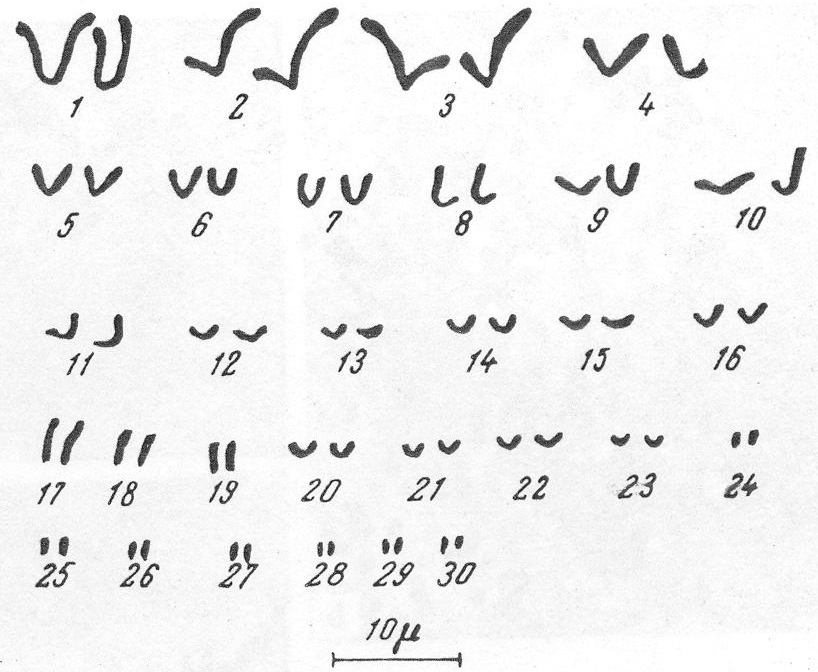
<td>2n=60±2; 40 m+sm, 20 a, 100 FN <i>Only macrochromosomes were counted</i><br /> Serebryakova EV. 1972. Some data on the chromosome complexes in Acipenseridae. In: Genetics, Selection, and Hybridization of Fish. (Ed. B.I. Cherfas). Translated from Russian by Israel Program for Scientific Translations. Keter Press Binding: Wiener Bindery Ltd. Jerusalem. pp. 98-106</td>
<td><a href="https://old.sveb.unife.it/it/ricerca-1/laboratori/geneweb/immagini/hybeser72_g.jpg"><img src="https://old.sveb.unife.it/it/ricerca-1/laboratori/geneweb/immagini/hybeser72_s.jpg" alt="hybeser72_s.jpg" title="" width="80" height="66" /></a></td>
</tr>
<tr>
<td>2n=60<br /> Burtzev IA. Serebryakova EV. 1973. A hybrid beluga x sterlet (Huso huso (L.) x Acipenser ruthenus L., Pisces): karyology, gametogenesis and potential status. Genetics 74: s35</td>
<td></td>
</tr>
<tr>
<td>
<p>2n=117.4±1.08; 57.7±0.37 m+sm, 58.9±0.97 a, 174.3±1.41 FN<br /> Arefjev VA. 1989. Karyotype variability in successive generations after hybridization between the great sturgeon, Huso huso (L.), and the sterlet, Acipenser ruthenus. L. J. Fish Biol. 35: 819-828 <a class="urlextern" href="http://cat.inist.fr/?aModele=afficheN&amp;cpsidt=6924766" rel="nofollow" title="http://cat.inist.fr/?aModele=afficheN&amp;cpsidt=6924766">Abstract</a></p>
</td>
<td></td>
</tr>
<tr>
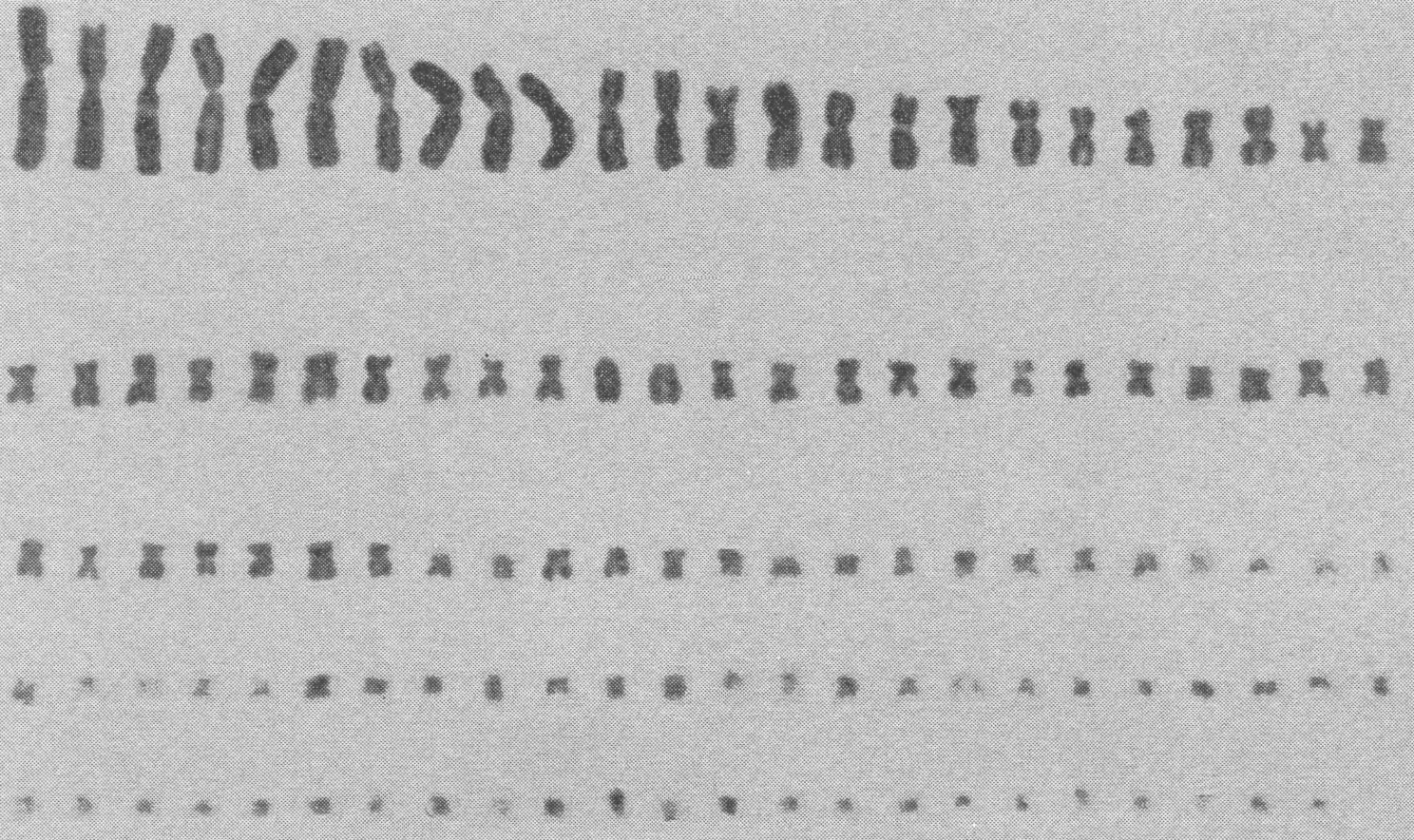
<td>2n=119<br /> Ojima Y. Nakanishi Y. Takay A. 1986. Chromosomal studies of cultured cells from the hybrids between Huso huso and Acipenser ruthenus. Proc. Japan Acad. 62B(3): 87-90 <a href="https://old.sveb.unife.it/it/ricerca-1/laboratori/geneweb/testi/chromosomal-studies-of-cultured-cells-from-the-hybrids-between-huso-huso-and-acipenser-ruthenus" class="wikilink1" title="abstracts:ab_hr1">Abstract</a></td>
<td><a href="https://old.sveb.unife.it/it/ricerca-1/laboratori/geneweb/immagini/hybeoji86_g.jpg"><img src="https://old.sveb.unife.it/it/ricerca-1/laboratori/geneweb/immagini/hybeoji86_s.jpg" alt="hybeoji86_s.jpg" title="" width="80" height="48" /></a></td>
</tr>
<tr>
<td>2n=116-118<br /> Arefjev VA. Nikolaev AI. 1993. Induced polyploidy in sturgeons: back to the problem in Russia. 31-32 pp. International Symposium on Sturgeons, Abstract Bulletin. September 6-11, 1993, Moscow-Kostroma-Moscow, Russia. <a href="https://old.sveb.unife.it/it/ricerca-1/laboratori/geneweb/testi/induced-polyploidy-in-sturgeons-back-to-the-problem-in-russia" class="wikilink1" title="abstracts:ab_arefjev93">Abstract</a></td>
<td></td>
</tr>
<tr>
<td>
<p>Omoto N, Maebayashi M, Adachi S, Arai K, Yamauchi K. 2005. Sex ratios of triploids and gynogenetic diploids induced in the hybrid sturgeon, the bester (Huso huso female x Acipenser ruthenus male) Aquaculture 245: 39-47 <a href="https://old.sveb.unife.it/it/ricerca-1/laboratori/geneweb/testi/sex-ratios-of-triploids-and-gynogenetic-diploids-induced-in-the-hybrid-sturgeon-the-bester-huso-huso-female-x-acipenser-ruthenus-male" class="internal-link">Abstract</a></p>
</td>
<td></td>
</tr>
<tr>
<td>
<h2><a name="acipenser_gueldenstaedti_x_huso_huso"></a></h2>
</td>
<td></td>
</tr>
<tr>
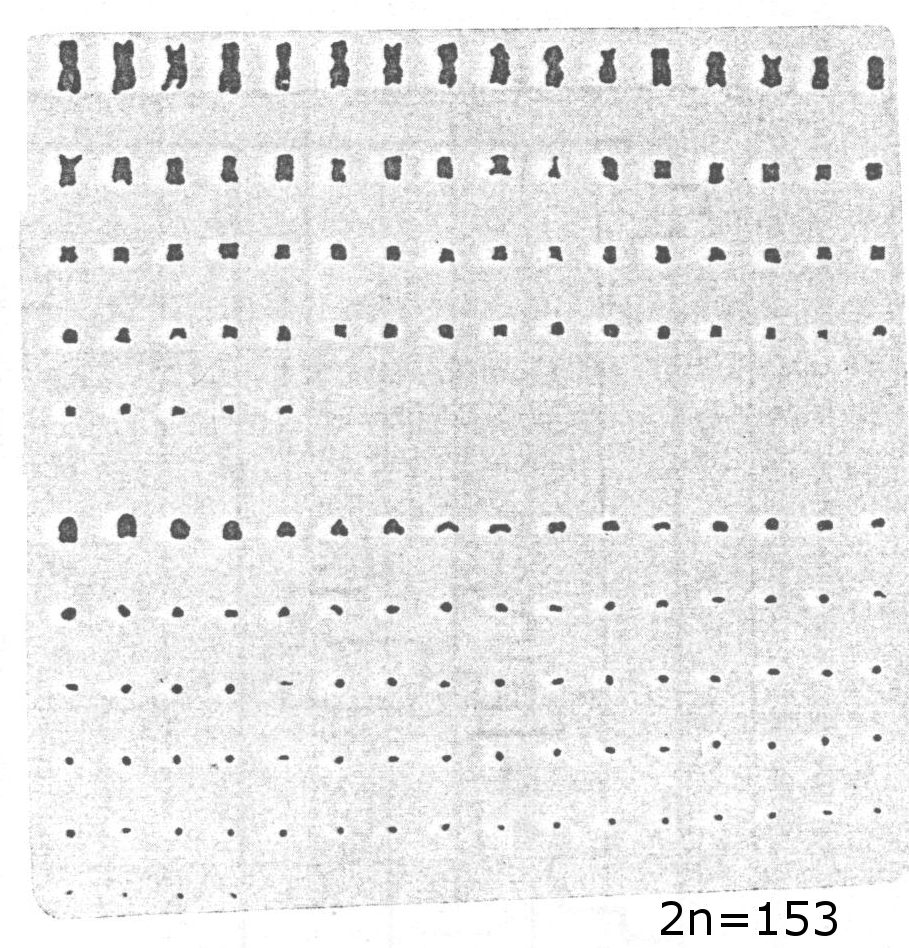
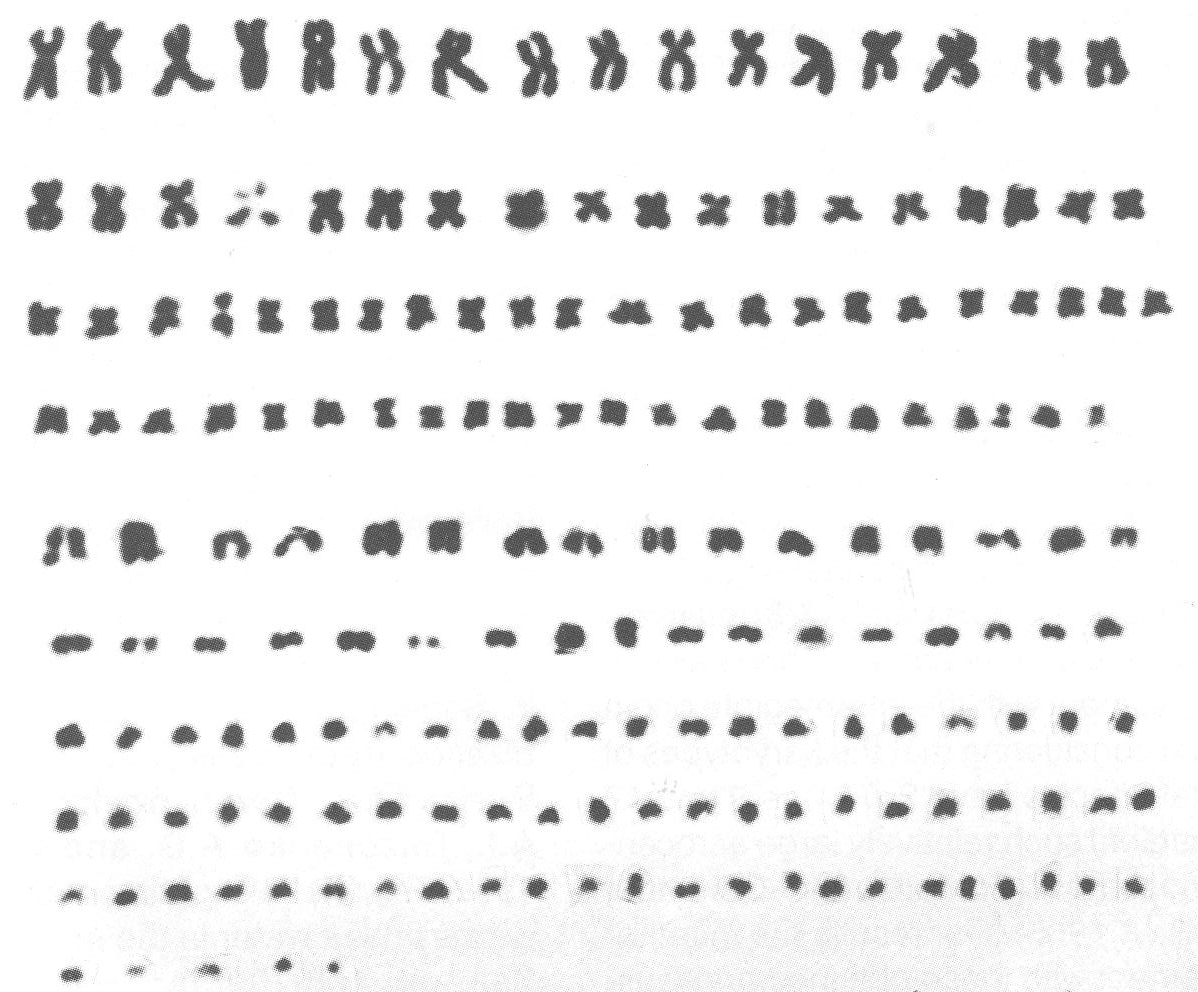
<td>2n=167.2±1.6; 74±0.4 m+sm, 93.6±1.4 a, 241.3±1.9 FN<br /> Arefjev VA. Nikolaev AI. 1991. Cytological analysis of the reciprocal hybrids between low- and high-chromosome acipenserids, the great sturgeon, Huso huso (L.), and the Russian sturgeon, Acipenser gueldenstaedti Brandt. Cytologia 56: 495-502 <a href="https://old.sveb.unife.it/it/ricerca-1/laboratori/geneweb/testi/cytological-analysis-of-the-reciprocal-hybrids-between-low-and-high-chromosome-acipenserids-the-great-sturgeon-huso-huso-l-and-the-russian-sturgeon-acipenser-gueldenstaedtii-brandt-2" class="wikilink1" title="abstracts:ab_guxhu">Abstract</a></td>
<td><a href="https://old.sveb.unife.it/it/ricerca-1/laboratori/geneweb/immagini/hygxhare91_g.jpg"><img src="https://old.sveb.unife.it/it/ricerca-1/laboratori/geneweb/immagini/hygxhare91_s.jpg" alt="hygxhare91_s.jpg" title="" width="80" height="83" /></a></td>
</tr>
<tr>
<td>
<h2><a name="huso_huso_x_acipenser_gueldenstaedti"></a></h2>
</td>
<td></td>
</tr>
<tr>
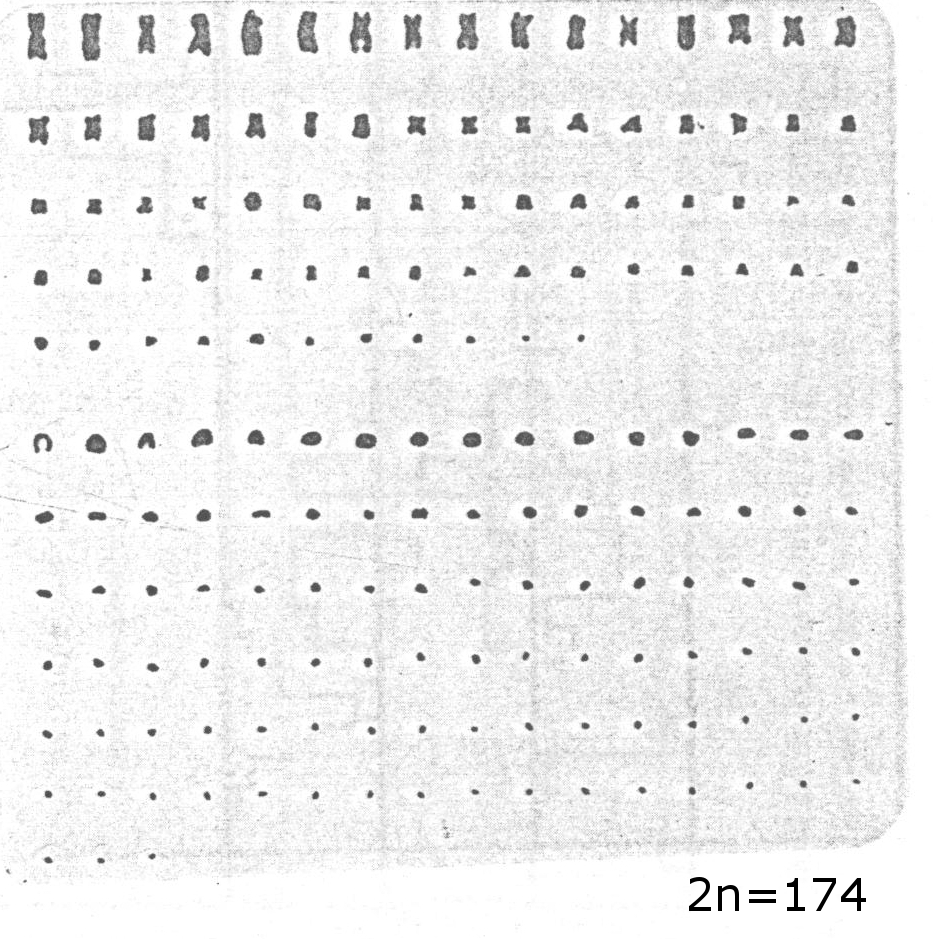
<td>2n=169.4±2.9; 74.2±0.7 m+sm, 95.3±2.4 a, 243.6±3.5 FN<br /> Arefjev VA. Nikolaev AI. 1991. Cytological analysis of the reciprocal hybrids between low- and high-chromosome acipenserids, the great sturgeon, Huso huso (L.), and the Russian sturgeon, Acipenser gueldenstaedti Brandt. Cytologia 56: 495-502 <a href="https://old.sveb.unife.it/it/ricerca-1/laboratori/geneweb/testi/cytological-analysis-of-the-reciprocal-hybrids-between-low-and-high-chromosome-acipenserids-the-great-sturgeon-huso-huso-l-and-the-russian-sturgeon-acipenser-gueldenstaedtii-brandt-2" class="wikilink1" title="abstracts:ab_guxhu">Abstract</a></td>
<td><a href="https://old.sveb.unife.it/it/ricerca-1/laboratori/geneweb/immagini/hyhxgare91_g.jpg"><img src="https://old.sveb.unife.it/it/ricerca-1/laboratori/geneweb/immagini/hyhxgare91_s.jpg" alt="hyhxgare91_s.jpg" title="" /></a></td>
</tr>
<tr>
<td>
<p>2n=177.1±2.2; 78 m+sm, 16 a, 88 mc 260 FN<br /> Gorshkova G. Gorshkov S. Gordin H. Knibb W. 1996 Karyological study in hybrids of beluga Huso huso (L.) and the russian sturgeon Acipenser guldenstaedti Brandt. Isr. J. Aquacult-Bamin. 48: 35-39 <a href="https://old.sveb.unife.it/it/ricerca-1/laboratori/geneweb/testi/karyological-study-in-hybrids-of-beluga-huso-huso-l-and-the-russian-sturgeon-acipenser-guldenstaedti-brandt" class="wikilink1" title="abstracts:ab_hy1">Abstract</a><i><br /></i></p>
</td>
<td><a href="https://old.sveb.unife.it/it/ricerca-1/laboratori/geneweb/immagini/hyhxggor91_g.jpg"><img src="https://old.sveb.unife.it/it/ricerca-1/laboratori/geneweb/immagini/hyhxggor91_s.jpg" alt="hyhxggor91_s.jpg" title="" width="80" height="66" /></a></td>
</tr>
<tr>
<td>
<h2><a name="acipenser_baeri_x_acipenser_gueldenstaedti"></a></h2>
Fopp-Bayat D, Woznicki P. 2006. Verification of ploidy level in sturgeon larvae. Aquac. Res. 37: 1671-1675 <a class="urlextern" href="http://www.blackwell-synergy.com/doi/abs/10.1111/j.1365-2109.2006.01614.x" rel="nofollow" title="http://www.blackwell-synergy.com/doi/abs/10.1111/j.1365-2109.2006.01614.x">Abstract</a></td>
<td></td>
</tr>
<tr>
<td>
<p>Fopp-Bayat D, Jankun M, Woznicki P. 2007. Viability of diploid and triploid larvae of Siberian sturgeon and bester hybrids. Aquac. Res. 38: 1301–1304 <a href="http://www.blackwell-synergy.com/doi/abs/10.1111/j.1365-2109.2007.01802.x"><span class="urlextern">Abstract</span></a></p>
</td>
<td></td>
</tr>
<tr>
<td>
<h2><a name="acipenser_baeri_x_huso_huso_x_acipenser_ruthenus"></a></h2>
Fopp-Bayat D. Jankun M. Woznicki P. Kolman R. 2007. Viability of diploid and triploid larvae of Siberian sturgeon and bester hybrids. Aquaculture Research 38: 1301-1304 <a href="https://old.sveb.unife.it/it/ricerca-1/laboratori/geneweb/testi/viability-of-diploid-and-triploid-larvae-of-siberian-sturgeon-and-bester-hybrids" class="wikilink1" title="abstracts:ab_fop1">Abstract</a></td>
<td></td>
</tr>
<tr>
<td></td>
<td></td>
</tr>
<tr>
<td></td>
<td></td>
</tr>
</tbody>
</table>
<p><i>m = metacentric; sm = submetacentric; a = acrocentric; mc = micro chromosomes; FN = fondamental number</i></p>
</div>]]></content:encoded>
    <dc:publisher>No publisher</dc:publisher>
    <dc:creator>Fontana Francesco</dc:creator>
    <dc:rights></dc:rights>
    <dc:date>2009-09-15T16:15:00Z</dc:date>
    <dc:type>Pagina</dc:type>
  </item>


  <item rdf:about="https://old.sveb.unife.it/it/ricerca-1/laboratori/geneweb/immagini">
    <title>Immagini</title>
    <link>https://old.sveb.unife.it/it/ricerca-1/laboratori/geneweb/immagini</link>
    <description></description>
    
    <dc:publisher>No publisher</dc:publisher>
    <dc:creator>Sandri Massimo</dc:creator>
    <dc:rights></dc:rights>
    <dc:date>2009-09-15T16:15:00Z</dc:date>
    <dc:type>Cartella</dc:type>
  </item>


  <item rdf:about="https://old.sveb.unife.it/it/ricerca-1/laboratori/geneweb/testi/cell-culture-and-karyotype-of-sakhalin-sturgeon-acipenser-mikadoi">
    <title>Cell Culture and Karyotype of Sakhalin Sturgeon Acipenser mikadoi</title>
    <link>https://old.sveb.unife.it/it/ricerca-1/laboratori/geneweb/testi/cell-culture-and-karyotype-of-sakhalin-sturgeon-acipenser-mikadoi</link>
    <description></description>
    <content:encoded xmlns:content="http://purl.org/rss/1.0/modules/content/"><![CDATA[<div class="level1"><p><em>Vishnyakova KS, Mugue NS, Zelenina DA, Mikodina EV, Kovaleva OA, Madan GV, Yegorov YE</em></p>  <p>Cell culture of a rare threatened species of Sakhalin sturgeon Acipenser mikadoi, was obtained from a fragment of pectoral fin and neighboring tissues. At the beginning the Culture consisted of cells of different types including typical fibroblasts as well its cells of epithelial origin, myofibroblasts, etc. After approximately five passages, the culture contained mainly cells of fibroblast morphology. In the normal Culturing conditions, these cells grew for more than one year with constant rate and passed approximately 80 population doublings. In the absence of serum, the cells passed into the state of proliferative quiescence (Go- state). After it long culturing without media replacement the cells fused and formed myofibers about 1 cm long. These myofibers exhibited an ability to branch out and with time acquired cross striation. After cultivation for approximately 40 days, myofibers degenerated, lost their morphological features, detached from the substrate, and died. Induction of adipogenic differentiation led to the proliferation arrest and appearance of lypophilic inclusions in some cells. The quantity of these inclusions was restricted; cells with inclusions considerably varied by morphology and did not resemble adipocytes. Induction of osteogenic differentiation led to the emergence of cells producing mineralized extracellular matrix and formation of bone nodules. Chromosome analysis revealed a set of chromosomes typical for several sturgeon species. The variability of the chromosome numbers was very high (mean 247 +/- 33, mode 248). Using AT- and GC-specific fluorescent ligands it was found that telomeric and centromeric regions of all chromosomes are enriched by GC-sequences. Distribution of AT- and GC-rich sequences among chromosomes was heterogeneous. Long chromosomes were preferentially stained by an AT-specific DAPI whereas small chromosomes had brighter fluorescence after 7-aminoactinomycin D treatment. Several small chromosomes fluoresced extremely bright after that. Our work is a first attempt. of the Sakhalin sturgeon cell Culturing and karyotype analysis.</p></div>]]></content:encoded>
    <dc:publisher>No publisher</dc:publisher>
    <dc:creator>Fontana Francesco</dc:creator>
    <dc:rights></dc:rights>
    <dc:date>2009-09-15T16:14:22Z</dc:date>
    <dc:type>Pagina</dc:type>
  </item>


  <item rdf:about="https://old.sveb.unife.it/it/ricerca-1/laboratori/geneweb/testi/chromosomal-nucleolar-organizer-regions-in-four-sturgeon-species-as-markers-of-karyotype-evolution-in-acipenseriformes-pisces-5">
    <title>Chromosomal nucleolar organizer regions in four sturgeon species as markers of karyotype evolution in Acipenseriformes (Pisces)</title>
    <link>https://old.sveb.unife.it/it/ricerca-1/laboratori/geneweb/testi/chromosomal-nucleolar-organizer-regions-in-four-sturgeon-species-as-markers-of-karyotype-evolution-in-acipenseriformes-pisces-5</link>
    <description></description>
    <content:encoded xmlns:content="http://purl.org/rss/1.0/modules/content/"><![CDATA[<p><em>Fontana F</em> <br />  <br /> Nucleolar organizer regions in Acipenser ruthenus (2n = 118 +/- 4) are localized on the telomeric regions of two morphologically different pairs of chromosomes. In A. baeri (2n = 250 +/- 8), A. transmontanus (2n= 248 +/- 8), and A. naccarii (2n = 246 +/- 8) they are localized on eight chromosomes arranged in two quadruplets. Contrary to what is commonly accepted, such distribution suggests that species with 120 chromosomes should be considered diploids and species with 240-250 chromosomes should be considered tetraploid.</p>]]></content:encoded>
    <dc:publisher>No publisher</dc:publisher>
    <dc:creator>Fontana Francesco</dc:creator>
    <dc:rights></dc:rights>
    <dc:date>2009-09-15T16:14:22Z</dc:date>
    <dc:type>Pagina</dc:type>
  </item>


  <item rdf:about="https://old.sveb.unife.it/it/ricerca-1/laboratori/geneweb/testi/viability-of-diploid-and-triploid-larvae-of-siberian-sturgeon-and-bester-hybrids">
    <title>Viability of diploid and triploid larvae of Siberian sturgeon and bester hybrids.</title>
    <link>https://old.sveb.unife.it/it/ricerca-1/laboratori/geneweb/testi/viability-of-diploid-and-triploid-larvae-of-siberian-sturgeon-and-bester-hybrids</link>
    <description></description>
    <content:encoded xmlns:content="http://purl.org/rss/1.0/modules/content/"><![CDATA[<p>&nbsp;</p><div class="level1"><p><em>Fopp-Bayat D. Jankun M. Woznicki P. Kolman R.</em></p>  <p>The aim of the present study was to produce Acipenser baeri x (Huso huso x Acipenser ruthenus) hybrids in a diploid and triploid state and to study their viability in comparison with the A. baeri from the fish farm stock. A heat shock (37 1C) in the 18th minute after fertilization was applied to induce triploidy. The survival rate and the ploidy level of the hybrids obtained were studied. The mortality of triploid hybrids was approximately twice as high as the mortality of diploid hybrids. No significant difference in the survival rate between Siberian sturgeon and their diploid hybrid with bester was noted. Cytogenetic analysis was performed by preparing chromosomes from the gill epithelium. The results showed that all studied fish from the heat-shocked group were triploid.</p></div>]]></content:encoded>
    <dc:publisher>No publisher</dc:publisher>
    <dc:creator>Fontana Francesco</dc:creator>
    <dc:rights></dc:rights>
    <dc:date>2009-09-15T16:14:22Z</dc:date>
    <dc:type>Pagina</dc:type>
  </item>


  <item rdf:about="https://old.sveb.unife.it/it/ricerca-1/laboratori/geneweb/testi/karyological-study-in-hybrids-of-beluga-huso-huso-l-and-the-russian-sturgeon-acipenser-guldenstaedti-brandt">
    <title>Karyological study in hybrids of beluga Huso huso (L.) and the russian sturgeon Acipenser guldenstaedti Brandt</title>
    <link>https://old.sveb.unife.it/it/ricerca-1/laboratori/geneweb/testi/karyological-study-in-hybrids-of-beluga-huso-huso-l-and-the-russian-sturgeon-acipenser-guldenstaedti-brandt</link>
    <description></description>
    <content:encoded xmlns:content="http://purl.org/rss/1.0/modules/content/"><![CDATA[<p><em>Gorshkova G. Gorshkov S. Gordin H. Knibb W</em> <br />  <br /> This study presents the karyotype analysis of the sturgeon hybrid between the Russian sturgeon Acipenser guldenstaedti (2n=250) and beluga Huso huso (2n=118-120) which was recently introduced to Israel as a subject for experimental culturing. The consistent mode of diploid chromosome number of hybrid fish is 181-190. The karyotype is characterized by 78 metacentric and submetacentric, 16 acrocentric (8 of them are relatively large) and about 88 microchromosomes. Our results confirm the intermediate origin of the hybrid between species with (in the family Acipenseridae) a large number of chromosomes and species with about half the number of chromosomes. The presence of numerous microchromosomes and polyploid origin of the family Acipenseridae raises some uncertainty as to whether the hybrid will be completely sterile.</p>]]></content:encoded>
    <dc:publisher>No publisher</dc:publisher>
    <dc:creator>Fontana Francesco</dc:creator>
    <dc:rights></dc:rights>
    <dc:date>2009-09-15T16:14:22Z</dc:date>
    <dc:type>Pagina</dc:type>
  </item>


  <item rdf:about="https://old.sveb.unife.it/it/ricerca-1/laboratori/geneweb/testi/cytological-analysis-of-the-reciprocal-hybrids-between-low-and-high-chromosome-acipenserids-the-great-sturgeon-huso-huso-l-and-the-russian-sturgeon-acipenser-gueldenstaedtii-brandt-2">
    <title>Cytological analysis of the reciprocal hybrids between low- and high-chromosome acipenserids, the great sturgeon, Huso huso (L.), and the Russian sturgeon, Acipenser gueldenstaedtii Brandt</title>
    <link>https://old.sveb.unife.it/it/ricerca-1/laboratori/geneweb/testi/cytological-analysis-of-the-reciprocal-hybrids-between-low-and-high-chromosome-acipenserids-the-great-sturgeon-huso-huso-l-and-the-russian-sturgeon-acipenser-gueldenstaedtii-brandt-2</link>
    <description></description>
    <content:encoded xmlns:content="http://purl.org/rss/1.0/modules/content/"><![CDATA[<p><em>Arefjev VA. Nikolaev AI.</em> <br />  <br /> Hybrids between the great sturgeon and the Russian sturgeon in reciprocal crosses are found to exhibit non-intermediate chromosome number, 2n= 167-169, on average. The hybrids are also characterized by sharp increase in variability of the quantitative karyotypic parameters such as diploid chromosome number, bi-armed chromosome number, number of uni-armed and microchromosomes and chromosome arm number. Measurements of erythrocytes and their nuclei confirmed the di-tetraploid relationship of the parental species and non-intermediate pattern of the hybrid genome. Sharp disbalancing of karyotype of both reciprocal hybrids is indicative of high probability of their complete sterility.</p>]]></content:encoded>
    <dc:publisher>No publisher</dc:publisher>
    <dc:creator>Fontana Francesco</dc:creator>
    <dc:rights></dc:rights>
    <dc:date>2009-09-15T16:14:22Z</dc:date>
    <dc:type>Pagina</dc:type>
  </item>


  <item rdf:about="https://old.sveb.unife.it/it/ricerca-1/laboratori/geneweb/testi/induced-polyploidy-in-sturgeons-back-to-the-problem-in-russia">
    <title>Induced polyploidy in sturgeons: back to the problem in Russia</title>
    <link>https://old.sveb.unife.it/it/ricerca-1/laboratori/geneweb/testi/induced-polyploidy-in-sturgeons-back-to-the-problem-in-russia</link>
    <description></description>
    <content:encoded xmlns:content="http://purl.org/rss/1.0/modules/content/"><![CDATA[<p>&nbsp;</p><div class="level1"><p><em>Arefjev VA. Nikolaev AI.</em></p>  <p>Experiments on the polyploidy induction in sturgeons were conducted in Russia in the mid-1960s and yielded practically negative results: the subjects of those investigations were <code>pure</code> species, mainly the Russian sturgeon, Acipenser gueldenstaedti. In 1990-91 we made an attempt to return to this problem dealing with a hybrid between the great sturgeon, Huso huso, and the sterlet, Acipenser ruthenus. The experiment included four variants and two controls: 1) thermal shock (31&deg;C) for 10 min., 20 min. after fertilization; 2) thermal shock for 15 min., 15 min. after fertilization; 3) chemical shock (colchicines, 0,01%) for 15 min., 15 min. after fertilization; 4) chemical shock for 40 min., 1.5 hours after fertilization. The viability in all six variants did not differ significantly both during embryogenesis and after hatching. Ploidy control was made by conventional cytogenetic methods when the fish attained the age of about 1.5 months. The proportions of triploids in Variants 1, 2 &amp; 3 were 30%, 45.7% and 28%, respectively; no tetraploids were observed in variant 4. The proportions of mosaic specimens (mainly mixoploids) were 3.3%, 20%, 6.7% and 10%, respectively. The modal chromosome numbers were 2n=116-118 in diploids and 3n=168-176 in triploids. Interestingly, viable colchiploid fish were obtained for the first time. It thus appears that induction of triploidy is possible in principle, at least in sturgeon hybrids, possibly due to higher flexibility of their genomes in comparison with &ldquo;pure&rdquo; species, though elaboration of a method for 100% triploidization is doubtful.</p></div>]]></content:encoded>
    <dc:publisher>No publisher</dc:publisher>
    <dc:creator>Fontana Francesco</dc:creator>
    <dc:rights></dc:rights>
    <dc:date>2009-09-15T16:14:22Z</dc:date>
    <dc:type>Pagina</dc:type>
  </item>


  <item rdf:about="https://old.sveb.unife.it/it/ricerca-1/laboratori/geneweb/testi/chromosomal-studies-of-cultured-cells-from-the-hybrids-between-huso-huso-and-acipenser-ruthenus">
    <title>Chromosomal studies of cultured cells from the hybrids between Huso huso and Acipenser ruthenus</title>
    <link>https://old.sveb.unife.it/it/ricerca-1/laboratori/geneweb/testi/chromosomal-studies-of-cultured-cells-from-the-hybrids-between-huso-huso-and-acipenser-ruthenus</link>
    <description></description>
    <content:encoded xmlns:content="http://purl.org/rss/1.0/modules/content/"><![CDATA[<p><em>Ojima Y. Nakanishi Y. Takay A</em> <br />  <br /> In this paper the karyotype of the hybrids between Huso huso and Acipenser ruthenus reared in the National Research Institute of Agriculture, Mie Prefecture, Japan is described. The chromosome number is 119 with 4 acrocentrics</p>]]></content:encoded>
    <dc:publisher>No publisher</dc:publisher>
    <dc:creator>Fontana Francesco</dc:creator>
    <dc:rights></dc:rights>
    <dc:date>2009-09-15T16:14:22Z</dc:date>
    <dc:type>Pagina</dc:type>
  </item>


  <item rdf:about="https://old.sveb.unife.it/it/ricerca-1/laboratori/geneweb/testi/karyological-investigation-in-natural-hybrids-of-sturgeons-of-the-lower-danube-river-and-black-sea">
    <title>Karyological investigation in natural hybrids of sturgeons of the lower Danube River and Black Sea</title>
    <link>https://old.sveb.unife.it/it/ricerca-1/laboratori/geneweb/testi/karyological-investigation-in-natural-hybrids-of-sturgeons-of-the-lower-danube-river-and-black-sea</link>
    <description></description>
    <content:encoded xmlns:content="http://purl.org/rss/1.0/modules/content/"><![CDATA[<p><em>Ene AC. Suciu R. Danube Delta National and Development Institute Tulcea Adress: Babadag str. 165 Tulcea 8800, Romania </em> <br />  <br /> Four natural sturgeon hybrids were karyologically investigated. They were sampled in the Romanian sector of Danube River and Black Sea during 1996 - 2000. All of them were hybrids between the only octaploid species existing in Romanian waters, Acipenser gueldenstaedti (2n = 258&plusmn;4) and tetraploid species H. huso and A. stellatus (2n = 118&plusmn;2), respectively. Three hybrids (one A. gueldenstedti x Huso huso and two A. gueldenstaedti x A. stellatus) had an intermediate chromosome number (2n = 175 - 190) between tetraploid and octaploid species. The fourth one (A. gueldenstaedti x A. stellatus) had a non-intermediate chromosomal complement of 116-120. The hybrids A. gueldenstaedti x A. stellatus were morfologically distinct, representing three possible morphs of hybrids, already described by Antipa (1909). The aspect of morphological similarities between two snouts varieties of A. gueldenstaedti (var. acutirostris and var. longirostris) and two of the hybrids of A. gueldenstaedti (A. gueldenstaedti x Huso huso and one morph of A. gueldenstaedti x A. stellatus) is discussed. Karyologically investigations clearly indicate that two of the speeimens we investigated (A. gueldenstedti x Huso huso and one of the hexaploids A. gueldenstaedti x A. stellatus) are hybrids and not snout varieties of A. gueldenstaedti. According to our present knowledge, this is the first report on kariology in natural hybrids of sturgeons.</p>]]></content:encoded>
    <dc:publisher>No publisher</dc:publisher>
    <dc:creator>Fontana Francesco</dc:creator>
    <dc:rights></dc:rights>
    <dc:date>2009-09-15T16:14:22Z</dc:date>
    <dc:type>Pagina</dc:type>
  </item>


  <item rdf:about="https://old.sveb.unife.it/it/ricerca-1/laboratori/geneweb/testi/odd-ploidy-levels-in-sturgeons-suggest-a-backcross-of-interspecific-hexaploid-sturgeon-hybrids-to-evolutionarily-tetraploid-and-or-octaploid-parental-species">
    <title>Odd ploidy levels in sturgeons suggest a backcross of interspecific hexaploid sturgeon hybrids to evolutionarily tetraploid and/or octaploid parental species</title>
    <link>https://old.sveb.unife.it/it/ricerca-1/laboratori/geneweb/testi/odd-ploidy-levels-in-sturgeons-suggest-a-backcross-of-interspecific-hexaploid-sturgeon-hybrids-to-evolutionarily-tetraploid-and-or-octaploid-parental-species</link>
    <description></description>
    <content:encoded xmlns:content="http://purl.org/rss/1.0/modules/content/"><![CDATA[<p>&nbsp;</p><div class="level1"><p><em>Flajshans M. Vajcova V.</em></p>  <p>Three presumably purebred aquaculture stocks of sturgeons (Acipenser ruthenus, A. gueldenstaedtii and A. baerii) were investigated. Analyses of DNA contents by flow cytometry and of erythrocyte nuclear dimensions by microscope-coupled, computer-assisted image analysis revealed that only an A. ruthenus stock was purebred tetraploid in 93.33%; whereas both A. gueldenstaedtii and A. baerii stocks under study consisted of hexaploids, yet unknown penta- or heptaploid specimens and purebred octaploids. We hypothesized that the hexaploid specimens were F-1 interspecific hybrids of tetra- and octaploid sturgeon species, whereas pentaploid specimens may have originated from an intentional or accidental backcross of the F-1 hybrid to tetraploid parental species in aquaculture, and the heptaploid specimens may have originated from similar backcross of the F-1 hybrid to octaploid parent.</p></div>]]></content:encoded>
    <dc:publisher>No publisher</dc:publisher>
    <dc:creator>Fontana Francesco</dc:creator>
    <dc:rights></dc:rights>
    <dc:date>2009-09-15T16:14:22Z</dc:date>
    <dc:type>Pagina</dc:type>
  </item>


  <item rdf:about="https://old.sveb.unife.it/it/ricerca-1/laboratori/geneweb/testi/cytogenetics-of-interploid-hybridization-of-sturgeons">
    <title>Cytogenetics of interploid hybridization of sturgeons</title>
    <link>https://old.sveb.unife.it/it/ricerca-1/laboratori/geneweb/testi/cytogenetics-of-interploid-hybridization-of-sturgeons</link>
    <description></description>
    <content:encoded xmlns:content="http://purl.org/rss/1.0/modules/content/"><![CDATA[<div class="level1"><p><em>Arefjev VA.</em></p>  <p>In this study we investigated the chromosome pictures in four combinations of interploid hybrids: 1) Russian sturgeon (female) x sterlet; 2) sterlet (female) x Russian sturgeon; 3) Russian sturgeon (female) x great sturgeon; 4) Russian sturgeon (female) x bester (hybrid between great sturgeon and sterlet) in 3rd generation. On the basis of morphological assessments of somatic karyotypes, the following conclusions are drawn: a) all hybrid combinations have an intermediate karyotype with statistically significant bias of chromosome number (2n) to the diploid parent (2n=160-168, on average); b) the variation in all karyotype parameters is relatively high with a coefficient of variation (CV) of more than 12% (in comparison with 2-4% in &ldquo;pure&rdquo; species); c) taking into account the known relationship between increased karyotype variability and decreased fertility, or, more precisely, survivorship of progenies (as had been shown on successive generation of the bester), a high level of chromosome set variation in interploid hybrids is proof of practically complete sterility.</p></div><p>&nbsp;</p>]]></content:encoded>
    <dc:publisher>No publisher</dc:publisher>
    <dc:creator>Fontana Francesco</dc:creator>
    <dc:rights></dc:rights>
    <dc:date>2009-09-15T16:14:22Z</dc:date>
    <dc:type>Pagina</dc:type>
  </item>


  <item rdf:about="https://old.sveb.unife.it/it/ricerca-1/laboratori/geneweb/testi/increase-of-karyotypic-variability-in-sturgeon-hybrids">
    <title>Increase of karyotypic variability in sturgeon hybrids</title>
    <link>https://old.sveb.unife.it/it/ricerca-1/laboratori/geneweb/testi/increase-of-karyotypic-variability-in-sturgeon-hybrids</link>
    <description></description>
    <content:encoded xmlns:content="http://purl.org/rss/1.0/modules/content/"><![CDATA[<p>&nbsp;</p><div class="level1"><p><em>Arefjev, V.A.</em></p>  <p>Various forms of bester (i.e. hybrid between great sturgeon, Huso huso, and sterlet, Acipenser ruthenus; in F1 , F2. F3 and FB), hybrid between A. ruthenus and ship, A. nudiventris, as well of hybrid between Russian sturgeon, A. gueldenstaedtii, and Siberian sturgeon, A. baeri, are characterized by authentical increase of karyotypic variability estimate from coefficients of variation of quantitative parameters of karyotype such as diploid chromosome number, number of microchromosome and number of chromosome arms. However. some hybrid forms (F3 and FB in second generation of bester) show the karyotype variability practically identical of that characteristic for parental species. Koryotypic variability in sturgeon hybrids as well as apparently in &ldquo;clean&rdquo; species is basically realized at the expense of aneuploidy on microchromosomes. The problems of the reality or individual karyotypic variations and of presumptive nature of sturgeons microchromosomes as supernumeraries are briefly discussed.</p></div>]]></content:encoded>
    <dc:publisher>No publisher</dc:publisher>
    <dc:creator>Fontana Francesco</dc:creator>
    <dc:rights></dc:rights>
    <dc:date>2009-09-15T16:14:22Z</dc:date>
    <dc:type>Pagina</dc:type>
  </item>


  <item rdf:about="https://old.sveb.unife.it/it/ricerca-1/laboratori/geneweb/testi/some-questions-of-cytogenetics-hybridization-and-systematics-of-the-acipenseridae">
    <title>Some questions of cytogenetics, hybridization and systematics of the Acipenseridae</title>
    <link>https://old.sveb.unife.it/it/ricerca-1/laboratori/geneweb/testi/some-questions-of-cytogenetics-hybridization-and-systematics-of-the-acipenseridae</link>
    <description></description>
    <content:encoded xmlns:content="http://purl.org/rss/1.0/modules/content/"><![CDATA[<p><em>N. I. Nikoljukin  Research Institute of Sea Fisheries and Oceanography, Moscow  </em> <br />  <br /> Investigation of chromosome complexes in Acipenseridae has shown that a series of species of this family such as - Huso huso, Acipenser ruthenus, A. stellatus, A. nudiventris are characterized by a low chromosome number (about 60) differing strongly from A. gueldenstaedti whose chromosome number is more than twice higher (above 130). Owing to this, the first four species when crossed among themselves yield fertile hybrids while each crossed separately with A. gueldenstaedti produce hybrids either partly fertile or completely sterile. Consequently the most stressed cytogenetical boundary lies not between the genera Huso and Acipenser, but within the limits of the latter among its species. In connection with this a question arises whether it was justified to form separate genus Huso including Huso huso and exclude the latter from the genus Acipenser to which it had belonged since Linneus time is as much as the morphological differences between them are not so considerable.</p>]]></content:encoded>
    <dc:publisher>No publisher</dc:publisher>
    <dc:creator>Fontana Francesco</dc:creator>
    <dc:rights></dc:rights>
    <dc:date>2009-09-15T16:14:22Z</dc:date>
    <dc:type>Pagina</dc:type>
  </item>


</rdf:RDF>